|
THE BIBLE UNEARTHED: THE MAKING OF A RELIGION -- ILLUSTRATED SCREENPLAY & SCREENCAP GALLERY |
|
Can they give us any clue to when this was written?
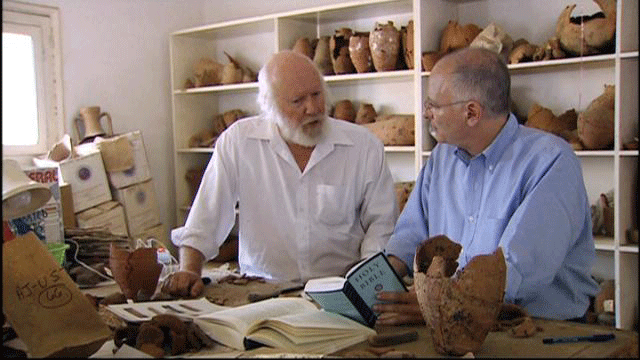
[Donald Redford, University of Pennsylvania] The geographical clues can, in fact, help to date the person who put this down. That's true. When one does that, one comes up with A FAIRLY GOOD IMPRESSION of what the writer knew, and the geography that he was familiar with. And that would help to plug him in in terms of chronology. "When did he live?" [Neil Silberman] When was that time? [Donald Redford, University of Pennsylvania] Well, Pithom, as I say, has been identified as the city called Per-Etham, the House of Etham. This was built by Pharaoh Necho II around 600 B.C. Certainly not before 605 B.C. That's one item.
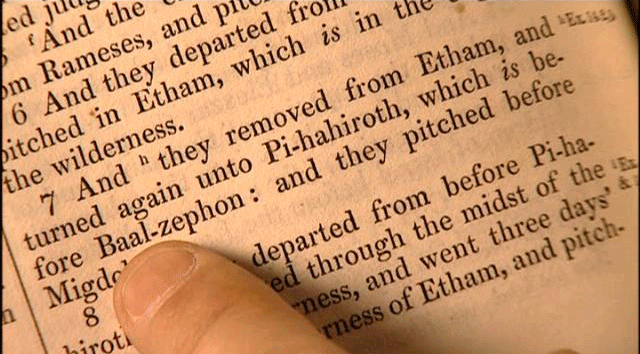
Going out of Egypt you have such names as Etham, Pi-hahiroth, Baal-zephon -- all of these are known from the later geography of Egypt.
They weren't around -- many of them -- in the new kingdom WHEN THE STORY IS SUPPOSED TO HAVE TAKEN PLACE. I would see the Saite Period, what we call the Saite -- that's the 26th dynasty, from 664-525 B.C., as a period, kind of an OPTIMAL PERIOD, for the general background of the STORY as we have it in Exodus. At any rate, we've limited it to 7th, 6th centuries before Christ.
[Narrator] So, as in our investigation of the Patriarchs, both the clues gathered in the field, and the texts point in the same direction: CERTAIN STORIES, INCLUDING THE EXODUS, started to be written down in the 7th century B.C. [?]
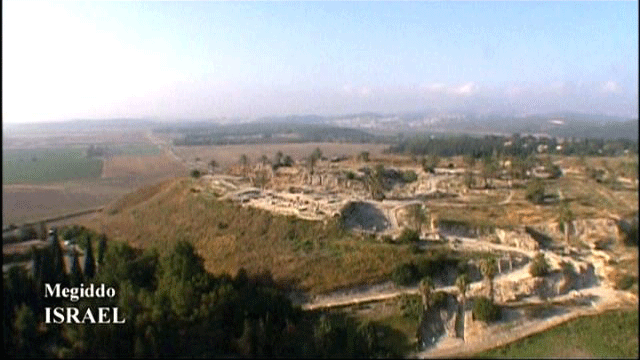
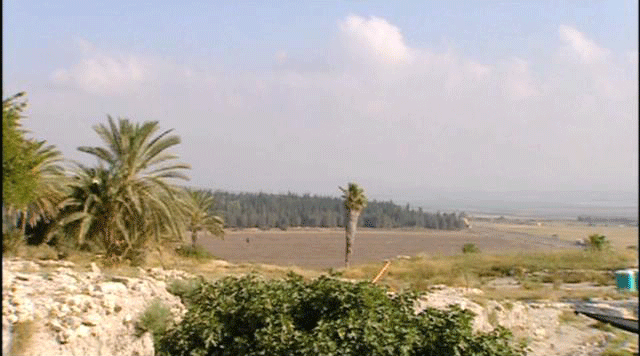
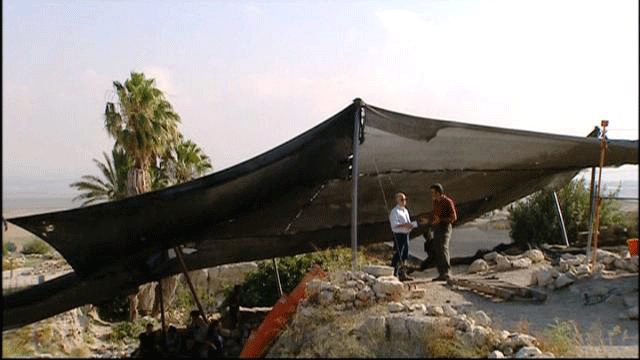
Neil Silberman has returned to Megiddo.
|