|
THE GODDESS MINERVA & HER SYMBOLISM |
|
by Michael Tsarion, excerpt from "The Irish Origins of Civilization" APPENDIX FOURTEEN The Goddess Minerva & Her Symbolism
The Illuminati Degree System The Illuminati divided their Order and system of initiation into three categories and nine stages. The three stages or grades were:
The Nursery Grade was itself divided into three stages of:
The Masonic Grade was divided into:
and within the Mystery Grade were four final stages of:
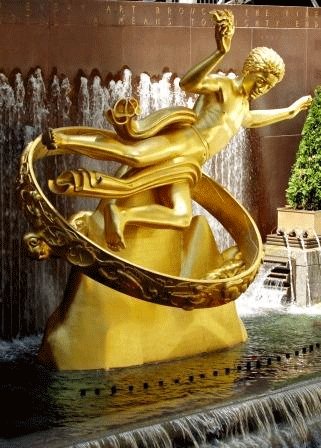
It is suggestive that the Illuminati employed the term "Minerval" for one of their introductory stages of initiation. The term apparently denotes the Roman goddess Minerva. She was connected to intelligence and warfare. She was probably revered by the Illuminati because of her connection to Prometheus who, with the goddess's assistance, stole fire (knowledge) from the gods of Olympus so that men on earth could rise above a primitive level and eventually match the gods in power and ability.
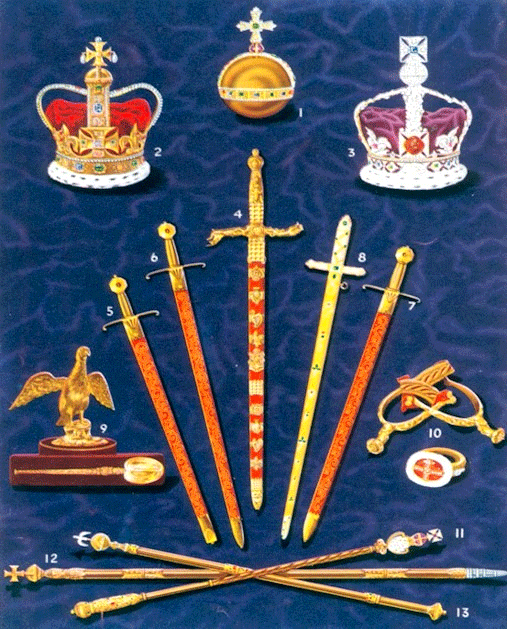
The famous statue of Prometheus outside the Rockefeller Plaza in New York City. Both Prometheus and his divine helper Minerva are revered by the Order of the Illuminati. The Rockefellers could not be making their secret society allegiance more obvious. Like their masters they too are adept at symbolic communication. The fountain over which the figure of Prometheus stands is significant because Minerva was associated with the healing power of water. The word "mineral" may derive from her name. (See sources section below for more on Prometheus) Dividing schools of mystery according to a threefold schemata was once the habit of the Irish Druids. This is significant since Minerva had undoubtedly been based on the ancient Irish goddess Brigid. We might note the suggestive fact that the final initiatory stage of the final grade was named "Rex," which means "King." The Illuminati were officially supposed to be anti-monarchy. This term leads us to doubt this assertion. After all, it was an assertion made by the Illuminati elite. Additionally, the esoteric symbolism pertaining to the cult of Minerva was employed during the coronation ceremony of Queen Elizabeth II. So, despite the spin, we might question whether there is truly a difference between the Illuminati and the royal houses of the world? We think not. Incidentally, thirteen objects of regalia were involved during the Queen's coronation. This is the same number of stars on the flag of the United States of Europe, and that can be found above the eagle's head on the US one dollar bill. As we showed in the Irish Origins of Civilization (Volume Two), thirteen is the number of the Cult of Aton. In Judaism, thirteen denotes the Levites. The Levites were the recipients of the secret and mysterious "Oral Tradition" on Mount Sinai. This enigmatic thirteenth tribe are the progenitors of modern day Zionists and Talmudists.
1. The Orb As we pointed out in the Irish Origins of Civilization, the dove is the emblem of the "Davids," or commanders of the House of Aton. The dove staff is referred to as the "Virge," meaning Virgin. As well as referring to the astrological sign of Virgo, it is yet another occult reference to Minerva. Who Was Minerva?
The Roman goddess Minerva was based on the Greek Athena, who, in turn, was based on earlier Egyptian goddesses such as Isis and Neith. These goddesses were, in turn, based on earlier Western antetypes. They were described as "virginal" and were commonly depicted with fair complexions. They were the mothers of the various sun gods. Most of the Eastern goddesses who turn up in Greek and Roman pantheons were based on the Aryan goddesses Danu, Ana and Brigit. One perfect example is Hera, the supreme goddess of the Greeks. She was based on Eri, goddess of Ireland. (See Chapter Ten, The Disciples of Horus, for more on this subject.)
From the name Athena we get the city name Athens. Many cities of the world were consecrated to goddesses. The very word city may derive from cteis, meaning "circle" (a reference to the ovum). Athena was a version of Egyptian goddesses Neith and Isis. Neith was depicted as warlike and armored, same as the Grecian version (Pallas Athena). She carried a bow, which doubles up as a womb symbol. (Arrows being phallic symbols.) So we can see that the Illuminati worshiped pagan goddesses. More importantly, their Minerva was based on Egyptian antetypes. This helps us to link them to the Solar and Stellar Cults of antiquity. If the members of the Order are not biologically related to the sun priests of old, they are certainly ideologically related. Minerva's Birth
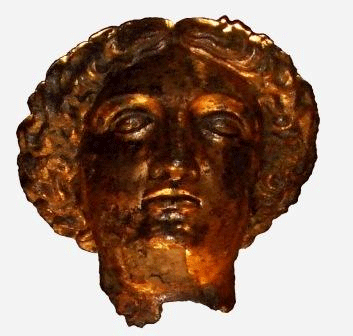
In British mythology Minerva was known as Sulis. The bronze head above -- of Minerva (or Sulis) -- was discovered at the city of Bath that was dedicated to her. The word Sulis means "eye." It also means "opening" or "portal." This latter meaning connotes the female vagina. Some scholars believe the word Sulis comes from the Indo-European Sewel, which meant "sun." Minerva was undoubtedly a version of Baratana, and the the primordial Irish goddess Brigid. Scholars accept that she is closely connected to the Celtic Brigantia. The Christian Saint Brigid of Kildare was also based on the early Irish goddess. (See sources section below for more on these goddesses.) In the movie Avatar, James Cameron's protagonist goes by the name Jake Sully. Is this a subtextual reference to Sulis and Minerva, goddess of the Illuminati?
Minerva the Virgin Not only was Minerva "immaculately" conceived (being without a mother), but she was also a virginal goddess.
Related Goddesses The Roman Minerva was a composite deity. She is either identical with, or mythologically related to, the following goddesses of antiquity:
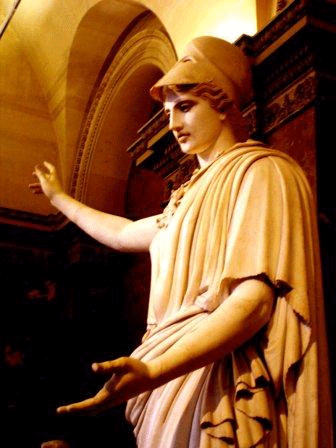
Pallas Athena The word Pallas means "virginal." Minerva was, therefore, both immaculately conceived and virginal. For the Greeks Pallas Athena symbolized man's reason. She assisted Prometheus in his plot to steal "fire" (knowledge) from the gods to give to men. This is because she sprang from the head of Zeus. Hitherto, men have associated her with the intellect and with reason. In this aspect she is close to the Egyptian goddess Ma'at, and many other "virgin" goddess of Egypt, such as Neith and Isis. In fact, if we examine the names Neith and Athena, we can see faint etymological similarities.
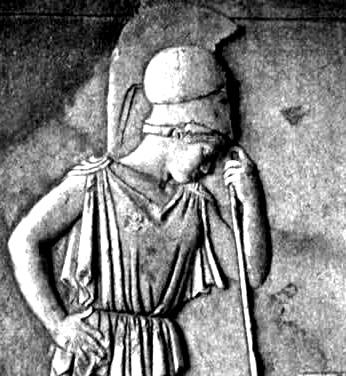
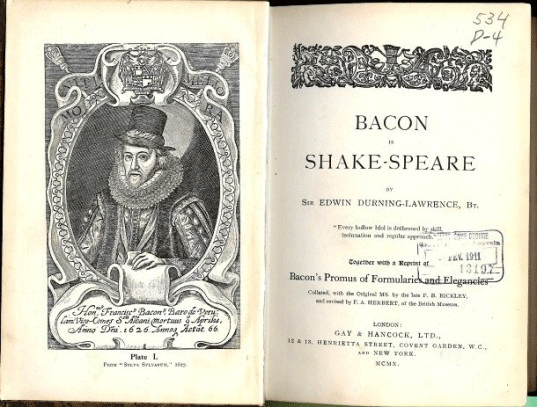
Minerva was known by the Athenians of Greece as Athena, or Pallas Athena. The Shakespeare Controversy A secondary meaning of Pallas is "shaker." Indeed, Athena was known as the "Spear Shaker." Since her symbol was the spear, some scholars have been lead to connect Athena to the work of William Shakespeare, whom, it is believed, adopted his surname from the goddess in question. Moreover, some researchers believe that the historical personage responsible for the plays and poems of "Shakespeare," was none other than scientific genius Sir Francis Bacon, the editor of the King James Bible and author of the The New Atlantis. Suggestively, Bacon was a member of a Masonic enclave known as the "Knights of the Helmet," named after Minerva, or Pallas Athena.
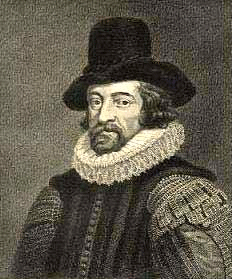
Sir Francis Bacon (1561-1626 AD) is believed by some occult researchers to be the true author of the works of Elizabethan playwright William Shakespeare. (See sources section below for more information on this controversy). A Knight Templar, and major Occultist, Sir Francis Bacon was appointed Solicitor-General and Chief Advisor to the British Crown on June 25th 1607. He conceived the idea of reactivating various secret societies and in 1580 founded the secret Rosicrosse Literary Society and the Lodge of Free and Accepted Speculative Masons. Bacon is said to have introduced the 33 Degree system into Masonry, from the original Templar 9 Degrees -- Tony Bushby (Bible Fraud) For one year he had in his possession the first English translations of the Bible. In fact, he was the first major editor of what would become the King James Bible. He also added secret information into the Bible which was not there before. It will eventually be proved that the whole structure of the Authorized Bible was Francis Bacon’s. He was and ardent student not only of the Bible, but also of early manuscripts -- William T. Smedley (Biographer of Bacon)
Bacon is, however, not the only candidate put forth as the brain behind the works of Shakespeare. A major case has been made for Edward de Vere, the Earl of Oxford, and also for the great dramatist Christopher Marlowe. (See links below for more information on the Shakespeare controversy.) http://en.wikipedia.org/wiki/Francis_Bacon The Spear
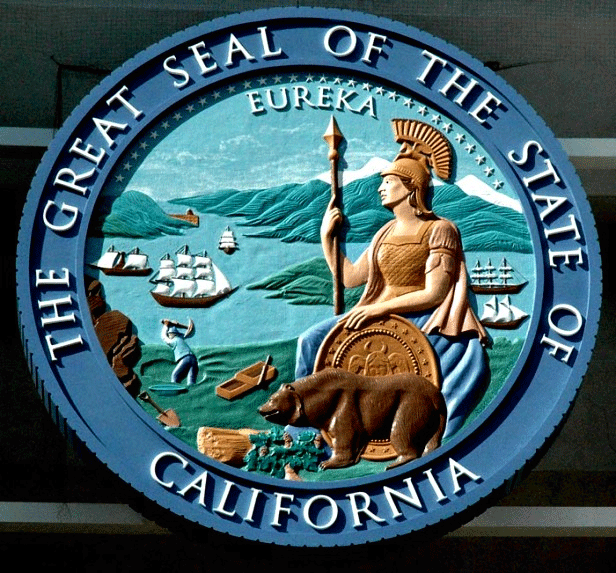
The seal of the State of California, depicting Minerva with her spear. This goddess was based on the primordial Western mother goddesses Sulis, Brigid, and Baratana.
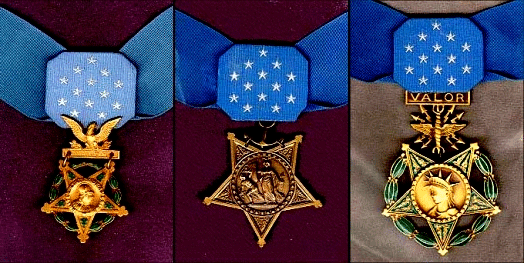
Minerva is displayed on the Medal of Honor. The Medal of Honor is the highest military decoration awarded by the United States government. Note the inverted pentacle. Minerva and the Owl Minerva was the first deity to build an enclosed house. She is therefore connected with building and architecture. One of her symbols was the butterfly. However, her main symbol was the owl. Her name has the "mn-" stem, linked with memory. See Greek "Mnemosyne" ... memory, remembrance, recollection. The Romans could have confused her foreign name with their word mens meaning "mind" since one of her aspects as goddess pertained not only to war but also to the intellectual. Minerva is the Roman name for Athena the goddess of Wisdom and Virginity. She is also depicted as an owl -- Wikipedia Online Encyclopedia (Entry on Minerva)
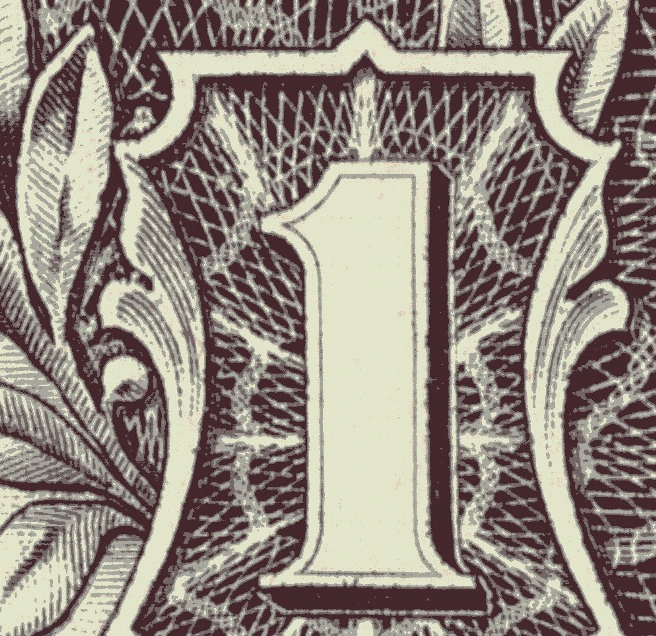
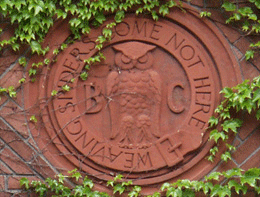
The owl of goddess Minerva on the US one dollar bill. Minerva was, like the Egyptian goddess Neith, connected with webs and weaving. The owl is the symbol of the Bohemian Club. It may also be a symbol for the Order of the Illuminati. In the Illuminati system of initiation, there is a degree named "Minerval." As far as the dollar symbolism goes, Minerva could quite easily and realistically associated with the number 1. After all, she was the firstborn of Jupiter, was immaculately conceived, virginal, and independent. Minerva was the goddess of war. Certainly, warmongering has enriched the United States government more than any other enterprise. Minerva, the War Goddess In her warlike aspect, Minerva resembles the Egyptian goddess Neith, who was also considered "virginal."
Chief Symbols of Minerva
Athens and the Serpent
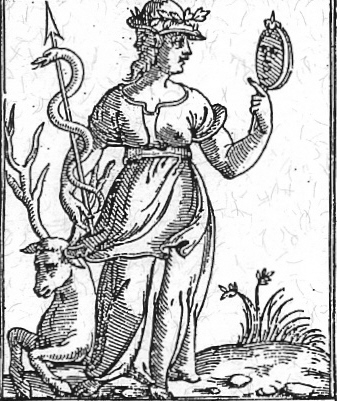
A woodcut showing Minerva with spear and serpent. Note the stag, the animal sacred to the ancient Gaels, Celts, and Arya of the West. Minerva and the Law As the patron of justice, judges, and lawmakers, Minerva closely resembles the Egyptian goddess Ma'at.
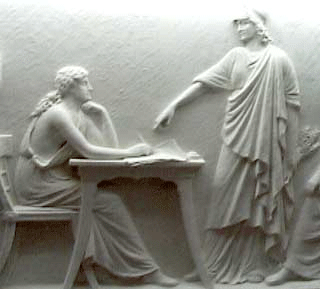
An image showing Minerva dictating the American Constitution. Minerva and the Creation of Man
The Palladium of Troy
City of Bath
Minerva as Weaver
Minerva and the Flute
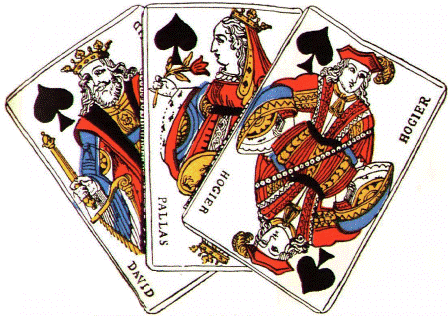
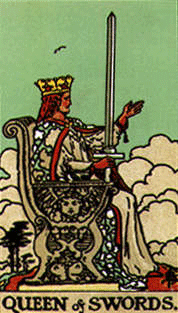
The Queen of Spades In regular playing decks Minerva is depicted as the Queen of Spades. The suit of Spades represents the warrior (knightly) class. The Hearts or Cups represent the clergy, the Clubs or Wands represent the peasant or worker class, and the diamonds or disks represent the merchant class. In the Tarot the Queen of Spades is equivalent with the Queen of Swords. In the Major Arcana, the card entitled Justice is assigned to the astrological sign of Libra. The esoteric symbolism of this both Libran cards (Queen of Swords and Justice) features prominently during the coronation of the Queen of England, Elizabeth Windsor.
The Queen of Spades (center card) depicts the goddess Minerva or Pallas Athena. The suit of spades corresponds with the Tarot's suit of Swords. Minerva would therefore be represented by the Tarot card known as the Queen of Swords. It is associated with the astrological sign of Libra, that is in turn connected to Ma'at, goddess of balance and harmony.
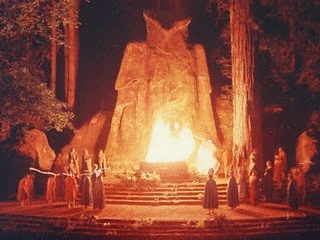
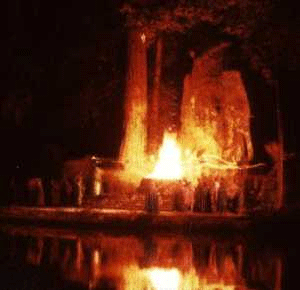
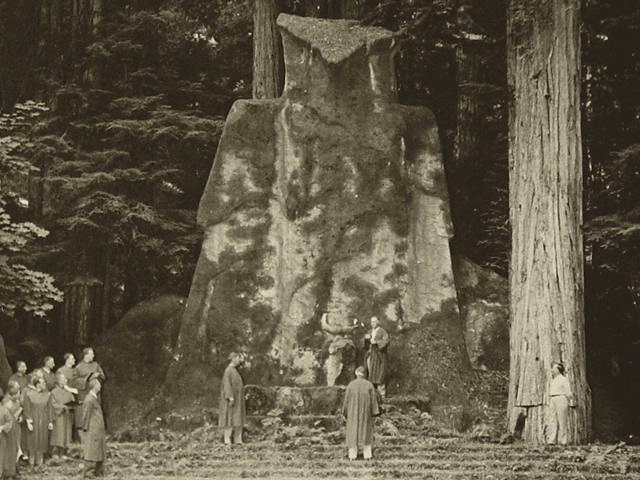
The Queen of Swords of the Tarot's Minor Arcana. This card is associated with the Egyptian goddess Ma'at. It is also connected to Libra, the seventh sign of the zodiac. Minerva was associated with the seventh month of the year. Interestingly, during the coronation ceremony of Elizabeth Windsor, the symbolism of this Tarot card was employed. In other words, esoteric symbolism pertaining to the goddesses Ma'at and Minerva was incorporated into the Queen's coronation ceremony. The Major Arcana card assigned to Libra is numbered eleven and entitled Justice. Interestingly, Minerva was the goddess of Justice. Statues of Minerva holding the scales of justice can be seen on innumerable buildings throughout the western world. Additional References http://en.wikipedia.org/wiki/Sulis What is the Cremation of Care? By Keelan Balderson January 7th, 2012 The Cremation of Care is a ritual performance undertaken at the yearly Bohemian Grove club, where a mock child sacrifice is made to an approximate 40ft stone owl. The ritual involves club members, often high ranking businessmen and politicians, cremating (getting rid of) their care (moral compass) in order to clear their conscience for the year ahead. Presumably the cremation of care is conducted because club members will be involved in unethical business deals and corrupt political decisions in the coming year and want to rid themselves of any internal guilt. This most likely just being symbolic.
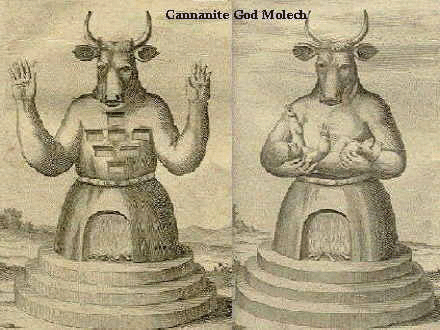
The Cremation of Care in action The owl idol used during the cremation of care might represent Minerva like other symbols of the club, the Babylonian demon Lilith or a rendition of Phoenician child sacrifice God Moloch. The narrator of the ritual names Phoenicia during the line, “As vanished Babylon and goodly Tyre, So shall they also vanish.” Tyre is another term for “an ancient seaport of Phoenicia”.[1]
The Bohemian Club logo
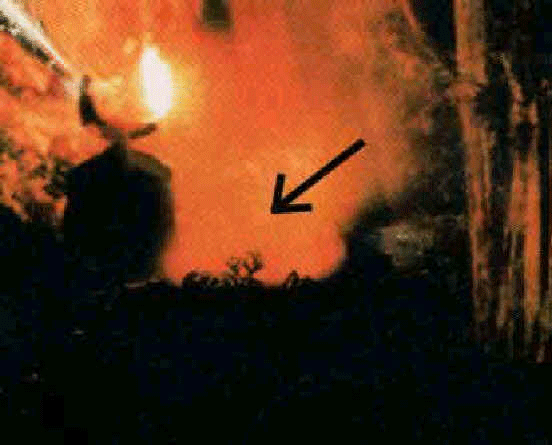
Moloch in the form of a bull accepting a sacrifice In his paper A Relative Advantage: Sociology of the San Francisco Bohemian Club, Dr. Peter Martin Phillips writes: This owl shrine was built in 1929 to serve as a ceremonial site for traditional Bohemian rituals and is used yearly for the Cremation of Care Ceremony. 1910 marked the first ceremonial burial of the cares of the world during the midsummer encampment and by 1913 Care was being cremated during the first weekend of the Grove (Annals, 1972) The Cremation of Care Ceremony was produced as a play in 1920, wherein a High Priest standing before a huge pre-historic alter, is confronted by Dull Care wrapped in the chains but not dead because Bacchus, the only warrior Care fears, is truly dead (18th Amendment was passed in 1919). Good Fellowship arrives, but lacks the sword necessary to kill Dull Care, and can only imprison him and Care still sings out through the prison window. At last Bohemia’s Spirit emerges and proclaims: Down with all fears! And up with your cheers, for his (Cares) mocking is turning to sobbing and tears. During his July 15, 2000 infiltration of the Grove, InfoWars head Alex Jones recorded a portion of the Cremation of Care ceremony. Other aspects of the cremation of care ritual involve the symbolic salvation of the trees by the club. (The Grove is based in redwood forestry near Monte Rio, California). Transcript: The Owl is in His leafy temple Weaving spiders come not here! Hail, Bohemians! Fools! Say Thou mocking spirit! Ye shall burn me once again! O Owl! Prince of all mortal wisdom No fire! O Great Owl of Bohemia! More Cremation of Care Images:
Care being cremated
Care, the mock child sacrifice
40ft Owl Idol used in the Cremation of Care: Moloch or Minerva
|