|
INSPECTOR GENERAL'S SURVEY OF THE CUBAN OPERATION AND ASSOCIATED DOCUMENTS |
|
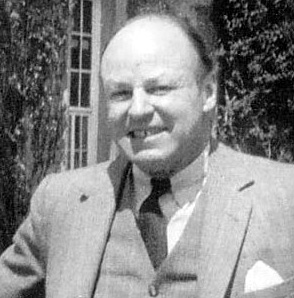
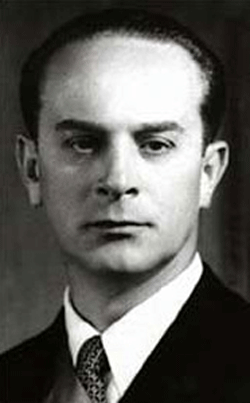
Gerry Droller was born in Germany in about 1905. Not a great deal is known about his early life but during the Second World War he worked closely with the Office of Strategic Services (OSS) and the Marquis in France. After the war Droller was recruited into the Central Intelligence Agency and for a while was a desk officer in Switzerland. According to one report, Droller "was responsible for the reorganization of West Germany and the consequent strengthening of German-American relations". Later he was transferred to Formosa where he helped Chiang Kai-Shek "organize his government and army". In 1954 Droller took part in the successful CIA operation to overthrow Jacobo Arbenz in Guatemala. Others involved in this project included Frank Wisner, Richard Bissell, Tracy Barnes, E. Howard Hunt, David Atlee Phillips, David Morales, Jake Esterline, Rip Robertson and William Pawley. In June 1960, Droller was sent to Miami in order to help overthrow the government of Fidel Castro in Cuba. Adopting the name, Frank Bender, he posed as a wealthy steel tycoon. According to one report Bender was given the "task of binding together a few of the most eligible anti-Castro groups into an organization that could not only oppose Castro politically, but count on a strong nucleus of trained guerrillas for active opposition and sabotage." Droller was also involved in the Bay of Pigs operation. Once again he worked closely with E. Howard Hunt. According to Jake Esterline, Droller and Hunt were brought in to "handle the political aspects of the operation". Manuel Artime met Droller in the summer of 1960. At the time he was using the name "Frank Bender" and had adopted the role of a Steel tycoon based in Miami. Droller told Artime: "I have nothing to do with the United States government. I am working for a powerful company that wants to fight communism." Jake Esterline accused Droller as being "insanely ambitious". Another CIA agent described him in 1960 as "a man in his fifties, perhaps 185 pounds, of medium build" who "smoked a pipe, wore glasses, was well mannered and displayed a good knowledge of history".
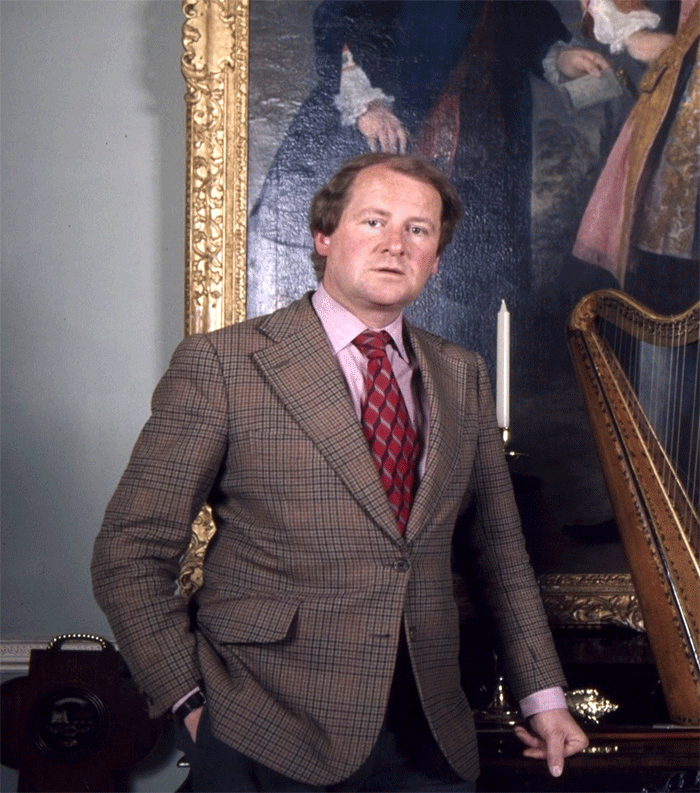
Frank Wisner was born in Laurel, Mississippi, in 1910. He was educated at Woodberry Forest School in Orange and the University of Virginia. He was a good sprinter and hurdler and in 1936 was asked to compete in the Olympic trials. After graduating Wisner worked as a Wall Street lawyer. However, he got bored and enlisted in the United States Navy six months before Pearl Harbor. He worked in the Navy's censor's office before managing to get a transfer to the Office of Strategic Services (OSS). In June. 1944, Wisner was sent to Turkey. Two months later he moved on to Romania. His task was to spy on the activities of the Soviet Union. While in Bucharest he became friendly with King Michael of Romania. Wisner became an informal adviser to the royal family. OSS agents penetrated the Romanian Communist Party and Wisner was able to discover that the Soviets intended to take over all of Eastern Europe. Wisner was disappointed by the US government's reaction to this news and he was forced to advise the Romanian royal family to go into exile. Wisner was transferred to the OSS station in Wiesbaden. While in Germany he served under Allen W. Dulles. Wisner also met Arthur Schlesinger, an OSS sergeant serving in Germany. He later claimed that Wisner had become obsessed with the Soviet Union: "He was already mobilizing for the cold war. I myself was no great admirer of the Soviet Union, and I certainly had no expectation of harmonious relations after the war. But Frank was a little excessive, even for me." During the war William Donovan as head of the OSS, had built up a team of 16,000 agents working behind enemy lines. The growth of the OSS brought conflict with John Edgar Hoover who saw it as a rival to the Federal Bureau of Investigation. He persuaded President Harry S. Truman that the OSS in peacetime would be an "American Gestapo". As soon as the war ended Truman ordered the OSS to be closed down leaving a small intelligence organization, the Strategic Services Unit (SSU) in the War Department. After leaving the OSS Wisner joined the Wall Street law firm, Carter Ledyard. However, in 1947, he was recruited by Dean Acheson, to work under Charles Saltzman, at the State Department's Office of Occupied Territories. Wisner moved to Washington where he associated with a group of journalists, politicians and government officials that became known as the Georgetown Set. This included Frank Wisner, George Kennan, Dean Acheson, Richard Bissell, Desmond FitzGerald, Joseph Alsop, Stewart Alsop, Tracy Barnes, Thomas Braden, Philip Graham, David Bruce, Clark Clifford, Walt Rostow, Eugene Rostow, Chip Bohlen, Cord Meyer, James Angleton, William Averill Harriman, John McCloy, Felix Frankfurter, John Sherman Cooper, James Reston, Allen W. Dulles and Paul Nitze. Most men brought their wives to these gatherings. Members of what was later called the Georgetown Ladies' Social Club included Katharine Graham, Mary Pinchot Meyer, Sally Reston, Polly Wisner, Joan Braden, Lorraine Cooper, Evangeline Bruce, Avis Bohlen, Janet Barnes, Tish Alsop, Cynthia Helms, Marietta FitzGerald, Phyllis Nitze and Annie Bissell. Wisner remained concerned about the spread of communism and began lobbying for a new intelligence agency. He gained support for this from James Forrestal, the Defense Secretary. With the help of George Kennan, the Office of Special Projects was created in 1948. Wisner was appointed director of the organization. Soon afterwards it was renamed the Office of Policy Coordination (OPC). This became the espionage and counter-intelligence branch of the Central Intelligence Agency. Wisner was told to create an organization that concentrated on "propaganda, economic warfare; preventive direct action, including sabotage, anti-sabotage, demolition and evacuation measures; subversion against hostile states, including assistance to underground resistance groups, and support of indigenous anti-Communist elements in threatened countries of the free world." Later that year Wisner established Operation Mockingbird, a program to influence the American media. Wisner recruited Philip Graham (Washington Post) to run the project within the industry. According to Deborah Davis (Katharine the Great): "By the early 1950s, Wisner 'owned' respected members of the New York Times, Newsweek, CBS and other communications vehicles." After 1953 the network was overseen by Allen W. Dulles, director of the Central Intelligence Agency. By this time Operation Mockingbird had a major influence over 25 newspapers and wire agencies. These organizations were run by people with well-known right-wing views such as William Paley (CBS), Henry Luce (Time Magazine and Life Magazine), Arthur Hays Sulzberger (New York Times), Jerry O'Leary (Washington Star), Hal Hendrix (Miami News), Barry Bingham Sr., (Louisville Courier-Journal), James Copley (Copley News Services) and Joseph Harrison (Christian Science Monitor). According to Alex Constantine (Mockingbird: The Subversion Of The Free Press By The CIA), in the 1950s, "some 3,000 salaried and contract CIA employees were eventually engaged in propaganda efforts. One of the most important journalists under the control of Operation Mockingbird was Joseph Alsop, whose articles appeared in over 300 different newspapers. Other journalists willing to promote the views of the Central Intelligence Agency included Stewart Alsop (New York Herald Tribune), Ben Bradlee (Newsweek), James Reston (New York Times), Charles Douglas Jackson (Time Magazine), Walter Pincus (Washington Post), William C. Baggs (Miami News), Herb Gold (Miami News) and Charles Bartlett (Chattanooga Times). These journalists sometimes wrote articles that were unofficially commissioned by Meyer was based on leaked classified information from the CIA. During this period Wisner worked closely with Kim Philby, the British Secret Intelligence Service (SIS) liaison in Washington. Wisner grew very fond of Philby and was unaware that he was a Soviet spy betraying all his operations to his masters in Moscow. However, he began to get suspicious in 1951 and he asked William Harvey to investigate Philby. Harvey reported back in June 1951 that he was convinced that Philby was a KGB spy. As a result Philby was forced to leave the United States. The Office of Policy Coordination (OPC) was funded by siphoning of funds intended for the Marshall Plan. Some of this money was used to bribe journalists and publishers. Wisner was constantly looked for ways to help convince the public of the dangers of communism. In 1954 Wisner arranged for the funding the Hollywood production of Animal Farm, the animated allegory based on the book written by George Orwell. Another project started by Wisner was called Operation Bloodstone. This included recruiting former German officers and diplomats who could be used in the covert war against the Soviet Union. This included former members of the Nazi Party such as Gustav Hilger and Hans von Bittenfield. Later, John Loftus, a prosecutor with the Office of Special Investigations at the U.S. Justice Department, accused Wisner of methodically recruiting Nazi war criminals. As one of the agents involved in Operation Bloodstone, Harry Rositzke, pointed out, Wisner was willing to use anyone "as long as he was anti-communist". Wisner began having trouble with J. Edgar Hoover. He described the OPC as "Wisner's gang of weirdos" and began carrying out investigations into their past. It did not take him long to discover that some of them had been active in left-wing politics in the 1930s. This information was passed to Joseph McCarthy who started making attacks on members of the OPC. Hoover also passed to McCarthy details of an affair that Wisner had with Princess Caradja in Romania during the war. Hoover, claimed that Caradja was a Soviet agent. Hoover did not realise what he was taking on. Wisner unleashed Operation Mockingbird on McCarthy. Drew Pearson, Joe Alsop, Jack Anderson, Walter Lippmann and Ed Murrow all went into attack mode and McCarthy was permanently damaged by the press coverage orchestrated by Wisner. In August, 1952, the Office of Policy Coordination and the Office of Special Operations (the espionage division) were merged to form the Directorate of Plans (DPP). Wisner became head of this new organization and Richard Helms became his chief of operations. The DPP now accounted for three quarters of the CIA budget and 60% of its personnel. At this time Wisner began plotting the overthrow of Mohammed Mossadegh in Iran. He had upset the US government by nationalizing Iran's oil industry. Mossadegh also abolished Iran's feudal agriculture sector and replaced with a system of collective farming and government land ownership. On April 4, 1953, Wisner persuaded Allen W. Dulles to approve $1 million to be used "in any way that would bring about the fall of Mossadegh." Kermit Roosevelt, the grandson of Theodore Roosevelt, was put in charge of what became known as Operation Ajax. According to Donald N. Wilber, who was involved in this CIA plot to remove Mossadegh from power, in early August, 1953, Iranian CIA operatives, pretending to be socialists, threatened Muslim leaders with "savage punishment if they opposed Mossadegh," thereby giving the impression that Mossadegh was cracking down on dissent. This resulted in the religious community turning against Mossadegh. Iranians took to the streets against Mossadegh. Funded with money from the CIA and MI6, the pro-monarchy forces quickly gained the upper hand. The military now joined the opposition and Mossadegh was arrested on August 19, 1953. President Dwight Eisenhower was delighted with this result and asked Wisner to arrange for Kermit Roosevelt to give him a personal briefing on Operation Ajax. Wisner's other great success was the overthrow of Jacobo Arbenz. He had been elected as President of Guatemala in March, 1951. Arbenz began to tackle Guatemala's unequal land distribution. He said that the country needed "an agrarian reform which puts an end to the latifundios and the semi-feudal practices, giving the land to thousands of peasants, raising their purchasing power and creating a great internal market favorable to the development of domestic industry." In March 1953, 209,842 acres of United Fruit Company's uncultivated land was taken by the government which offered compensation of $525,000. The company wanted $16 million for the land. While the Guatemalan government valued $2.99 per acre, the American government valued it at $75 per acre. United Fruit main shareholder, Samuel Zemurray, United Fruit Company's largest shareholder, organized an anti-Arbenz campaign in the American media. This included the claim that Guatemala was the beginning of "Soviet expansion in the Americas". The Central Intelligence Agency decided that Arbenz had to be removed from power. Wisner, as head of the Office of Policy Coordination (OPC), took overall responsibility for the operation. Also involved was Richard Bissell, head of the Directorate for Plans, an organization instructed to conduct covert anti-Communist operations around the world. The plot against Arbenz therefore became part of Executive Action (a plan to remove unfriendly foreign leaders from power). Jake Esterline was placed in charge of the CIA's Washington task force in the overthrow of Jacobo Arbenz in Guatemala. Tracy Barnes was field commander of what became known as Operation Success. David Atlee Phillips was appointed to run the propaganda campaign against Arbenz's government. According to Phillips he initially questioned the right of the CIA to interfere in Guatemala: In his autobiography Phillips claims he said to Barnes: "But Arbenz became President in a free election. What right do we have to help someone topple his government and throw him out of office?" However, Barnes convinced him that it was vital important that the Soviets did not establish a "beachhead in Central America". The CIA propaganda campaign included the distribution of 100,000 copies of a pamphlet entitled Chronology of Communism in Guatemala. They also produced three films on Guatemala for showing free in cinemas. Phillips, along with E. Howard Hunt, was responsible for running the CIA's Voice of Liberation radio station. Faked photographs were distributed that claimed to show the mutilated bodies of opponents of Arbenz. William (Rip) Robertson was also involved in the campaign against Arbenz. The CIA began providing financial and logistic support for Colonel Carlos Castillo. With the help of resident Anastasio Somoza, Castillo had formed a rebel army in Nicaragua. It has been estimated that between January and June, 1954, the CIA spent about $20 million on Castillo's army. The Guatemalan Foreign Minister, Guillermo Toriello, asked the United Nations for help against the covert activities of the United States. Toriello accused the United States government of categorizing "as communism every manifestation of nationalism or economic independence, any desire for social progress, any intellectual curiosity, and any interest in progressive liberal reforms." President Dwight Eisenhower responded by claiming that Guatemala had a "communist dictatorship.. had established... an outpost on this continent to the detriment of all the American nations". Secretary of State John Foster Dulles added that the Guatemala people were living under a "communist type of terrorism". On 18th June, 1954, aircraft dropped leaflets over Guatemala demanding that Arbenz resign immediately or else the county would be bombed. CIA's Voice of Liberation also put out similar radio broadcasts. This was followed by a week of bombing ports, ammunition dumps, military barracks and the international airport. Guillermo Toriello appealed to the United Nations to help protect Guatemalan government. Henry Cabot Lodge tried to block the Security Council from discussing a resolution to send an investigation team to Guatemala. When this failed he put pressure on Security Council members to vote against the resolution. Britain and France were both initially in favour but eventually buckled under United States pressure and agreed to abstain. As a result the resolution was defeated by 5 votes to 4. The UN Secretary-General Dag Hammarskjold was so upset by the actions of the USA that he considered resigning from his post. Carlos Castillo's collection of soldiers now crossed the Honduran-Guatemalan border. His army was outnumbered by the Guatemalan Army. However, the CIA Voice of Liberation successfully convinced Arbenz's supporters that two large and heavily armed columns of invaders were moving towards Guatemala City. The CIA was also busy bribing Arbenz's military commanders. It was later discovered that one commander accepted $60,000 to surrender his troops. Ernesto Guevara attempted to organize some civil militias but senior army officers blocked the distribution of weapons. Arbenz now believed he stood little chance of preventing Castillo gaining power. Accepting that further resistance would only bring more deaths he announced his resignation over the radio. Castillo's new government was immediately recognised by President Dwight Eisenhower. Castillo now reversed the Arbenz reforms. In July 19, 1954, he created the National Committee of Defense Against Communism and decreed the Preventive Penal Law Against Communism to fight against those who supported Arbenz when he was in power. Over the next few weeks thousands were arrested on suspicion of communist activity. A large number of these prisoners were tortured or killed. The removal of Jacobo Arbenz resulted in several decades of repression. Later, several of the people involved in Operation Success, including Richard Bissell and Tracy Barnes, regretted the outcome of the Guatemala Coup. Wisner managed to get a copy of the speech that Nikita Khrushchev made at the 20th Party Congress in February, 1956, Khrushchev launched an attack on the rule of Joseph Stalin. He condemned the Great Purge and accused Stalin of abusing his power. He announced a change in policy and gave orders for the Soviet Union's political prisoners to be released. Wisner leaked details of the speech to the New York Times who published it on 2nd June, 1956. Khrushchev's de-Stalinzation policy encouraged people living in Eastern Europe to believe that he was willing to give them more independence from the Soviet Union. Over the next few weeks riots took place in Poland and East Germany. In Hungary the prime minister Imre Nagy removed state control of the mass media and encouraged public discussion on political and economic reform. Nagy also released anti-communists from prison and talked about holding free elections and withdrawing Hungary from the Warsaw Pact. Khrushchev became increasingly concerned about these developments and on 4th November 1956 he sent the Red Army into Hungary. Wisner expected the United States would help the Hungarians. As Thomas Polgar later pointed out: "Sure, we never said rise up and revolt, but there was a lot of propaganda that led the Hungarians to believe that we would help." Wisner, who had been involved in creating this propaganda, told friends that he felt the American government had let Hungary down. He pointed out that they had spent a great deal of money on Radio Free Europe "to get these people to revolt". Wisner added that he felt personally betrayed by this behaviour. During the Hungarian Uprising an estimated 20,000 people were killed. Wisner told Clare Boothe Luce, the American ambassador in Italy: "All these people are getting killed and we weren't doing anything, we were ignoring it." In December, 1956, Wisner had a mental breakdown and was diagnosed as suffering from manic depression. During his absence Wisner's job was covered by his chief of operations, Richard Helms. Wisner's friends believed the illness was triggered by the failure of the Hungarian Uprising. A close friend, Avis Bohlen said he "was so depressed about how the world was going... he felt we were losing the Cold War." The CIA sent Wisner to the Sheppard-Pratt Institute, a psychiatric hospital near Baltimore. He was prescribed psychoanalysis and shock therapy (electroconvulsive treatment). It was not successful and still suffering from depression, he was released from hospital in 1958. Wisner was too ill to return to his post as head of the DDP. Allen W. Dulles therefore sent him to London to be CIA chief of station in England. Dulles decided that Richard Bissell rather than Richard Helms should become the new head of the DPP. Wisner arrived in England in September, 1959. His work involved planning a coup in Guyana, a country that had a left-wing government. In April 1962 Richard Helms recalled Wisner to Washington. Four months later he agreed to retire from the CIA. Frank Wisner killed himself with one of his son's shotguns on 29th October, 1965.
Desmond FitzGerald was born in 1910. Educated at St. Mark's, Massachusetts and Harvard University, he served as a member of the Office of Strategic Services in the Far East during the Second World War. He joined General Joe Stilwell and took part in his campaign to recapture Burma from the Japanese. After the war FitzGerald worked as a lawyer in New York City. He became active in the Republican Party and helped establish the Committee of Five Million, an organization that investigated political corruption in the city. FitzGerald had been friends with Frank Wisner since before the war. Wisner persuaded him to become executive officer of the Office of Policy Coordination's Far Eastern Division. OPC was the espionage and counter-intelligence branch of the Central Intelligence Agency. One of FitzGerald's tasks involved arranging for over 200 agents to be parachuted into China. In a two year period 101 were killed by local peasants and another were captured and imprisoned. He also purchased $152 million worth of foreign weapons and ammunition for guerrilla groups that never existed in China. Based in Taiwan he organized covert operations during the Korean War. Later he became CIA station chief in the Philippines and Japan. Eventually he became head of the CIA's Far Eastern Division (1957-1962). During this period he worked closely with Colonel Edward Lansdale. In 1962 FitzGerald was appointed Chief of the Cuban Task Force. John F. Kennedy was determined to overthrow Fidel Castro. He created a committee (SGA) charged with overthrowing Castro's government. The SGA, chaired by Robert F. Kennedy (Attorney General), included John McCone (CIA Director), Alexis Johnson (State Department), McGeorge Bundy (National Security Adviser), Roswell Gilpatric (Defence Department), General Lyman Lemnitzer (Joint Chiefs of Staff) and General Maxwell Taylor. Although not officially members, Dean Rusk (Secretary of State) and Robert S. McNamara (Secretary of Defence) also attending meetings. Robert Kennedy put FitzGerald under a lot of pressure to arrange the assassination of Fidel Castro. CIA agent, Sam Halpern, later claimed that "Bobby Kennedy was a bad influence on Des. He reinforced his worst instincts." Thomas Parrott, the secretary of SGA, claimed that FitzGerald had trouble dealing with Kennedy: "He was arrogant, he knew it all, he knew the answer to everything. He sat there, tie down, chewing gum, his feet up on the desk. His threats were transparent. It was, "If you don't do it, I tell my big brother on you." FitzGerald also became concerned when John F. Kennedy invited Tony Varona to the White House. As FitzGerald pointed out, Varona had been recruited by Johnny Roselli to kill Fidel Castro. As Evan Thomas pointed out: "to bring an assassin into the Oval Office was hardly the way to preserve plausible deniability." FitzGerald personally organized three different plots to assassinate Fidel Castro. This included working with Rolando Cubela, a senior official in Castro's government. He was given the codename AM/LASH and reported to JM/WAVE. However, Joseph Langosch, of the Special Affairs Staff, suspected that Cubela was a "dangle" (a double agent recruited by Castro to penetrate the American plots against him". This idea was reinforced when Cubela refused to take a lie-detector test. In September, 1963, Cubela had a meeting with the CIA in Sao Paulo, Brazil. It was suggested that Cubela should assassinate Fidel Castro. According to a CIA report Cubela asked for a meeting with Robert Kennedy: "for assurances of U.S. moral support for any activity Cubela under took in Cuba." This was not possible but FitzGerald, now Chief of the Cuban Task Force, agreed to meet Cubela. Ted Shackley was opposed to the idea as he was now convinced that Cubela was a double-agent. FitzGerald and Nestor Sanchez met Cubela met in Paris on 29th October, 1963. Cubela requested a "high-powered, silenced rifle with an effective range of hundreds of thousands of yards" in order to kill Fidel Castro. The CIA refused and instead insisted on Cubela used poison. On 22nd November, 1963, FitzGerald handed over a pen/syringe. He was told to use Black Leaf 40 (a deadly poison) to kill Castro. As Cubela was leaving the meeting, he was informed that President John F. Kennedy had been assassinated. On 7th April, 1964, the SGA officially brought an end to the sabotage operations against Cuba. John McCone, director of the CIA, stated that President Lyndon B. Johnson had abandoned the goal of overthrowing or "eliminating" Castro. However, FitzGerald continued to work with Cubela who was now put in touch with Manuel Artime. They met for the first time on 27th December, 1964. At the Madrid meeting Cubela again asked for a FAL rifle and silencer. A CIA report suggests that a "Belgian FAL rifle with silencer" was given to Cubela on 11th February, 1965. On 17th June, 1965, FitzGerald was appointed as as head of the Directorate for Plans. For days later the CIA sent out a cable to all stations directing termination of all contact with Cubela and his associates. It stated that there was "convincing proof that entire AMLASH group insecure and that further contact with key members of group constitutes menace to CIA operations against Cuba as well as to the security of CIA staff personnel in western Europe." The CIA had been informed that one of Cubela's associates was having secret meetings with Cuba intelligence. Eladio del Valle had also told the CIA that Cubela was secretly in league with Santo Trafficante. It is claimed that FitzGerald came to the conclusion that Trafficante was feeding back information to Fidel Castro in the hope of recovering his gambling dynasty. Richard Helms became director of the Central Intelligence Agency in June, 1966. He immediately put FitzGerald under pressure to sack Tracy Barnes. The following month FitzGerald told Barnes his CIA career was over. FitzGerald told his friend, Thomas Parrott: "It was the hardest thing I ever did" In January, 1967, FitzGerald discovered that Ramparts, a left-wing publication, had discovered that the CIA had been secretly funding the National Student Association. FitzGerald ordered Edgar Applewhite to organize a campaign against the magazine. Applewhite later told Evan Thomas for his book, The Very Best Men: "I had all sorts of dirty tricks to hurt their circulation and financing. The people running Ramparts were vulnerable to blackmail. We had awful things in mind, some of which we carried off." This dirty tricks campaign failed to stop Ramparts publishing this story in February, 1967. As well as reporting CIA funding of the National Student Association it exposed the whole system of anti-communist front organizations in Europe, Asia, and South America was essentially blown. FitzGerald became increasingly concerned about the mental state of James Angleton, the CIA's counterintelligence section. FitzGerald was convinced that Angleton was suffering from paranoia. He was also concerned by his excessive drinking. However, FitzGerald failed to get support from Richard Helms and Angleton held onto his job. Desmond FitzGerald died of a heart attack while playing tennis in Virginia on 23rd July, 1967.
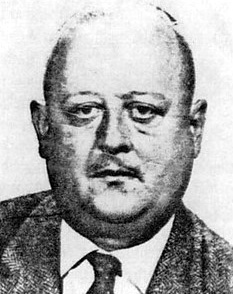
William Harvey, the son of a lawyer, was born in Danville, Indiana, in 1915. After graduating from Indiana University Law School he opened a one-man law practice in Kentucky. In December, 1940, he joined the Federal Bureau of Investigation. In July 1947 Hoover broke FBI regulations that an agent had to be on two-hour call at all times. J. Edgar Hoover ordered that Harvey should be punished by being reassigned to Indianapolis. Harvey refused the post and resigned. Soon afterwards Harvey joined the Central Intelligence Agency (CIA). Frank Wisner, the head of the Office of Policy Coordination (OPC) asked Harvey to investigate Kim Philby, the British Secret Intelligence Service (SIS) liaison in Washington. Harvey reported back in June 1951 that he was convinced that Philby was a KGB spy. As a result Philby was forced to leave the United States. Harvey was sent to West Germany where he worked with Ted Shackley at the CIA Berlin Station. In 1955 he was commander of Operation Gold which succeeded in tapping Soviet phone lines via a 500-yard tunnel into East Berlin. Until it was detected a year later, the tap gave the CIA information about the military plans of the Soviet Union. It was only later that it was discovered that George Blake, a MI6 agent in Berlin, had told the KGB about the tunnel when it was first built. Tom Parrott, who worked with Harvey in Berlin claims that Harvey was "anti-elitist". He disliked and resented the "Ivy Leaguers in the CIA". According to another agent, Carleton Swift: "He (Harvey believed that the elite had a guilty conscience. Guilt was the upper-class pathology. Actually, he was envious as hell. He wanted to be part of the establishment. He knew he wasn't, so he hated it." According to Swift he ruined several people's careers because of their elite background. Harvey was also involved a policy that was later to become known as Executive Action (a plan to remove unfriendly foreign leaders from power). This including a coup d'état that overthrew the Guatemalan government of Jacobo Arbenz in 1954 after he introduced land reforms and nationalized the United Fruit Company. In March I960, President Dwight Eisenhower of the United States approved a Central Intelligence Agency (CIA) plan to overthrow Fidel Castro. The plan involved a budget of $13 million to train "a paramilitary force outside Cuba for guerrilla action." The strategy was organised by Richard Bissell and Richard Helms. After the Bay of Pigs disaster President John F. Kennedy created a committee (SGA) charged with overthrowing Castro's government. The SGA, chaired by Robert F. Kennedy (Attorney General), included John McCone (CIA Director), McGeorge Bundy (National Security Adviser), Alexis Johnson (State Department), Roswell Gilpatric (Defence Department), General Lyman Lemnitzer (Joint Chiefs of Staff) and General Maxwell Taylor. Although not officially members, Dean Rusk (Secretary of State) and Robert S. McNamara (Secretary of Defence) also attending meetings. At a meeting of this committee at the White House on 4th November, 1961, it was decided to call this covert action program for sabotage and subversion against Cuba, Operation Mongoose. Attorney General Robert F. Kennedy also decided that General Edward Lansdale (Staff Member of the President's Committee on Military Assistance) should be placed in charge of the operation. The CIA JM/WAVE station in Miami served as operational headquarters for Operation Mongoose. The head of the station was Ted Shackley and over the next few months became very involved in the attempt to overthrow Fidel Castro. One of Lansdale's first decisions was to appoint Harvey as head of Task Force W. Harvey's brief was to organize a broad range of activities that would help to bring down Castro's government. On 12th March, 1961, Harvey arranged for CIA operative, Jim O'Connell, to meet Sam Giancana, Santo Trafficante, Johnny Roselli and Robert Maheu at the Fontainebleau Hotel. During the meeting O'Connell gave poison pills and $10,000 to Rosselli to be used against Fidel Castro. As Richard D. Mahoney points out in his book: Sons and Brothers: "Late one evening, probably March 13, Rosselli passed the poison pills and the money to a small, reddish-haired Afro-Cuban by the name of Rafael "Macho" Gener in the Boom Boom Room, a location Giancana thought "stupid." Rosselli's purpose, however, was not just to assassinate Castro but to set up the Mafia's partner in crime, the United States government. Accordingly, he was laying a long, bright trail of evidence that unmistakably implicated the CIA in the Castro plot. This evidence, whose purpose was blackmail, would prove critical in the CIA's cover-up of the Kennedy assassination." During the Cuban Missile Crisis, Robert Kennedy instructed CIA director John McCone, to halt all covert operations aimed at Cuba. A few days later he discovered that Harvey had ignored this order and had dispatched three commando teams into Cuba to prepare for what he believed would be an inevitable invasion. Kennedy was furious and as soon as the Cuban Missile Crisis was over, Harvey was removed as commander of ZR/RIFLE. On 30th October, 1962, RFK terminated "all sabotage operations" against Cuba. As a result of President Kennedy's promise to Nikita Khrushchev that he would not invade Cuba, Operation Mongoose was disbanded. Harvey was now sent to Italy where he became Chief of Station in Rome. Harvey knew that Robert Kennedy had been responsible for his demotion. A friend of Harvey's said that he "hated Bobby Kennedy's guts with a purple passion". Harvey continued to keep in contact with Johnny Roselli. According to Richard D. Mahoney: "On April 8, Rossrlli flew to New York to meet with Bill Harvey. A week later, the two men met again in Miami to discuss the plot in greater detail... On April 21 he (Harvey) flew from Washington to deliver four poison pills directly to Rosselli, who got them to Tony Varona and hence to Havana. That same evening, Harvey and Ted Shackley, the chief of the CIA's south Florida base, drove a U-Haul truck filled with the requested arms through the rain to a deserted parking lot in Miami. They got out and handed the keys to Rosselli." Some researchers such as Gaeton Fonzi, Larry Hancock, Richard D. Mahoney, Noel Twyman, James Richards and John Simkin believe that Harvey was involved in the assassination of John F. Kennedy. William Harvey died as a result of complications from heart surgery in June, 1976.
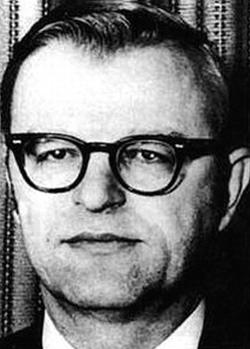
Theodore (Ted) Shackley was born in 1927. His mother was a Polish immigrant and he spent much of his childhood living with his grandmother. Shackley was raised in West Palm Beach, Florida and in October, 1945, joined the United States Army. After basic training he was sent to Germany where he was part of the Allied occupation force. As a result of his knowledge of the Polish language he was recruited into the U.S. Army Counter Intelligence Corp. In 1947 he was sent to study at the University of Maryland. Shackley returned to Germany in 1951 as a 2nd Lieutenant. As a member of Army Counter Intelligence Corp he was involved in recruiting Polish agents. He was also recruited by the Central Intelligence Agency. By 1953 he was working for William Harvey at the CIA Berlin Station. Shackley, whose nickname was the "Blond Ghost" (because he hated to be photographed) became involved in CIA's Black Operations. This involved a policy that was later to become known as Executive Action (a plan to remove unfriendly foreign leaders from power). This including a coup d'état that overthrew the Guatemalan government of Jacobo Arbenz in 1954 after he introduced land reforms and nationalized the United Fruit Company. In 1962 Shackley was appointed by William Harvey as deputy chief of JM WAVE, the CIA station in Miami. In April, 1962, Shackley was involved in delivering supplies to Johnny Roselli as part of the plan to assassinate Fidel Castro. Later that year he became head of the station that served as operational headquarters for Operation Mongoose. He was also responsible for gathering intelligence and recruiting spies in Cuba. Most of the anti-Castro Cubans that the CIA managed to infiltrate into Cuba were captured and either imprisoned or executed. In the winter of 1962 Eddie Bayo claimed that two officers in the Red Army based in Cuba wanted to defect to the United States. Bayo added that these men wanted to pass on details about atomic warheads and missiles that were still in Cuba despite the agreement that followed the Cuban Missile Crisis. Bayo's story was eventually taken up by several members of the anti-Castro community including William Pawley, Gerry P. Hemming, John Martino, Felipe Vidal Santiago and Frank Sturgis. Pawley became convinced that it was vitally important to help get these Soviet officers out of Cuba. William Pawley contacted Shackley at JM WAVE. Shackley decided to help Pawley organize what became known as Operation Tilt. He also assigned Rip Robertson, a fellow member of the CIA in Miami, to help with the operation. David Morales, another CIA agent, also became involved in this attempt to bring out these two Soviet officers. In June, 1963, a small group, including William Pawley, Eddie Bayo, Rip Robertson, John Martino, and Richard Billings, a journalist working for Life Magazine, secretly arrived in Cuba. They were unsuccessful in their attempts to find these Soviet officers and they were forced to return to Miami. Bayo remained behind and it was rumoured that he had been captured and executed. However, his death was never reported in the Cuban press. Later that year William Harvey, head of ZR/RIFLE, recruited Shackley and David Morales to the Task Force W project. In 1966 Shackley was placed in charge of CIA secret war in Laos. Tom Clines was appointed as his deputy. Shackley recruited David Morales to take charge at Pakse, a black operations base focused on political paramilitary action within Laos. Pakse was used to launch military operations against the Ho Chi Minh Trial. In 1968 Shackley became Chief of Station in Vietnam and headed the Phoenix Program. When Shackley was recalled in February, 1972, he was put in charge of the CIA's Western Hemisphere Division. One of his major tasks was to undermine Philip Agee, an ex-CIA officer who was writing a book on the CIA. The book was eventually published as Inside the Company, but did not include the information that would have permanently damaged the reputation of the CIA. Shackley also played an important role in the overthrow of Salvador Allende in Chile. As his biographer, David Corn points out: "Salvador Allende died during the coup. When the smoke cleared, General Augusto Pinochet, the head of a military junta, was in dictatorial control... Elections were suspended. The press was censored. Allende supporters and opponents of the junta were jailed. Torture centers were established. Executions replaced soccer matches in Santiago's stadiums. Bodies floated down the Mapocho river. Due in part to the hard work of Shackley and dozens of other Agency bureaucrats and operatives, Chile was free of the socialists." By 1975 he was promoted to Deputy Director of Operations, where he served under George H. W. Bush. He therefore became second-in-command of all CIA covert activity. Shackley was a close friend of Edwin Wilson, an ex-CIA agent, who became an arms dealer. Wilson was jailed for shipping plastic explosive and detonators to Libya. Stansfield Turner, the head of the CIA, believed Shackley was closely involved in this affair and he was forced to resign. CIA chief, Richard Helms, reportedly said: Ted is what we call in the spook business a quadruple threat - Drugs, Arms, Money and Murder." After leaving the CIA Shackley formed his own company, Research Associates International, which specialized in providing intelligence to business. He took part in the October Surprise which resulted in the American hostages in Iran being held until Ronald Reagan had defeated Jimmy Carter at the 1980 elections. Soon after Reagan was elected the hostages were released. During the Ronald Reagan administration, Shackley and some of his former CIA friends, Thomas Clines and Richard Secord, became involved in the Iran-Contra affair. Clines was sent to prison but Shackley managed to escape prosecution. Ted Shackley died in Bethesda, Maryland, in December 2002. His autobiography, Spymaster: My Life in the CIA, will be published in April, 2005.
Jacobo Arbenz Guzmán, the son of a Swiss immigrant, was born in Quetzaltenango, Guatemala, on 14th September, 1913. His father committed suicide when Arbenz was still very young and was raised by his Guatemalan mother. Arbenz joined the army and in 1935 graduated as sub-lieutenant. He joined the Guatemalan Military Academy in 1937 and became a teacher of science and history. In 1939 Arbenz met and fell in love with Maria Cristina Vilanova. They were married soon afterwards. Maria was a socialist and soon converted her husband to this political philosophy. During this period Maria developed a strong friendship with the Chilean Communist leader Virginia Bravo and the Salvadorian Communist exile Matilde Elena Lopez. These three women organized regular political discussions at the Arbenz family home. Arbenz became a secret opponent of Guatemalan dictator, Jorge Ubico. In June, 1944, teachers in Guatemala went on strike for higher pay. Other professions joined the teachers in street demonstrations. Ubico sent in the army and over 200 protesters were killed. This included Maria Chinchilla, the leader of the teachers' union movement. A few days later, a group of over 300 teachers, lawyers, doctors, and businessmen handed a petition to Ubico in which demanded that the demonstrators' actions were legitimate. At this stage, the United States withdrew its support of Ubico and he was forced to resign. General Francisco Ponce became Guatemala's new dictator. In an attempt to gain public support, Ponce announced democratic elections. He choose himself as presidential candidate, while the opposition picked the former teacher, Juan Jose Arevalo, who was living in exile in Argentina. Afraid that he would lose the election, Ponce ordered Arevalo's arrest as soon as he arrived back in Guatemala. Appalled by the actions of Ponce, Arbenz and a fellow junior officer, Major Francisco Arana, organized a military rebellion. They were quickly joined by other officers and attacked the pro-Ponce military and police forces. Ponce and Ubico were forced to abandon the country and Arbenz and Arana created a provisional junta with businessman, Jorge Toriello, and promised free and democratic elections. Arbenz and Arana introduced a new constitution. Censorship was brought to an end, men and women were declared equal before the law, racial discrimination was declared a crime, higher education was free of governmental control, private monopolies were banned, workers were assured a forty-hour week, payment in coupons was forbidden, and labour unions were legalized. Arevalo won the first elections and attempted to begin an age of reforms in Guatemala. Juan Jose Arevalo won the first elections. However, political groups continued to resort to violence and in 1949 Major Francisco Arana was murdered. The following year Arbenz defeated Manuel Ygidoras to become Guatemala's new president. Arbenz, who obtained 65% of the votes, took power on 15th March, 1951. Arbenz's first action was to order the construction of a government run port to compete with United Fruit's Puerto Barrios. He also attempted to break the International Railways of Central America's (IRCA) transportation monopoly by building a new highway to the Atlantic. Another measure was to build a national hydroelectric plant to offer a cheaper energy alternative different from the American controlled electricity monopoly. Arbenz also proposed a new system of progressive income tax. Arbenz also began to tackle Guatemala's unequal land distribution. He said that the country needed "an agrarian reform which puts an end to the latifundios and the semi-feudal practices, giving the land to thousands of peasants, raising their purchasing power and creating a great internal market favorable to the development of domestic industry." Arbenz's agrarian reform was approved in 1952. This empowered the government to expropriate uncultivated portions of large plantations. Farms smaller than 223 acres were not subject to this law. The expropriated lands would be distributed only to landless peasants in plots not bigger of 42.5 acres each, and the new owners were not allowed to sell them or gain profits through speculation. The new owners would pay to the government a rental fee of 5% the value of the food produced. The Agrarian Reform managed to give 1.5 million acres to around 100,000 families for which the government paid $8,345,545 in bonds. Among the expropriated landowners was Arbenz himself, who had become into a landowner with the dowry of his wealthy wife. Around 46 farms were given to groups of peasants who organized themselves in cooperatives. The main opponent to Arbenz's reforms were the United Fruit Company. The company owned 550,000 acres on the Atlantic coast, 85% of which was not cultivated. In March 1953, 209,842 acres of United Fruit Company's uncultivated land was taken by the government which offered compensation of $525,000. The company wanted $16 million for the land. While the Guatemalan government valued $2.99 per acre, the American government valued it at $75 per acre. United Fruit main shareholder, Samuel Zemurray, United Fruit Company's largest shareholder, organized an anti-Arbenz campaign in the American media. This included the claim that Guatemala was the beginning of "Soviet expansion in the Americas". The Central Intelligence Agency (CIA) also became involved in the campaign against Arbenz. Frank Wisner, head of the Office of Policy Coordination (OPC), took overall responsibility for the operation. Also involved was Richard Bissell, head of the Directorate for Plans, an organization instructed to conduct covert anti-Communist operations around the world. The plot against Arbenz became part of Executive Action (a plan to remove unfriendly foreign leaders from power). Tracy Barnes was placed in charge of what became known as Operation Success. David Atlee Phillips was appointed to run the propaganda campaign against Arbenz's government. According to Phillips he initially questioned the right of the CIA to interfere in Guatemala: In his autobiography Phillips claims he said to Barnes: "But Arbenz became President in a free election. What right do we have to help someone topple his government and throw him out of office?" However, Barnes convinced him that it was vital important that the Soviets did not establish a "beachhead in Central America". The CIA propaganda campaign included the distribution of 100,000 copies of a pamphlet entitled Chronology of Communism in Guatemala. They also produced three films on Guatemala for showing free in cinemas. Phillips, along with E. Howard Hunt, was responsible for running the CIA's Voice of Liberation radio station. Faked photographs were distributed that claimed to show the mutilated bodies of opponents of Arbenz. William (Rip) Robertson was also involved in the campaign against Arbenz. The CIA began providing financial and logistic support for Colonel Carlos Castillo. With the help of resident Anastasio Somoza, Castillo had formed a rebel army in Nicaragua. It has been estimated that between January and June, 1954, the CIA spent about $20 million on Castillo's army. The Guatemalan Foreign Minister, Guillermo Toriello, asked the United Nations for help against the covert activities of the United States. Toriello accused the United States government of categorizing "as communism every manifestation of nationalism or economic independence, any desire for social progress, any intellectual curiosity, and any interest in progressive liberal reforms." President Dwight Eisenhower responded by claiming that Guatemala had a "communist dictatorship.. had established... an outpost on this continent to the detriment of all the American nations". Secretary of State John Foster Dulles added that the Guatemala people were living under a "communist type of terrorism". On 18th June, 1954, aircraft dropped leaflets over Guatemala demanding that Arbenz resign immediately or else the county would be bombed. CIA's Voice of Liberation also put out similar radio broadcasts. This was followed by a week of bombing ports, ammunition dumps, military barracks and the international airport. Guillermo Toriello appealed to the United Nations to help protect Guatemalan government. Henry Cabot Lodge tried to block the Security Council from discussing a resolution to send an investigation team to Guatemala. When this failed he put pressure on Security Council members to vote against the resolution. Britain and France were both initially in favour but eventually buckled under United States pressure and agreed to abstain. As a result the resolution was defeated by 5 votes to 4. The UN Secretary-General Dag Hammarskjold was so upset by the actions of the USA that he considered resigning from his post. Carlos Castillo's collection of soldiers now crossed the Honduran-Guatemalan border. His army was outnumbered by the Guatemalan Army. However, the CIA Voice of Liberation successfully convinced Arbenz's supporters that two large and heavily armed columns of invaders were moving towards Guatemala City. The CIA was also busy bribing Arbenz's military commanders. It was later discovered that one commander accepted $60,000 to surrender his troops. Ernesto Guevara attempted to organize some civil militias but senior army officers blocked the distribution of weapons. Arbenz now believed he stood little chance of preventing Castillo gaining power. Accepting that further resistance would only bring more deaths he announced his resignation over the radio. Castillo's new government was immediately recognised by President Dwight Eisenhower. Castillo now reversed the Arbenz reforms. In July 19, 1954, he created the National Committee of Defense Against Communism and decreed the Preventive Penal Law Against Communism to fight against those who supported Arbenz when he was in power. Over the next few weeks thousands were arrested on suspicion of communist activity. A large number of these prisoners were tortured or killed. The new government disenfranchised three-quarters of Guatemala's voters by barring illiterates from the electoral rolls. Castillo also outlawed all political parties, trade unions and peasant organizations. Opposition newspapers were closed down and "subversive" books were banned and existing copies were burnt in the streets. Arbenz and his family found it difficult to find a country willing to grant him sanctuary. He lived for short periods in Mexico, Switzerland, France, Czechoslovakia, the Soviet Union and Uruguay. In 1960 Fidel Castro invited him to live in Cuba. Ten years later, Arbenz and his wife moved to Mexico. Jacobo Arbenz drowned in his bathtub in Mexico City on 27th January, 1971.
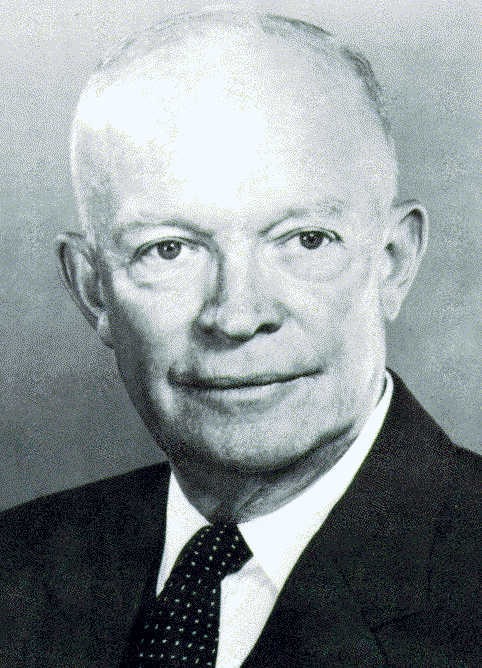
Dwight David Eisenhower, the son of a small farmer, was born in Denison, Texas, on 14th October, 1890. He attended West Point Military Academy and graduated in 1915 (61/164). Eisenhower became a temporary lieutenant colonel during the First World War. He was appointed commander of a heavy tank brigade in Pennsylvania but was not sent to Europe during the conflict. After the war Eisenhower served under George Patton at Fort Meade, Maryland. These two pioneers of tank warfare became close friends. Promoted to the rank of major Eisenhower was appointed as chief of staff to Brigadier General Fox Connor when he was sent to Panama in 1922. Connor was a great influence on Eisenhower and introduced him to books written by philosophers and military strategists such as Plato, Tactitus, Clausewitz and Nietzsche. Eisenhower entered the Command and General Staff School at Fort Leavenworth, Kansas, in 1942. He graduated two years later as head of the class. He then served under General John Pershing at the American Battle Monuments in France. This included working on the commission's guide, American Armies and Battlefields in Europe. In February 1932, Eisenhower was appointed to the staff of General Douglas MacArthur. Along with George Patton, Eisenhower was involved in dealing with the Bonus Army in Washington. MacArthur, was later criticized for using tanks, four troops of cavalry with drawn sabers, and infantry with fixed bayonets, on the protesters. Promoted to lieutenant colonel, Eisenhower also served under MacArthur in the Philippines. In his diaries Eisenhower makes it clear that he did not like MacArthur and in 1939 took up an appointment with the 15th Infantry Regiment at Fort Lewis. In March 1941 he was promoted to colonel and became chief of staff to General Walter Krueger in 3rd Army headquarters at San Antonio, Texas. Eisenhower's career in the US Army had so far being fairly unspectacular but he had impressed General George Marshall, U.S. Chief of Staff, and a week after Pearl Harbor was recruited to help prepare the plans for war with Japan and Germany. In March 1942, Eisenhower was sent to England as head of European Theatre of Operations (ETO). In July, 1942, Franklin D. Roosevelt and Winston Churchill decided that the Allies should open a Second Front to help the Red Army fighting in the Soviet Union. Joseph Stalin favoured an invasion of Europe but Roosevelt and Churchill opted for an invasion of northwest Africa. Given the code-name Operation Torch, Eisenhower was appointed Allied commander of the invasion. Over 100,000 Vichy troops were stationed in Algeria, Morocco and Tunisia. It was hoped that the French troops not to resist the Allied invasion. On 8th November 1942, Allied forces landed in Casablanca, Oran and Algiers. The French troops fought back at Oran and General Mark Clark immediately began negotiations with Admiral Jean-Francois Darlan, overall C-in-C of Vichy forces, in an attempt to negotiate a ceasefire. Adolf Hitler threatened Henri-Philippe Petain that the German Army would invade Vichy if his troops did not resist. When Darlan surrendered on the 11th November, Hitler carried out his threat and occupied the rest of France. French troops in Morocco stopped fighting but some joined the Germans in Tunisia. Eisenhower now controversially appointed Jean-Francois Darlan as the political head of the French North Africa. The decision infuriated General Charles De Gaulle and the French Resistance who claimed that Darlan was a fascist and a Nazi collaborator. However, the decision was endorsed by Winston Churchill and Franklin D. Roosevelt who both agreed with Eisenhower that the deal with Darlan would assist military operations in the area. In January 1943, General Jurgen von Arnium took control of the German forces in Tunisia. Later that month he was joined by General Erwin Rommel and his army in southern Tunisia. Rommel was in retreat from Egypt and was being chased by General Bernard Montgomery and the 8th Army. Montgomery now spent several weeks in Tripoli building up his supplies. Arnium and Rommel decided to take this opportunity to attack Allied forces led by General Kenneth Anderson at Faid Pass (14th February) and Kasserine Pass (19th February). The Deutsches Afrika Korps then headed for Thala but were forced to retreat after meeting a large Allied force on 22nd February, 1943. General Harold Alexander was now sent to oversee Allied operations in Tunisia whereas General Erwin Rommel was placed in command of the German forces. On 6th March 1943, Rommel attacked the Allies at Medenine. General Bernard Montgomery and the 8th Army fought off the attack and the Germans were forced to withdraw. Rommel now favoured a full retreat but this was rejected by Adolf Hitler. By April 1943 the Allies had over 300,000 men in Tunisia. This gave them a 6-to-1 advantage in troops and a 15-to-1 superiority in tanks. The Allied blockade of the Mediterranean also made it difficult for the German Army to be supplied with adequate amounts of fuel, ammunition and food. Eisenhower now decided to make another effort to take Tunis. General Omar Bradley, who had replaced General George Patton, as commander of the 2nd Corps, joined General Bernard Montgomery for the offensive. On 23rd April the 300,000 man force advanced along a 40 mile front. At the same time there was a diversionary attack by the 8th Army at Enfidaville. On 7th May 1943, British forces took Tunis and the US Army captured Bizerte. By 13th May all Axis forces in Tunisia surrendered and over 150,000 were taken prisoner. After the success of Operation Torch, Eisenhower was promoted to full general and given the task of organizing the invasion of Sicily. General Harold Alexander was commander of ground operations and his 15th Army Group included General George Patton (US 7th Army) and General Bernard Montgomery (8th Army). Admiral Andrew Cunningham was in charge of naval operations and Air Marshal Arthur Tedder was air commander. On 10th July 1943, the 8th Army landed at five points on the south-eastern tip of the island and the US 7th Army at three beaches to the west of the British forces. The Allied troops met little opposition and Patton and his troops quickly took Gela, Licata and Vittoria. The British landings were also unopposed and Syracuse was taken on the the same day. This was followed by Palazzolo (11th July), Augusta (13th July) and Vizzini (14th July), whereas the US troops took the Biscani airfield and Niscemi (14th July). General George Patton now moved to the west of the island and General Omar Bradley headed north and the German Army was forced to retreat to behind the Simeto River. Patton took Palermo on 22nd July cutting off 50,000 Italian troops in the west of the island. Patton now turned east along the northern coast of the island towards the port of Messina. Meanwhile General Bernard Montgomery and the 8th Army were being held up by German forces under Field Marshal Albrecht Kesselring. The Allies carried out several amphibious assaults attempted to cut off the Germans but they were unable to stop the evacuation across the Messina Straits to the Italian mainland. This included 40,000 German and 60,000 Italian troops, as well as 10,000 German vehicles and 47 tanks. On 17th August 1943, General George Patton and his troops marched into Messina. The capture of the island made it possible to clear the way for Allied shipping in the Mediterranean. It also helped to undermine the power of Benito Mussolini and Victor Emmanuel III forced him to resign. Eisenhower was now placed in charge of the invasion of Italy. On 3rd September, 1943, General Bernard Montgomery and the 8th Army landed at Reggio. There was little resistance and later that day British warships landed the 1st Parachute Division at Taranto. Six days later the US 6th Corps arrived at Salerno. These troops faced a heavy bombardment from German troops and the beachhead was not secured until 20th September. On 23rd September 1943, Pietro Badoglio and General Dwight D. Eisenhower signed the Italian surrender aboard Nelson off Malta. The German Army continued to fight ferociously in southern Italy and the Allied armies made only slow progress as the moved north towards Rome. The 5th Army took Naples on 1st October and later that day the 8th Army captured the Foggia airfields. General Albrecht Kesselring now withdrew his forces to what became known as the Gustav Line on the Italian peninsula south of Rome. Organized along the Garigliano and Rapido rivers it included Monte Cassino, a hilltop site of a sixth-century Benedictine monastery. Defended by 15 German divisions the line was fortified with gun pits, concrete bunkers, turreted machine-gun emplacements, barbed-wire and minefields. In December 1943, the Allied suffered heavy loses while trying to capture the monastery. In January 1944, Eisenhower and General Harold Alexander, Supreme Allied Commander in Italy, ordered a new Cassino offensive combined with an amphibious operation at Anzio, a small port on the west coast of Italy. The main objective of the operation was to cut the communication lines of the German 10th Army and force a withdrawal from the Gustav Line. Attacks on Monte Cassino on 17th January resulted in the Germans reserves moving to the Gustav Line and on 22nd January troops led by General John Lucas landed at Anzio. Lucas decided not to push straight away to the Alban Hills. This enabled General Heinrich Vietinghoff to order the 14th Army to return to the area and contain the 6th Corps on the Anzio bridgehead. On 12th February the exhausted US Army at Cassino were replaced by the New Zealand Corps. Alexander now decided to use these fresh troops in another attempt to capture Cassino. General Bernard Freyberg, who was in charge of the infantry attack, asked for the monastery be bombed. Despite claims by troops on the front-line that no fire had come from the monastery, General Harold Alexander agreed and it was destroyed by the United States Air Force on 15th February, 1944. Eisenhower was criticised by some Allied military leaders as being over cautious during the invasion of Sicily of Italy. However, he had impressed Winston Churchill and Franklin D. Roosevelt as a man who was able to command soldiers from several different countries. Recognized as an excellent coalition commander, Eisenhower was appointed head of the Supreme Headquarters Allied Expeditionary Force (SHAEF) and was given responsibility for Operation Overlord, the invasion of Europe. Eisenhower now had the task of organizing around a million combat troops and two million men involved in providing support services. The plan, drawn up by Eisenhower, George Marshall, Bernard Montgomery, Omar Bradley, Bertram Ramsay, Walter Bedell-Smith, Arthur Tedder and Trafford Leigh-Mallory, involved assaults on five beaches west of the Orne River near Caen (codenamed Sword, Juno, Gold, Omaha and Utah) by the British 2nd Army and the American 1st Army. Follow-up forces included the Canadian 1st Army and the American 3rd Army under Lt. General George Patton. The invasion was preceded by a massive aerial bombardment of German communications. This resulted in the destruction of virtually every bridge over the Seine. On 6th June, 1944, 2,727 ships sailed to the Normandy coast and on the first day landed 156,000 men on a front of thirty miles. It was the largest and most powerful armada that has ever sailed. The Allied invasion was faced by 50 divisions of the German Army under General Erwin Rommel. At Omaha, steep cliffs favoured the defenders and the US Army suffered 2,500 casualties. The Allies also sent in three airborne divisions, two American and one British, to prepare for the main assault by taking certain strategic points and by disrupting German communications. Of the 23,000 airborne troops, 15,500 were Americans and of these, 6,000 were killed or seriously wounded. Over the next couple of days 156,215 troops were landed from sea and air in Normandy, at a cost of some 10,300 casualties. The invasion was a great success but he was later criticised by Omar Bradley and George Patton for not fighting a more positive campaign and argued that if he had forced General Bernard Montgomery to have fought more aggressively in Caen the German Army would have been trapped in Normandy. Instead they were able to retreat back to Nazi Germany and the war was able to continue into 1945. After the war Eisenhower served briefly as US member of the Allied Commission governing Germany. In November 1945, Eisenhower took over from General George Marshall, as US Army Chief of Staff. His book, Crusade in Europe, was published in 1948. Eisenhower retired in 1948 and became presidency of Columbia University. In 1951 he returned to Europe as Supreme Commander of NATO. Although Eisenhower had never identified himself with any particular political party, in 1952 he was approached about being the Republican Party candidate for president. He accepted and in November easily defeated the Democratic Party candidate, Adlai Stevenson by 33,936,252 votes to 27,314,922. On 20th January, 1953 Eisenhower became the first soldier-President since Ulysses Grant (1869-77). Eisenhower left party matters to his vice-president, Richard Nixon. His political philosophy was never clearly defined. He was against enlarging the role of government in economic matters but he did support legislation fixing a minimum wage and the extension of social security. Eisenhower also refused to speak out against Joe McCarthy and members of the House of Un-American Activities Committee (HUAC) until they began to attack his army commanders in 1954. Eisenhower's government was severely concerned about the success of communism in South East Asia. Between 1950 and 1953 they had lost 142,000 soldiers in attempting to stop communism entering South Korea. The United States feared that their efforts would have been wasted if communism were to spread to South Vietnam. Eisenhower was aware that he would have difficulty in persuading the American public to support another war so quickly after Korea. He therefore decided to rely on a small group of Military Advisers' to prevent South Vietnam becoming a communist state. In 1956 Eisenhower defeated Adlai Stevenson again. This time the margin was even greater with Eisenhower winning 35,585,316 votes to Stevenson's 26,031,322. The following year he controversially sent federal troops to Little Rock to enforce the Supreme Court decision to desegregate schooling. In foreign affairs during this period he relied heavily on Richard Nixon and his secretary of state, John Foster Dulles. During the Suez Crisis President Dwight Eisenhower refused to support the Anglo-French action against Gamal Abdel Nasser in Egypt. Afterwards his Secretary of State, John Foster Dulles, became concerned about the growing influence of the Soviet Union in the Middle East. In January 1957 made a speech in Congress where Eisenhower recommended the use of American forces to protect Middle East states against overt aggression from nations "controlled by international communism". He also urged the provision of economic aid to those countries with anti-communist governments. This new foreign policy became known as the Eisenhower Doctrine. Eisenhower made his last speech as president on 17th January, 1961. Probably the most controversial speech of his career he gave the American people a serious warning about the situation that faced them: "Until the latest of our world conflicts, the United States had no armaments industry. American makers of plowshares could, with time and as required, make swords as well. But now we can no longer risk emergency improvisation of national defense; we have been compelled to create a permanent armaments industry of vast proportions. Added to this, three and a half million men and women are directly engaged in the defense establishment. We annually spend on military security more than the net income of all United States corporations. This conjunction of an immense military establishment and a large arms industry is new in the American experience. The total influence - economic, political, even spiritual - is felt in every city, every State house, every office of the Federal government. We recognize the imperative need for this development. Yet we must not fail to comprehend its grave implications. Our toil, resources and livelihood are all involved; so is the very structure of our society. In the councils of government, we must guard against the acquisition of unwarranted influence, whether sought or unsought, by the military-industrial complex. The potential for the disastrous rise of misplaced power exists and will persist." When Eisenhower left office as one of the most popular presidents in American history. He was admired for his integrity, modesty, strength and a flair for conciliation. He retired to his farm in Gettysburg and devoted much of his time to writing his memoirs. Mandate For Change (1963), Waging Peace (1965) and At Ease (1967). Dwight David Eisenhower died on March 28, 1969.
Joseph Scheider (Sidney Gottlieb) was born in 1918. He studied chemistry at the California Institute of Technology and after he finished his Ph.D. he joined the Central Intelligence Agency (CIA). He worked as a member of the Technical Services Staff (TSS) and eventually became head of the Chemical Division. Richard Bissell, head of the Directorate for Plans, an organization instructed to conduct covert anti-Communist operations around the world, made full use of Gottlieb's abilities. The Directorate for Plans was responsible for what became known as the CIA's Black Operations. This involved a policy that was later to become known as Executive Action (a plan to remove unfriendly foreign leaders from power). In March I960, President Dwight Eisenhower of the United States approved a CIA plan to overthrow Fidel Castro. Gottlieb was asked to come up with proposals that would undermine Castro's popularity with the Cuban people. Plans included a scheme to spray a television studio in which he was about to appear with an hallucinogenic drug (LSD) and contaminating his shoes with thallium which they believed would cause the hair in his beard to fall out. Richard Bissell eventually decided to organize a CIA plot to kill Castro. Gottlieb came up with several ideas on how to do this including the insertion of poison into cigars Castro was known to smoke. Another scheme involved a conch shell that would be programmed to explode when Castro was swimming underwater. Gottlieb also came up with the idea of planting a poisoned handkerchief in his suit pocket. This was unsuccessfully used against General Abd al-Karim Kassem of Iraq. Gottlieb was also assigned the task of planning the assassination of Patrice Lumumba of the Congo. This included the idea of a lethal biological agent that would be added to a tube of toothpaste. Attempts were made to develop a biological agent that would cause tularemia, brucelloisis, anthrax, smallpox, tuberculosis and equine encephalis. These experiments ended in failure and eventually Lumumba was murdered by soldiers loyal to Moise Tshombe. By 1967 Gottlieb became head of the Technical Services Staff and held the post until his retirement in 1972. Before he left he destroyed some 80 percent of the CIA's most damaging files. Most of these had something to do with programs run by Gottlieb. In 1975 Frank Church and his Select Committee on Intelligence Activities began investigating the work of the Central Intelligence Agency. They discovered the existence of Executive Action. The disclosure of Gottlieb's work resulted in some of his victims taking legal action against the CIA. Sidney Gottlieb died on 10th March, 1999.
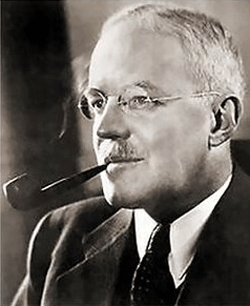
Allen Dulles, the son of a Presbyterian minister, and the brother of John Foster Dulles, was born in Washington in 1893. His grandfather was John Watson Foster, Secretary of State under President Benjamin Harrison. His uncle, Robert Lansing, was Secretary of State in the Cabinet of President Woodrow Wilson. After attending Princeton University he joined the diplomatic service and served in Vienna, Berne, Paris, Berlin and Instanbul. In 1922 he was appointed as chief of Division of Near Eastern Affairs. During the Second World War Dulles served in Europe with the Office of Strategic Services (OSS) under William Donovan. The organization that was given the responsible for espionage and for helping the resistance movement in Europe. Dulles was stationed in Switzerland and was able to use his base in this neutral country to obtain important information on Nazi Germany and the Gestapo. As soon as the Second World War ended President Harry S. Truman ordered the OSS to be closed down. However, it provided a model for the Central Intelligence Agency (CIA) established in September 1947. Dulles joined the CIA and became director of the organization in 1953. Under his leadership the CIA had success in assisting right wing coups in Guatemala and Iran. His attempts to oust against Fidel Castro ended in failure and was forced to resign after the Bay of Pigs disaster. Dulles published The Craft of Intelligence (1963). After the death of John F. Kennedy Dulles served on the Warren Commission that investigated the assassination. Allen Dulles died of cancer in 1969.
John Roselli (Filippo Sacco) first became involved in crime when he worked for Al Capone in the 1920s. By the end of the Second World War Roselli had emerged as a senior crime boss in Las Vegas with close links to Meyer Lansky. In 1947 the Federal Bureau of Investigation (FBI) identified him as a leading figure in the Mafia and a close associate of Santos Trafficante. In March I960, President Dwight Eisenhower of the United States approved a Central Intelligence Agency (CIA) plan to overthrow Fidel Castro. The plan involved a budget of $13 million to train "a paramilitary force outside Cuba for guerrilla action." The strategy was organised by Richard Bissell and Richard Helms. Sidney Gottlieb of the CIA Technical Services Division was asked to come up with proposals that would undermine Castro's popularity with the Cuban people. Plans included a scheme to spray a television studio in which he was about to appear with an hallucinogenic drug and contaminating his shoes with thallium which they believed would cause the hair in his beard to fall out. These schemes were rejected and instead Bissell decided to arrange the assassination of Fidel Castro. In September 1960, Richard Bissell and Allen W. Dulles, the director of the Central Intelligence Agency (CIA), initiated talks with two leading figures of the Mafia, Roselli (using the name John Rawlston) and Sam Giancana. On 12th March, 1961, William Harvey arranged for CIA operative, Jim O'Connell, to meet Sam Giancana, Santo Trafficante, Johnny Roselli and Robert Maheu at the Fontainebleau Hotel. During the meeting O'Connell gave poison pills and $10,000 to Rosselli to be used against Fidel Castro. As Richard D. Mahoney points out in his book: Sons and Brothers: "Late one evening, probably March 13, Rosselli passed the poison pills and the money to a small, reddish-haired Afro-Cuban by the name of Rafael "Macho" Gener in the Boom Boom Room, a location Giancana thought "stupid." Rosselli's purpose, however, was not just to assassinate Castro but to set up the Mafia's partner in crime, the United States government. Accordingly, he was laying a long, bright trail of evidence that unmistakably implicated the CIA in the Castro plot. This evidence, whose purpose was blackmail, would prove critical in the CIA's cover-up of the Kennedy assassination." In 1961 Roselli persuaded Meyer Lansky, to join the conspiracy and was reportedly offering a million-dollar reward for the Cuban leader's murder. Richard Cain, a specialist in electronics and wire taps, was also recruited by Roselli. Cain took part in a failed attempt in March 1961 to poison Castro. The nearest Rosselli came to killing Fidel Castro was in September 1961. Several Cubans were arrested at the intersection of Rancho Boyeros Avenue and Santa Catalina Avenue in Havana. The men were in two Jeeps armed with bazookas, grenade launchers, and machine guns. Two of those arrested, Guillermo Caula Ferrer and Higinio Menendez, made a full confession during their interrogation and admitted they had been working with CIA agents in Miami and had been trained on Guantanamo, the American naval base in Cuba. All the men involved in the plot were executed. In April 1962, William Harvey took control of the ZR/RIFLE project. He told Johnny Roselli that Santos Trafficante and Sam Giancana had to cease involvement in the project to kill Castro. Ted Shackley, the new head of JM WAVE, also began to play a more important role in planning the assassination. Eventually Rosselli and his friends became convinced that the Cuban revolution could not be reversed by simply removing its leader. However, they continued to play along with this CIA plot in order to prevent them being prosecuted for criminal offences committed in the United States. In February, 1963, William Harvey was removed as head of the ZR/RIFLE project. Harvey was now sent to Italy where he became Chief of Station in Rome. Harvey was convinced that Robert Kennedy had been responsible for his demotion. A friend of Harvey's said that he "hated Bobby Kennedy's guts with a purple passion". Harvey continued to keep in contact with Johnny Roselli. According to Richard D. Mahoney: "On April 8, Rossrlli flew to New York to meet with Bill Harvey. A week later, the two men met again in Miami to discuss the plot in greater detail... On April 21 he (Harvey) flew from Washington to deliver four poison pills directly to Rosselli, who got them to Tony Varona and hence to Havana. That same evening, Harvey and Ted Shackley, the chief of the CIA's south Florida base, drove a U-Haul truck filled with the requested arms through the rain to a deserted parking lot in Miami. They got out and handed the keys to Rosselli." In November, 1963, Roselli travelled to Arizona with a male friend and two women. He was being followed by the FBI but on the way to Los Vegas they lost contact with him. According to Tosh Plumlee, a pilot working for the CIA, he picked up Roselli from Tampa, Florida, early on the 22nd November. Plumlee then took Roselli to New Orleans. After picking up three more men, Plumlee took Roselli and his friends to Redbird Airport in Dallas. In an interview in April, 1992, Plumlee claimed that he was told that the objective was "to abort the assassination" of John F. Kennedy. Roselli discovered in 1966 that the FBI had been collecting information on his activities. Attempts were made to deport him as an illegal alien. Roselli moved to Los Angeles where he went into early retirement. It was at this time he told attorney, Edward Morgan: "The last of the sniper teams dispatched by Robert Kennedy in 1963 to assassinate Fidel Castro were captured in Havana. Under torture they broke and confessed to being sponsored by the CIA and the US government. At that point, Castro remarked that, 'If that was the way President Kennedy wanted it, Cuba could engage in the same tactics'. The result was that Castro infiltrated teams of snipers into the US to kill Kennedy". Morgan took the story to Jack Anderson and Drew Pearson. The story was then passed on to Earl Warren. He did not want anything to do with it and so the information was then passed to the FBI. When they failed to investigate the story Anderson wrote an article entitled "President Johnson is sitting on a political H-bomb" about Roselli's story. It has been suggested that Roselli started this story at the request of his friends in the Central Intelligence Agency in order to divert attention from the investigation being carried out by Jim Garrison. Roselli was eventually charged with being involved in illegal gambling in Las Vegas. In an attempt to obtain a lenient sentence, Roselli provided information in court about his role in helping the CIA with Operation Mongoose and ZR/RIFLE. The judge was not impressed and he was sent to McNeal Island prison. His good friend Fred Black intervened and used his powerful political connections to get transferred to a less harsh prison. Roselli was eventually released in 1973. In 1975 Frank Church and his Select Committee on Intelligence Activities interviewed Roselli about his relationship with the secret services. It emerged from this interview that Roselli and fellow crime boss, Sam Giancana had taken part in talks with the CIA about the possibility of murdering Fidel Castro. Roselli also claimed that a CIA hit team that had been dispatched to Cuba had been "turned" and used to kill Kennedy. The following year the Select Committee on Intelligence Activities decided to recall Roselli. Soon afterwards Fred Black called him and warned him that Santos Trafficante had taken out a contract on his life and that the "Cubans were after him". In July 1976, Roselli left home in Florida to play golf. He never arrived at the golf course and ten days later his body was found floating in an oil drum in Miami's Dumfoundling Bay. He had been garroted. Roselli's legs had been sawed off and squashed into the drum with the rest of his body. Jack Anderson, of the Washington Post, interviewed Roselli just before he was murdered. On 7th September, 1976, the newspaper reported Roselli as saying : "When Oswald was picked up, the underworld conspirators feared he would crack and disclose information that might lead to them. This almost certainly would have brought a massive US crackdown on the Mafia. So Jack Ruby was ordered to eliminate Oswald." The House Select Committee on Assassinations managed to obtain the records of an FBI wire tap on Santos Trafficante. On the tape Trafficante was heard to say "now only two people know who killed Kennedy and they aren't talking." In an interview in April, 1992, Tosh Plumlee claimed that Roselli had been killed because he knew too much about JM WAVE, Operation Mongoose, and the assassination of John F. Kennedy.
Gilorma (Sam) Giancana was born in Chicago on 24th May, 1908. At the age of ten he was expelled from Reese Elementary School and was sent to St. Charles Reformatory. This did not have the desired effect and in 1921 joined the 42 Gang. Over the next few years he was arrested for a variety of different offences. In 1926 Giancana was arrested for murder. However, charges were dropped after the key witness was murdered. He was later sent to prison for theft and burglary. On his release he went to work for leading gangster Paul Ricca. By the 1950s Giancana was one of the leading crime bosses in Chicago. In 1960 Giancana was involved in talks with Allen W. Dulles, the director of the Central Intelligence Agency (CIA), about the possibility of murdering Fidel Castro. It is claimed that during the 1960 presidential election Giancana used his influence in Illinois to help John F. Kennedy defeat Richard Nixon. The two men, at that time, shared the same girlfriend, Judith Campbell Exner. After becoming president John F. Kennedy appointed his brother, Robert Kennedy, as U.S. Attorney General. The two men worked closely together on a wide variety of issues including the attempt to tackle organized crime. One of their prime targets was to get Giancana arrested. On 22nd November, 1963, President Kennedy was assassinated. Rumours began to circulate that Giancana and other gang bosses such as Santos Trafficante, Carlos Marcello, and Johnny Roselli, were involved in the crime. In 1975 Frank Church and his Select Committee to Study Governmental Operations with Respect to Intelligence Activities discovered that Judith Campbell had been involved with both Giancana and John F. Kennedy. It emerged that during the 1960 presidential election Campbell took messages from Giancana to Kennedy. Campbell later claimed these messages concerned the plans to murder Fidel Castro. Kennedy also began an affair with Campbell and used her as a courier to carry sealed envelopes to Giancana. He told her they contained "intelligence material" concerning the plot to kill Castro. Giancana was now ordered to appear before Church's committee. However, before he could appear, on 19th June, 1975, Sam Giancana was murdered in his own home. He had a massive wound in the back of the head. He had also been shot six times in a circle around the mouth. On 14th January, 1992, the New York Post claimed that Hoffa, Santos Trafficante and Carlos Marcello had all been involved in the assassination of President John F. Kennedy. Frank Ragano was quoted as saying that at the beginning of 1963 Hoffa had told him to take a message to Trafficante and Marcello concerning a plan to kill Kennedy. When the meeting took place at the Royal Orleans Hotel, Ragano told the men: "You won't believe what Hoffa wants me to tell you. Jimmy wants you to kill the president." He reported that both men gave the impression that they intended to carry out this order. In 1992 Giancana's nephew published Double Cross: The Story of the Man Who Controlled America. The book attempted to establish that Giancana had rigged the 1960 Presidential election vote in Cook County on John Kennedy's behalf, which effectively gave Kennedy the election. It is argued that Kennedy reneged on the deal and therefore Giancana had him killed. In his autobiography, Mob Lawyer (1994) (co-written with journalist Selwyn Raab) Frank Ragano added that in July, 1963, he was once again sent to New Orleans by Hoffa to meet Santos Trafficante and Carlos Marcello concerning plans to kill President John F. Kennedy. When Kennedy was killed Hoffa apparently said to Ragano: "I told you could do it. I'll never forget what Carlos and Santos did for me." He added: "This means Bobby is out as Attorney General". Marcello later told Ragano: "When you see Jimmy (Hoffa), you tell him he owes me and he owes me big."
Carlos Marcello (Calogero Minacore) was born in Tunis, North Africa, on 6th February, 1910. Marcello emigrated to the United States and in 1929 was arrested for bank robbery by the police in New Orleans. These charges were later dropped but the following year he was convicted of assault and robbery and was sentenced to the State penitentiary for 9 years (served 5 years). In 1938 Marcello was arrested and charged with the sale of more than 23 pounds of narcotics. Despite receiving another lengthy prison sentence and a $76,830 fine, Marcello served less than 10 months in prison. On his release from prison Marcello became associated with Frank Costello, the leader of the Mafia in New York. By the late 1940's, Marcello had taken control of Louisiana's gambling network. He had also joined forces with Meyer Lansky in order to buy some of the most important gambling casinos in the New Orleans area. By this time Marcello was the undisputed leader of the Mafia in New Orleans. He was to hold this position for the next 30 years. On 24th March, 1959, Marcello appeared before the Senate Committee investigating organized crime. Serving as chief counsel to the committee was Robert F. Kennedy; his brother, Senator John F. Kennedy, was a member of the committee. In response to committee questioning, Marcello again invoked the fifth amendment in refusing to answer any questions relating to his background, activities, and associates. After becoming president John F. Kennedy appointed his brother, Robert Kennedy, as U.S. Attorney General. The two men worked closely together on a wide variety of issues including the attempt to tackle organized crime. In March 1961, the Attorney General took steps to have Marcello deported to Guatemala (the country Marcello had falsely listed as his birthplace). On 4th April, Marcello was arrested by the authorities and taken forcibly removed to Guatemala. It did not take Marcello long to get back into the United States. Undercover informants reported that Marcello made several threats against John F. Kennedy. He told Edward Becker that a dog will continue to bite you if you cut off its tail. Whereas if you cut off the dog's head, it would cease to cause you trouble. Becker reported that Marcello "clearly stated that he was going to arrange to have President Kennedy murdered in some way." Marcello told another informant that he would need to take out "insurance" for the assassination by "setting up a nut to take the blame". Just before Kennedy was assassinated on 22nd November, 1963, Jack Ruby made contact with Marcello, and another Mafia leader, Santos Trafficante, about a problem he was having with the American Guild of Variety Artists (AGVA). Ruby also visited New Orleans that summer. So also did the alleged assassin, Lee Harvey Oswald. After the assassination of Kennedy the Federal Bureau of Investigation investigated Marcello. They came to the conclusion that they "did not believe Carlos Marcello was a significant organized crime figure" and that Marcello earned his living "as a tomato salesman and real estate investor." As a result of this investigation the Warren Commission concluded that there was no direct link between Ruby and Marcello. In 1966 Marcello was arrested in New York. He was eventually charged and after a long drawn out legal battle he was eventually convicted for assault. Sentenced to two years. he served less than 6 months, and was released on March 12, 1971. G. Robert Blakey, chief counsel and staff director to the House Select Committee on Assassinations, published The Plot to Kill the President in 1981. In the book Blakey argues that there was a conspiracy to kill John F. Kennedy. He believes that Lee Harvey Oswald was involved but believes that there was at least one gunman firing from the Grassy Knoll. Blakey came to the conclusion that Marcello organized the assassination. On 14th January, 1992, the New York Post claimed that Marcello, Jimmy Hoffa and Santos Trafficante had all been involved in the assassination of President John F. Kennedy. Frank Ragano was quoted as saying that at the beginning of 1963 Hoffa had told him to take a message to Trafficante and Marcello concerning a plan to kill Kennedy. When the meeting took place at the Royal Orleans Hotel, Ragano told the men: "You won't believe what Hoffa wants me to tell you. Jimmy wants you to kill the president." He reported that both men gave the impression that they intended to carry out this order. In his autobiography, Mob Lawyer (1994) (co-written with journalist Selwyn Raab) Frank Ragano added that in July, 1963, he was once again sent to New Orleans by Jimmy Hoffa to meet Marcello and Santos Trafficante concerning plans to kill President John F. Kennedy. When Kennedy was killed Hoffa apparently said to Ragano: "I told you could do it. I'll never forget what Carlos and Santos did for me." He added: "This means Bobby is out as Attorney General". Marcello later told Ragano: "When you see Jimmy (Hoffa), you tell him he owes me and he owes me big." Carlos Marcello died on 3rd March, 1993.
|