CHAPTER II.
HABITS OF WORMS—continued.
Manner in which worms seize
objects—Their power of suction—The instinct of plugging up the mouths of
their burrows—Stones piled over the burrows—The advantages thus
gained—Intelligence shown by worms in their manner of plugging up their
burrows—Various kinds of leaves and other objects thus used—Triangles of
paper—Summary of reasons for believing that worms exhibit some
intelligence—Means by which they excavate their burrows, by pushing away
the earth and swallowing it—Earth also swallowed for the nutritious
matter which it contains—Depth to which worms burrow, and the
construction of their burrows—Burrows lined with castings, and in the
upper part with leaves—The lowest part paved with little stones or
seeds—Manner in which the castings are ejected—The collapse of old
burrows—Distribution of worms—Tower-like castings in Bengal—Gigantic
castings on the Nilgiri Mountains—Castings ejected in all countries.
In the pots in which worms were kept, leaves were
pinned down to the soil, and at night the manner in which they were
seized could be observed. The worms always endeavoured to drag the
leaves towards their burrows; and they tore or sucked off small
fragments, whenever the leaves were sufficiently tender. They generally
seized the thin edge of a leaf with their mouths, between the projecting
upper and lower lip; the thick and strong pharynx being at the same
time, as Perrier remarks, pushed forward within their bodies, so as to
afford a point of resistance for the upper lip. In the case of broad
flat objects they acted in a wholly different manner. The pointed
anterior extremity of the body, after being brought into contact with an
object of this kind, was drawn within the adjoining rings, so that it
appeared truncated and became as thick as the rest of the body. This
part could then be seen to swell a little; and this, I believe, is due
to the pharynx being pushed a little forwards. Then by a slight
withdrawal of the pharynx or by its expansion, a vacuum was produced
beneath the truncated slimy end of the body whilst in contact with the
object; and by this means the two adhered firmly together. [1] That
under these circumstances a vacuum was produced was plainly seen on one
occasion, when a large worm lying beneath a flaccid cabbage leaf tried
to drag it away; for the surface of the leaf directly over the end of
the worms body became deeply pitted. On another occasion a worm suddenly
lost its hold on a flat leaf; and the anterior end of the body was
momentarily seen to be cup-formed. Worms can attach themselves to an
object beneath water in the same manner; and I saw one thus dragging
away a submerged slice of an onion-bulb.
The edges of fresh or nearly fresh leaves affixed to
the ground were often nibbled by the worms; and sometimes the epidermis
and all the parenchyma on one side was gnawed completely away over a
considerable space; the epidermis alone on the opposite side being left
quite clean. The veins were never touched, and leaves were thus
sometimes partly converted into skeletons. As worms have no teeth and as
their mouths consist of very soft tissue, it may be presumed that they
consume by means of suction the edges and the parenchyma of fresh
leaves, after they have been softened by the digestive fluid. They
cannot attack such strong leaves as those of sea-kale or large and thick
leaves of ivy; though one of the latter after it had become rotten was
reduced in parts to the state of a skeleton.
Worms seize leaves and other objects, not only to
serve as food, but for plugging up the mouths of their burrows; and this
is one of their strongest instincts. Leaves and petioles of many kinds,
some flower-peduncles, often decayed twigs of trees, bits of paper,
feathers, tufts of wool and horse-hairs are dragged into their burrows
for this purpose. I have seen as many as seventeen petioles of a
Clematis projecting from the mouth of one burrow, and ten from the mouth
of another. Some of these objects, such as the petioles just named,
feathers, &c., are never gnawed by worms. In a gravel walk in my garden
I found many hundred leaves of a pine-tree (P. austriaca or
nigricans) drawn by their bases into burrows. The surfaces by which
these leaves are articulated to the branches are shaped in as peculiar a
manner as is the joint between the leg-bones of a quadruped; and if
these surfaces had been in the least gnawed, the fact would have been
immediately visible, but there was no trace of gnawing. Of ordinary
dicotyledonous leaves, all those which are dragged into burrows are not
gnawed. I have seen as many as nine leaves of the lime-tree drawn into
the same burrow, and not nearly all of them had been gnawed; but such
leaves may serve as a store for future consumption. Where fallen leaves
are abundant, many more are sometimes collected over the mouth of a
burrow than can be used, so that a small pile of unused leaves is left
like a roof over those which have been partly dragged in.
A leaf in being dragged a little way into a
cylindrical burrow is necessarily much folded or crumpled. When another
leaf is drawn in, this is done exteriorly to the first one, and so on
with the succeeding leaves; and finally all become closely folded and
pressed together. Sometimes the worm enlarges the mouth of its burrow,
or makes a fresh one close by, so as to draw in a still larger number of
leaves. They often or generally fill up the interstices between the
drawn-in leaves with moist viscid earth ejected from their bodies; and
thus the mouths of the burrows are securely plugged. Hundreds of such
plugged burrows may be seen in many places, especially during the
autumnal and early winter months. But, as will hereafter be shown,
leaves are dragged into the burrows not only for plugging them up and
for food, but for the sake of lining the upper part or mouth.
When worms cannot obtain leaves, petioles, sticks,
&c., with which to plug up the mouths of their burrows, they often
protect them by little heaps of stones; and such heaps of smooth rounded
pebbles may frequently be seen on gravel-walks. Here there can be no
question about food. A lady, who was interested in the habits of worms,
removed the little heaps of stones from the mouths of several burrows
and cleared the surface of the ground for some inches all round. She
went out on the following night with a lantern, and saw the worms with
their tails fixed in their burrows, dragging the stones inwards by the
aid of their mouths, no doubt by suction. "After two nights some of the
holes had 8 or 9 small stones over them; after four nights one had about
30, and another 34 stones." [2] One stone which had been dragged over
the gravel-walk to the mouth of a burrow weighed two ounces; and this
proves how strong worms are. But they show greater strength in sometimes
displacing stones in a well-trodden gravel-walk; that they do so, may be
inferred from the cavities left by the displaced stones being exactly
filled by those lying over the mouths of adjoining burrows, as I have
myself observed.
Work of this kind is usually performed during the
night; but I have occasionally known objects to be drawn into the
burrows during the day. What advantage the worms derive from plugging up
the mouths of their burrows with leaves, &c., or from piling stones over
them, is doubtful. They do not act in this manner at the times when they
eject much earth from their burrows; for their castings then serve to
cover the mouth. When gardeners wish to kill worms on a lawn, it is
necessary first to brush or rake away the castings from the surface, in
order that the lime-water may enter the burrows. [3] It might be
inferred from this fact that the mouths are plugged up with leaves, &c.,
to prevent the entrance of water during heavy rain; but it may be urged
against this view that a few, loose, well-rounded stones are ill-adapted
to keep out water. I have moreover seen many burrows in the
perpendicularly cut turf-edgings to gravel-walks, into which water could
hardly flow, as well plugged as burrows on a level surface. Can the
plugs or piles of stones aid in concealing the burrows from scolopenders,
which, according to Hoffmeister, [4] are the bitterest enemies of worms?
Or may not worms when thus protected be able to remain with safety with
their heads close to the mouths of their burrows, which we know that
they like to do, but which costs so many of them their lives? Or may not
the plugs check the free ingress, of the lowest stratum of air, when
chilled by radiation at night, from the surrounding ground and herbage.
I am inclined to believe in this latter view; firstly, because when
worms were kept in pots in a room with a fire, in which case cold air
could not enter the burrows, they plugged them up in a slovenly manner;
and secondarily, because they often coat the upper part of their burrows
with leaves, apparently to prevent their bodies from coming into close
contact with the cold damp earth. But the plugging-up process may
perhaps serve for all the above purposes.
Whatever the motive may be, it appears that worms much
dislike leaving the mouths of their burrows open. Nevertheless they will
reopen them at night, whether or not they can afterwards close them.
Numerous open burrows may be seen on recently-dug ground, for in this
case the worms eject their castings in cavities left in the ground, or
in the old burrows, instead of piling them over the mouths of their
burrows, and they cannot collect objects on the surface by which the
mouths might be protected. So again on a recently disinterred pavement
of a Roman villa at Abinger (hereafter to be described) the worms
pertinaciously opened their burrows almost every night, when these had
been closed by being trampled on, although they were rarely able to find
a few minute stones wherewith to protect them.
Intelligence shown by worms in their manner of
plugging up their burrows.—If a man had to
plug up a small cylindrical hole, with such objects as leaves, petioles
or twigs, he would drag or push them in by their pointed ends; but if
these objects were very thin relatively to the size of the hole, he
would probably insert some by their thicker or broader ends. The guide
in his case would be intelligence. It seemed therefore worth while to
observe carefully how worms dragged leaves into their burrows; whether
by their tips or bases or middle parts. It seemed more especially
desirable to do this in the case of plants not natives to our country;
for although the habit of dragging leaves into their burrows is
undoubtedly instinctive with worms, yet instinct could not tell them how
to act in the case of leaves about which their progenitors knew nothing.
If, moreover, worms acted solely through instinct or an unvarying
inherited impulse, they would draw all kinds of leaves into their
burrows in the same manner. If they have no such definite instinct, we
might expect that chance would determine whether the tip, base or middle
was seized. If both these alternatives are excluded, intelligence alone
is left; unless the worm in each case first tries many different
methods, and follows that alone which proves possible or the most easy;
but to act in this manner and to try different methods makes a near
approach to intelligence.
In the first place 227 withered leaves of various
kinds, mostly of English plants, were pulled out of worm-burrows in
several places. Of these, 181 had been drawn into the burrows by or near
their tips, so that the foot-stalk projected nearly upright from the
mouth of the burrow; 20 had been drawn in by their bases, and in this
case the tips projected from the burrows; and 26 had been seized near
the middle, so that these had been drawn in transversely and were much
crumpled. Therefore 80 per cent. (always using the nearest whole number)
had been drawn in by the tip, 9 per cent. by the base or footstalk, and
11 per cent. transversely or by the middle. This alone is almost
sufficient to show that chance does not determine the manner in which
leaves are dragged into the burrows.
Of the above 227 leaves, 70 consisted of the fallen
leaves of the common lime-tree, which is almost certainly not a native
of England. These leaves are much acuminated towards the tip, and are
very broad at the base with a well-developed foot-stalk. They are thin
and quite flexible when half-withered. Of the 70, 79 per cent. had been
drawn in by or near the tip; 4 per cent. by or near the base; and 17 per
cent. transversely or by the middle. These proportions agree very
closely, as far as the tip is concerned, with those before given. But
the percentage drawn in by the base is smaller, which may be attributed
to the breadth of the basal part of the blade. We here, also, see that
the presence of a foot-stalk, which it might have been expected would
have tempted the worms as a convenient handle, has little or no
influence in determining the manner in which lime leaves are dragged
into the burrows.
The considerable proportion, viz., 17 per cent., drawn
in more or less transversely depends no doubt on the flexibility of
these half-decayed leaves. The fact of so many having been drawn in by
the middle, and of some few having been drawn in by the base, renders it
improbable that the worms first tried to draw in most of the leaves by
one or both of these methods, and that they afterwards drew in 79 per
cent. by their tips; for it is clear that they would not have failed in
drawing them in by the base or middle.
The leaves of a foreign plant were next searched for,
the blades of which were not more pointed towards the apex than towards
the base. This proved to be the case with those of a laburnum (a hybrid
between Cytisus alpinus and laburnum) for on doubling
the terminal over the basal half, they generally fitted exactly; and
when there was any difference, the basal half was a little the narrower.
It might, therefore, have been expected that an almost equal number of
these leaves would have been drawn in by the tip and base, or a slight
excess in favour of the latter. But of 73 leaves (not included in the
first lot of 227) pulled out of worm-burrows, 63 per cent. had been
drawn in by the tip; 27 per cent. by the base, and 10 per cent.
transversely. We here see that a far larger proportion, viz., 27 per
cent. were drawn in by the base than in the case of lime leaves, the
blades of which are very broad at the base, and of which only 4 per
cent. had thus been drawn in. We may perhaps account for the fact of a
still larger proportion of the laburnum leaves not having been drawn in
by the base, by worms having acquired the habit of generally drawing in
leaves by their tips and thus avoiding the foot-stalk. For the basal
margin of the blade in many kinds of leaves forms a large angle with the
foot-stalk; and if such a leaf were drawn in by the foot-stalk, the
basal margin would come abruptly into contact with the ground on each
side of the burrow, and would render the drawing in of the leaf very
difficult.
Nevertheless worms break through their habit of
avoiding the footstalk, if this part offers them the most convenient
means for drawing leaves into their burrows. The leaves of the endless
hybridised varieties of the Rhododendron vary much in shape; some are
narrowest towards the base and others towards the apex. After they have
fallen off, the blade on each side of the midrib often becomes curled up
while drying, sometimes along the whole length, sometimes chiefly at the
base, sometimes towards the apex. Out of 28 fallen leaves on one bed of
peat in my garden, no less than 23 were narrower in the basal quarter
than in the terminal quarter of their length; and this narrowness was
chiefly due to the curling in of the margins. Out of 36 fallen leaves on
another bed, in which different varieties of the Rhododendron grew, only
17 were narrower towards the base than towards the apex. My son William,
who first called my attention to this case, picked up 237 fallen leaves
in his garden (where the Rhododendron grows in the natural soil) and of
these 65 per cent. could have been drawn by worms into their burrows
more easily by the base or foot-stalk than by the tip; and this was
partly due to the shape of the leaf and in a less degree to the curling
in of the margins: 27 percent. could have been drawn in more easily by
the tip than by the base: and 8 per cent. with about equal ease by
either end. The shape of a fallen leaf ought to be judged of before one
end has been drawn into a burrow, for after this has happened, the free
end, whether it be the base or apex, will dry more quickly than the end
embedded in the damp ground; and the exposed margins of the free end
will consequently tend to become more curled inwards than they were when
the leaf was first seized by the worm. My son found 91 leaves which had
been dragged by worms into their burrows, though not to a great depth;
of these 66 per cent. had been drawn in by the base or foot-stalk; and
34 per cent. by the tip. In this case, therefore, the worms judged with
a considerable degree of correctness how best to draw the withered
leaves of this foreign plant into their burrows; notwithstanding that
they had to depart from their usual habit of avoiding the foot-stalk.
On the gravel-walks in my garden a very large number
of leaves of three species of Pinus (P. austriaca, nigricans
and sylvestris) are regularly drawn into the mouths of
worm-burrows. These leaves consist of two needles, which are of
considerable length in the two first and short in the last named
species, and are united to a common base; and it is by this part that
they are almost invariably drawn into the burrows. I have seen only two
or at most three exceptions to this rule with worms in a state of
nature. As the sharply pointed needles diverge a little, and as several
leaves are drawn into the same burrow, each tuft forms a perfect
chevaux de frise. On two occasions many of these tufts were pulled
up in the evening, but by the following morning fresh leaves had been
pulled in, and the burrows were again well protected. These leaves could
not be dragged into the burrows to any depth, except by their bases, as
a worm cannot seize hold of the two needles at the same time, and if one
alone were seized by the apex, the other would be pressed against the
ground and would resist the entry of the seized one. This was manifest
in the above mentioned two or three exceptional cases. In order,
therefore that worms should do their work well, they must drag
pine-leaves into their burrows by their bases, where the two needles are
conjoined. But how they are guided in this work is a perplexing
question.
This difficulty led my son Francis and myself to
observe worms in confinement during several nights by the aid of a dim
light, while they dragged the leaves of the above named pines into their
burrows. They moved the anterior extremities of their bodies about the
leaves, and on several occasions when they touched the sharp end of a
needle they withdrew suddenly as if pricked. But I doubt whether they
were hurt, for they are indifferent to very sharp objects, and will
swallow even rose-thorns and small splinters of glass. It may also be
doubted, whether the sharp ends of the needles serve to tell them that
this is the wrong end to seize; for the points were cut off many leaves
for a length of about one inch, and fifty-seven of them thus treated
were drawn into the burrows by their bases, and not one by the cut-off
ends. The worms in confinement often seized the needles near the middle
and drew them towards the mouths of their burrows; and one worm tried in
a senseless manner to drag them into the burrow by bending them. They
sometimes collected many more leaves over the mouths of their burrows
(as in the case formerly mentioned of lime-leaves) than could enter
them. On other occasions, however, they behaved very differently; for as
soon as they touched the base of a pine-leaf, this was seized, being
sometimes completely engulfed in their mouths, or a point very near the
base was seized, and the leaf was then quickly dragged or rather jerked
into their burrows. It appeared both to my son and myself as if the
worms instantly perceived as soon as they had seized a leaf in the
proper manner. Nine such cases were observed, but in one of them the
worm failed to drag the leaf into its burrow, as it was entangled by
other leaves lying near. In another case a leaf stood nearly upright
with the points of the needles partly inserted into a burrow, but how
placed there was not seen; and then the worm reared itself up and seized
the base, which was dragged into the mouth of the burrow by bowing the
whole leaf. On the other hand, after a worm had seized the base of a
leaf, this was on two occasions relinquished from some unknown motive.
As already remarked, the habit of plugging up the
mouths of the burrows with various objects, is no doubt instinctive in
worms; and a very young one, born in one of my pots, dragged for some
little distance a Scotchfir leaf, one needle of which was as long and
almost as thick as its own body. No species of pine is endemic in this
part of England, it is therefore incredible that the proper manner of
dragging pine-leaves into the burrows can be instinctive with our worms.
But as the worms on which the above observations were made, were dug up
beneath or near some pines, which had been planted there about forty
years, it was desirable to prove that their actions were not
instinctive. Accordingly, pine-leaves were scattered on the ground in
places far removed from any pine-tree, and 90 of them were drawn into
the burrows by their bases. Only two were drawn in by the tips of the
needles, and these were not real exceptions, as one was drawn in for a
very short distance, and the two needles of the other cohered. Other
pine-leaves were given to worms kept in pots in a warm room, and here
the result was different; for out of 42 leaves drawn into the burrows,
no less than 16 were drawn in by the tips of the needles. These worms,
however, worked in a careless or slovenly manner; for the leaves were
often drawn in to only a small depth; sometimes they were merely heaped
over the mouths of the burrows, and sometimes none were drawn in. I
believe that this carelessness may be accounted for by the air of the
room being warm, and the worms consequently not being anxious to plug up
their holes effectually. Pots tenanted by worms and covered with a net
which allowed the entrance of cold air, were left out of doors for
several nights, and now 72 leaves were all properly drawn in by their
bases.
It might perhaps be inferred from the facts as yet
given, that worms somehow gain a general notion of the shape or
structure of pine leaves, and perceive that it is necessary for them to
seize the base where the two needles are conjoined. But the following
cases make this more than doubtful. The tips of a large number of
needles of P. austriaca were cemented together with shell-lac
dissolved in alcohol, and were kept for some days, until, as I believe,
all odour or taste had been lost; and they were then scattered on the
ground where no pine-trees grew, near burrows from which the plugging
had been removed. Such leaves could have been drawn into the burrows
with equal ease by either end; and judging from analogy and more
especially from the case presently to be given of the petioles of
Clematis montana, I expected that the apex would have been
preferred. But the result was that out of 121 leaves with the tips
cemented, which were drawn into burrows, 108 were drawn in by their
bases, and only 13 by their tips. Thinking that the worms might possibly
perceive and dislike the smell or taste of the shell-lac, though this
was very improbable, especially after the leaves had been left out
during several nights, the tips of the needles of many leaves were tied
together with fine thread. Of leaves thus treated 150 were drawn into
burrows—123 by the base and 27 by the tied tips; so that between four
and five times as many were drawn in by the base as by the tip. It is
possible that the short cut-off ends of the thread with which they were
tied, may have tempted the worms to drag in a larger proportional number
by the tips than when cement was used. Of the leaves with tied and
cemented tips taken together (271 in number) 85 per cent. were drawn in
by the base and 15 per cent. by the tips. We may therefore infer that it
is not the divergence of the two needles which leads worms in a state of
nature almost invariably to drag pine-leaves into their burrows by the
base. Nor can it be the sharpness of the points of the needles which
determines them; for, as we have seen, many leaves with the points cut
off were drawn in by their bases. We are thus led to conclude, that with
pine-leaves there must be something attractive to worms in the base,
notwithstanding that few ordinary leaves are drawn in by the base or
footstalk.
Petioles.—We will now
turn to the petioles or foot-stalks of compound leaves, after the
leaflets have fallen off. Those from Clematis montana, which
grew over a verandah, were dragged early in January in large numbers
into the burrows on an adjoining gravel-walk, lawn, and flower-bed.
These petioles vary from 2½ to 4½ inches in length, are rigid and of
nearly uniform thickness, except close to the base where they thicken
rather abruptly, being here about twice as thick as in any other part.
The apex is somewhat pointed, but soon withers and is then easily broken
off. Of these petioles, 314 were pulled out of burrows in the above
specified sites; and it was found that 76 per cent. had been drawn in by
their tips, and 24 per cent. by their bases; so that those drawn in by
the tip were a little more than thrice as many as those drawn in by the
base. Some of those extracted from the well-beaten gravel-walk were kept
separate from the others; and of these (59 in number) nearly five times
as many had been drawn in by the tip as by the base; whereas of those
extracted from the lawn and flower-bed, where from the soil yielding
more easily, less care would be necessary in plugging up the burrows,
the proportion of those drawn in by the tip (130) to those drawn in by
the base (48) was rather less than three to one. That these petioles had
been dragged into the burrows for plugging them up, and not for food,
was manifest, as neither end, as far as I could see, had been gnawed. As
several petioles are used to plug up the same burrow, in one case as
many as 10, and in another case as many as 15, the worms may perhaps at
first draw in a few by the thicker end so as to save labour; but
afterwards a large majority are drawn in by the pointed end, in order to
plug up the hole securely.
The fallen petioles of our native ash-tree were next
observed, and the rule with most objects, viz., that a large majority
are dragged into the burrows by the more pointed end, had not here been
followed; and this fact much surprised me at first. These petioles vary
in length from 5 to 8½ inches; they are thick and fleshy towards the
base, whence they taper gently towards the apex, which is a little
enlarged and truncated where the terminal leaflet had been originally
attached. Under some ash-trees growing in a grass-field, 229 petioles
were pulled out of worm burrows early in January, and of these 51.5 per
cent. had been drawn in by the base, and 48.5 percent. by the apex. This
anomaly was however readily explained as soon as the thick basal part
was examined; for in 78 out of 103 petioles, this part had been gnawed
by worms, just above the horse-shoe shaped articulation. In most cases
there could be no mistake about the gnawing; for ungnawed petioles which
were examined after being exposed to the weather for eight additional
weeks had not become more disintegrated or decayed near the base than
elsewhere. It is thus evident that the thick basal end of the petiole is
drawn in not solely for the sake of plugging up the mouths of the
burrows, but as food. Even the narrow truncated tips of some few
petioles had been gnawed; and this was the case in 6 out of 37 which
were examined for this purpose. Worms, after having drawn in and gnawed
the basal end, often push the petioles out of their burrows; and then
drag in fresh ones, either by the base for food, or by the apex for
plugging up the mouth more effectually. Thus, out of 37 petioles
inserted by their tips, 5 had been previously drawn in by the base, for
this part had been gnawed. Again, I collected a handful of petioles
lying loose on the ground close to some plugged-up burrows, where the
surface was thickly strewed with other petioles which apparently had
never been touched by worms; and 14 out of 47 (i.e. nearly one-third),
after having had their bases gnawed had been pushed out of the burrows
and were now lying on the ground. From these several facts we may
conclude that worms draw in some petioles of the ash by the base to
serve as food, and others by the tip to plug up the mouths of their
burrows in the most efficient manner.
The petioles of Robinia pseudo-acacia vary
from 4 or 5 to nearly 12 inches in length; they are thick close to the
base before the softer parts have rotted off, and taper much towards the
upper end. They are so flexible that I have seen some few doubled up and
thus drawn into the burrows of worms. Unfortunately these petioles were
not examined until February, by which time the softer parts had
completely rotted off, so that it was impossible to ascertain whether
worms had gnawed the bases, though this is in itself probable. Out of
121 petioles extracted from burrows early in February, 68 were embedded
by the base, and 53 by the apex. On February 5 all the petioles which
had been drawn into the burrows beneath a Robinia, were pulled up; and
after an interval of eleven days, 35 petioles had been again dragged in,
19 by the base, and 16 by the apex. Taking these two lots together, 56
per cent. were drawn in by the base, and 44 per cent. by the apex. As
all the softer parts had long ago rotted off, we may feel sure,
especially in the latter case, that none had been drawn in as food. At
this season, therefore, worms drag these petioles into their burrows
indifferently by either end, a slight preference being given to the
base. This latter fact may be accounted for by the difficulty of
plugging up a burrow with objects so extremely thin as are the upper
ends. In support of this view, it may be stated that out of the 16
petioles which had been drawn in by their upper ends, the more
attenuated terminal portion of 7 had been previously broken off by some
accident.
Triangles of paper.—Elongated
triangles were cut out of moderately stiff writing-paper, which was
rubbed with raw fat on both sides, so as to prevent their becoming
excessively limp when exposed at night to rain and dew. The sides of all
the triangles were three inches in length, with the bases of 120 one
inch, and of the other 183 half an inch in length. These latter
triangles were very narrow or much acuminated. [5] As a check on the
observations presently to be given, similar triangles in a damp state
were seized by a very narrow pair of pincers at different points and at
all inclinations with reference to the margins, and were then drawn into
a short tube of the diameter of a worm-burrow. If seized by the apex,
the triangle was drawn straight into the tube, with its margins
infolded; if seized at some little distance from the apex, for instance
at half an inch, this much was doubled back within the tube. So it was
with the base and basal angles, though in this case the triangles
offered, as might have been expected, much more resistance to being
drawn in. If seized near the middle the triangle was doubled up, with
the apex and base left sticking out of the tube. As the sides of the
triangles were three inches in length, the result of their being drawn
into a tube or into a burrow in different ways, may be conveniently
divided into three groups: those drawn in by the apex or within an inch
of it; those drawn in by the base or within an inch of it; and those
drawn in by any point in the middle inch.
In order to see how the triangles would be seized by
worms, some in a damp state were given to worms kept in confinement.
They were seized in three different manners in the case of both the
narrow and broad triangles: viz., by the margin; by one of the three
angles, which was often completely engulfed in their mouths; and lastly,
by suction applied to any part of the flat surface. If lines parallel to
the base and an inch apart, are drawn across a triangle with the sides
three inches in length, it will be divided into three parts of equal
length. Now if worms seized indifferently by chance any part, they would
assuredly seize on the basal part or division far oftener than on either
of the two other divisions. For the area of the basal to the apical part
is as 5 to 1, so that the chance of the former being drawn into a burrow
by suction, will be as 5 to 1, compared with the apical part. The base
offers two angles and the apex only one, so that the former would have
twice as good a chance (independently of the size of the angles) of
being engulfed in a worm's mouth, as would the apex. It should, however,
be stated that the apical angle is not often seized by worms; the margin
at a little distance on either side being preferred. I judge of this
from having found in 40 out of 46 cases in which triangles had been
drawn into burrows by their apical ends, that the tip had been doubled
back within the burrow for a length of between 1/20th of an inch and 1
inch. Lastly, the proportion between the margins of the basal and apical
parts is as 3 to 2 for the broad, and 2½ to 2 for the narrow triangles.
From these several considerations it might certainly have been expected,
supposing that worms seized hold of the triangles by chance, that a
considerably larger proportion would have been dragged into the burrows
by the basal than by the apical part; but we shall immediately see how
different was the result.
Triangles of the above specified sizes were scattered
on the ground in many places and on many successive nights near
worm-burrows, from which the leaves, petioles, twigs, &c., with which
they had been plugged, were removed. Altogether 303 triangles were drawn
by worms into their burrows: 12 others were drawn in by both ends, but
as it was impossible to judge by which end they had been first seized,
these are excluded. Of the 303, 62 per cent, had been drawn in by the
apex (using this term for all drawn in by the apical part, one inch in
length); 15 per cent. by the middle; and 23 per cent, by the basal part.
If they had been drawn indifferently by any point, the proportion for
the apical, middle and basal parts would have been 33.3. per cent, for
each; but, as we have just seen, it might have been expected that a much
larger proportion would have been drawn in by the basal than by any
other part. As the case stands, nearly three times as many were drawn in
by the apex as by the base. If we consider the broad triangles by
themselves, 59 per cent, were drawn in by the apex, 25 per cent. by the
middle, and 16 per cent. by the base. Of the narrow triangles, 65 per
cent. were drawn in by the apex, 14 per cent. by the middle, and 21 per
cent. by the base; so that here those drawn in by the apex were more
than 3 times as many as those drawn in by the base. We may therefore
conclude that the manner in which the triangles are drawn into the
burrows is not a matter of chance.
In eight cases, two triangles had been drawn into the
same burrow, and in seven of these cases, one had been drawn in by the
apex and the other by the base. This again indicates that the result is
not determined by chance. Worms appear sometimes to revolve in the act
of drawing in the triangles, for five out of the whole lot had been
wound into an irregular spire round the inside of the burrow. Worms kept
in a warm room drew 63 triangles into their burrows; but, as in the case
of the pine-leaves, they worked in a rather careless manner, for only 44
per cent, were drawn in by the apex, 22 per cent, by the middle, and 33
per cent, by the base. In five cases, two triangles were drawn into the
same burrow.
It may be suggested with much apparent probability
that so large a proportion of the triangles were drawn in by the apex,
not from the worms having selected this end as the most convenient for
the purpose, but from having first tried in other ways and failed. This
notion was countenanced by the manner in which worms in confinement were
seen to drag about and drop the triangles; but then they were working
carelessly. I did not at first perceive the importance of this subject,
but merely noticed that the bases of those triangles which had been
drawn in by the apex, were generally clean and not crumpled. The subject
was afterwards attended to carefully. In the first place several
triangles which had been drawn in by the basal angles, or by the base,
or a little above the base, and which were thus much crumpled and
dirtied, were left for some hours in water and were then well shaken
while immersed; but neither the dirt nor the creases were thus removed.
Only slight creases could be obliterated, even by pulling the wet
triangles several times through my fingers. Owing to the slime from the
worms' bodies, the dirt was not easily washed off. We may therefore
conclude that if a triangle, before being dragged in by the apex, had
been dragged into a burrow by its base with even a slight degree of
force, the basal part would long retain its creases and remain dirty.
The condition of 89 triangles (65 narrow and 24 broad ones), which had
been drawn in by the apex, was observed; and the bases of only 7 of them
were at all creased, being at the same time generally dirty. Of the 82
uncreased triangles, 14 were dirty at the base; but it does not follow
from this fact that these had first been dragged towards the burrows by
their bases; for the worms sometimes covered large portions of the
triangles with slime, and these when dragged by the apex over the ground
would be dirtied; and during rainy weather, the triangles were often
dirtied over one whole side or over both sides. If the worms had dragged
the triangles to the mouths of their burrows by their bases, as often as
by their apices, and had then perceived, without actually trying to draw
them into the burrow, that the broader end was not well adapted for this
purpose—even in this case a large proportion would probably have had
their basal ends dirtied. We may therefore infer—improbable as is the
inference—that worms are able by some means to judge which is the best
end by which to draw triangles of paper into their burrows.
The percentage results of the foregoing observations
on the manner in which worms draw various kinds of objects into the
mouths of their burrows may be abridged as follows:
| Nature of Object. |
Drawn into the
burrows, by or near the apex. |
Drawn in, by or
near the middle. |
Drawn in, by or
near the base. |
| Leaves of various kinds . . . |
80 |
11 |
9 |
| ——— of the Lime, basal margin
of blade broad, apex acuminated . . . . |
79 |
17 |
4 |
| ——— of a Laburnum, basal part
of blade as narrow as, or sometimes little narrower than the
apical part |
63 |
10 |
27 |
| ——— of the Rhododendron,
basal part of blade often narrower than the apical part. . . |
34 |
.. |
66 |
| ——— of Pine-trees, consisting
of two needles arising from a common base . . . |
. . |
. . |
100 |
| Petioles of a Clematis,
somewhat pointed at the apex, and blunt at the base . . |
76 |
. . |
24 |
| ——— of the Ash, the thick
basal end often drawn in to serve as food . . . . |
48.5 |
. . |
51.5 |
| ——— of Robinia, extremely
thin, especially towards the apex, so as to be ill-fitted
for plugging up the burrows . |
44 |
. . |
56 |
| Triangles of paper, of the
two sizes . |
62 |
15 |
23 |
| ——— of the broad ones alone. |
59 |
25 |
16 |
| ——— of the narrow ones alone |
65 |
14 |
21 |
If we consider these several cases, we can hardly
escape from the conclusion that worms show some degree of intelligence
in their manner of plugging up their burrows. Each particular object is
seized in too uniform a manner, and from causes which we can generally
understand, for the result to be attributed to mere chance. That every
object has not been drawn in by its pointed end, may be accounted for by
labour having been saved through some being inserted by their broader or
thicker ends. No doubt worms are led by instinct to plug up their
burrows; and it might have been expected that they would have been led
by instinct how best to act in each particular case, independently of
intelligence. We see how difficult it is to judge whether intelligence
comes into play, for even plants might sometimes be thought to be thus
directed; for instance when displaced leaves re-direct their upper
surfaces towards the light by extremely complicated movements and by the
shortest course. With animals, actions appearing due to intelligence may
be performed through inherited habit without any intelligence, although
aboriginally thus acquired. Or the habit may have been acquired through
the preservation and inheritance of beneficial variations of some other
habit; and in this case the new habit will have been acquired
independently of intelligence throughout the whole course of its
development. There is no à priori improbability in worms having
acquired special instincts through either of these two latter means.
Nevertheless it is incredible that instincts should have been developed
in reference to objects, such as the leaves or petioles of foreign
plants, wholly unknown to the progenitors of the worms which act in the
described manner. Nor are their actions so unvarying or inevitable as
are most true instincts.
As worms are not guided by special instincts in each
particular case, though possessing a general instinct to plug up their
burrows, and as chance is excluded, the next most probable conclusion
seems to be that they try in many different ways to draw in objects, and
at last succeed in some one way. But it is surprising that an animal so
low in the scale as a worm should have the capacity for acting in this
manner, as many higher animals have no such capacity. For instance, ants
may be seen vainly trying to drag an object transversely to their
course, which could be easily drawn longitudinally; though after a time
they generally act in a wiser manner. M. Fabre states [6] that a Sphex—an
insect belonging to the same highly-endowed order with ants—stocks its
nest with paralysed grasshoppers, which are invariably dragged into the
burrow by their antennæ. When these were cut off close to the head, the
Sphex seized the palpi; but when these were likewise cut off, the
attempt to drag its prey into the burrow was given up in despair. The
Sphex had not intelligence enough to seize one of the six legs or the
ovipositor of the grasshopper, which, as M. Fabre remarks, would have
served equally well. So again, if the paralysed prey with an egg
attached to it be taken out of the cell, the Sphex after entering and
finding the cell empty, nevertheless closes it up in the usual elaborate
manner. Bees will try to escape and go on buzzing for hours on a window,
one half of which has been left open. Even a pike continued during three
months to dash and bruise itself against the glass sides of an aquarium,
in the vain attempt to seize minnows on the opposite side. [7] A
cobrasnake was seen by Mr. Layard [8] to act much more wisely than
either the pike or the Sphex; it had swallowed a toad lying within a
hole, and could not withdraw its head; the toad was disgorged, and began
to crawl away; it was again swallowed and again disgorged; and now the
snake had learnt by experience, for it seized the toad by one of its
legs and drew it out of the hole. The instincts of even the higher
animals are often followed in a senseless or purposeless manner: the
weaver-bird will perseveringly wind threads through the bars of its
cage, as if building a nest: a squirrel will pat nuts on a wooden floor,
as if he had just buried them in the ground: a beaver will cut up logs
of wood and drag them about, though there is no water to dam up; and so
in many other cases.
Mr. Romanes who has specially studied the minds of
animals, believes that we can safely infer intelligence, only when we
see an individual profiting by its own experience. By this test the
cobra showed some intelligence; but this would have been much plainer if
on a second occasion he had drawn a toad out of a hole by its leg. The
Sphex failed signally in this respect. Now if worms try to drag objects
into their burrows first in one way and then in another, until they at
last succeed, they profit, at least in each particular instance, by
experience.
But evidence has been advanced showing that worms do
not habitually try to draw objects into their burrows in many different
ways. Thus half-decayed lime-leaves from their flexibility could have
been drawn in by their middle or basal parts, and were thus drawn into
the burrows in considerable numbers; yet a large majority were drawn in
by or near the apex. The petioles of the Clematis could certainly have
been drawn in with equal ease by the base and apex; yet three times and
in certain cases five times as many were drawn in by the apex as by the
base. It might have been thought that the foot-stalks of leaves would
have tempted the worms as a convenient handle; yet they are not largely
used, except when the base of the blade is narrower than the apex. A
large number of the petioles of the ash are drawn in by the base; but
this part serves the worms as food. In the case of pine-leaves worms
plainly show that they at least do not seize the leaf by chance; but
their choice does not appear to be determined by the divergence of the
two needles, and the consequent advantage or necessity of drawing them
into their burrows by the base. With respect to the triangles of paper,
those which had been drawn in by the apex rarely had their bases creased
or dirty; and this shows that the worms had not often first tried to
drag them in by this end.
If worms are able to judge, either before drawing or
after having drawn an object close to the mouths of their burrows, how
best to drag it in, they must acquire some notion of its general shape.
This they probably acquire by touching it in many places with the
anterior extremity of their bodies, which serves as a tactile organ. It
may be well to remember how perfect the sense of touch becomes in a man
when born blind and deaf, as are worms. If worms have the power of
acquiring some notion, however rude, of the shape of an object and of
their burrows, as seems to be the case, they deserve to be called
intelligent; for they then act in nearly the same manner as would a man
under similar circumstances.
To sum up, as chance does not determine the manner in
which objects are drawn into the burrows, and as the existence of
specialized instincts for each particular case cannot be admitted, the
first and most natural supposition is that worms try all methods until
they at last succeed; but many appearances are opposed to such a
supposition. One alternative alone is left, namely, that worms, although
standing low in the scale of organization, possess some degree of
intelligence. This will strike every one as very improbable; but it may
be doubted whether we know enough about the nervous system of the lower
animals to justify our natural distrust of such a conclusion. With
respect to the small size of the cerebral ganglia, we should remember
what a mass of inherited knowledge, with some power of adapting means to
an end, is crowded into the minute brain of a worker-ant.
Means by which worms excavate their burrows.—This
is effected in two ways; by pushing away the earth on all sides, and by
swallowing it. In the former case, the worm inserts the stretched out
and attenuated anterior extremity of its body into any little crevice,
or hole; and then, as Perrier remarks, [9] the pharynx is pushed
forwards into this part, which consequently swells and pushes away the
earth on all sides. The anterior extremity thus serves as a wedge. It
also serves, as we have before seen, for prehension and suction, and as
a tactile organ. A worm was placed on loose mould, and it buried itself
in between two and three minutes. On another occasion four worms
disappeared in 15 minutes between the sides of the pot and the earth,
which had been moderately pressed down. On a third occasion three large
worms and a small one were placed on loose mould well mixed with fine
sand and firmly pressed down, and they all disappeared, except the tail
of one, in 35 minutes. On a fourth occasion six large worms were placed
on argillaceous mud mixed with sand firmly pressed down, and they
disappeared, except the extreme tips of the tails of two of them, in 40
minutes. In none of these cases, did the worms swallow, as far as could
be seen, any earth. They generally entered the ground close to the sides
of the pot.
A pot was next filled with very fine ferruginous sand,
which was pressed down, well watered, and thus rendered extremely
compact. A large worm left on the surface did not succeed in penetrating
it for some hours, and did not bury itself completely until 25 hrs. 40
min. had elapsed. This was effected by the sand being swallowed, as was
evident by the large quantity ejected from the vent, long before the
whole body had disappeared. Castings of a similar nature continued to be
ejected from the burrow during the whole of the following day.
As doubts have been expressed by some writers whether
worms ever swallow earth solely for the sake of making their burrows,
some additional cases may be given. A mass of fine reddish sand, 23
inches in thickness, left on the ground for nearly two years, had been
penetrated in many places by worms; and their castings consisted partly
of the reddish sand and partly of black earth brought up from beneath
the mass. This sand had been dug up from a considerable depth, and was
of so poor a nature that weeds could not grow on it. It is therefore
highly improbable that it should have been swallowed by the worms as
food. Again in a field near my house the castings frequently consist of
almost pure chalk, which lies at only a little depth beneath the
surface; and here again it is very improbable that the chalk should have
been swallowed for the sake of the very little organic matter which
could have percolated into it from the poor overlying pasture. Lastly, a
casting thrown up through the concrete and decayed mortar between the
tiles, with which the now ruined aisle of Beaulieu Abbey had formerly
been paved, was washed, so that the coarser matter alone was left. This
consisted of grains of quartz, micaceous slate, other rocks, and bricks
or tiles, many of them from 1/20 to 1/10 inch in diameter. No one will
suppose that these grains were swallowed as food, yet they formed more
than half of the casting, for they weighed 19 grains, the whole casting
having weighed 33 grains. Whenever a worm burrows to a depth of some
feet in undisturbed compact ground, it must form its passage by
swallowing the earth; for it is incredible that the ground could yield
on all sides to the pressure of the pharynx when pushed forwards within
the worm's body.
That worms swallow a larger quantity of earth for the
sake of extracting any nutritious matter which it may contain than for
making their burrows, appears to me certain. But as this old belief has
been doubted by so high an authority as Claparède, evidence in its
favour must be given in some detail. There is no à priori
improbability in such a belief, for besides other annelids, especially
the Arenicola marina, which throws up such a profusion of
castings on our tidal sands, and which it is believed thus subsists,
there are animals belonging to the most distinct classes, which do not
burrow, but habitually swallow large quantities of sand; namely the
molluscan Onchidium and many Echinoderms. [10]
If earth were swallowed only when worms deepened their
burrows or made new ones, castings would be thrown up only occasionally;
but in many places fresh castings may be seen every morning, and the
amount of earth ejected from the same burrow on successive days is
large. Yet worms do not burrow to a great depth, except when the weather
is very dry or intensely cold. On my lawn the black vegetable mould is
only about 5 inches in thickness, and overlies light coloured or reddish
clayey soil: now when castings are thrown up in the greatest profusion,
only a small proportion are light coloured, and it is incredible that
the worms should daily make fresh burrows in every direction in the thin
superficial layer of dark-coloured humus, unless they obtained nutriment
of some kind from it. I have observed a strictly analogous case in a
field near my house where bright red clay lay close beneath the surface.
Again on one part of the Downs near Winchester the vegetable mould
overlying the chalk was found to be only from 3 to 4 inches in
thickness; and the many castings here ejected were as black as ink and
did not effervesce with acids; so that the worms must have confined
themselves to this thin superficial layer of mould, of which large
quantities were daily swallowed. In another place at no great distance
the castings were white; and why the worms should have burrowed into the
chalk in some places and not in others, I am unable to conjecture.
Two great piles of leaves had been left to decay in my
grounds, and months after their removal, the bare surface, several yards
in diameter, was so thickly covered during several months with castings
that they formed an almost continuous layer; and the large number of
worms which lived here must have subsisted during these months on
nutritious matter contained in the black earth.
The lowest layer from another pile of decayed leaves
mixed with some earth was examined under a high power, and the number of
spores of various shapes and sizes which it contained was astonishingly
great; and these crushed in the gizzards of worms may largely aid in
supporting them. Whenever castings are thrown up in the greatest number,
few or no leaves are drawn into the burrows; for instance the turf along
a hedgerow, about 200 yards in length, was daily observed in the autumn
during several weeks, and every morning many fresh castings were seen;
but not a single leaf was drawn into these burrows. These castings from
their blackness and from the nature of the subsoil could not have been
brought up from a greater depth than 6 or 8 inches. On what could these
worms have subsisted during this whole time, if not on matter contained
in the black earth? On the other hand, whenever a large number of leaves
are drawn into the burrows, the worms seem to subsist chiefly on them,
for few earth-castings are then ejected on the surface. This difference
in the behaviour of worms at different times, perhaps explains a
statement by Claparède, namely, that triturated leaves and earth are
always found in distinct parts of their intestines.
Worms sometimes abound in places where they can rarely
or never obtain dead or living leaves; for instance, beneath the
pavement in well-swept courtyards, into which leaves are only
occasionally blown. My son Horace examined a house, one corner of which
had subsided; and he found here in the cellar, which was extremely damp,
many small worm-castings thrown up between the stones with which the
cellar was paved; and in this case it is improbable that the worms could
ever have obtained leaves.
But the best evidence, known to me, of worms
subsisting for at least considerable periods of time solely on the
organic matter contained in earth, is afforded by some facts
communicated to me by Dr. King. Near Nice large castings abound in
extraordinary numbers, so that 5 or 6 were often found within the space
of a square foot. They consist of fine, pale-coloured earth, containing
calcareous matter, which after having passed through the bodies of worms
and being dried, coheres with considerable force. I have reason to
believe that these castings had been formed by species of Perichæta,
which have been naturalised here from the East. [11] They rise like
towers (see Fig. 2), with their summits often a little broader than
their bases, sometimes to a height of above 3 and often to a height of
2½ inches.
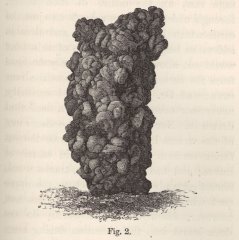
Fig. 2. Tower-like casting from near Nice,
constructed of earth, voided probably by a species of Perichæta: of
natural size, copied from a photograph.
The tallest of those which were measured was 3.3 inch
in height and 1 in diameter. A small cylindrical passage runs up the
centre of each tower, through which the worm ascends to eject the earth
which it has swallowed, and thus to add to its height. A structure of
this kind would not allow leaves being easily dragged from the
surrounding ground into the burrows; and Dr. King, who looked carefully,
never saw even a fragment of a leaf thus drawn in. Nor could any trace
be discovered of the worms having crawled down the exterior surfaces of
the towers in search of leaves; and had they done so, tracks would
almost certainly have been left on the upper part whilst it remained
soft. It does not, however, follow that these worms do not draw leaves
into their burrows during some other season of the year, at which time
they would not build up their towers.
From the several foregoing cases, it can hardly be
doubted that worms swallow earth, not only for the sake of making their
burrows, but for obtaining food. Hensen, however, concludes from his
analyses of humus that worms probably could not live on ordinary
vegetable mould, though he admits that they might be nourished to some
extent by leaf-mould. [12] But we have seen that worms eagerly devour
raw meat, fat, and dead worms; and ordinary mould can hardly fail to
contain many ova, larvæ, and small living or dead creatures, spores of
cryptogamic plants, and micrococci, such as those which give rise to
saltpetre. These various organisms, together with some cellulose from
any leaves and roots not utterly decayed, might well account for such
large quantities of mould being swallowed by worms. It may be worth
while here to recall the fact that certain species of Utricularia, which
grow in damp places in the tropics, possess bladders beautifully
constructed for catching minute subterranean animals; and these traps
would not have been developed unless many small animals inhabited such
soil.
The depth to which worms penetrate, and the
construction of their burrows. — Although
worms usually live near the surface, yet they burrow to a considerable
depth during long-continued dry weather and severe cold. In Scandinavia,
according to Eisen, and in Scotland, according to Mr. Lindsay Carnagie,
the burrows run down to a depth of from 7 to 8 feet; in North Germany,
according to Hoffmeister, from 6 to 8 feet, but Hensen says, from 3 to 6
feet. This latter observer has seen worms frozen at a depth of 1½ feet
beneath the surface. I have not myself had many opportunities for
observation, but I have often met with worms at depths of 3 to 4 feet.
In a bed of fine sand overlying the chalk, which had never been
disturbed, a worm was cut into two at 55 inches, and another was found
here in December at the bottom of its burrow, at 61 inches beneath the
surface. Lastly, in earth near an old Roman Villa, which had not been
disturbed for many centuries, a worm was met with at a depth of 66
inches; and this was in the middle of August.
The burrows run down perpendicularly, or more commonly
a little obliquely. They are said sometimes to branch, but as far as I
have seen this does not occur, except in recently dug ground and near
the surface. They are generally, or as I believe invariably, lined with
a thin layer of fine, dark-coloured earth voided by the worms; so that
they must at first be made a little wider than their ultimate diameter.
I have seen several burrows in undisturbed sand thus lined at a depth of
4 ft. 6 in.; and others close to the surface thus lined in recently dug
ground. The walls of fresh burrows are often dotted with little globular
pellets of voided earth, still soft and viscid; and these, as it
appears, are spread out on all sides by the worm as it travels up or
down its burrow. The lining thus formed becomes very compact and smooth
when nearly dry, and closely fits the worm's body. The minute reflexed
bristles which project in rows on all sides from the body, thus have
excellent points of support; and the burrow is rendered well adapted for
the rapid movement of the animal. The lining appears also to strengthen
the walls, and perhaps saves the worm's body from being scratched. I
think so because several burrows which passed through a layer of sifted
coal-cinders, spread over turf to a thickness of 1½ inch, had been thus
lined to an unusual thickness. In this case the worms, judging from the
castings, had pushed the cinders away on all sides and had not swallowed
any of them. In another place, burrows similarly lined, passed through a
layer of coarse coal-cinders, 3½ inches in thickness. We thus see that
the burrows are not mere excavations, but may rather be compared with
tunnels lined with cement.
The mouths of the burrow are in addition often lined
with leaves; and this is an instinct distinct from that of plugging them
up, and does not appear to have been hitherto noticed. Many leaves of
the Scotch-fir or pine (Pinus sylvestris) were given to worms
kept in confinement in two pots; and when after several weeks the earth
was carefully broken up, the upper parts of three oblique burrows were
found surrouuded for lengths of 7, 4, and 3½ inches with pine-leaves,
together with fragments of other leaves which had been given the worms
as food. Glass beads and bits of tile, which had been strewed on the
surface of the soil, were stuck into the interstices between the
pine-leaves; and these interstices were likewise plastered with the
viscid castings voided by the worms. The structures thus formed cohered
so well, that I succeeded in removing one with only a little earth
adhering to it. It consisted of a slightly curved cylindrical case, the
interior of which could be seen through holes in the sides and at either
end. The pine-leaves had all been drawn in by their bases; and the sharp
points of the needles had been pressed into the lining of voided earth.
Had this not been effectually done, the sharp points would have
prevented the retreat of the worms into their burrows; and these
structures would have resembled traps armed with converging points of
wire, rendering the ingress of an animal easy and its egress difficult
or impossible. The skill shown by these worms is noteworthy and is the
more remarkable, as the Scotch pine is not a native of this district.
After having examined these burrows made by worms in
confinement, I looked at those in a flower-bed near some Scotch pines.
These had all been plugged up in the ordinary manner with the leaves of
this tree, drawn in for a length of from 1 to 1½ inch; but the mouths of
many of them were likewise lined with them, mingled with fragments of
other kinds of leaves, drawn in to a depth of 4 or 5 inches. Worms often
remain, as formerly stated, for a long time close to the mouths of their
burrows, apparently for warmth; and the basket-like structures formed of
leaves would keep their bodies from coming into close contact with the
cold damp earth. That they habitually rested on the pine-leaves, was
rendered probable by their clean and almost polished surfaces.
The burrows which run far down into the ground,
generally, or at least often, terminate in a little enlargement or
chamber. Here, according to Hoffmeister, one or several worms pass the
winter rolled up into a ball. Mr. Lindsay Carnagie informed me (1838)
that he had examined many burrows over a stone-quarry in Scotland, where
the overlying boulder-clay and mould had recently been cleared away, and
a little vertical cliff thus left. In several cases the same burrow was
a little enlarged at two or three points one beneath the other; and all
the burrows terminated in a rather large chamber, at a depth of 7 or 8
feet from the surface. These chambers contained many small sharp bits of
stone and husks of flax-seeds. They must also have contained living
seeds, for on the following spring Mr. Carnagie saw grass-plants
sprouting out of some of the intersected chambers. I found at Abinger in
Surrey two burrows terminating in similar chambers at a depth of 36 and
41 inches, and these were lined or paved with little pebbles, about as
large as mustard seeds; and in one of the chambers there was a decayed
oat-grain, with its husk. Hensen likewise states that the bottoms of the
burrows are lined with little stones; and where these could not be
procured, seeds, apparently of the pear, had been used, as many as
fifteen having been carried down into a single burrow, one of which had
germinated. [13] We thus see how easily a botanist might be deceived who
wished to learn how long deeply buried seeds remained alive, if he were
to collect earth from a considerable depth, on the supposition that it
could contain only seeds which had long lain buried. It is probable that
the little stones, as well as the seeds, are carried down from the
surface by being swallowed; for a surprising number of glass beads, bits
of tile and of glass were certainly thus carried down by worms kept in
pots; but some may have been carried down within their mouths. The sole
conjecture which I can form why worms line their winter-quarters with
little stones and seeds, is to prevent their closely coiled-up bodies
from coming into close contact with the surrounding cold soil; and such
contact would perhaps interfere with their respiration which is effected
by the skin alone.
A worm after swallowing earth, whether for making its
burrow or for food, soon comes to the surface to empty its body. The
ejected earth is thoroughly mingled with the intestinal secretions, and
is thus rendered viscid. After being dried it sets hard. I have watched
worms during the act of ejection, and when the earth was in a very
liquid state it was ejected in little spurts, and when not so liquid by
a slow peristaltic movement. It is not cast indifferently on any side,
but with some care, first on one and then on another side; the tail
being used almost like a trowel.
As soon as a little heap is formed, the worm
apparently avoids, for the sake of safety, protruding its tail; and the
earthy matter is forced up through the previously deposited soft mass.
The mouth of the same burrow is used for this purpose for a considerable
time. In the case of the tower-like castings (see Fig. 2) near Nice, and
of the similar but still taller towers from Bengal (hereafter to be
described and figured) a considerable degree of skill is exhibited in
their construction. Dr. King also observed that the passage up these
towers hardly ever ran in the same exact line with the underlying
burrow, so that a thin cylindrical object such as a haulm of grass,
could not be passed down the tower into the burrow; and this change of
direction probably serves in some manner as a protection. When a worm
comes to the surface to eject earth, the tail protrudes, but when it
collects leaves its head must protrude. Worms therefore must have the
power of turning round in their closely-fitting burrows; and this, as it
appears to us, would be a difficult feat.
Worms do not always eject their castings on the
surface of the ground. When they can find any cavity, as when burrowing
in newly turned-up earth, or between the stems of banked-up plants, they
deposit their castings in such places. So again any hollow beneath a
large stone lying on the surface of the ground, is soon filled up with
their castings. According to Hensen, old burrows are habitually used for
this purpose; but as far as my experience serves, this is not the case,
excepting with those near the surface in recently dug ground. I think
that Hensen may have been deceived by the walls of old burrows, lined
with black earth, having sunk in or collapsed; for black streaks are
thus left, and these are conspicuous when passing through light-coloured
soil, and might be mistaken for completely filled-up burrows.
It is certain that old burrows collapse in the course
of time; for as we shall see in the next chapter, the fine earth voided
by worms, if spread out uniformly, would form in many places in the
course of a year a layer 1/5; of an inch in thickness; so that at any
rate this large amount is not deposited within the old unused burrows.
If the burrows did not collapse, the whole ground would be first thickly
riddled with holes to a depth of about ten inches, and in fifty years a
hollow unsupported space, ten inches in depth, would be left. The holes
left by the decay of successively formed roots of trees and plants must
likewise collapse in the course of time.
The burrows of worms run down perpendicularly or a
little obliquely, and where the soil is at all argillaceous, there is no
difficulty in believing that the walls would slowly flow or slide
inwards during very wet weather. When, however, the soil is sandy or
mingled with many small stones, it can hardly be viscous enough to flow
inwards during even the wettest weather; but another agency may here
come into play. After much rain the ground swells, and as it cannot
expand laterally, the surface rises; during dry weather it sinks again.
For instance, a large flat stone laid on the surface of a field sank
3.33 mm. whilst the weather was dry between May 9th and June 13th, and
rose 1.91 mm. between September 7th and 19th, much rain having fallen
during the latter part of this time. During frosts and thaws
the movements were twice as great. These observations were made by
my son Horace, who will hereafter publish an account of the movements of
this stone during successive wet and dry seasons, and of the effects of
its being undermined by worms. Now when the ground swells, if it be
penetrated by cylindrical holes, such as worm-burrows, their walls will
tend to yield and be pressed inwards; and the yielding will be greater
in the deeper parts (supposing the whole to be equally moistened) from
the greater weight of the superincumbent soil which has to be raised,
than in the parts near the surface. When the ground dries, the walls
will shrink a little and the burrows will be a little enlarged. Their
enlargement, however, through the lateral contraction of the ground,
will not be favoured, but rather opposed, by the weight of the
superincumbent soil.
Distribution of Worms.—Earth-worms
are found in all parts of the world, and some of the genera have an
enormous range. [14] They inhabit the most isolated islands; they abound
in Iceland, and are known to exist in the West Indies, St. Helena,
Madagascar, New Caledonia and Tahiti. In the Antarctic regions, worms
from Kerguelen Land have been described by Ray Lankester; and I found
them in the Falkland Islands. How they reach such isolated islands is at
present quite unknown. They are easily killed by salt-water, and it does
not appear probable that young worms or their egg-capsules could be
carried in earth adhering to the feet or beaks of land-birds. Moreover
Kerguelen Land is not now inhabited by any land-bird.
In this volume we are chiefly concerned with the earth
cast up by worms, and I have gleaned a few facts on this subject with
respect to distant lands. Worms throw up plenty of castings in the
United States. In Venezuela, castings, probably ejected by species of
Urochæta, are common in the gardens and fields, but not in the forests,
as I hear from Dr. Ernst of Caracas. He collected 156 castings from the
court-yard of his house, having an area of 200 square yards. They varied
in bulk from half a cubic centimeter to five cubic centimeters, and were
on an average three cubic centimeters. They were, therefore of small
size in comparison with those often found in England; for six large
castings from a field near my house averaged 16 cubic centimeters.
Several species of earth-worms are common in St. Catharina in South
Brazil, and Fritz Müller informs me "that in most parts of the forests
and pasture-lands, the whole soil, to a depth of a quarter of a metre,
looks as if it had passed repeatedly through the intestines of
earth-worms, even where hardly any castings are to be seen on the
surface." A gigantic but very rare species is found there, the burrows
of which are sometimes even two centimeters or nearly 4/5; of an inch in
diameter, and which apparently penetrate the ground to a great depth.
In the dry climate of New South Wales, I hardly
expected that worms would be common; but Dr. G. Krefft of Sydney, to
whom I applied, after making enquiries from gardeners and others, and
from his own observations, informs me that their castings abound. He
sent me some collected after heavy rain, and they consisted of little
pellets, about .15 inch in diameter; and the blackened sandy earth of
which they were formed still cohered with considerable tenacity.
The late Mr. John Scott of the Botanic Gardens near
Calcutta made many observations for me on worms living under the hot and
humid climate of Bengal. The castings abound almost everywhere, in
jungles and in the open ground, to a greater degree, as he thinks, than
in England. After the water has subsided from the flooded rice-fields,
the whole surface very soon becomes studded with castings—a fact which
much surprised Mr. Scott, as he did not know how long worms could
survive beneath water. They cause much trouble in the Botanic garden,
"for some of the finest of our lawns can be kept in anything like order
only by being almost daily rolled; if left undisturbed for a few days
they become studded with large castings." These closely resemble those
described as abounding near Nice; and they are probably the work of a
species of Perichæta. They stand up like towers, with an open passage in
the centre.
A figure of one of these castings from a photograph is
here given (Fig. 3). The largest received by me was 3½ inches in height
and 1.35 inch in diameter; another was only ¾ inch in diameter and 2¾ in
height.
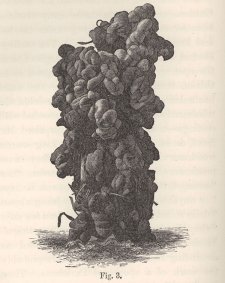
Fig. 3. A tower-like casting, probably
ejected by a species of Perichæta, from the Botanic Garden, Calcutta: of
natural size, engraved from a photograph.
In the following year, Mr. Scott measured several of
the largest; one was 6 inches in height and nearly 1½ in diameter: two
others were 5 inches in height and respectively 2 and rather more than
2½ inches in diameter. The average weight of the 22 castings sent to me
was 35 grammes (1¼ oz.); and one of them weighed 44.8 grammes (or 2
oz.). All these castings were thrown up either in one night or in two.
Where the ground in Bengal is dry, as under large trees, castings of a
different kind are found in vast numbers: these consist of little oval
or conical bodies, from about the 1/20 to rather above 1/10 of an inch
in length. They are obviously voided by a distinct species of worms.
The period during which worms near Calcutta display
such extraordinary activity lasts for only a little over two months,
namely, during the cool season after the rains. At this time they are
generally found within about 10 inches beneath the surface. During the
hot season they burrow to a greater depth, and are then found coiled up
and apparently hybernating. Mr. Scott has never seen them at a greater
depth than 2½ feet, but has heard of their having been found at 4 feet.
Within the forests, fresh castings may be found even during the hot
season. The worms in the Botanic garden, during the cool and dry season,
draw many leaves and little sticks into the mouths of their burrows,
like our English worms; but they rarely act in this manner during the
rainy season.
Mr. Scott saw worm-castings on the lofty mountains of
Sikkim in North India. In South India Dr. King found in one place, on
the plateau of the Nilgiris, at an elevation of 7000 feet, "a good many
castings," which are interesting for their great size. The worms which
eject them are seen only during the wet season, and are reported to be
from 12 to 15 inches in length, and as thick as a man's little finger.
These castings were collected by Dr. King after a period of 110 days
without any rain; and they must have been ejected either during the
north-east or more probably during the previous south-west monsoon; for
their surfaces had suffered some disintegration and they were penetrated
by many fine roots. A drawing is here given (Fig. 4) of one which seems
to have best retained its original size and appearance. Notwithstanding
some loss from disintegration, five of the largest of these castings
(after having been well sun-dried) weighed each on an average 89.5
grammes, or above 3 oz.; and the largest weighed 123.14 grammes, or 4⅓
oz.,—that is above a quarter of a pound! The largest convolutions were
rather more than one inch in diameter; but it is probable that they had
subsided a little whilst soft, and that their diameters had thus been
increased. Some had flowed so much that they now consisted of a pile of
almost flat confluent cakes. All were formed of fine, rather light-coloured
earth, and were surprisingly hard and compact, owing no doubt to the
animal matter by which the particles of earth had been cemented
together. They did not disintegrate, even when left for some hours in
water. Although they had been cast up on the surface of gravelly soil,
they contained extremely few bits of rock, the largest of which was only
.15 inch in diameter.
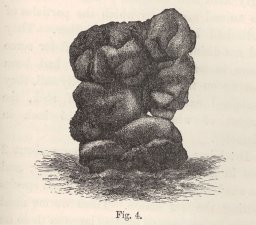
Fig. 4. A casting from the Nilgiri Mountains
in South India; of natural size, engraved from a photograph.
Dr. King saw in Ceylon a worm about 2 feet in length
and ½ inch in diameter; and he was told that it was a very common
species during the wet season. These worms must throw up castings at
least as large as those on the Nilgiri Mountains; but Dr. King saw none
during his short visit to Ceylon. Sufficient facts have now been given,
showing that worms do much work in bringing up fine earth to the surface
in most or all parts of the world, and under the most different
climates.
_______________
1. Claparède remarks ('Zeitschrift für wissenschaft.
Zoolog. B. 19, 1869, p. 602) that the pharynx appears from its structure
to be adapted for suction.
2. An account of her observations is given in the
'Gardeners Chronicle, March 28th, 1868, p. 324.
3. Londons 'Gard. Mag. xvii. p. 216, as
quoted in the 'Catalogue of the British Museum Worms, 1865, p. 327.
4. 'Familie der Regenwürmer, p. 19.
5. In these narrow triangles the apical
angle is 9° 34′, and the basal angles 85° 13′. In the broader triangles
the apical angle is 19° 10′ and the basal angles 80° 25′.
6. See his interesting work,
'Souvenirs entomologiques,' 1879, p. 168–177.
7. Möbius, 'Die Bewegungen der
Thiere,' &c., 1873, p. 111.
8. 'Annals and Mag. of N.
History,' series ii. vol. ix. 1852, p. 333.
9. 'Archives de Zoolog. expér.' tom.
iii. 1874, p. 405.
10. I state this on the authority of
Semper, 'Reisen im Archipel der Philippinen," Th. ii. 1877, p. 30.
11. Dr. King gave me some worms
collected near Nice, which, as he believes, had constructed these
castings. They were sent to M. Perrier, who with great kindness examined
and named them for me: they consisted of Perichœta affinis, a
native of Cochin China and of the Philippines; P. Luzonica, a
native of Luzon in the Philippines; and P. Houlleti, which
lives near Calcutta. M. Perrier informs me that species of Perichæta
have been naturalized in the gardens near Montpellier and in Algiers.
Before I had any reason to suspect that the tower-like castings from
Nice had been formed by worms not endemic in the country, I was greatly
surprised to see how closely they resembled castings sent to me from
near Calcutta, where it is known that species of Perichæta abound.
12. 'Zeitschrift für wissenschaft.
Zoolog.' B. xxviii. 1877, p. 364.
13. 'Zeitschrift für wissenschaft.
Zoolog.' B. xxviii. 1877, p. 356.
14. Perrier, 'Archives de Zoolog.
expér.' tom. 3, p. 378, 1874.