|
BLACK ELK SPEAKS: BEING THE LIFE STORY OF A HOLY MAN OF THE OGLALA SIOUX |
|
APPENDIXES APPENDIX 1 Transcript of
stenographic notes for a letter written by John G. Neihardt to Nick
Black Elk, Nick Black Elk Dear Friend, Your letter of November 3 has just reached me, and I am very happy to hear from you! I wondered why I did not hear from you. But I was sure that you would write to me, for I felt when we parted at your home in Manderson that we were friends and that you would not fail me. I see now why you did not write sooner. I am glad to know that you are willing to make the picture story of the Messiah and of Wounded Knee for me. You say if I will send you $7 for the material, you can go ahead on this work, and I am sending you the money with this letter, so that you can get started. You did not tell me how much you will want for your work. Please do. I think that fawn skin will be even better for the picture than rawhide. Now I have something to tell you that I hope and believe will interest you as much as it does me. After talking with you four and a half hours and thinking over many things you told me, I feel that the whole story of your life ought to be written truthfully by somebody with the right feeling and understanding of your people and of their great history. My idea is to come back to the reservation next spring, probably in April, and have a number of meetings with you and your old friends among the Oglalas who have shared the great history of your race, during the past half century or more. I would want you to tell the story of your life beginning at the beginning and going straight through to Wounded Knee. I would have my daughter, who is a shorthand writer, take down everything you would say, and I would want your friends to talk any time about, and share in, the different things that you would tell about. This would make a complete story of your people since your childhood. So, you see, this book would be not only the story of your life, but the story of the life of your people. The fact that you have been both a warrior and a medicine man would be of great help in writing the book, because both religion and war are of great importance in history. The book that I sent you at Manderson [The Song of the Indian Wars] is a poem dealing only with the wars between the Sioux and white men and does not tell everything that ought to be told. This book about you would be written in prose, and I would use as much of your language in it as possible. My publisher is eager to have me do this, for I have told him all about it. I would, of course, expect to pay you well for all the time that you would give me. It would probably be necessary for us to have eight or ten meetings. Does this plan seem a good one to you, and if it seems good to you, will you not be willing to help me make it successful? I do feel that so much is known by you Indians that our white people do not know and should know, that I am very eager to write this book if you will help me. Write and tell me how much you think you should be paid for each meeting, and there should be from six to ten meetings. And tell me if you think you could get three or four of the fine old men that you know to meet with us and talk about old times while you are telling your story to me. This is not a money-making scheme for me. I can make money much faster and easier in other ways. I want to do this book because I want to tell the things that you and your friends know, and I can promise you that it will be an honest and a loving book. I often look at the beautiful ornaments you gave me, and I am very proud of them. And also when I look at them, I think of what they tell me, and that makes them more beautiful still. With every kind thought for you and your family. Your friend, John G. Neihardt
Joint
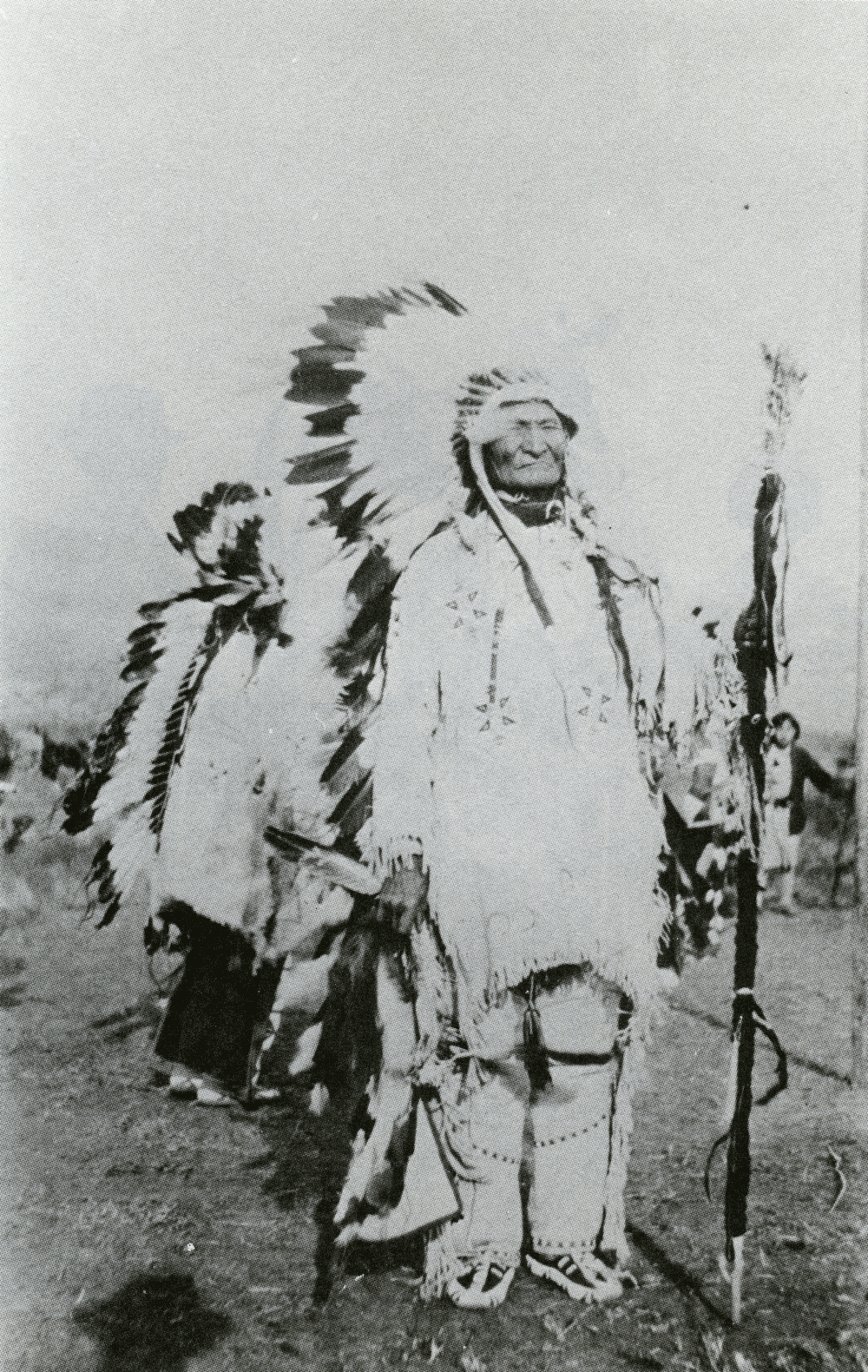
Collection, Western Historical Manuscript Collection, University of APPENDIX 2: A NEIHARDT-BLACK ELK PORTFOLIO The photograph overleaf of Black Elk and Elk is used with the permission of the Smithsonian Institution. All the following photographs are reproduced by permission of the John G. Neihardt Trust. They may not be used in any manner without the written permission of the John G. Neihardt Trust, Hilda N. Petri, Trustee.
Smithsonian institution, National Anthropological Archives.
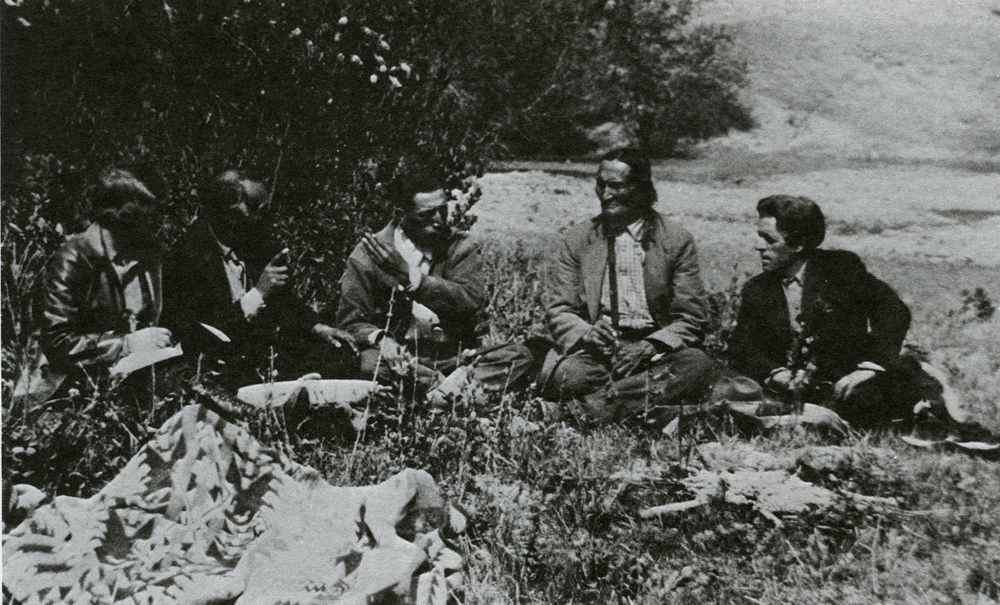
Enid Neihardt, Nick Black Elk, Ben Black Elk, Standing Bear, and John G. Neihardt
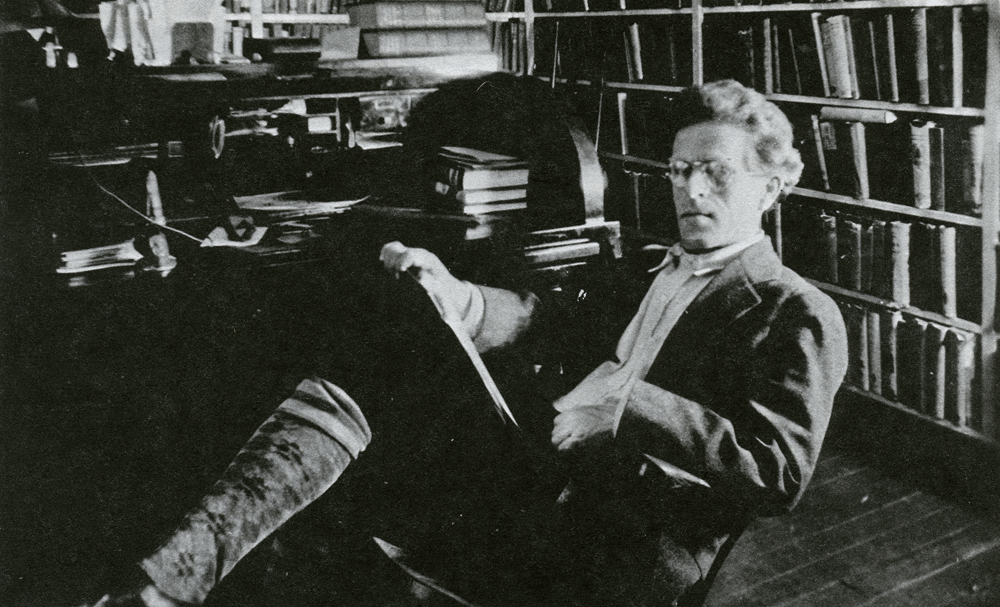
John G. Neihardt in the study in his home in Branson, Missouri, during the early 1930s
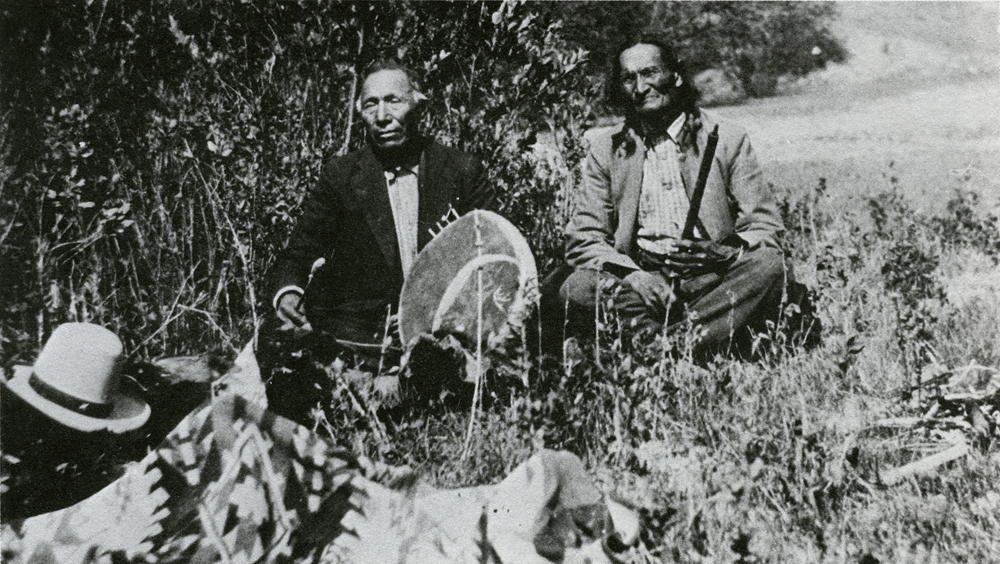
Black Elk with his drum and Standing Bear with Black Elk's pipe; in the foreground a Chief Joseph blanket. Photograph taken by John G. Neihardt during the interviews for Black Elk Speaks
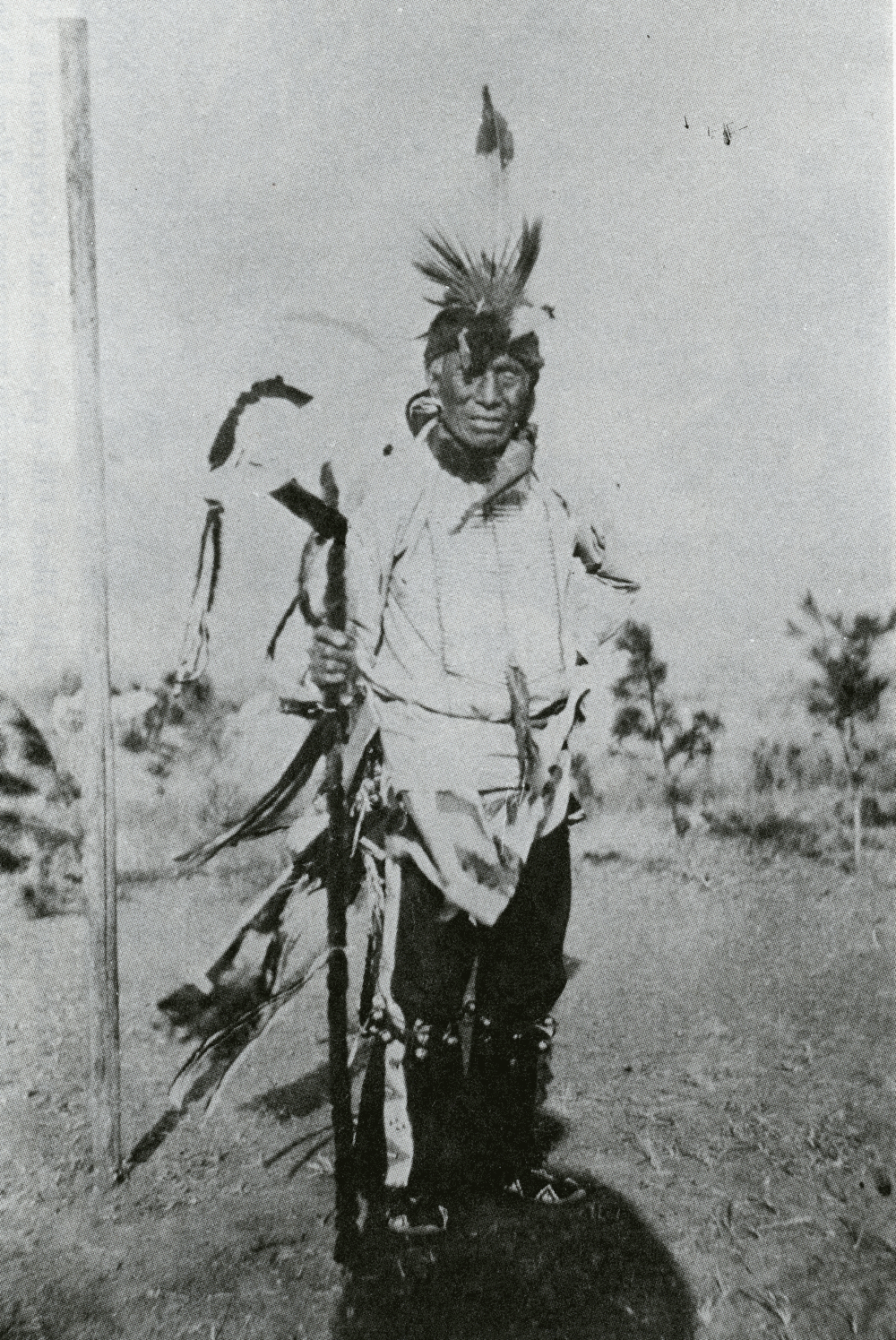
Black Elk at a feast given by John G. Neihardt in May 1931. Photograph taken by the author
Standing Bear at the same feast. Photograph taken by the author
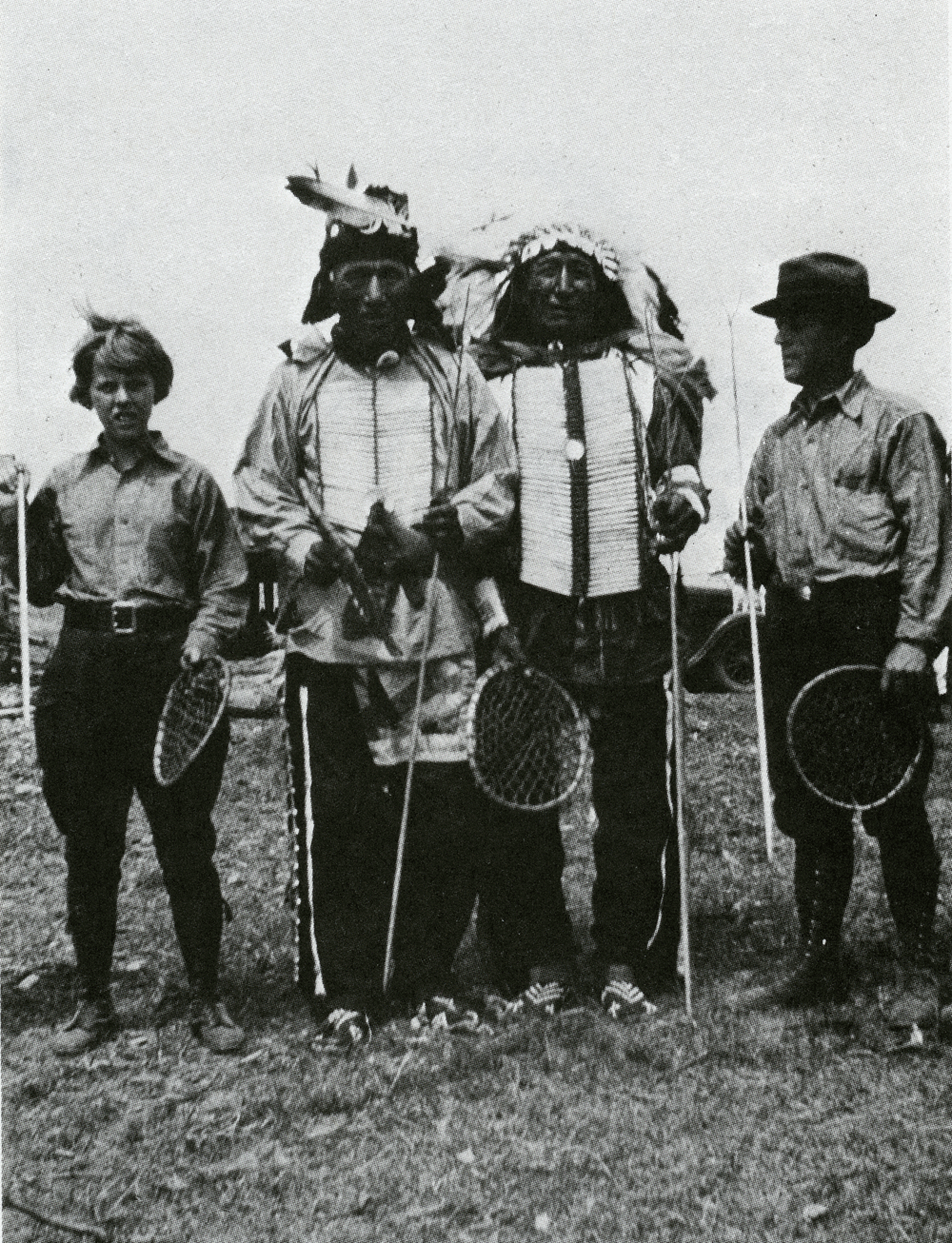
Hilda Neihardt, Black Elk, Chase in the Morning, and John G. Neihardt ready for the hoop and spear game. Photograph taken in May 1931 in front of Black Elk's home
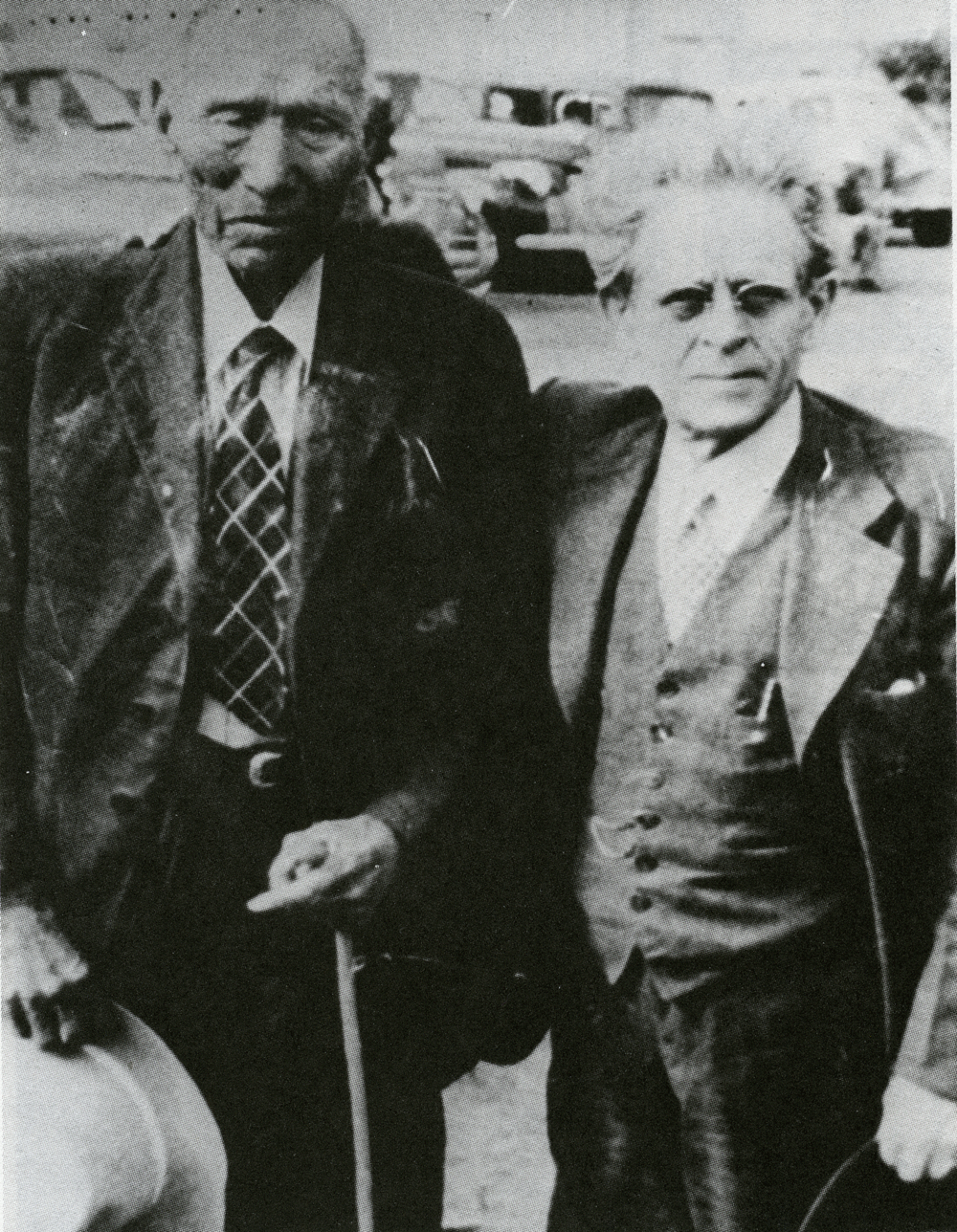
Black Elk and Neihardt at the Sioux Victory celebration at Pine Ridge in September 1945
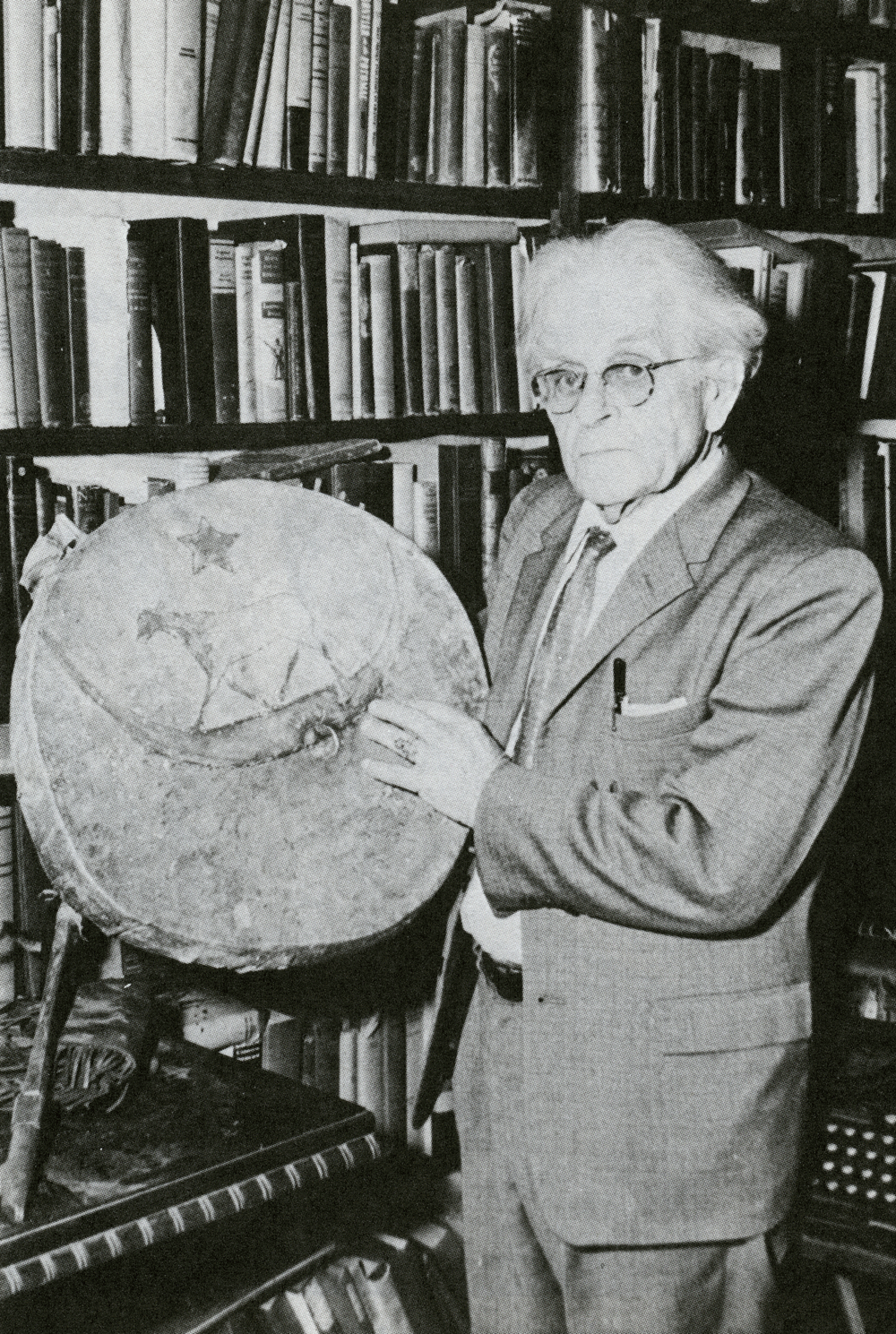
John G. Neihardt with Black Elk's drum in the library of Skyrim, his home in Columbia, Missouri, 1958 or 1959 APPENDIX 3: THE ORIGIN OF THE PEACE PIPE During the Black Elk interviews, as John Neihardt has described in the Preface, "a faithful record of the narrative and conversations" was kept by his daughter Enid, a skilled stenographer, and a transcript of her notes lay before him when he wrote Black Elk Speaks. To illustrate concretely how Neihardt interpreted the spirit of Black Elk's narrative, this Appendix presents the transcript of Black Elk's oral account of the origin of the peace pipe for comparison with the corresponding passages in Neihardt's handwritten draft. (For comparison with the printed version, see page 3, line 11, through page 5, line 7.) A comparison of the transcript and the draft reveals that Neihardt suppressed unnecessary details, altered awkward expressions, and introduced a tone of reverence and solemnity, transmuting the oral narrative into literature. For the general reader the omitted details clutter up the story, making it harder to follow; but for anthropologists, folklorists, and students of religion some of these details are significant. For example, from the beginning of the story the woman is seen to be carrying something, and when she arrives at the camp she first places this bundle down facing east. A dozen or so of these specific details which do not appear in the story can be found in the transcript. The Transcript ORIGINATION OF PEACE PIPE. The Indians were in camp and they had a meeting to send scouts out to kill buffalo. The scouts were on top of a hill and as they looked to the north in the distance something was appearing. They were going on, but they wanted to find out what it was and they kept looking and finally it came closer; then they found out it was a woman. Then one of the men said: "That is a woman coming." One of them had bad thoughts of her and one of them said: "This is a sacred woman, throw all bad thots aside." She came up the hill where they were. She was very beautiful, her long hair hanging down and she had on a beautiful buckskin coat. She put down what she was carrying and covered it up with sage. She knew what they had in their minds. She said: "Probably you do not know me, but if you want to do as you think, come." So the one said to the other, "That is what I told you, but you wouldn't listen to me." So one of the men went and just as he faced her, there was a cloud that came and covered them. The beautiful woman walked out of the cloud and stood there. Then the cloud blew off and the man was nothing but a skeleton with worms eating on it. That is what happened to him for being bad. She turned to the other one and said, "You shall go home and tell thy nation that I am coming. Therefore in the center of thy nation they shall build a big teepee and there I will come." So this man left at once and he was very scared, for his friend was a skeleton. He told the tribe what had happened and they all got excited and right away they prepared a place for her to come. They built a teepee right in the center and she was now in it. She put what she was carrying facing the East. All the people gathered right there. She sang a song as she entered the teepee:
Then she presented the pipe to the chief. It was an ordinary pipe but there was a calf carved in one side and there were twelve eagle feathers tied on with a grass that never breaks. She said: "Behold this, for you shall multiply with this and a good nation thou shalt be. You shall get nothing but good from this pipe, so I want it to be in the hands of a good man and the good shall have the privilege of seeing it, but the bad shall not have the privilege of seeing it." This pipe is still in the possession of the Sioux. The first man who kept it was a man by the name of High Hollow Horn. The pipe is handed down from son to son. She taught them to "keep spirits" and if a man's son dies, the man keeps a piece of his son's hair. This woman was really a white buffalo. Thus the respect for the white buffalo. She told them that when there was no food they should offer this pipe to the Great Spirit and they would know from this pipe when they were going to have trouble. The pipe gets long at certain times and this means hard times. When it gets short the times are good. After she went back she sang another song. As she went out of the teepee everyone saw a white buffalo kicking up his hind legs and leaving in a hurry snorting as it went. The Handwritten Draft There is a story about the way the pipe first came to us. A very long time ago, they say, two scouts were out looking for bison; and when they came to the top of a high hill and looked north they saw something coming a long way off, and when it came closer they cried out, "It is a woman!", and it was. Then one of the scouts, being foolish, had bad thoughts & spoke them; but the other said: "That is a sacred woman; throw all bad thoughts away." When she came still closer, they saw that she wore a fine white buckskin dress, that her hair was very long and that she was young & very beautiful. And she knew their thoughts and said in a voice that was like singing: "You do not know me, but if you want to do as you think, you may come." And the foolish one went, but just as he stood before her, there was a white cloud that came & covered them. And the beautiful young woman came out of the white cloud, and when it blew away the foolish man was a skeleton covered with worms. Then the woman spoke to the one who was not foolish: "You shall go home & tell your people that I am coming & that a big tepee shall be built for me in the center of the nation." And the man who was very much afraid went quickly and told the people, who did at once as they were told; & there around the big tepee they waited for the sacred woman. And after a while she came, very beautiful & singing, and as she went into the tepee this is what she sang:
And as she sang there came from her mouth a white cloud that was sweet to smell. Then she gave something to the chief, and it was a pipe with a bison calf carved on one side to mean the earth that bears & feeds us, and with twelve eagle feathers hanging from the stem to mean the sky and the twelve moons, and these were tied with a grass that never breaks. "Behold!" she said. "With this you shall multiply & be a good nation. Nothing but good shall come from it. Only the hands of the good shall take care of it & the bad shall not even see it." Then she sang again & went out of the tepee, and as the people watched her going, suddenly it was a white bison galloping away & snorting, and soon it was gone. This they tell, and whether it happened so or not I do not know; but if you think about it, you can see that it is true.
Joint
Collection, Western Historical Manuscript Collection, University of |