|
CHRISTMAS unWRAPPED: THE HISTORY OF CHRISTMAS |
|
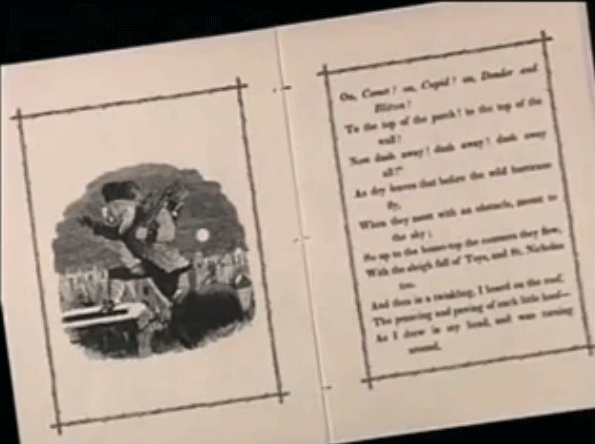
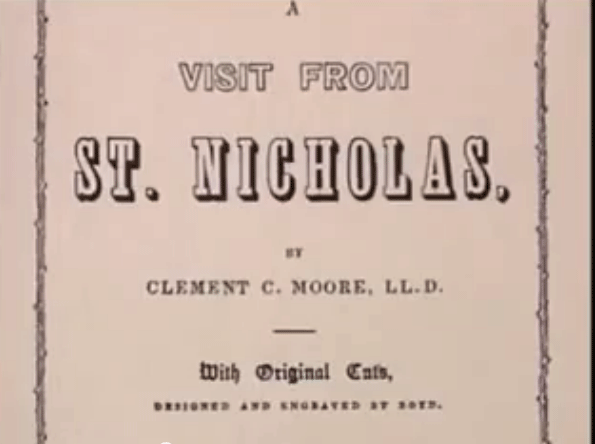
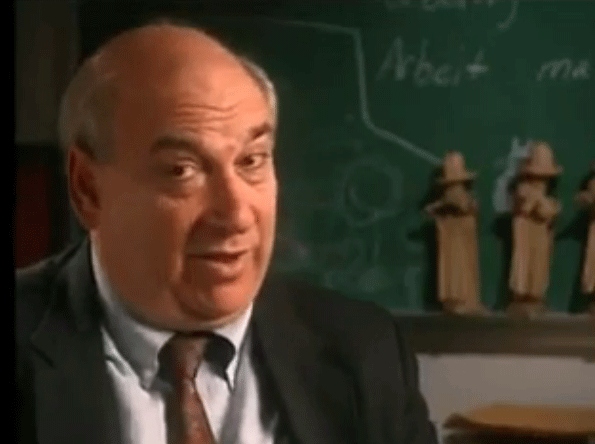
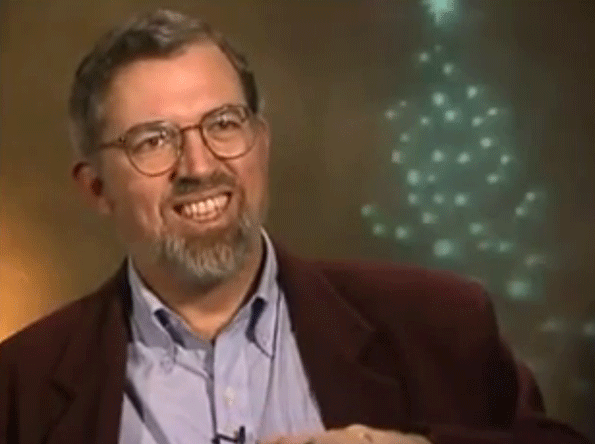
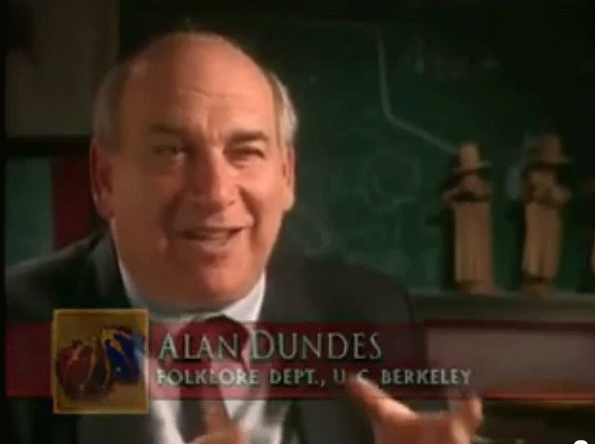
[Alan Dundes, Folklore Dept., U.C. Berkeley] Clement Moore was a minister. Here, a minister, who should be on the other side, is promoting a secular Christmas, with reindeer and all of the rest of it. But there was no mention in the poem of anything religious.
In fact, that's why he didn't reveal who he was. In the beginning, he didn't reveal the authorship.
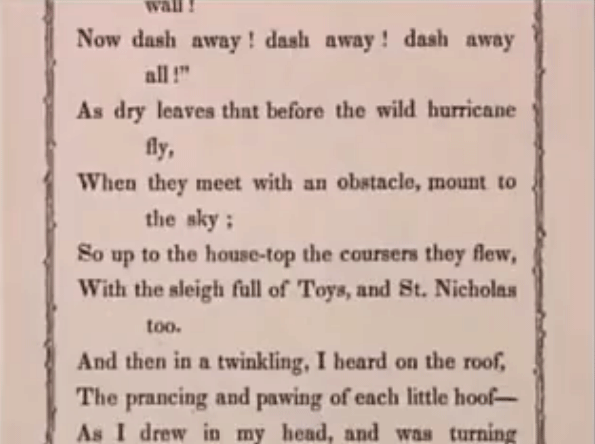
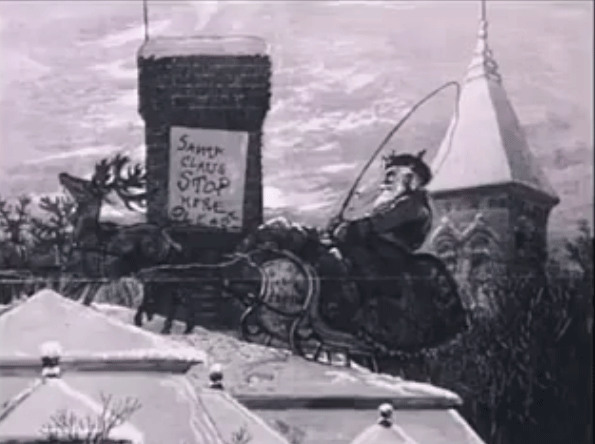
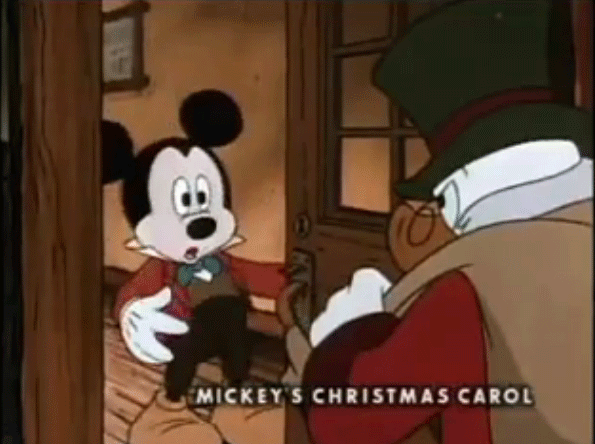
[Narrator] Moore soon owned up to the poem when it became clear that every child in America was scanning the horizon for reindeer on Christmas eve.
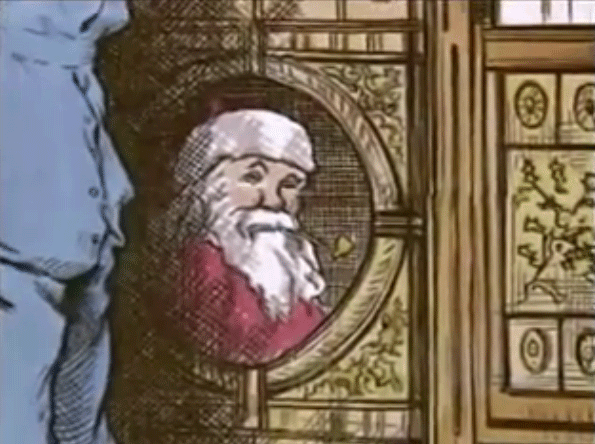
Less clear was what exactly this Santa Claus looked like.
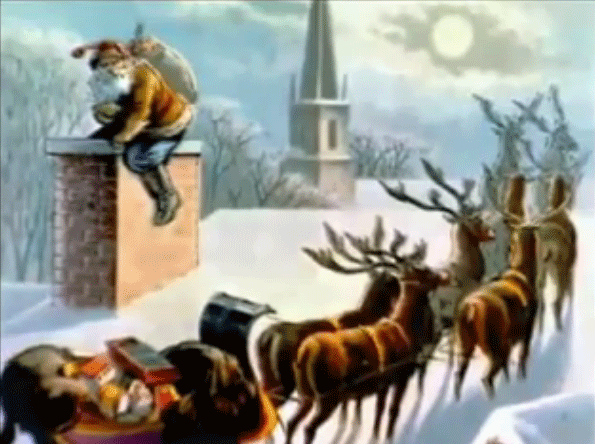
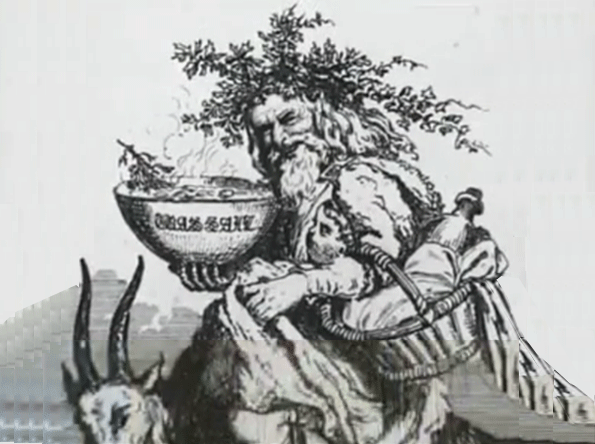
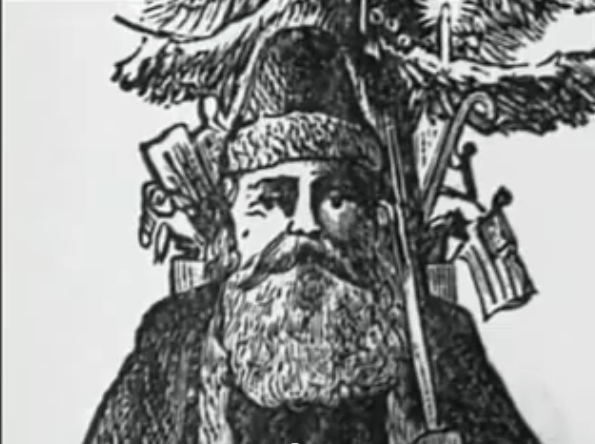
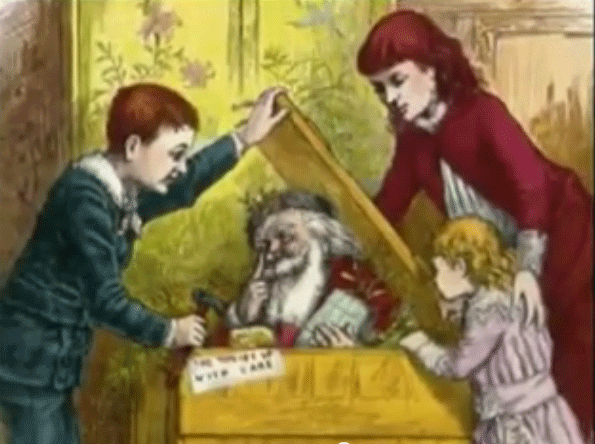
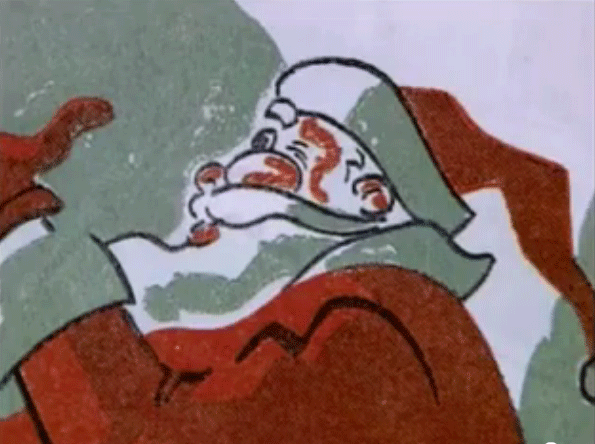
At first, Santa came in all shapes and sizes: a pagan sorcerer;
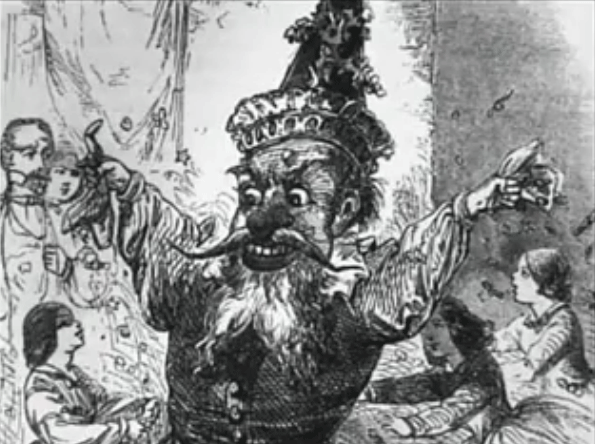
a frightening gnome;
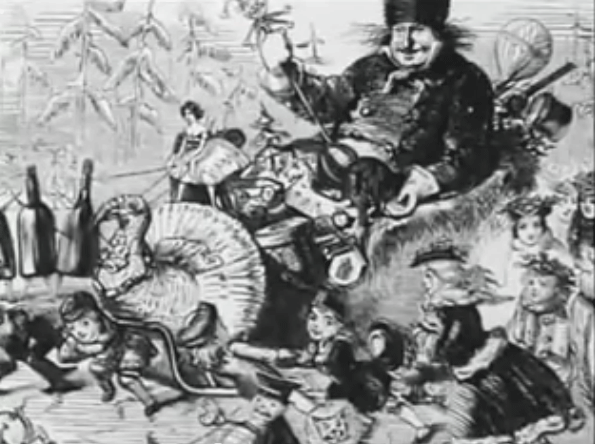
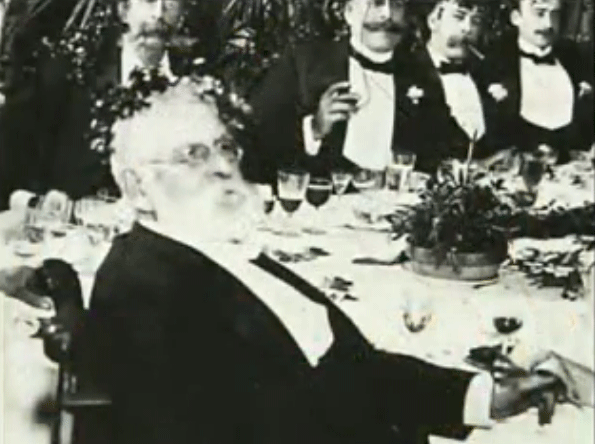
even a drunkard on a turkey-driven sleigh.
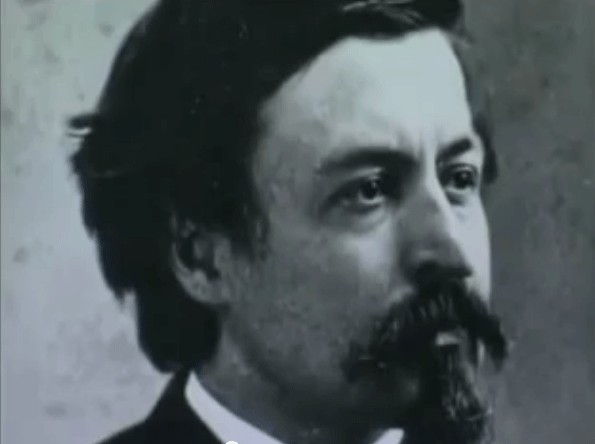
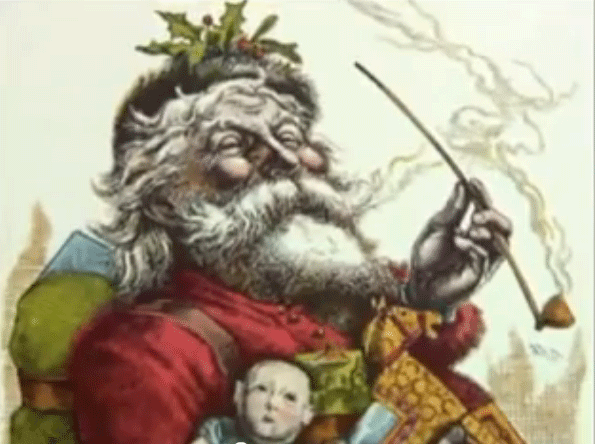
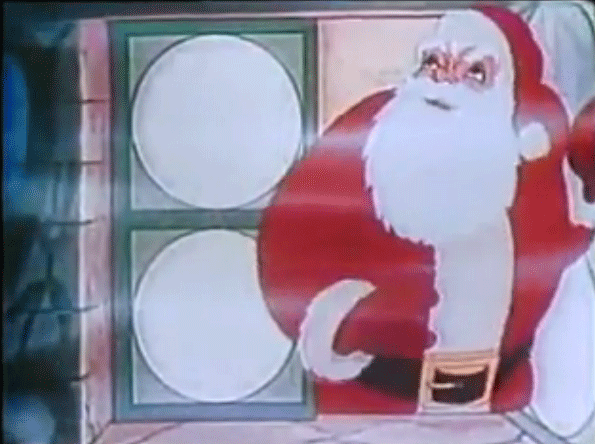
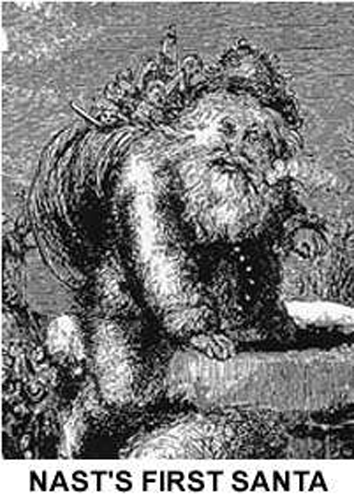
Then in 1863, Thomas Nast, a cartoonist for Harper's Weekly, settled the matter once and for all with his version of the Christmas Saint.
Nast's Santa was rounder and jollier than his austere Catholic cousin.
He looked, in fact, like a man of his times, a man who would fit right in with the rotund, bewhiskered robber-barons of the late 19th century.
But Santa was a robber-baron in reverse. [Penne L. Restad, Historian, Univ. of Texas] Instead of taking from the less fortunate, he gave to the less fortunate. He gave to people regardless of whether they had done something or not. In other words, he gave to children. Instead of gathering together wealth, he gets rid of wealth, and he does it yearly.
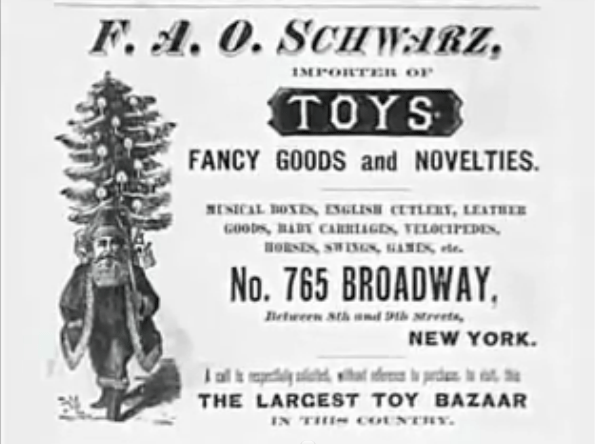
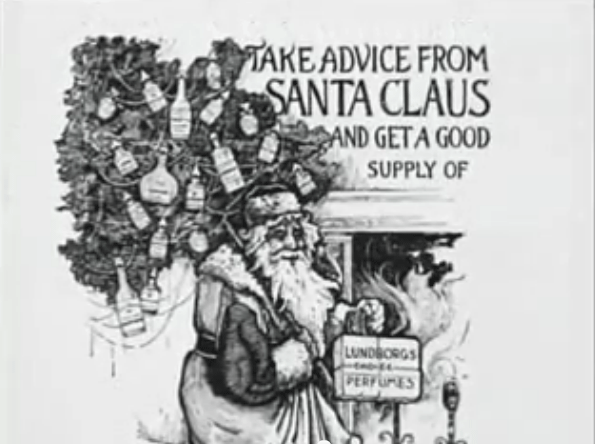
[Narrator] A captain of industry with a heart of gold. It's no wonder that by the 1840s, Santa Claus was an irresistible image to America's retailers. Here was a guy who could sell anything at Christmas, but make it seem like you were not buying gifts at all.
[Stephen Nissenbaum, Historian, Univ. of Mass.] Santa provided a way for both children and parents to pretend that Christmas presents were not in the realm of the commercial marketplace, that Christmas presents existed in the realm of pure domestic affection. So Santa Claus played a very important role for both parents and children. He took presents out of the realm of commerce.
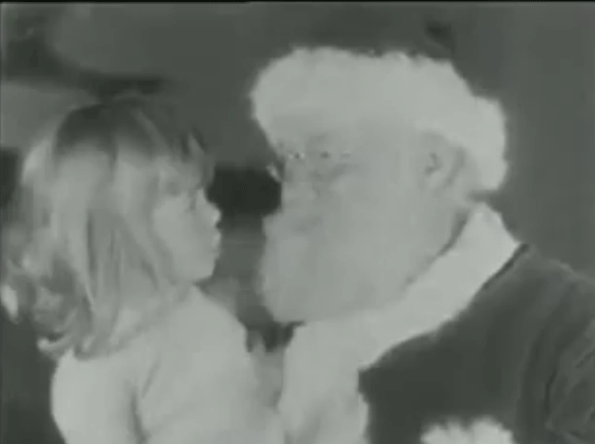
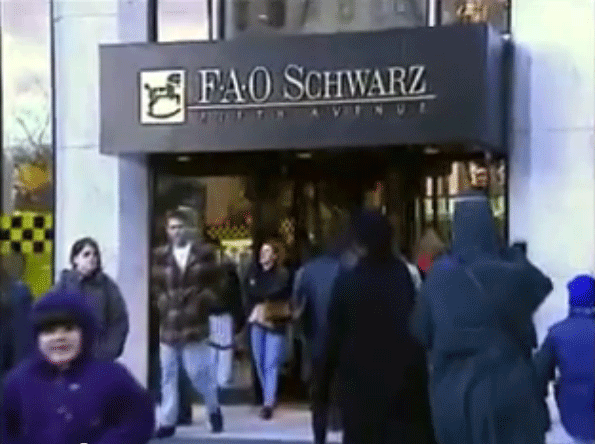
[Narrator] If the image of Santa could sell merchandise, retailers soon figured out that a real, live Santa would boost sales even further. Santa has been showing up in department stores since the mid-1800s. And since then, nothing has loomed larger to a child at Christmas than this annual pilgrimage.
[Alan Dundes, Folklore Dept., U.C. Berkeley] If you want to talk to Santa Claus, where do you go? You go to the shopping mall.
Now this is strange for a Saint to be living pretty much full time in a department store.
And it is rather American, because we are after all a capitalistic society. It makes perfect sense for us to have our national saint in a department store. That's commercial sense for us. Dollars and cents.
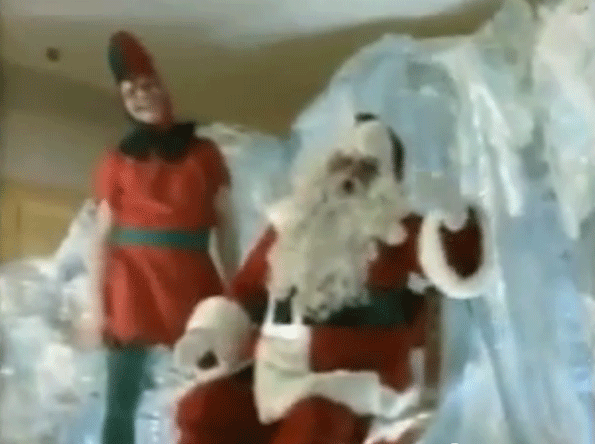
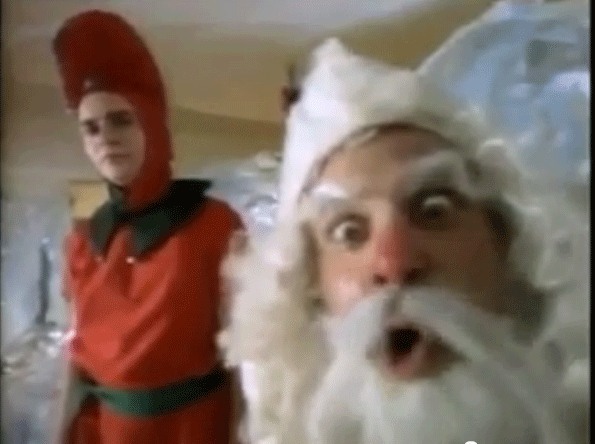
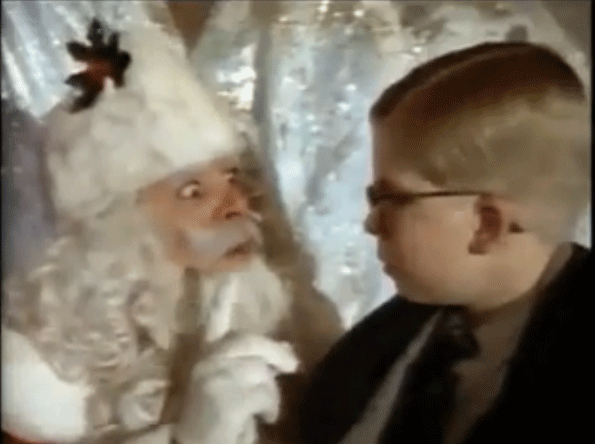
[Narrator] Author and humorist Jean Shepherd immortalized this rite of passage in "A Christmas Story," an autobiographical account of one boy's Christmas. [Jean Shepherd, Humorist] I had been thinking for weeks what I wanted for Christmas. I figured the best thing to do was to tell Santa Claus about that.
And I looked up at that Santa Claus, and he had these big, watery blue eyes, and a huge beard. And he's looking me right in the eye, and he was so impressive that my mind went blank.
It's like if all of a sudden you are sitting on the President's lap, and he says, "What would you like me to pass in legislation, sonny?" I mean, your mind's gonna go blank. You can't remember any of this stuff. And so at that point Santa Claus looked at me and he says, "Alright, ha, ha, ha, ha, how about a football, kid?"
A football? I wanted a BB gun.
So he pushed me off his lap, and this elf grabbed me and threw me down a slide that went down into the snow. And I lay there for a minute, and I knew that I was not a fit person to talk to the great Santa Claus, who is obviously a star.
[Narrator] A celebrity of this magnitude obviously needed a sidekick.
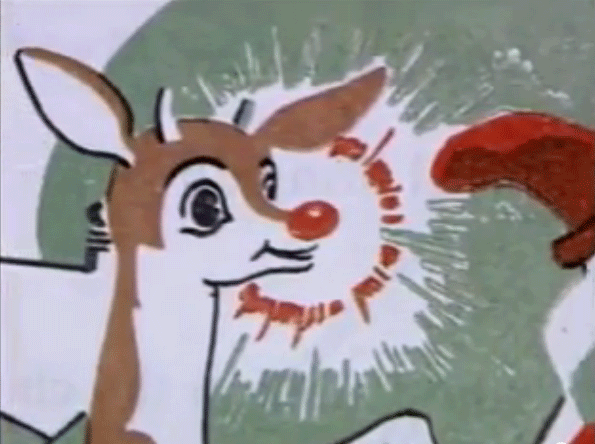
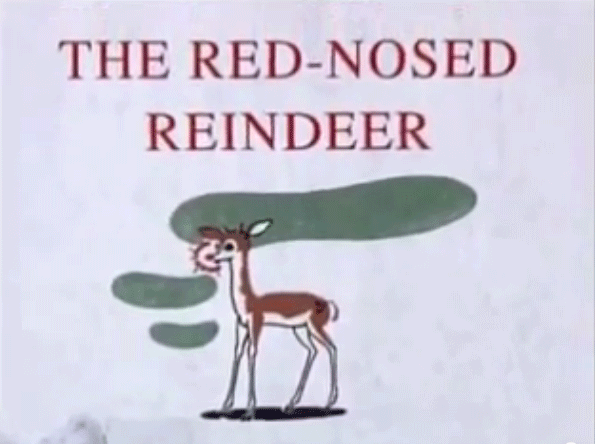
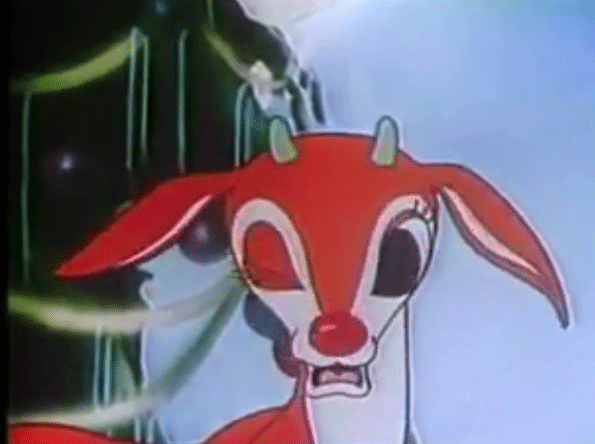
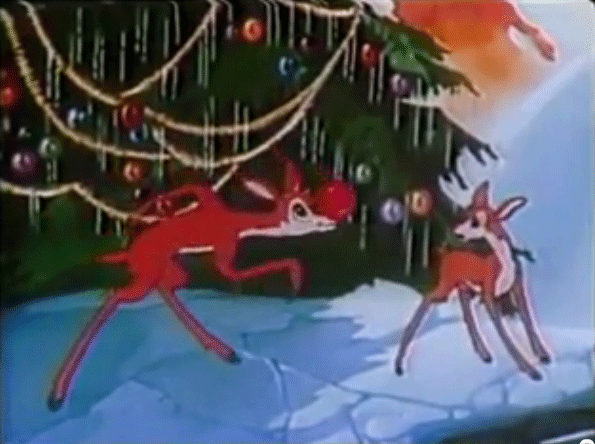
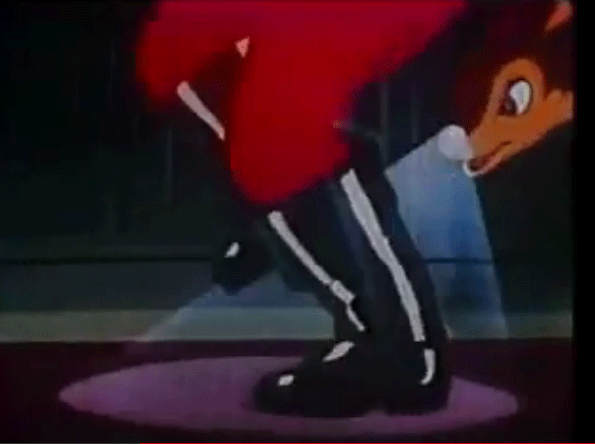
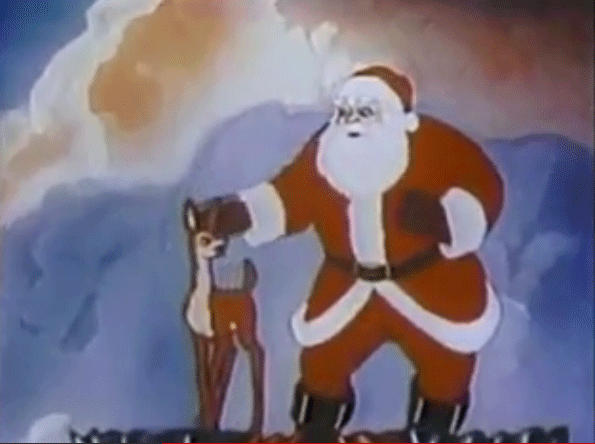
In 1939, Robert May, a copyrighter at the Montgomery Ward department store, dashed off a promotional children's book to lure Christmas shoppers into the store. [Rudolph The Red-Nosed Reindeer]
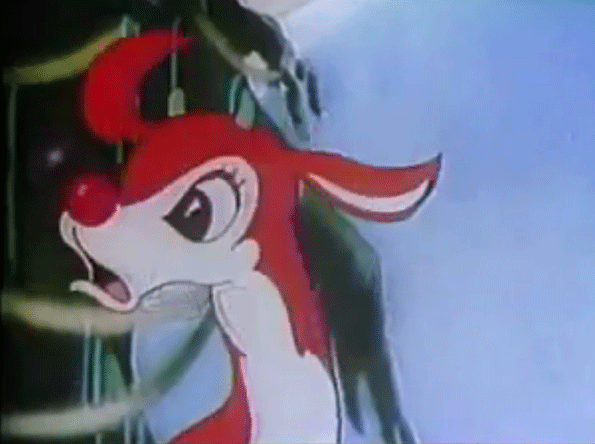
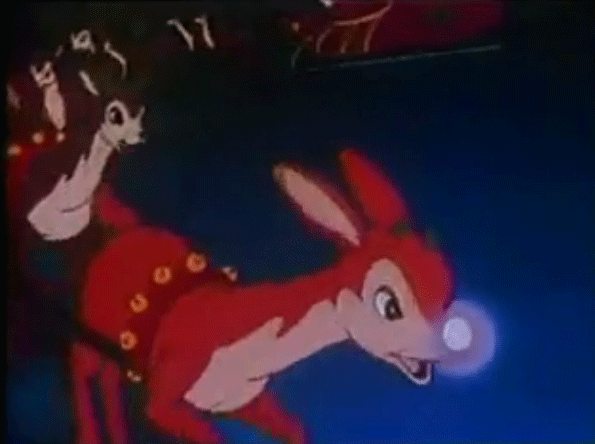
May's story told of an ostracized reindeer with a big, red nose.
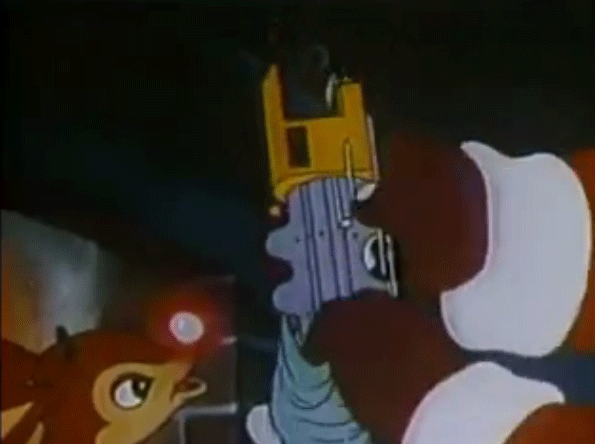
[Alan Dundes, Folklore Dept., U.C. Berkeley] This physical, should I say "disability", turns out to be an asset, because it's a foggy Christmas eve, and this light (ha ha ha) on his nose enables poor old stumbling Santa Claus to get through.
So you have this handicapped sort of child figure helping the benighted parental figure make Christmas possible.
[Narrator] Rudolph brought Christmas full circle. It was now the children who really made Christmas possible. Only THEY understood the meaning of this enchanted day. From Washington Irving to Montgomery Ward ... I'll Be Home For Christmas
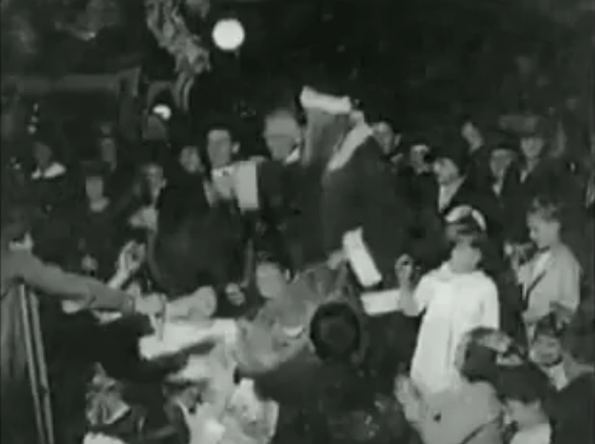
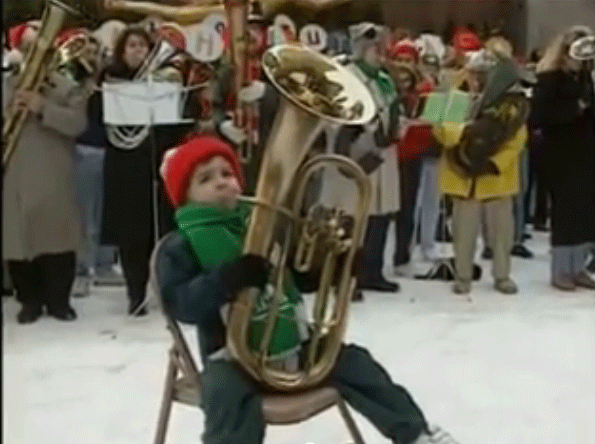
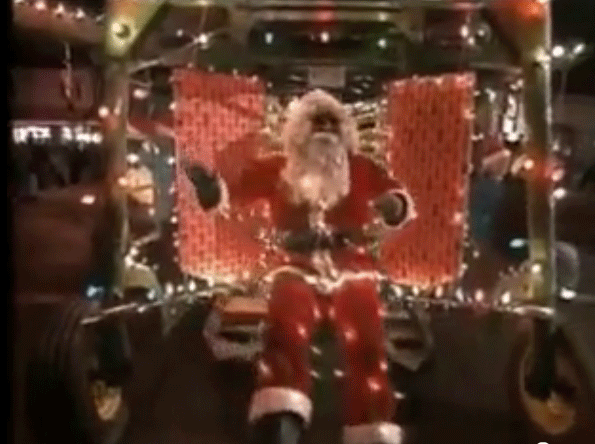
[Narrator] By the 1920s, few vestiges of the carnival Christmas were left in America. One exception was this Christmas parade in New York City, where a glimpse of Santa Claus was worth an all-day wait.
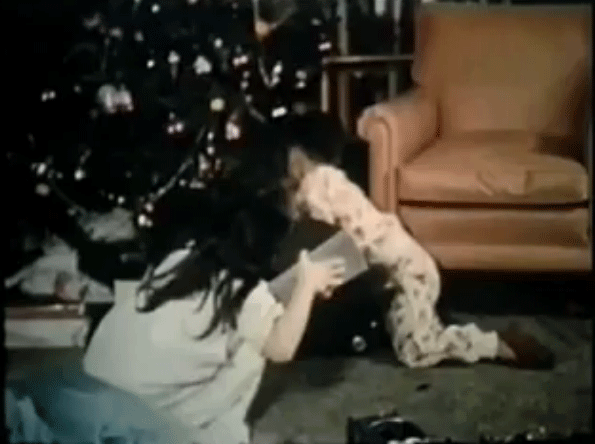
But by the 1950s, Christmas was strictly a family affair, with eggnog by the fire, Bing on the hi-fi, and a load of presents under the tree. [Jean Shepherd, Humorist] The joy of opening up gifts is one of the things that makes Christmas what it is. It's the mystery of all of these packages. I think that's why we wrap them. It's exciting to have a package lying there with silver paper on it. You don't know what's in it. And you open it up and there it is, it's something that's really great, that you really wanted. [Narrator] But to give presents, you have to shop for them. And shopping has long been at the heart of the Christmas season. Critics say this yearly buying frenzy obscures the real reason for Christmas: to celebrate the birth of the Christ Child.
[Penne L. Restad, Historian, Univ. of Texas] People say that "Christ" has been lost in Christmas. Implicit in that is the idea that Christ had ever been totally the center of Christmas. And as Christmas has been celebrated ever since it was instituted as a feast of the nativity, there's always been other ritual, other ceremony, other activity associated with Christmas in addition to Christ.
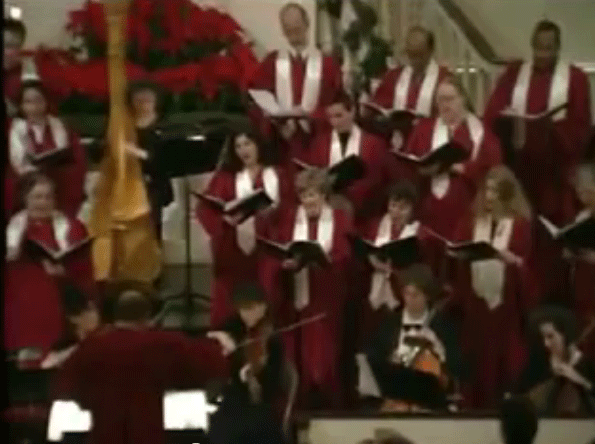
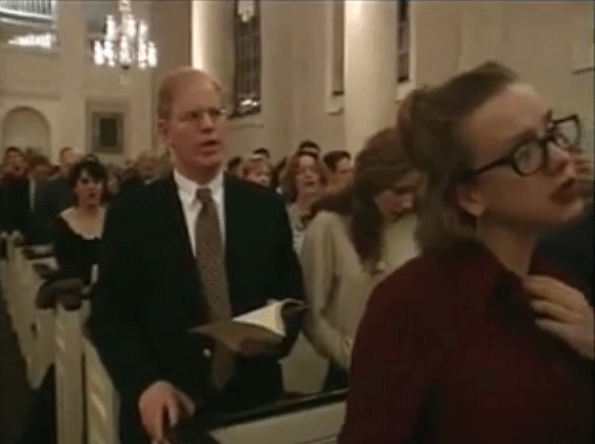
[Narrator] At the All Souls Church in New York City, Christmas Eve services give the secular side of the holiday some stiff competition.
[Rev. Forrest Church, Minister, All Souls Church, NYC] At All Souls, we sing carols, we bring in [inaudible] orchestra that do great music from the Christmas tradition. Certainly today, most churches revel in the celebrations as completely as do the corporate malls. That's not a bad thing. It actually goes back to the sources of this kind of holiday, where we recognize that people have deep needs at this time of year to connect with that which is very important, but also to celebrate.
[Leigh Eric Schmidt, Religion Dept., Princeton Univ.] It gets 50-60% of the population going to one kind of Christmas religious service or another. So clearly a lot of people haven't lost sight of the religious need. But what seems to be the concern here is that there's a struggle, a competition over what the real meaning is, and a sense that the religious is not competing effectively with all these other competitors.
[Narrator] But perhaps Christmas in America is more a combination of the sacred and the secular, and less a competition between the two.
[Penne L. Restad, Historian, Univ. of Texas] I think that if people had Christmas with just Christ in it, it would not be a holiday that would come out into the streets the way that it does, because the trees, the carols, the shopping, all of that becomes the cultural material that holds the religion in place.
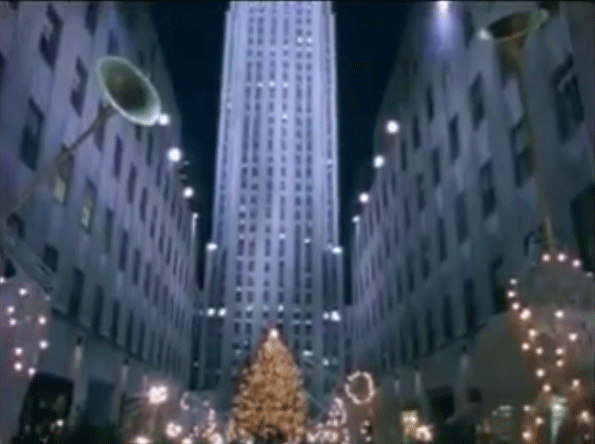
[Narrator] This cultural material is everywhere. Certain songs and movies have become as much a part of Christmas as the tree.
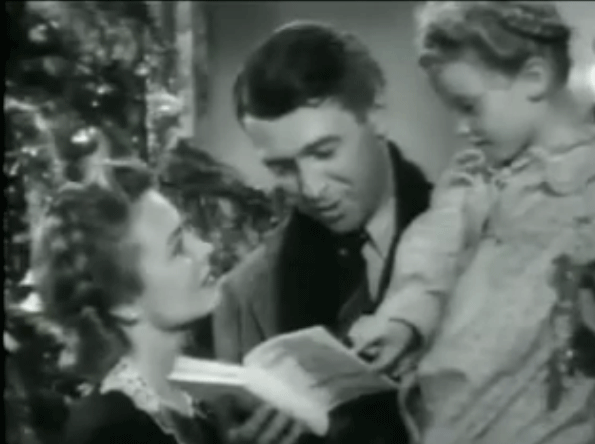
[Jimmy Stewart} I don't want to get married to anybody, you understand? I want to do what I want to do. And you --
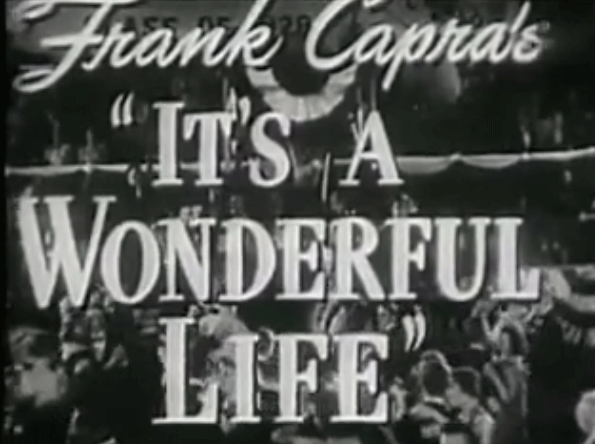
[Rev. Forrest Church, Minister, All Souls Church, NYC] Movies such as "It's a Wonderful Life", hunger for the art, or delight in them, reflects a deep potential goodness in the human soul.
But these are good movies. People do good things, and they get rewarded for them. Someone might say that this is a trivialization of Christmas. I think it probably is coming a little closer than many of the things we do to tapping the true Christmas spirit in the broadest sense of that word.
[Child] Look Daddy! Teacher says, "Every time a bell rings, an angel gets his wings."
[Stephen Nissenbaum, Historian, Univ. of Mass] Nowadays, kids watch new films and new TV shows, and they will grow up thinking that that was the way Christmas always used to be. We always reinvent, and every time we reinvent we think that what we're reinventing is something that has no beginning.
[Narrator] You can reinvent Christmas, or celebrate it the way your great grandparents did. The only thing you cannot do is ignore Christmas.
To not catch a glimpse of a Christmas tree, or hear a note of jingle bells, would be nearly impossible. And since 98% of Americans celebrate Christmas in some form, it looks like that won't change for quite some time. [Alan Dundes, Folklore Dept., U.C. Berkeley] It gives you a kind of sense of belonging. You are who you are because of the way you celebrate Christmas, in part.
And if you're celebrating an Armenian Christmas, or an Italian Christmas, whatever it is, whatever your group is, if you celebrate Christmas the same way every year, there's a sense of continuity here.
And the new children are brought in, and in effect are socialized by saying, "This is how we celebrate Christmas in our own family."
Something touches Americans, somewhere down deep in his belly button, about Christmas. You can't really explain what it is about Christmas that he enjoys so much.
He just knows that when all those red and green lights go up, you know, on the street, and you see Santa Clauses walking around with their bells, that something happens to you. You enjoy it. Now you can be cynical all you want, but you still enjoy it.
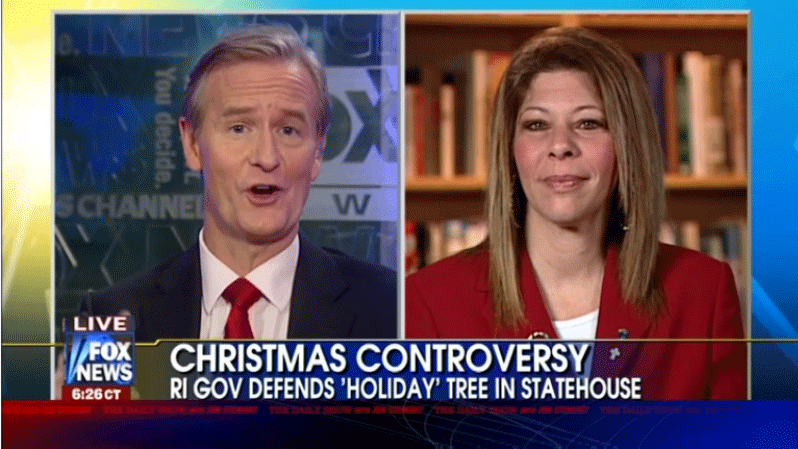
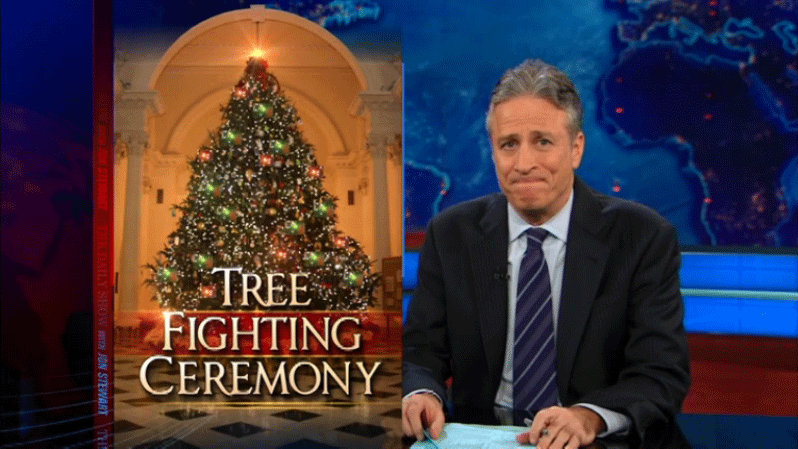
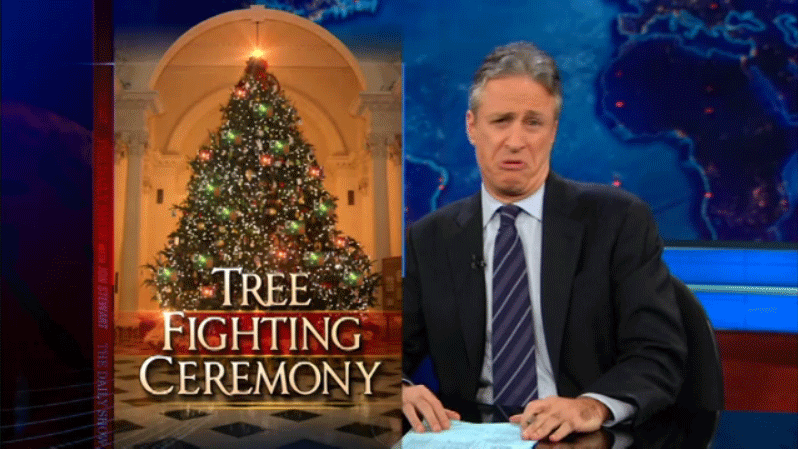
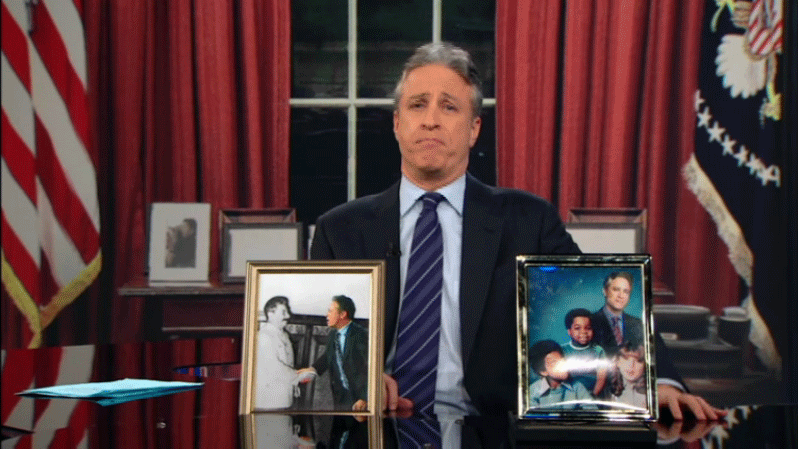
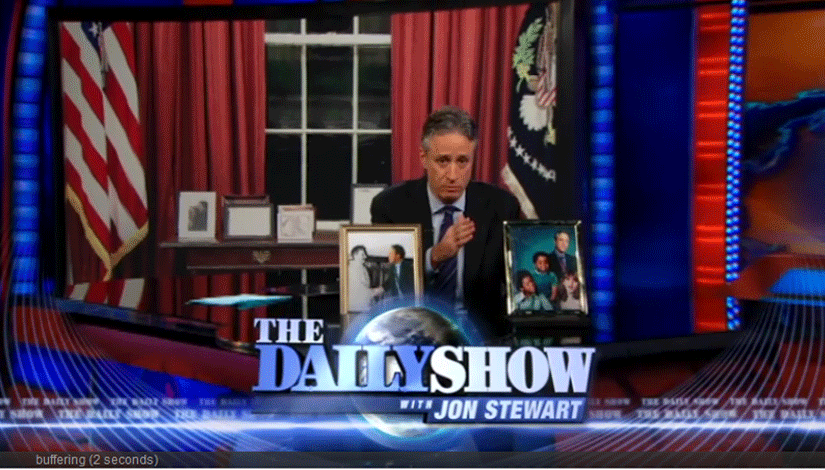
Produced and Written by Alison Guss Hosted by Harry Smith Tree Fighting Ceremony by Jon Stewart [Transcribed from the video by Tara Carreon, ABOL Librarian] [Jon] Friends, friends -- and I say that not really being able to see who's watching -- friends, it's that time of year again: holiday magic, the twinkling of lights, the nogging of eggs, and of course, anger and bitter disappointment. [Fox News Reporter] Rhode Island Governor, Lincoln Chafee, coming under fire after refusing to call the tree in the Rhode Island State House a "Christmas Tree." [Jon] He insists people call it the Devil's Pine, Satan's Spruce, a Treebortion. It's Fox's War on Christmas. It's back, baby, and this year's designated scrooge, Rhode Island Governor and part-time Steve Doocy impersonator Lincoln Chafee. A couple of weeks ago Chafee had the audacity to invite Americans to a "Tree Lighting," or judging by the reaction, a Jesus Tipping. [Fox News reporter] It's a "Christ"mas tree, with C H R I S T -- keep "Christ" in Christmas.
[Fox News reporter] For folks who are watching right now and who are thinking, "That's crazy. I should call the governor, we've got his phone number." (Contact Gov. Chafee at (401) 222-2080)
[Fox News reporter] And if it has lights and ornaments and an angel and decorations on top, it's a Christmas tree. [Fox News reporter] For the past eight years before this governor, your former governor, in fact, did call it a "Christmas tree," right? [Fox News witness] He did, Gretchen.
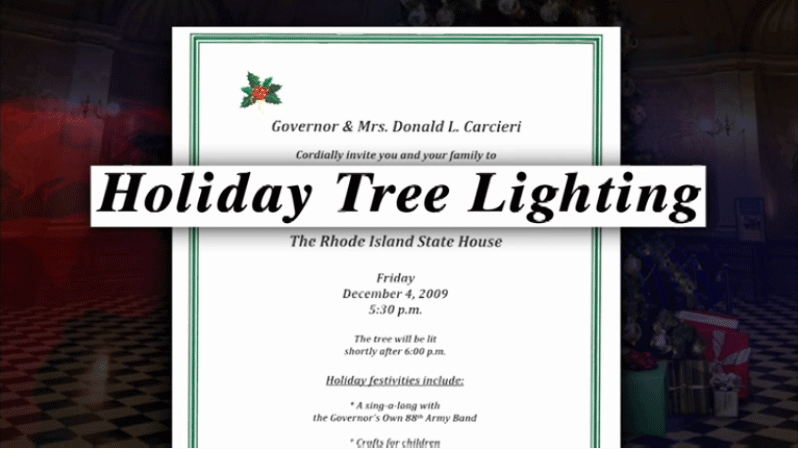
[Jon] Yeah, and while that's not true, who cares, it makes them angry? See, the previous Republican governor's 2009 invitation to this very same ceremony also uses the offending phrase, "Holiday Tree Lighting."
I mean, how is that not akin to wiping your ass with the shroud of Turin? I mean, really. That's a rhetorical question, obviously. Now who cares if the story is true, or what it actually means? The important thing is, to allow this heathen governor to defile a sacred oritichinal -- ritual. I don't even know what I was combining that word with. To allow him to defile a sacred ritual is to imperil our nation's very founding principles.
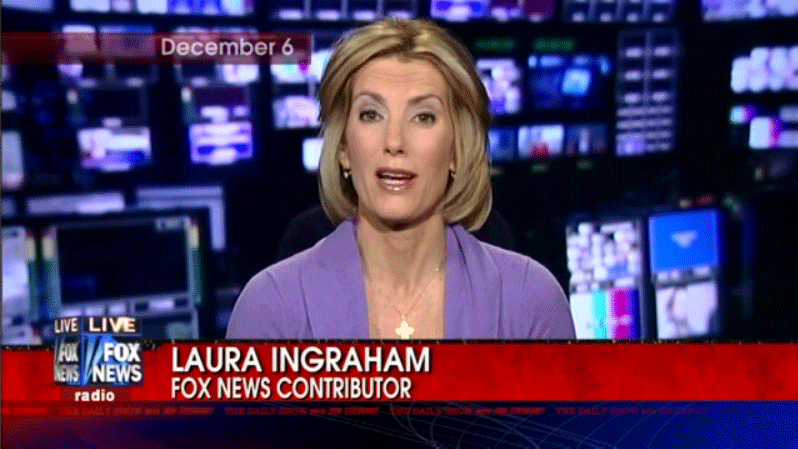
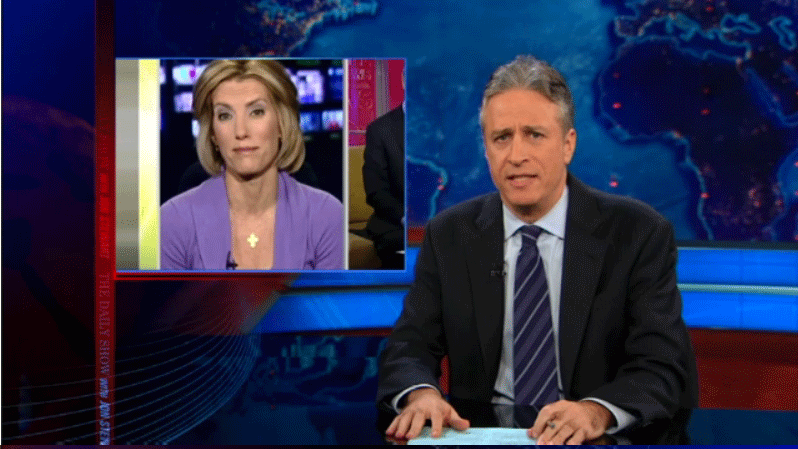
[Laura Ingraham, Fox News Reporter] Why do these pilgrims brave incredibly difficult conditions to live here, die here, and to try to start a new way of life for themselves, except for religious freedom? And now religious freedom is on the rocks.
[Jon] Yes, lady wearing cross on television. Religious freedom is on the rocks. Rocks!
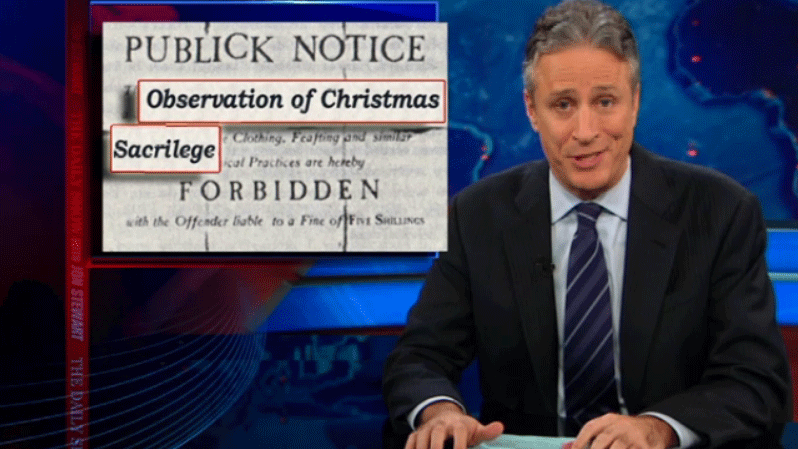
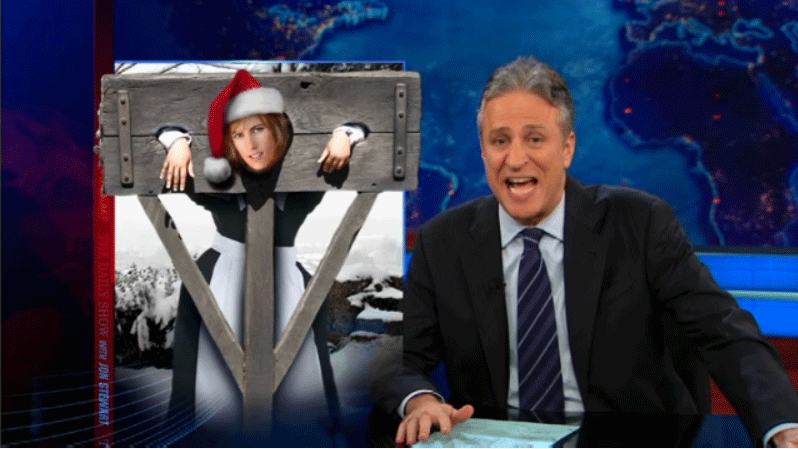
Of course, not as on the rocks as it was in the 17th century when your friends, the pilgrims, outlawed Christmas celebrations as a sacrilege, and declared gifts and Christmas decorations Satanical, levying a 5 schilling fine on anyone for saying, "Merry Christmas." Five schillings!
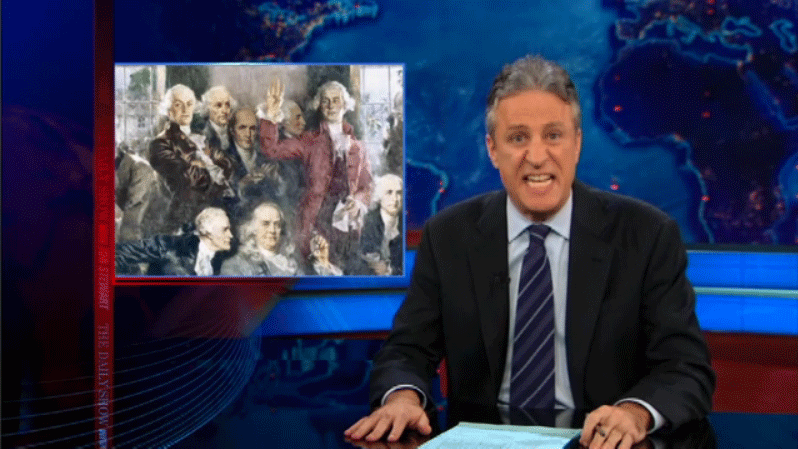
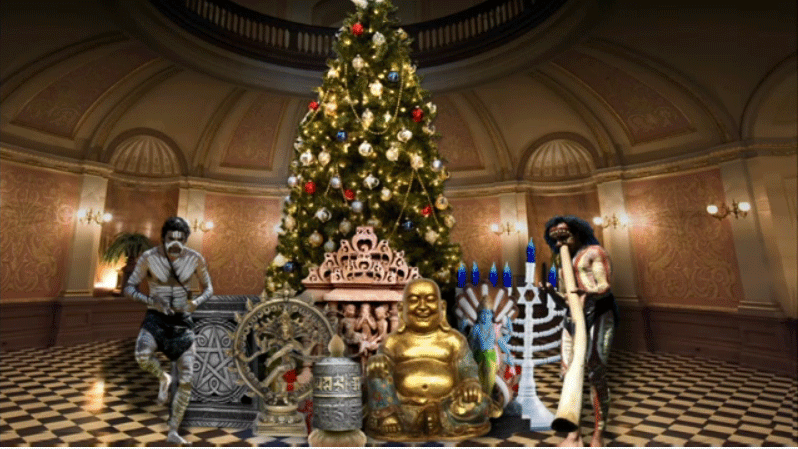
I mean, in those days that's two milk cows and a buckle hat. If the pilgrims were alive today, this is how they'd decorate the town square. Or, perhaps, you'd prefer to celebrate Christmas the way our founding fathers did.
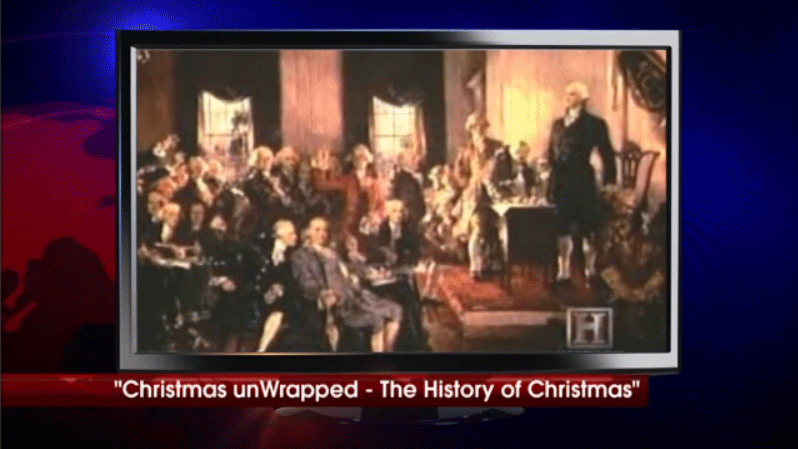
[Narrator "Christmas unWrapped, The History of Christmas"] On December 25, 1789, the United States Congress sat in session, and continued to stay open on Christmas day for most of the next 67 years.
[Jon] How does that taste, motherfuckers? That's right. When the country was founded, Congress had exactly the same attitude about the sanctity of Christmas celebrations that a 7-11 does today: "Yeah, we're open." Tree Fighting Ceremony, War on Christmas by Jon Stewart [Transcribed from the video by Tara Carreon, ABOL Librarian] [Jon] Fox, you take for granted the ubiquity of Christmas. But if there has been a war, Christmas is the aggressor nation. Right now, every public space in the country looks like it got hit with a 500 pound tinsel bomb. The White House looks like a yuletide episode of "Hoarders." Many of these displays are subsidized by -- what's that thing you don't want to spend on anything? -- taxpayer money.
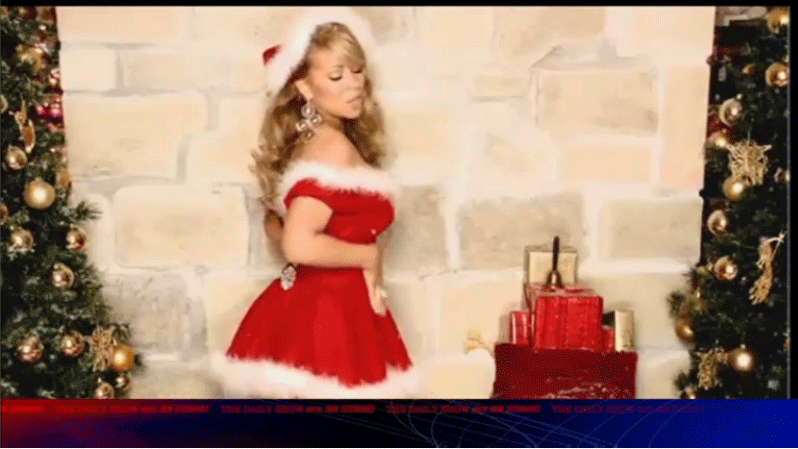
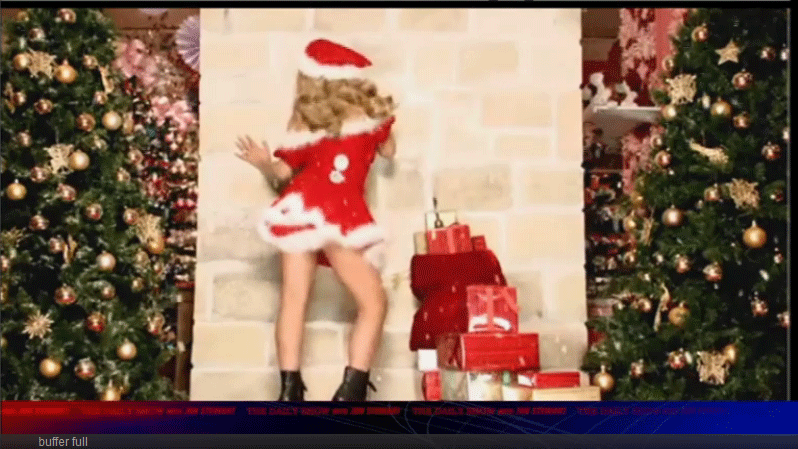
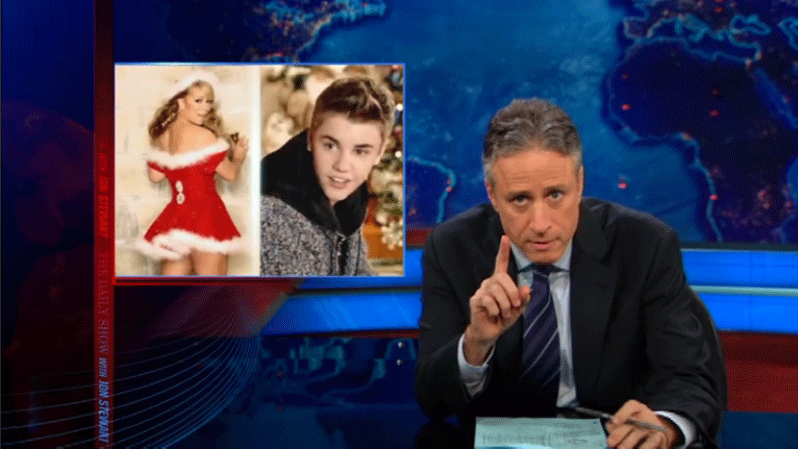
You want to fight about something taking the Christ out of Christmas? Whatever you think is the reason for the season, it does not involve Mariah Carey in a half-a-Santa suit presenting her ass to Justin Beaver like a horny bonobo. By the way, what if we all did go back to always calling them "Christmas" trees, and saying "Merry Christmas"? Would that make you happy?
[Fox News Reporter] The good news is that now some retailers are going back to using the word "Christmas" again. But are they just doing it to make a quick buck? And if so, are you okay with that?
[Jon] We can't win! I mean, sure, they're saying "Merry Christmas," but they don't mean it! The way we want them to mean it, like that Jesus is their savior. That is why tonight I must make the hardest decision that any anchor of a fake news program has to make.
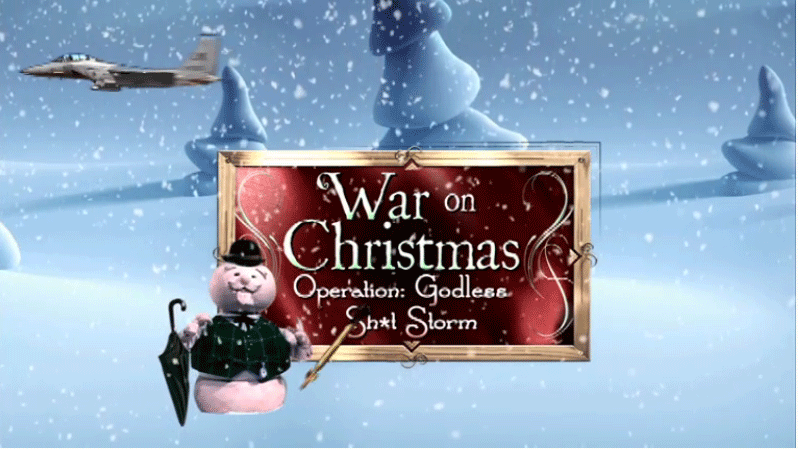
War on Christmas. Operation Godless Shit Storm
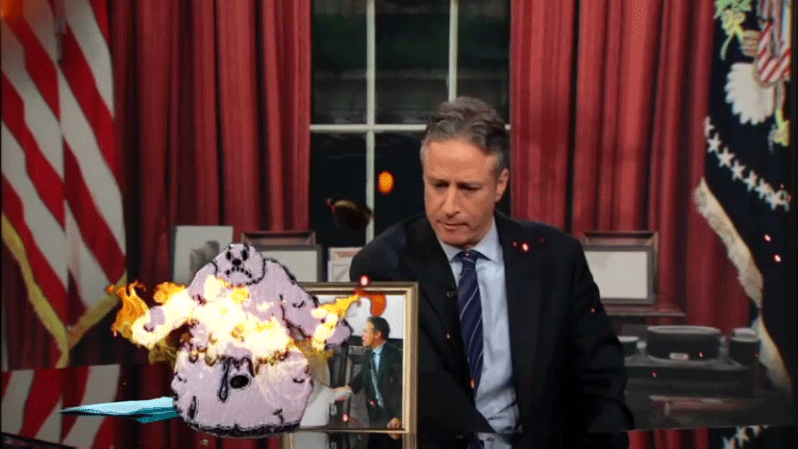
They are unusually boisterous for an announcement of war. My fellow Americans, tonight I humbly come before you to declare war on Christmas. We did not ask for this war, but neither will we shrink from it. It is said we provoked these hostilities through our use of the phrase, "Happy Holidays." This is a lie.
That was a phrase born not of aggression but of convenience. But as long as our enemies view the words "Happy Holidays" not as a lazy man's way to avoid the time-sucking, dumb holiday salutation, "I wish you a merry Christmas and a happy new year," but rather as a subtextual, "Fuck you and your baby Jesus," there can be no peace. We now ask that Christmas immediately and unilaterally withdraw to its pre-'67 borders, pre-1667 borders. Do this now, or face the full might of our secular, multi-cultural society.
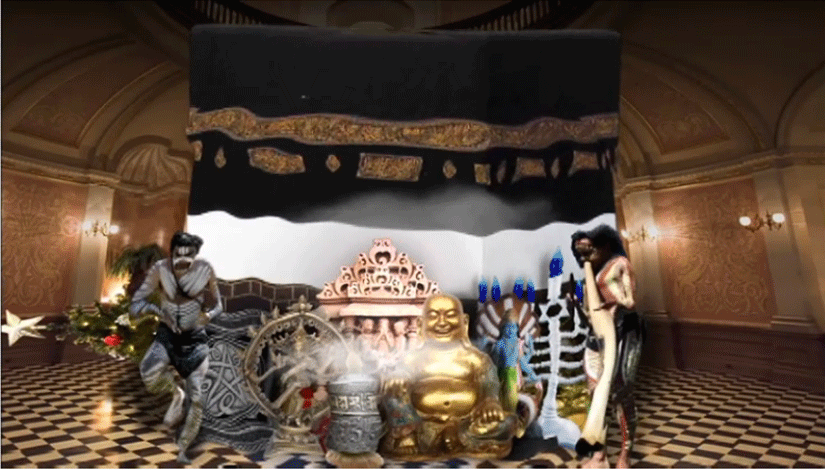
It's a world where Christmas will have to share State House rotundas, not just with Jews, but with Hindus, Buddhists, Wiccans, Santeros, Atheists, and of course, Muslims.
We will fight until we live in a world where free Americans everywhere seek not validation of their religious beliefs through Macy's signage, where non-sectarian greetings are not seen as diminishing the most ubiquitous, two-month holiday emerging since Caligula's birthday party. Until that day, I wish you and your family in this season a happy and heartfelt end of the fiscal 4th quarter.
Santa Claus: The Great Imposter by Dr. Terry Watkins, Th.D. Excerpt Where did Santa come from? Nearly all Santa researchers agree that some traits of Santa was borrowed from Norse [Scandinavian] mythology. Encyclopedia Britannica describes the role of Nordic mythology in the life of Santa: Sinterklaas was adopted by the country's English-speaking majority under the name Santa Claus, and his legend of a kindly old man was united with old Nordic folktales of a magician who punished naughty children and rewarded good children with presents. ("Santa Claus" Encyclopaedia Britannica 99) Some Santa researchers associate Santa with the Norse "god" of Odin or Woden. Crichton describes Odin as riding through the sky on an eight-legged, white horse name Sleipnir. (Santa originally had eight reindeers, Rudolph was nine). Odin lived in Valhalla (the North) and had a long white beard. Odin would fly through the sky during the winter solstice (December 21-25) rewarding the good children and punishing the naughty. (Crichton, Robin. Who is Santa Claus? The Truth Behind a Living Legend. Bath: The Bath Press, 1987, pp. 55-56) Mythologist Helene Adeline Guerber presents a very convincing case tracing Santa to the Norse god Thor in Myths of Northern Lands: Thor was the god of the peasants and the common people. He was represented as an elderly man, jovial and friendly, of heavy build, with a long white beard. His element was the fire, his color red. The rumble and roar of thunder were said to be caused by the rolling of his chariot, for he alone among the gods never rode on horseback but drove in a chariot drawn by two white goats (called Cracker and Gnasher). He was fighting the giants of ice and snow, and thus became the Yule-god. He was said to live in the "Northland" where he had his palace among icebergs. By our pagan forefathers he was considered as the cheerful and friendly god, never harming the humans but rather helping and protecting them. The fireplace in every home was especially sacred to him, and he was said to come down through the chimney into his element, the fire. (Guerber, H.A. Myths of Northern Lands. New York: American Book Company, 1895, p. 61) The unusual and common characteristics of Santa and Thor are too close to ignore.
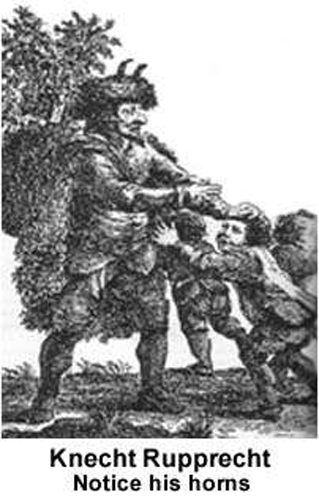
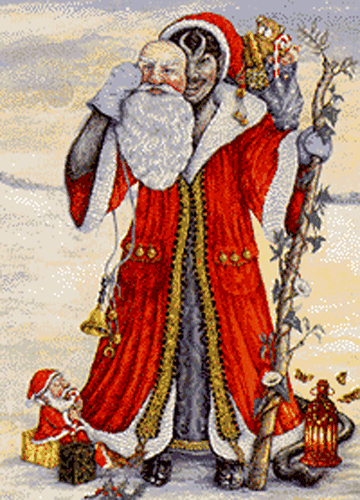
Even today in Sweden, Thor represents Santa Claus. The book, The Story of the Christmas Symbols, records: Swedish children wait eagerly for Jultomten, a gnome whose sleigh is drawn by the Julbocker, the goats of the thunder god Thor. With his red suit and cap, and a bulging sack on his back, he looks much like the American Santa Claus. (Barth, Edna. Holly, Reindeer, and Colored Lights, The Story of the Christmas Symbols. New York: Clarion Books, 1971, p. 49) Thor was probably history’s most celebrated and worshipped pagan god. His widespread influence is particularly obvious in the fifth day of the week, which is named after him – Thursday (a.k.a. Thor’s Day). It is ironic that Thor’s symbol was a hammer. A hammer is also the symbolic tool of the carpenter – Santa Claus. It is also worth mentioning that Thor’s helpers were elves and like Santa’s elves, Thor’s elves were skilled craftsman. It was the elves who created Thor’s magic hammer. In the Handbook of Christian Feasts and Customs, author Francis Weiser traces the origin of Santa to Thor: "Behind the name Santa Claus actually stands the figure of the pagan Germanic god Thor." (Weiser, Francis X. Handbook of Christian Feasts and Customs. New York: Harcourt, Brace & World, Inc., 1952, p. 113) After listing some the common attributes of Thor and Santa, Weiser concludes: Here, [Thor] then, is the true origin of our "Santa Claus." ... With the Christian saint whose name he still bears, however, this Santa Claus has really nothing to do. (Weiser, Francis X. Handbook of Christian Feasts and Customs. New York: Harcourt, Brace & World, Inc., 1952, p. 114) Another interesting trait of Thor is recorded by H.R. Ellis Davidson in Scandinavian Mythology, "It was Thor who in the last days of heathenism was regarded as the chief antagonist of Christ." (Davidson, H.R. Ellis. Scandinavian Mythology. New York: Peter Bedrick Books, 1982, p. 133) In case you are not aware, an "antagonist" is an enemy, adversary or replacement. The bizarre and mutual attributes of Thor and Santa are no accident. While the pagan brush strokes of Norse mythology has painted some of the traits of Santa Claus, there exists another brush stroke coloring Santa that bids our inspection. There is a little-known piece in the life of Santa that time and tradition has silently erased. Few people are aware that for most of his life, St. Nicholas (Sinter Klaas, Christkind, et. al.) had an unusual helper or companion. This mysterious sidekick had many names or aliases. He was known as Knecht Rupprecht; Pelznickle; Ru-Klas; Swarthy; Dark One; Dark Helper; Black Peter; Hans Trapp; Krampus; Grampus; Zwarte Piets; Furry Nicholas; Rough Nicholas; Schimmelreiter; Klapperbock; Julebuk; et. al. Though his name changed, he was always there. Some other well known titles given to St. Nick’s bizarre companion is a demon, evil one, the devil and Satan. One of his dark duties was to punish children and "gleefully drag them to hell." The following references are provided to demonstrate the "devil" who accompanies St. Nicholas is a well documented fact. In every forerunner of Santa this dark and diabolic character appears. It is the Christkind who brings the presents, accompanied by one of its many devilish companions, Knecht Rupprecht, Pelznickle, Ru-Klas. . . (Del Re, Gerard and Patricia. The Christmas Almanack. New York: Random House, 2004, p. 70) Christmas historian Miles Clement relates that no "satisfactory account has yet been given" to the origins of these demons and devils that appear with St. Nicholas. It can hardly be said that any satisfactory account has yet been given of the origins of this personage, or of his relation to St. Nicholas, Pelzmarte, and monstrous creatures like the Klapperbock. (Miles, Clement A. Christmas in Ritual and Tradition Christian and Pagan. New York: Frederick A. Stokes Company, 1912, p. 232) Maybe a satisfactory account has been given. Let us keep reading. Previously, we established the peculiar fact that today’s Santa Claus and St. Nicholas are not the same. They never have been. Santa Claus is dressed in a long shaggy beard, furs, short, burly and obese. The legends of St. Nicholas portrayed a thin, tall, neatly dressed man in religious apparel. You could not possibly find two different characters. If Nicholas, the ascetic bishop of fourth-century Asia Manor, could see Santa Claus, he would not know who he was. (Del Re, Gerard and Patricia. The Christmas Almanack. New York: Random House, 2004, pp. 138,141) So the legends of Saint Nicholas afford but a slight clew to the origin of Santa Klaus,–alike, indeed, in name but so unlike in all other respects. (Walsh, William S. The Story of Santa Klaus. Detroit: Gale Research Company, 1970, p. 54) The startling fact is, Santa Claus is not the Bishop St. Nicholas – but his Dark Helper! In certain German children’s games, the Saint Nicholas figure itself is the Dark Helper, a devil who wants to punish children, but is stopped from doing so by Christ. (Renterghem, Tony van. When Santa Was a Shaman. St. Paul: Llewellyn Publications, 1995, p. 105) Black Pete, the ‘grandfather’ of our modern Santa Claus. Known in Holland as Zwarte Piet, this eighteenth-century German version, is—like his ancient shamanic ancestor—still horned, fur-clad, scary, and less than kind to children. Although portrayed as the slave helper of Saint Nicholas, the two are, in many villages, blended into one character. This figure often has the name Nikolass or Klaus, but has the swarthy appearance of the Dark Helper. (Renterghem, Tony van. When Santa Was a Shaman. St. Paul: Llewellyn Publications, 1995, p. 98) Artist Thomas Nast is rightfully credited for conceiving the image of our modern day Santa, but Nast’s model for Santa was not the Bishop St. Nicholas but his dark companion, the evil Pelznickle.
In Thomas Nast: His Period and His Pictures, biographer Albert Bigelow Paine, documents that Nast’s Santa was Pelznickle. But on Christmas Eve, to Protestant and Catholic alike, came the German Santa Claus, Pelze-Nicol, leading a child dressed as the Christkind, and distributing toys and cakes, or switches, according as the parents made report. It was this Pelze-Nicol – a fat, fur-clad, bearded old fellow, at whose hands he doubtless received many benefits – that the boy in later years was to present to us as his conception of the true Santa Claus – a pictorial type which shall lone endure. (Paine, Albert Bigelow. Thomas Nast: His Period and His Pictures. New York: Chelsea House, 1980, p. 6) Santa historian and author, Tony van Renterghem also documents Nast’s Santa Claus was not Saint Nicholas, but the evil Black Pete–the devil.
Santa researcher, Phyllis Siefker, echoes Renterghem’s conclusion: It seems obvious, therefore, that Santa Claus can be neither the alter ego of Saint Nicholas nor the brainchild of Washington Irving. . . If we peek behind the imposing Saint Nicholas, we see, glowering in the shadows, the saint’s reprobate companion, Black Pete. He, like Santa, has a coat of hair, a disheveled beard, a bag, and ashes on his face. . . In fact, it is this creature, rather than Irving’s creation or an Asian saint, who fathered Santa Claus. (Siefker, Phyllis. Santa Claus, Last of the Wild Men: The Origins and Evolution of Saint Nicholas. Jefferson: McFarland & Company, Inc., 1997, p. 15) By the way, St. Nicholas did not come down the chimney. It was his fur-clad, dark companion that came down the chimney. One of the reasons his sidekick was called the "Dark One" or "Black Peter" was because he was normally covered in soot and ashes from his chimney travels. The "dark companion" also carried the bag, distributed the goodies and punished the bad boys and girls. Children [in Holland] are told that Black Peter enters the house through the chimney, which also explained his black face and hands, and would leave a bundle of sticks or a small bag with salt in the shoe instead of candy when the child had been bad. ("Saint Nicholas," Wikipedia Encyclopedia. <en.wikipedia.org/wiki/Saint_Nicholas>) It is significant that Black Peter, Pelze-Nicol, Knecht Rupprecht and all of St. Nicholas companions are openly identified as the devil. To the medieval Dutch, Black Peter was another name for the devil. Somewhere along the way, he was subdued by St. Nicholas and forced to be his servant. (Del Re, Gerard and Patricia. The Christmas Almanack. New York: Random House, 2004, p. 44) In Denmark, Sweden, and Norway creatures resembling both the Schimmelreiter and the Klapperbock are or were to be met with at Christmas. . . People seem to have had a bad conscience about these things, for there are stories connecting them with the Devil. A girl, for instance, who danced at midnight with a straw Julebuk, found that her partner was no puppet but the Evil One himself. (Miles, Clement A. Christmas in Ritual and Tradition Christian and Pagan. New York: Frederick A. Stokes Company, 1912, p. 202) Thus, in parts of Europe, the Church turned Herne into Saint Nicholas’ captive, chained Dark Helper, none other than Satan, the Dark One, symbolic of all evil. (Renterghem, Tony van. When Santa Was a Shaman. St. Paul: Llewellyn Publications, 1995, p. 97) One of the bizarre jobs of St. Nick’s devilish helper was to "gleefully drag sinners" to hell! On the eve of December 6, the myth told that this bearded, white-haired old ‘saint,’ clad in a wide mantel, rode through the skies on a white horse, together with his slave, the swarthy Dark Helper. This reluctant helper had to disperse gifts to good people, but much preferred to threaten them with his broom-like scourge, and, at a sign of his master, would gleefully drag sinners away to a place of eternal suffering. (Renterghem, Tony van. When Santa Was a Shaman. St. Paul: Llewellyn Publications, 1995, p. 111) It is also alarming that Santa’s popular title, "Nick," is also a common name for "the devil." Old Nick: A well-known British name of the Devil. It seems probable that this name is derived from the Dutch Nikken, the devil..." (Shepard, Leslie A. Encyclopedia of Occultism and Parapsychology. New York: Gale Research Inc. 1991, p. 650) Nick, the devil. (Skeat, Walter W. Concise Dictionary of English Etymology. Ware: Wordsworth Editions Ltd, 1993, p. 304) Devil: Besides the name Satan, he is also called Beelzebub, Lucifer . . . and in popular or rustic speech by many familiar terms as Old Nick . . . (Oxford English Dictionary) Nicholas is one of the most common devil’s names in German, a name that remains today when Satan is referred as Old Nick. (Siefker, Phyllis. Santa Claus, Last of the Wild Men: The Origins and Evolution of Saint Nicholas. Jefferson: McFarland & Company, Inc., 1997, p. 69) The shocking truth is Santa Claus originated from a character identified as the devil or Satan. Something else that fashioned our modern day Santa was the popular medieval Christmas plays of the tenth through the sixteenth century. These miracle, moral, mystery and passion dramas acted out scenes from the scriptures and the liturgy of the Roman Catholic Church. Combining humor and religion, they flourished during the fifteenth century. It is significant that St. Nicholas was a dominant theme among these plays. Much of the myth and outlandish miracles of St. Nicholas originated from these dramas. And much of the bizarre characteristics of Santa were planted in these Christmas plays. In the classic, Teutonic Mythology, author Jacob Grimm provides us with some revealing detail into St, Nicholas’s transformation into Santa. Notice in the following excerpt from Teutonic Mythology where Nicholas converts himself into the Knecht Ruprecht [the devil], a "man of Clobes" or a "man of Claus." Grimm states, the characters of Nicholas and Knecht Ruprecht "get mixed, and Clobes [Claus] himself is the "man." The Christmas plays sometimes present the Saviour with His usual attendant Peter or else with Niclas [St. Nicholas]. At other times however Mary with Gabriel, or with her aged Joseph, who, disguised as a peasant, acts the part of Knecht Ruprecht Nicholas again has converted himself into a "man Clobes" or Rupert; as a rule there is still a Niclas, a saintly bishop and benevolent being distinct from the "man" who scares children; the characters get mixed, and Clobes himself acts the "man." (qtd. in Siefker, Phyllis. Santa Claus, Last of the Wild Men: The Origins and Evolution of Saint Nicholas. Jefferson: McFarland & Company, Inc., 1997, p. 69) From Grimm’s account, in the early 1100’s, the transformation of St. Nicholas into Santa Claus from the devil Knecht Ruprecht was in full throttle. There is not enough space in this book to adequately document the influence and inspiration of the medieval plays into the making of Santa, but let us examine Santa’s trademark "Ho! Ho! Ho!". Most people have no idea where this came from, and more important whom it came from. . . In The Drama Before Shakespeare - A Sketch, author Frank Ireson, describes the popular Miracle Play. Notice the description of the devil as "shaggy, hairy," etc. (as Santa), and notice the devil’s trademark "exclamation on entering was ho, ho, ho!": Besides allegorical personages, there were two standing characters very prominent in Moral Plays—the Devil and Vice. The Devil was, no doubt, introduced from the Miracle Plays, where he had figured so amusingly; he was made as hideous as possible by his mask and dress, the latter being generally of a shaggy and hairy character, and he was duly provided with a tail: his ordinary exclamation on entering was, "Ho, ho, ho! what a felowe [sic] am I."(Ireson, Frank. "The Drama Before Shakespeare - A Sketch." 1920 Siefker also collaborates the devil’s trademark "ho, ho, ho." In these plays, the devil’s common entry line, known as the "devil’s bluster," was "Ho! Ho! Hoh!"(Siefker, Phyllis. Santa Claus, Last of the Wild Men: The Origins and Evolution of Saint Nicholas. Jefferson: McFarland & Company, Inc., 1997, p. 69) The devil’s trademark "ho, ho, ho" was carried over from the early medieval Miracle Plays to the popular old English play "Bomelio," as the following lines from the play verify: What, and a' come? I conjure thee, foul spirit, down to hell! Ho, ho, ho! the devil, the devil! A-comes, a-comes, a-comes upon me,. . . Another extremely popular character dominating the medieval plays was Robin Goodfellow (Robin Hood was created from him). Robin Goodfellow was a caricature of the devil, dressed with horns, shaggy, furs, and cloven feet. Author Gillian Mary Edwards in Hobgoblin and Sweet Puck, provides some interesting insight into Robin Goodfellow: One of the most popular characters in English folklore of the last thousand years has been the faerie, goblin, devil or imp known by the name of Puck or Robin Goodfellow. The Welsh called him Pwca, which is pronounced the same as his Irish incarnation Phouka, Pooka or Puca. Parallel words exist in many ancient languages - puca in Old English, puki in Old Norse, puke in Swedish, puge in Danish, puks in Low German, pukis in Latvia and Lithuania – mostly with the original meaning of a demon, devil or evil and malignant spirit. . . (Edwards, Gillian Mary. Hobgoblin and Sweet Puck. London: Bles Publishers, 1974, p. 143) In The History of a Hobgoblin, author Allen W. Wright, reveals "Robin itself was a medieval nickname for the devil" and "Robin's trademark laugh is "Ho Ho Ho!": Robin Goodfellow appeared in more plays around 1600. And there were many 17th century broadside ballads about him. . . Robin's trademark laugh is "Ho Ho Ho!" . . . Robin itself was a medieval nickname for the devil. (Wright, Allen W. "The History of a Hobgoblin." <www.boldoutlaw.com/puckrobin/puckages.html>) The original author is hidden today, but the devil’s trademark "Ho! Ho! Ho!" was common knowledge before the coming of Santa Claus. Author Tony Renterghem, concludes his extensive research into the origin of Santa with the following statement:
Note: Herne or Pan is the horned god. It is common knowledge that Pan and Herne are popular names for Satan. The Satanic Bible lists Pan as one of the Infernal Names of Satan. (LaVey, Anton Szandor. The Satanic Bible. New York: Avon Books, Inc., 1969 p. 144) After researching scores of books and material on the origin of Santa Claus, by far, the best book on this subject is Santa Claus, Last of the Wild Men: The Origins and Evolution of Saint Nicholas, authored by the late University of Kansas associate, Phyllis Siefker. This is no child’s book, but a scholarly exploration into the origin of Santa Claus. It is published by the prestigious McFarland Publishers, a leading publisher of reference and academic books. This book carries no Christian bias, but is simply a secular, non Christian scholastic study. With that in mind, the following analysis by Siefkler is even more alarming: The fact is that Santa and Satan are alter egos, brothers; they have the same origin. . . On the surface, the two figures are polar opposites, but underneath they share the same parent, and both retain many of the old symbols associated with their "father" . . . From these two paths, he arrived at both the warmth of our fireplace and in the flames of hell. (Siefker, Phyllis. Santa Claus, Last of the Wild Men: The Origins and Evolution of Saint Nicholas. Jefferson: McFarland & Company, Inc., 1997, p. 6) _______________ Librarian's Comment: [LC-1] Harrumph to the absurd contention that St. Nicholas, the Greek Orthodox Saint of the Middle Ages, was the inspiration behind Santa. Something much more powerful is needed to explain the appearance of Santa. Which is Lucifer, "Old Saint Nick," defined by Merriam Webster as the Devil, synonymous with archfiend, Beelzebub, Satan, and Serpent. Santa is the Pagan Satan. That's why the letters are the same. The Greek Orthodox Saint Nicholas, if anything, was simply a Christian historical cover for a Pagan Santa who only APPEARS to give; but actually takes every penny you have! Santa IS the American robber baron, without the miniscule decency of his fellow English Robber Barons who traditionally gave to the poor at Christmas, or else they got their stuff taken away from them. The English knew you had to threaten Robber Barons in order to get them to give. But Americans aren't as smart as the English. Americans don't seem to know that THEY'RE the ones giving to the robber barons, not the other way around. So they're piously grateful for nothing. You know how people are always pious and grateful? This is a propaganda film. All the speakers are propagandists for the Robber Barons, trying to make you believe that you WANT to be Marks. Here's how they argue: Christmas is American. It makes perfect sense, dollars and cents. It's worth it. It's a rite of passage. It's enchanted. It satisfies our deep needs. It combines the sacred and the secular. Etc. These guys are good, especially Alan Dundes, who makes funny faces, and winks slyly. ("A wink of his eye, and a twist of his head, soon led me to know I had nothing to dread." Clement C. Moore). Because if the Robber Barons can convince you to believe in a consumerist Christmas, then they don't have to feel bad for ripping you off, because you are obviously stupid. It's survival of the fittest. They are predatory men, after all. Let's explore their argument further: Santa is a man of his times who could fit right in with the rotund, bewhiskered robber-barons of the late 19th century. But he WASN'T one of those guys, NO, NO, NO! Don't think that! But the connection has been made. Santa is a GOOD robber baron. The experts' voices become soft, silky, female and laughing. They know their argument works best if it doesn't hurt (they're using KY jelly), although sometimes love hurts ("It's a Wonderful Life"). Santa doesn't take from the poor, they say, he GIVES to the poor. He's a captain of industry with a heart of gold. A guy who could sell anything, but make it seem like you weren't buying anything at all. He helps children and parents pretend that Christmas takes place not in the realm of the marketplace, but in the realm of pure domestic affection. He lures shoppers into stores, because shopping is the heart of the season, and meeting him is a rite of passage. He holds your religion in place, and is an example of the deep goodness of the human soul. You'll be rewarded (in heaven?) for believing in him. Christmas defines your very SELF. It's a force of socialization for your children. You enjoy it even when though you're cynical about it. And best argument of all: everybody loves it. Who are these shysters? I guess we're supposed to believe that they actually LOVE us as they con us. It's incest by the father. And they reveal themselves completely for who they are. They are the captains of industry. If you can't hear their warnings, then you deserve everything you get. I try and stand up for the people being conned by saying, "it's not their fault; they're easily susceptible to conditioning." But that doesn't change the fact that some people believe the con, while others don't. This is a good example of the Rosicrucian "reconciliation of opposites." Santa is NOT the robber baron; Santa IS the robber baron. The idea is to swing you back and forth between opposites. It's a kind of tantric game. In European alchemist terms, it's a game of transformation. Another example from the movie is the idea that it's only at Christmas time that parents can show love to their children, having subjected their children the rest of the year to "strict discipline." This love is shown by giving lots and lots of presents, which makes their children very happy, thus making the parents very happy. And they swing the word "children" when they say it -- cheeildrin. What a crock! Christmas is about making SLAVES of parents to their children! There is no time of the year when children have more license to abuse their parents than at Christmas time. There was many a year when my husband and I spent every penny we had on Christmas, because our "cheeildrin" demanded it. But the History Channel would have us believe that the choice was ours, made as responsible, loving adults. So it's a game of transformation AND transference. And the kids DON'T actually get what they want because their parents can't afford it. So if Santa is the pagan Satan, then who is Rudolph the "ostracized" red-nosed, big-nosed, nose-like-a-flashlight reindeer? Like God's name, it cannot be spoken. Here's a hint: the "reindeer" behind him are actually the robber barons (members of NAM, i.e., National Association of Manufacturers), and Rudolph is like Simonides in Xenophon's "Hiero.", or Machiavelli. He is the Tetragrammaton. I'd like to add a character to the Santa Claus story: a female muse, a woman who advises Santa NOT to be bad, and to give ALL of his money to the poor, a female St. Francis -- Francine without the sainthood. Just a good, regular, human woman.
|