[Eric Holt-Gimenez, Executive Director of Food First, Author of Food Rebellions!] Researchers have a hard time getting hold of seeds in order to carry out research, because Monsanto, Syngenta, and DuPont will not give the seeds away for research. They keep the seeds. They do their own research, which supports their own industrial objectives. So it's very difficult to do research. And then once it's done, it's very hard to get out there.
[Don Huber, Ph.D., Professor Emeritus of Plant Pathology, Purdue University] Many researchers that are involved in working on GMO crops are severely penalized. They've lost their jobs. They've had their funding canceled. They've been moved out of their laboratories.
[Elaine Ingham, Ph.D., Chief Scientist, Rodale Institute] As soon as you go up against these multinational corporations, they try to shred your reputation. They try to suggest that your methodology is inappropriate, is not right.
[Shiv Chopra, Former Health Canada Microbiologist and Author] Ultimately, the buck stops at the scientists evaluating. That's me. If I agree, then I'm part of the corruption. That's happening. If I don't agree, I get fired. I chose to be fired.
[Jeffrey M. Smith, Founder, Institute for Responsible Technology] Dr. Arpad Pusztai, one of the leading researchers in the world in his field,
was given a grant of $3 million dollars to figure out how to test for the safety of GMOs.
[In August 1998, leading food research scientist, Dr Árpád Pusztai, gives a short interview on British television. During this he drops a bombshell, saying he believes genetic modification may be a good thing, but that long-term tests have to be carried out before anyone can say it is safe to eat genetically modified food. Given the current state of knowledge, he himself wouldn‘t eat any.
Dr Pusztai‘s reasons are simple – he has made tests where rats fed with genetically modified potato in test series suffered serious organ diseases, inflammations, damage to the immune system and retarded organ growth. Pusztai’s explanation makes a devastating impact on the gold digger mood of the GM food industry. At that point in 1998, two-thirds of the food the American and British people are eating contained genetically modified elements – and the public aren‘t aware of this.
Pusztai does know, and has this fact in mind when he gives his BBC interview...Within hours, Pusztai is under attack. He‘s forbidden to give out any further information regarding his research, his papers are confiscated and he is denied access to his lab. Within 3 days he is sacked from his job and excluded from the Royal Society, the UK‘s leading association of scientists. Pressure from highest political authorities leads to Árpád Pusztai‘s personal and professional ruin. In the spring of 2001 NATURE does something which it had never done before. For the first time in 137 years, the world's most important science magazine actually retracts a published article. This is very strange and very worrying -- a scientist is under attack for doing his job.
The renowned biologist ...
-- Interview with Dr. Arpad Pusztai, British Television, August, 1998]
Arpad Pusztai, Ph.D., received his degree in Chemistry in Budapest, Hungary and his B.Sc. in Physiology and Ph.D. in Biochemistry at the University of London in England. Over his nearly 50-year career, he worked at universities and research institutes in Budapest; London; Chicago, U.S.; and Aberdeen, Scotland (Rowett Research Institute). He has published close to 300 primary peer-reviewed papers and wrote or edited 12 scientific books. In the last 30 years he pioneered research into the effects of dietary lectins (carbohydrate-reactive proteins), including those transgenically expressed in GM crop plants, on the gastrointestinal tract. Since his contract was not renewed with Rowett as a result of disagreements, Dr. Pusztai has been lecturing on his GM potato research all over the world and acting as a consultant to groups starting up research into the health effects of GM food.
-- Interview with Dr. Arpad Pusztai, oneradionetwork2, February 15, 2009
His research was supposed to create the protocols that would be used for approvals in the EU.
[What the Pusztai Research Was About
by Alison Goddard
19 February 1999
http://www.academicdevelopment.usw.ac.uk
Arpad Pusztai's experiment at the Rowett Research Institute was designed to identify whether potatoes could be genetically engineered to produce a powerful insecticide and yet still be safe to eat, writes Alison Goddard.
Previous work had shown that a group of proteins called lectins could help plants to resist attacks by insects and nematode worms. Some lectins, such as the kidney bean lectin, are known to damage the small intestine.]
He put rats through his protocols,
and it turns out the process of genetic engineering ...
was inherently unsafe,
[International scientists raise concerns over genetically modified food: British Labour government rushes to defend biotech industry, by Keith Lee and Richard Tyler]
and caused potentially pre-cancerous cell growth
in the digestive tracts, smaller brain, testicles,
partial atrophy of the liver, damaged immune system, in just 10 days.
[Arpad pusztai speaks out
19 February, 1999
THES Editorial
The scientist at the centre of allegations of suppression of research was freed this week to speak out about his controversial findings that genetically modified foods may cause ill-effects.
Arpad Pusztai's initial comments suggest it may have been a lack of research money and the threat to close his research that made him take his concerns to the press, rather than publishing through the normal process of peer review.
The Rowett Research Institute in Aberdeen bowed to immense media pressure, and calls from within the community to disclose the research, agreeing to release Dr. Pusztai from "usual conventions of many scientific research institutes in relation to public disclosure of unpublished work."]
When he went public with his concerns, he was a hero for about two days at his prestigious institute. Then two phone calls were allegedly placed from the UK Prime Minister's office, forwarded through the receptionist to the director.
[UK scientist in genetic food scare loses his job
by Robert Highfield
August 13, 1998
The world-renowned scientist who triggered a global scare over the safety of genetically modified food was relieved of his responsibilities yesterday and will retire shortly. The Rowett Research Institute in Aberdeen, Scotland, said that Dr. Arpad Pusztai (68) had not started crucial experiments to ...]
The next morning, Dr. Pusztai was fired from his job after 35 years,
silenced with threats of a lawsuit. His 20-member research team was disbanded. They took away the data. They never implemented his protocols.
[Who Is Arpad Pusztai and Why Has He Been Silenced?
by She Sees
from The Flowering Tree, Fall 1999
In 1956, after the Hungarian revolution against communist rule failed, Arpad Pusztai, a 26-year-old nutritionist, left Hungary and went to Scotland. For the past 35 years, Dr. Pusztai has worked as a senior researcher at the Rowett Institute of Aberdeen, Scotland, an internationally recognized government center for research in human and animal nutrition and biological sciences. Over the past 30 years, Dr. Pusztai has assembled a research team of 18 scientists, published three books and over 275 research papers, and has become a world expert on lectins, natural plant toxins which defend the plant against predators and disease-causing pests.
In 1995, Dr. Pusztai and his team began a research project funded by the Scottish Office to explore the safety of genetically engineered foods. The lectin used in his experiments had been found to be safe for consumption on its own. However, when feeding rats potatoes that had been genetically altered with this "safe" lectin, preliminary results showed ...]
Instead, they embarked on a campaign to destroy his reputation.
[Smeared GM Expert Vindicated
by Geoffrey Lean
Environment Correspondent
The Independent
October 2, 1999
[The scientist who suggested that genetically modified foods could damage health -- and was comprehensively rubbished by government ministers and the scientific establishment as a result -- is to have his reputation dramatically vindicated. Britain's top medical journal, The Lancet, is shortly to publish Arpad Pusztai's research showing changes in the guts of rats fed with GM potatoes. That will reignite fears that GM foods may endanger human health.
The scientist who suggested that genetically modified foods ...]
In Argentina, when the scientist Andres Carrasco, was planning to give a lecture to a group about Roundup, and its link to birth defects,
an organized mob of about 100 attacked him.
[Mob Violence Halts Speech by Monsanto Critic
by Richard Brenneman
August 17, 2010
Glyphosate, better know by its Monsanto trademark brand name Roundup, has become the linchpin of modern agriculture, with genetically modified [GM] crops designed to resist the powerful herbicide.
Between its patented plant killer and its GM "Roundup Ready" crops, Monsanto has emerged as a giant in the global agricultural industry, effectively controlling much of the globe's farmlands.
So when a scientists raises troubling questions that Roundup may bear a responsibility for the global die-off of amphibians and could threaten developing embryos, he is threatening a multinational power drawing billions of dollars a year from the world's farmers and their customers.]
He was able to make it into his car, where he locked himself in. But they beat his car for 2 hours. His friends were not so lucky. One was knocked unconscious, the other paralyzed.
[War Over Monsanto Gets Ugly
By Mike Ludwig
09 November 2010
A delegation of politicians and community activists gathered on August 7 in La Leonesa, a small farm town in Argentina, to hear Dr. Andres Carrasco speak about a study linking a popular herbicide to birth defects in Argentina's agricultural areas.
But the presentation never happened. A mob of about 100 people attacked the delegation before they could reach the local school where the talk was to be held.
Dr. Carrasco and a colleague locked themselves in a car as the mob yelled threats and beat on the vehicle for two hours. One delegate was hit in the spine and has since suffered lower-body paralysis. Another person was treated for blows to the head. A former provincial human rights official was hit in the face and knocked unconscious.
Witnesses said the angry crowd had ties to local officials and agribusiness bosses, and police made little effort to stop the violence, according to human rights group Amnesty International.]
[And the list goes on and on:
IGNACIO CHAPELA, Ph.D.:
Discovered GM corn contamination in Mexico. He was threatened, denied tenure, and a campaign was organized to falsely discredit him.]
[IRINA ERMAKOVA, Ph.D.:
Reported that most offspring of female rats fed GM soy died within three weeks. She was publicly attacked and discredited, and ordered to stop research.]
[TERJE TRAAVICK, Ph.D.:
Investigated a disease outbreak in the Philippines by villagers breathing Bt corn pollen. He too was victimized by pro-GMO "scientists."]
GMOs IN INDIA
[Jeffrey M. Smith, Founder, Institute for Responsible Technology] Monsanto talks about feeding the world.
This is their PR concoction.
Let's take a look at what's happening in India.
They took over the cottonseed industry,
and are forcing millions of farmers to plant their Bt cotton. The cotton is engineered to produce an insecticide which breaks open the stomach of insects, and kills them.
The normal, natural Bt, is found in soil bacteria.
When that's used as a spray in the Pacific Northwest, for example, for Gypsy Moths, about 500 people complained of allergic and flu-like symptoms. Some had to go to the hospital.
Now in India, thousands of workers are complaining of the same symptoms.
Many of them are getting rashes, and many are itching.
[Debjeet, Team Leader of Living Farms Organization] Farmers have been complaining that they are itching. When they go to pluck, they have an itching sensation.
[J. Sekhar, Employee of M.A.R.I. Modern Architects of Rural India] When farmers work in Bt cotton fields, they suffer from skin allergies and skin rashes. But when farmers work in non-Bt fields, they do not suffer any such symptoms.
[Jeffrey M. Smith, Founder, Institute for Responsible Technology] In India, they allow animals to graze on the cotton plants after harvest. They have had no problem for years.
When they introduced Bt cotton, however, they noticed that thousands of animals got sick, and thousands died.
There's a small organization called "Deccan Development Society" ("DDS"), that pleaded with the government to do tests on the Bt cotton to see if it was causing the animals' deaths.
[Deccan Development Society
ddsindia.com]
[Mass Deaths in Sheep Grazing on BT Cotton
by Dr. Mae-Wan Ho
At least 1,800 sheep reported dead from severe toxicity after grazing on Bt cotton fields in just four villages in Andhra Pradesh India
The Bt trail of dead sheep, ill workers and dead villagers over three years
At least 1,820 sheep were reported dead after grazing on post-harvest Bt cotton crops; the symptoms and post-mortem findings strongly suggest they died from severe toxicity. This was uncovered in a preliminary investigation conducted by civil society organisations in just four villages in the Warangal district of Andhra Pradesh in India. The actual problem is likely to be must greater.
This latest report confirms the findings of an earlier fact-finding investigation, also conducted by civil society organisations, on illnesses in cotton farm workers and handlers caused by Bt cotton in another cotton-growing state, Madhya Pradesh, in India ("More illnesses linked to Bt crops", this series).]
They went to the government; they didn't follow through. They went to universities; they didn't do anything.
So DDS did the study itself.
They took 9 sheep. Six were eating either Bollguard-1 ...
or Bollguard 2 Bt cotton. Three were eating non-GMO cotton plants.
[Kiran Sakkhari, Agricultural Scientist] So within a month, all the animals which ate on Bollguard-1, and Bollguard-2, they died. And the animals which ate on non-Bt, non-pesticide managed cotton, are still alive, and are still active.
[Jeffrey M. Smith, Founder, Institute for Responsible Technology] I visited a village in Andhra Pradesh.
They had allowed their buffalo to graze on cotton plants after harvest for years without a problem.
They allowed their 13 buffalo to graze on Bt cotton plants for a single day.
Within three days, all 13 buffalo were dead.
We know that the crops that are genetically engineered ...
have unpredicted side effects.
[BT Sins ... Itchy Scars!
Haryana is today reeling under an itch invasion -- people say due to farming Bt cotton -- but state and central governments are rubbishing this, reports Anil Pandey]
This cannot only affect health,
but also the agronomic properties.
[Bt Cotton -- Less Miracles, More Failures for Indian Farmers
by Anne Sewell
March 28, 2012
Bt cotton hybrids are pointing to drastic depletion of soil nutrients due to repeated cultivation. Crop failures and less yield from the use of transgenic seeds are causing suicides among Indian farmers.
Crop Yields]
The Bt cotton grown in India is extremely unreliable. Sometimes it works; sometimes it doesn't.
But there they have no safety net.
Millions of farmers have invested money ...
in the more expensive seeds and associated chemicals.
Many have borrowed heavily at high interests.
When the cotton doesn't work out,
many of these farmers cannot even pay back their high interest loans.
[On India's Farms, a Plague of Suicide
by Somini Sengupta
September 19, 2006]
The number of farmer suicides as a result is astounding.
[The GM Genocide: Thousands of Indian Farmers are Committing Suicide After Using Genetically Modified Crops
by Andrew Malone
2 November 2008]
[Vandana Shiva, Ph.D., Physicist, Author, and Founder of Navdanya] High-cost seed with unreliable performance is what is getting farmers into debt. And debt is what is causing the farmer suicides.
All of our studies over the last decade show that the suicides are concentrated in the cotton areas.
And in cotton, much higher suicides in the Bt cotton belt. My assessment is 250,000 farmer suicides in this country,
of which at least 3/4 is Bt.
GMOs IN SOUTH AFRICA
[Narrator] A farmer in South Africa was growing genetically engineered corn,
and feeding it to his animals.
His dairy cows were having problems with milk production, arthritic-type conditions, infertility, and short lifespans.
The pigs were also affected.
[Dan Skow, D.V.M., Veterinarian, Agricultural Consultant] The biggest single thing was reproductive failure. They would have respiratory issues -- things like pneumonia, for instance,
and they would also get scours, or diarrhea, to the point anyway where they would succumb to death. They would be cannibalistic. They would literally eat the tails right off each other. "You know, Dr. Skow," he said, "you've told me so many things, and we've discussed so many things. Can you narrow it down to just one simple thing that I can go home and do?" And I said, "Yeah, very easy to do." I says, "Go home and never, ever, put another GMO product on your farm."
[Narrator] After growing non-GMO corn, and feeding it to his animals, within a few weeks the health problems disappeared.
[Dan Skow, D.V.M., Veterinarian, Agricultural Consultant] So he went along for about five, six months until he ran out of his feed supply. And guess what? The only feed available was, again, GMO-based feeds. The dairy herd, within 60 days, was right back in the same mess that it was before. The swine herd took about three months, and they were right back in the same predicament they were in before.
[Narrator] In South Africa, corn is the staple, eaten three times a day.
The 50-60 workers on this farm ...
were eating only the GM corn grown there.
They were likely eating more genetically engineered food each day than any group in the world.
[Dan Skow, D.V.M., Veterinarian, Agricultural Consultant] The health issues that he was running into were things like upper respiratory, colds, runny noses, this achy feeling similar to having the flu, and headaches, severe, severe headaches. About once or twice a month he'd have one of his laborers come to him -- and these were not older people, these were younger people, in their mid-twenties through mid-forties --
and he'd notice one very dramatic thing. He'd see the individual, and they'd be talking and looking at each other in the eye, and one eye would go this way,
and at the same time the other eye would go this way,
so they didn't track, like turning one way or the other. Now, when he noticed that, or that occurred, normally that person would be dead within 24-48 hours after seeing that particular symptom.
[Narrator] When the farmer harvested non-GMO corn for his animals,
the workers also switched to non-GMO corn.
[Dan Skow, D.V.M., Veterinarian, Agricultural Consultant] His labor force had cleared up completely of the health issues they were having,
while they were on the non-GMO.
[Narrator] And then he ran out.
[Dan Skow, D.V.M., Veterinarian, Agricultural Consultant] It took about 30-40 days, and they were right back in the same predicament as before. Since then, I have heard from him a time or two, and he says now he has all non-GMO, and thanked me for the advice of never planting another GMO.
REVERSING GMO DAMAGE
[Jeffrey M. Smith, Founder, Institute for Responsible Technology] People always ask me, "Can we reverse the damage from eating a genetically modified diet?" Well, mice in an Italian study give us some hope. They were fed genetically modified soy for 8 months, and showed damage to their livers, pancreas, and testicles. But when they were put on a non-GM soy diet the next month, a lot of the problems reversed.
[William Lee Cowden, M.D., Cardiologist, Internist, and Author] When we teach doctors in this country, and other countries, about the importance of diet, one of the key factors that we teach is, "Avoid all GMO foods."
[Emily Lindner, M.D., Internal Medicine Specialist] One thing that's consistent in every single patient is removal of GMOs.
[Michael Visconti, N.D., A.P., Naturopathic and Acupuncture Physician] I've had a lot of different patients come in with various stages of chronic disease. This is what I specialize in, sort of these complex cases. And by changing the diet around, changing the nutritional status, a lot of the things they come in with literally just go away.
[Emily Lindner, M.D., Internal Medicine Specialist] Of course, GMO isn't the only thing that I do. I would never just do that. I use whatever works for patients individually. We look at what they're eating, and we take out the genetically modified foods, and the industry foods. And they all get better. So it pretty much takes from two days to 2-3 months. And some people continue to recover over a couple of years. But it never doesn't work.
[Doris Rapp, M.D., Environmental Medical Specialist and Pediatric Allergist, Author] We have to somehow or other educate the public so that they understand that they have a choice. They don't have to eat genetically engineered foods.
AVOIDING GMOs
[Jeffrey M. Smith, Founder, Institute for Responsible Technology] There are only nine genetically modified food crops.
[GMO FOOD CROPS
1. Soy
2. Corn (NOT popcorn)
3. Cottonseed (for oil)
4. Canola (for oil)
5. Sugar Beets (for sugar)
6. Papaya (Hawaiian and Chinese)
7. Zucchini
8. Yellow Crookneck Squash
9. Alfalfa (for hay)]
But their derivatives are found in over 70% of the foods in the supermarket. Particularly, the processed foods.
[canola oil
corn flour
corn masa
corn meal
corn oil
corn sugar
corn syrup
cornstarch
cottonseed oil
dextrin
dextrose
glucose
high fructose corn syrup (HFCS)
hydrolyzed vegetable protein
maltodextrin
protein isolate
soy flower
soy isolates
soy lecithin
soy milk
soy oil
soy protein
soy protein isolate
soy sauce
sugar (unless specified as cane sugar)
tamari
tocopherols (vitamin E)
tofu
vegetable fat
vegetable oil]
There are four ways to avoid GMOs: (1) Buy organic; (2) Buy products that say Non GMO; (3) Buy products listed in our Non-GMO Shopping Guide, or (4) avoid the at-risk ingredients altogether:
principally soy, corn, cottonseed oil, canola oil, and sugar from sugar beets. Most of those crops are genetically engineered.
So if it's grown in the U.S., and it doesn't say, "Organic,"
or "Non-GMO," it's genetically engineered.
[Russel Marz, N.D., Professor of Nutrition, Author of Medical Nutrition from Marz] If we can avoid those, I think certainly that would be a big step in improving people's health in terms of allergies, auto-immune disease, and a lot of conditions that we don't really even know too much about.
[Jeffrey M. Smith, Founder, Institute for Responsible Technology] Also, aspartame is derived from a genetically engineered microorganism. Just Google aspartame and symptoms, and camp out for a few hours. You'll never eat aspartame again.
[Headache
Dizziness or Problems with Balance
Change in Mood Quality or Level
Vomiting and Nausea
Abdominal Pain and Cramps
Diarrhea Seizures and Convulsions
Memory Loss
Fatigue, weakness
Rash
Sleep problems
Hives
Change in Heart Rate
Itching
Change in Sensation
(Numbness, Tingling)
Local Swelling
Change in Activity Level
Difficulty Breathing
Change in Menstrual Pattern
Other Localized Pain and Tenderness
Other Urogenital
Change in Body Temperature
Difficulty Swallowing
Other Metabolic Joint and Bone Pain
Speech Impairment
Chest Pain
Other Musculo-Skeletal
Fainting
Sore Throat
Irreversible brain damage
Birth defects, including mental retardation
Peptic ulcers
Aspartame addiction and increased craving for sweets
Hyperactivity in children
Severe depression
Aggressive behavior
Suicidal tendencies
Death]
LABELING
[Jeffrey M. Smith, Founder, Institute for Responsible Technology] When people hear about the health dangers of GMOs, the first thing they want to do is avoid them. Millions of people are trying to avoid GMOs, and we make it easier for you.
Go to "NonGMOShoppingGuide.com," and find thousands of products verified as non-GMO. Or download the free I-phone application, "ShopNoGMO."
Or get our booklet. It makes it much easier for you to shop for healthier, non-GMO products.
[Nancy Massoto, Founder and Executive Director, Holistic Moms Network] And we are very thankful for the organizations that are now certifying products that are non-GMO, so that we can have that assurance that we are buying something that we support.
[Jeffrey M. Smith, Founder, Institute for Responsible Technology] And when you look for Non-GMO labels,
look for NON GMO PROJECT VERIFIED. They are a third-party verifier.
And they back up the claims that companies make.
[Megan Westgate, Executive Director, Non-GMO Project] The Non-GMO Project is a non-profit organization ...
that is committed to preserving a non-GMO food supply, educating consumers about the GMO issue, and providing verified non-GMO choices.
In the last year, sales of Non-GMO project verified products have gone from 348 million to over 1.2 billion in dollars. So the growth is incredible. It's 219% growth. And that's because so many more brands are enrolling, because so many more consumers are asking for it.
We have close to 400 brands that have enrolled in the Non-GMO Project. 6,000 products at this point, 4,000 of them are verified. And the commitment of these companies is coming from consumer demand. People are asking for non-GMO choices. They don't want to be part of the GMO experiment. They don't want to feed GMOs to their families. And companies in the organic and natural products industry are really stepping up, by getting their products verified, and getting them labeled, so that people can opt out of the GMO experiment.
[Narrator] Currently, there are no legal requirements in the U.S. to label a product containing GMOs.
[Robyn O'Brien, Founder, Allergy Kids Foundation, Author of The Unhealthy Truth] The failure to disclose in this, to me, is the real issue.
Europe labels these things. Australia labels these things. Asia labels these things. And yet here in the U.S., we've all just been blissfully ignorant. I have a problem with that, because it's not in the best interest of my family.
[Laura Hirsch, Mother of Autistic Child] It's hard enough as a mom to have to go in and read every label. Your time is limited, and you really have to be knowledgeable about it. It should have been in there all along. I feel like we were tricked.
[Lawrence Plumlee, M.D., Former Medical Science Advisor, EPA Office of Research and Development] We're all part of a large, uncontrolled experiment. And we aren't getting answers, because we don't know who's eating genetically engineered food, and who isn't. So we have no way to do the studies. I suspect that this is the intention of the manufacturer. Let's so confuse the situation, that no liability could ever be ascertained, even if there is a big problem.
[Robyn O'Brien, Founder, Allergy Kids Foundation, Author of The Unhealthy Truth] Right now, there are about 5 million kids with food allergies. And there is no way of knowing what is in the food that you are feeding your child unless it's labeled.
[Gary Hoyer, Chef and Educator] These products are on the shelf before you even know they are. And now they are in everything.
[Woman] I don't want to be a human lab rat. And I certainly don't want my 2-year-old daughter to be a human lab rat.
[Girl] I'm not a science experiment!
[PLEASE HELP US LABEL GENETICALLY ENGINEERED FOOD]
[Michelle Perro, M.D., Named one of "America's Top Pediatricians"] So if there is no problem with the GMO food, then why don't we just label it? If it's not a problem, I say "label it."
And so that is coming down the pike. It's a 2012 ballot initiative to label GMOs. And I say, "support it."
[CALIFORNIA BALLOT INITIATIVE: LABEL GMOS]
[Jeffrey M. Smith, Founder, Institute for Responsible Technology] The GMO labeling issue is on fire in the United States.
Bills have been introduced in 19 states,
although none have yet ...
gotten past Monsanto's lobbying and influence peddling.
[Alaska
California
Connecticut
Hawaii
Illinois
Iowa
Maryland
Massachusetts
Missouri
New Hampshire
New Jersey
New York
North Carolina
Oregon
Rhode Island
Tennessee
Vermont
Washington
West Virginia]
In California, we have a real chance of victory, because in California, it's a ballot initiative. People vote directly.
So we finally have a chance ...
to get what 9 out of 10 Americans have wanted for more than a decade: mandatory labeling of genetically engineered foods.
[DEMAND LABELING OF GENETICALLY MODIFIED FOODS!!]
[Pamm Larry, Started the GMO labeling initiative in California] I have enough questions about this technology to wonder what's happening with us.
We have studies that say, "Everything is okay," from the industry,
an industry that I don't trust.
[Why Genetically Engineered Food is Dangerous: New Report by Genetic Engineers
Earth Open Source press release 17 June 2012
Aren't critics of genetically engineered food anti-science? Isn't the debate over GMOs (genetically modified organisms] a spat between emotional but ignorant activists on one hand and rational GM-supporting scientists on the other?
A new report released today, "GMO Myths and Truths", [1] challenges these claims. The report presents a large body of peer reviewed scientific and other authoritative evidence of the hazards to health and the environment posed by genetically engineered crops and organisms (GMOs).
Unusually, the initiative for the report came not from campaigners but from two genetic engineers who believe there are good scientific reasons to be wary of GM foods and crops.
One of the report's authors, Dr. Michael Antoniou of King's College London School of Medicine in the UK, uses genetic engineering for medical applications but warns against its use in developing crops for human food and animal feed.
Dr. Antoniou said: "GM crops are promoted on the basis of ambitious claims that they are safe to eat, environmentally beneficial, increase yields, reduce reliance on pesticides, and can help solve world hunger.
"I felt what was needed was a collation of the evidence that addresses the technology from a scientific point of view.]
We have studies by independent doctors that say, "There are huge questions. And there are problems. There have been no long-term human studies done on this."
[Monsanto's GMO Corn Linked to Organ Failure, Study Reveals
by Katherine Goldstein/Gazelle Emami
03/18/10
In a study released by the International Journal of Biological Sciences, analyzing the effects of genetically modified foods on mammalian health, researchers found that agricultural giant Monsanto's GM corn is linked to organ damage in rats.
According to the study, which was summarized by Rady Ananda at Food Freedom, "Three varieties of Monsanto's GM corn -- Mon 863, insecticide-producing Mon 810, and Roundup(R) herbicide-absorbing NK 603 -- were approved for consumption by U.S. European and several other national food safety authorities."]
And I, as a grandmother and a mother, am outraged that our government and that our agencies are not taking care of us, are not protecting us.
We have a right to know what we are putting inside our bodies.
[Jeffrey M. Smith, Founder, Institute for Responsible Technology] The entire world is looking to California. Because we can turn it around from this one place.
The enormity of the threat is unprecedented in history:
all living beings; all future generations.
So the enormity of the solution is something that we cannot afford to let slip away.
[David Bronner, President, Dr. Bronner's Magic Soaps] You know, if you like GMOs, if you think they are great, okay, just be proud of it. Buy it. Label it. But we have a right not to buy it. So you know, that's our issue. You know, we're taking that to Washington. You know, we've got to bring outside pressure. We've got to bring a wake-up call to FDA, and yeah, make our voices heard.
[Pamm Larry, Started the GMO labeling initiative in California] We're taking back the power to the people.
We have people all over this state ...
who are working non-stop ...
in communities:
151 leaders that are organizing their communities,
that are getting out there; that are educating their people.
We understand what's going on now with government, and with corporations.
[DO YOURSELF A FAVOR. LEARN ABOUT THE DANGERS OF GMOS's. THE LIFE YOU SAVE MAY BE YOUR OWN.]
[Pamm Larry, Started the GMO labeling initiative in California] This is what can happen when one very persistent, semi-obnoxious, Italian grandmother from California, decides that it will.
[Crowd Chanting] OMG, GMO, people have the right to know! OMG, GMO ...
[RIGHT TO KNOW MARCH. A MOBILIZATION FOR GMO LABELING. GMO LABELING RIGHT NOW!]
[Shiv Chopra, Former Health Canada Microbiologist and Author] I just want these corrupt governments and corporations to leave my body alone; leave my family alone; leave my milk alone; my food alone; my community alone. I can take care of myself. The whole world can take care of itself.
[Andrew Kimbrell, Executive Director, Center for Food Safety, Author of Your Right to Know] You want to know the dirty little secret of the biotech industry that they never talk about? No one gets up in the morning wanting to buy a GMO food. No one. Not a single human being on earth gets up and says, "Boy, I can't wait to go to the supermarket and buy a GMO food." And why is that? That's because after 30 years, and hundreds of billions of dollars of public and private investment, they haven't been able to come up with one thing in this food that actually helps the consumer. No better taste; no lower price; no more nutrition. Nothing; zip; zero; nada.
TAKING BACK OUR FOOD
[Jeffrey M. Smith, Founder, Institute for Responsible Technology] How do we get rid of genetically engineered foods? It's much easier than you think. And we don't have to ask the government for a bailout. We can do it ourselves.
In Europe, when they achieved the tipping point of consumer rejection at the end of April, 1999,
within about a week, most major food companies committed to stop using GM ingredients.
They had become a marketing liability. In the United States, as parents became aware of the cancer link to bovine growth hormone, it was kicked out of most American dairies. How many Americans will it take avoiding GMOs to create a tipping point in the United States? We think only 5%. Why? If the same food companies that already kicked GMOs out in Europe see even a small drop in market share in the United States that they can directly attribute to anti-GMO sentiment on the rise here, they will get rid of it here like they already got rid of it in Europe. It becomes a food industry sell signal: getting rid of GMOs. And we can do it ourselves.
[Shiv Chopra, Former Health Canada Microbiologist and Author] These companies are parasites. They don't care. They want to make money. They want to run governments. And they are right now running governments. I don't know how long, but I think their time is running out.
[Nick Pasco, Owner, Bear Foods Natural Market] While you can't control what was produced yesterday, by what you spend today you get to control what is produced tomorrow.
[Nancy Massoto, Founder and Executive Director, Holistic Moms Network] Moms and consumers are the ones that are going to make the change. They are going to be the ones who are going to drive the change.
If we demand that products be safe and healthy for our children, and refuse to purchase products that we know are genetically modified, then the industry is going to have to respond. Because at some point, you know, mothers are the ones who are out there buying 80% of the consumer products, including the food supplies, and the cleaning supplies, and on and on. And if we stop supporting those companies that are doing this, then they are going to feel it in their pocketbook. And unfortunately, I think that's where it really matters to them.
[Robyn O'Brien, Founder, Allergy Kids Foundation, Author of The Unhealthy Truth] A mother protecting her child is one of the most fundamental forces in nature. And most women would do anything to protect their child. And so to harness that power in a positive way, is something that no one could mess with.
[Eric Herm, Cotton Farmer, Author of Son of a Cotton Farmer] This impacts everything and everyone. It's not just an agriculture issue. It's not just a food industry issue. It's an Every-Living-Creature issue.
[Elaine Ingham, Ph.D., Chief Scientist, Rodale Institute] It's the most dangerous thing facing human beings in our generation.
[Doris Rapp, M.D., Environmental Medical Specialist and Pediatric Allergist, Author] Should you be concerned? I should think you'd be scared silly. Not only for your children, but for you. Why do you think so many people are sick now? We cannot tolerate what's going on any longer. We must stand up and be counted. We must write our politicians. We must talk to the people at the store, and say, "I'm not going to buy it unless it says, 'Not Genetically Engineered.'"
[Shiv Chopra, Former Health Canada Microbiologist and Author] I think we now can change the system. The world is ready.
[Andrew Kimbrell, Executive Director, Center for Food Safety, Author of Your Right to Know] You know, sometimes we hear that Monsanto can't be beat, that the genie is out of the bottle, or that the genes are out of the bottle. But that's just not true. In the last 15 years, you and me, and all of us, we have defeated genetically engineered tomatoes. They don't exist. Genetically engineered potatoes. They tried that; we got rid of that. Genetically engineered wheat. That was Monsanto's big, big, big try. All the wheat in the world is going to be genetically engineered. We defeated that. Genetic engineered rice. We defeated that. Genetically engineered biopharmaceuticals. That's when they were going to put all of those vaccines into your food. That was defeated. Genetically engineered alfalfa, which would destroy the organic dairy industry. For six years we have stopped that, and we are right in court to stop it again right now. Genetically engineered bent grass in all your schools and golf courses. We've defeated that. So they can be beat. They have been beat. And we will win. We will win this.
[Jeffrey M. Smith, Founder, Institute for Responsible Technology] It's in our hands. It's right in front of us. It's just a matter of avoiding genetically modified foods, and inspiring others to do the same.
[Boy] And at my new school, I'm going to try to get the GMOs ...
away from there, too.
Q. What are you going to do?
[Boy] Just keep on telling them, and they'll probably get it away.
Q. What are you going to tell them?
[Boy] Stop doing the GMOs, and start doing the good food.
Written, Produced and Directed by Jeffrey M. Smith
Edited by Micah Salaberrios
Associate Producer, Assistant Writer: Ms. Samm Simpson
Narrated by Lisa Oz
Lead Animator and Cartoonist: Jeff Bigman/Bigman Art
Motion Graphics: Tim O'Donnell
Gracious thanks are given to Mike Adams, http://www.naturalnews.com & Dr. Joseph Mercola, http://www.mercola.com, for their commitment and enduring support for this project.
Thank you also to the following supporters of the Institute for Responsible Technology for their contributions to the project.
Michael Kenoyer, in honor of Joan Kenoyer
Tracey McGrath
Nancy Ross, in honor of Nancy J. Ross
Thomas Cooper
Jan Staniecki
Andrew Edgar, in honor of Andrew J. Edgar
Theresa AuCoin
John Robbins
Brillouin Energy Corp.
Dana Stuart
Donna Lomp
Christabel Prost
Valerie Douglass, in honor of Mary's Gone Crackers
Erica Pettigrew, in honor of Erica K. Pettigrew
Deborah Sie, in honor of Light and Love Naturopathic Center
Daniel Brandt
Connie and John L., Jr., M.D.
and to thousands of others
[Dan Skow, D.V.M., Veterinarian, Agricultural Consultant] If you give animals a choice, I know for sure they'll take the non-GMO every time.
[Man] We have a dog, a mascot dog in the office, a cute little cocker spaniel whose name is Chloe. And we decided, well, let's see if she can tell the difference between GMO and non-GMO. She immediately went to a pile of non-GMO corn versus the same, right there next to her, GMO corn. And she just tasted it, and spit it out, went to the non-GMO corn and ate it. And Chloe does this every time. It's absolutely amazing.
ANIMATORS:
Jeff Bigman
Randy Cates
Nate Webu
Rod Stafford
Frank Vitale
CAMERAS:
Jeffrey M. Smith
Micah Salaberrios
Luke Stenger
Milena Anjana
Kim Sinton
Kim Johnson
Gayla Prewitt
Alf Megson
Jennifer Johnson, Cahoots Media
Cheri Johnson
J. Lynn Foy
Jeff Wynne
Andrea Smith
Howard Veegler
Additional Broll Provided by Africa Footage Courtesy of http://www.cookedinafrica.com
Kristin Canty
Rhonda Versane
Editor, Good News Press
Jason Boller
JB Cattle Company
Kalona, Iowa
Unaired rBGH news series by Jane Akre and Steve Wilson at Fox WTVT Tampa
LOWER THIRDS:
Tim O'Donnell
COLOR CORRECTION:
Shane Ernest
Micah Salaberrios
INFANT PHOTOS:
Venture Photography
Stacey Shy
ADDITIONAL PHOTOS:
Dana Stanley
RDECOM
pepoirrier
Torrez
Eric Herm
Jamie Snyder
Millions Against Monsanto
Don Huber, Ph.D.
Johal and Rahe
Amie Bandy
Howard Vlieger
Dr. M. Krueger
ORIGINAL MUSIC:
Joey Peters
Brianna Eason
Kevin Macleod
Setuniman
ERH
Xserra
Rhumphries
SOUND ASSISTANCE:
Alan Cobb
Tom Britton
Hedquist Productions
TRANSCRIPTION ASSISTANCE:
http://www.mercola.com
Thelma Seto
Samm Simpson
SPANISH TRANSLATORS:
Linda Evans
Adrian Marquez
Carmen Ugas
Alicia Cuervas
Elizabeth Araujo
subtitles provided by National Captioning Institute
[Man] I have feed that I store in my garage for my livestock. Our non-GMO feed is stored directly beside a conventional feed. We have seen where the mice, the rats, the raccoons, will attack our non-GM feed, and leave the GM feed untouched.
LEGAL:
James S. Turner
RESEARCHERS:
Jason Abagnale
Vita Canalungo
Stephanie Clements
Gerry Coffey
Jason Abagnale
Vita Canalungo
Stephanie Clements
Gerry Coffey
John Farais
Becky Fogarty
Kathleen Furey
Cheri Hansen
Jody Henderson
Sharon Koenig
Eric Meyer
Terry Arden Pollock, M.S.
Jessie Philips
Raina Saul
Jessie Smith
Samm Simpson
Neal Thomas
Gretchen Zimmer
SPEAKERS:
Robin Bernhoft, M.D.
Myrto Ashe, M.D.
Doris J. Rapp, M.D.
Don Huber, Ph.D.
Ashley Koff, R.D.
Dennis Kucinich
David Bronner
Steven Druker, J.D.
Lawrence Plumlee, M.D.
Tom Newmark
Arden Anderson, Ph.D., D.O., M.P.H.
Martha Grout, M.D.
William Lee Cowden, M.D.
Emily Lindner, M.D.
Michael Visconti, N.D., A.P.
Maria Mills
Gary Hoyer
Lorene Sauro, R.H.N.
John H. Boyles, Jr., M.D.
Robyn O'Brien
Michelle Perro, M.D.
Garry Gordon, M.D., D.O.
Michael Williamson, M.D.
Laura Hirsch
Curt Linderman
Bob Streit
Dan Skow, D.V.M.
Kent Friedrichsen
Michael Fox, D.V.M., Ph.D.
Mark Tainio
Pete Hardin
Shiv Chopra, M.D., Ph.D.
Rick North
AnnAlisa Behling, N.D.
Russell Marz, N.D.
Jennifer Lawrence, M.D.
Elaine Ingham, Ph.D.
Eric Herm
Eric Holt-Gimenz
Marcia Ishii Eiteman, Ph.D.
Charles Benbrook, Ph.D.
Michael Hansen, Ph.D.
Andrew Kimbrell, J.D.
Bill Witherspoon
J. Sekhar
Debjeet
Vandeva Shiva, Ph.D.
Nancy Massoto
Megan Westgate
Pamm Larry
Nick Pasco
Jeffrey M. Smith
Adam Corrigan
Additional Support:
Luan Van Le
Tim Vogel
Flynn Kellher
http://www.GeneticRouletteMovie.com
[Man] I have obtained 4 or 5 cobs of genetically modified corn, took them home, threw them in to my hens, which I thought they were going to eat them, but they just ran over like to eat them, but they didn't touch any of it.
[Man] I set up the feeder, side by side with the regular feed store feed, and the chickens chose the non-GMO feed naturally. They emptied the feeder without touching the other one. So I refilled it and I said, "I'm going to play a trick on my birds." I flipped it, flipped the two feeders from spot to spot. And the birds still chose the non-GMO feed, which was incredible.
No DNA was harmed during the making of this film.
Keep up to date and join the Non-GMO Tipping Point Network at http://www.ResponsibleTechnology.org
© 2012 Institute for Responsible Technology
Statistics: Posted by admin — Sat Apr 09, 2016 10:32 am
]]>
MYSTERY ORGANISM
[Jeffrey M. Smith, Founder, Institute for Responsible Technology] There's a virtual epidemic of reproductive disorders in the livestock in the U.S. Some veterinarians and scientists started examining the aborted fetal tissue of livestock that had miscarriages.
And they found an organism that was new to science.
It was tiny, the size of a virus, but it had some properties of the fungus. They had never seen it before.
[Don Huber, Ph.D., Professor Emeritus of Plant Pathology, Purdue University] We're still not quite sure what it is. We have the DNA now.
It's in the process of being analyzed, and sequenced, so we can put a name on it. So it's a very small entity.
We know that it's fairly heat tolerant. But that it can cause reproductive failure.
[Jeffrey M. Smith, Founder, Institute for Responsible Technology] In fact, they've taken the organism and exposed it to a pregnant chicken in a laboratory. And it killed the embryo within 48 hours.
[Don Huber, Ph.D., Professor Emeritus of Plant Pathology, Purdue University] Veterinarians have performed Koch's postulates, where they've isolated it from the animal, or from fetal tissue. They can culture it in pure culture, reintroduce it to the animal, reproduce all of the symptoms, and then re-isolate it. That establishes the scientific basis that this is the organism, or the entity, causing the reproductive failure.
[Jeffrey M. Smith, Founder, Institute for Responsible Technology] This new organism is in high concentrations in soy and corn products
that have been sprayed with Roundup.
In particular, it's in high concentrations on diseased plants, where the diseases are known to be created by Roundup.
[Kent Friedrichsen, Farmer, Consultant] I had a producer northwest of the Twin Cities last year that called me and was losing calves to miscarriages. And some cows were dying.
He was feeding his cows Roundup Ready corn silage, sprayed with Roundup. So it's all GMO. And over the years, he has drained the health of his cows down, and it's costing him calves now.
And they have had the feed tested, and the cows tested, and we are finding the deficiencies that are consistent with Dr. Huber's work. We had liver samples that were sent to a university, and found that they were all short on manganese. And we had feed samples sent out to a third party, to get us into the testing lab for that organism. And it was loaded with the organism.
[Jeffrey M. Smith, Founder, Institute for Responsible Technology] Secretary Vilsack, as governor of Iowa years earlier, was awarded Biotech Governor of the Year.
He's now in charge of agriculture in the United States.
Dr. Don Huber sent a letter ...
to Secretary Vilsack describing this organism, and describing it as an emergency.
[Letter to Secretary Vilsack: Roundup May Be Causing Animal Miscarriages and Infertility, by COL (Ret.) Don M. Huber]
[Don Huber, Ph.D., Professor Emeritus of Plant Pathology, Purdue University] I felt that it would be irresponsible for me as a scientist not to alert the Secretary of Agriculture to the serious nature of the situation as it was developing.
[Narrator] Dr. Huber wrote: "For the past 40 years, I have been a scientist in the professional and military agencies that evaluate and prepare for natural and manmade biological threats, including germ warfare and disease outbreaks. Based on this experience, I believe the threat we are facing from this pathogen is unique and of a high risk status. In layman's terms, it should be treated as an emergency."
[Jeffrey M. Smith, Founder, Institute for Responsible Technology] He asked the Secretary to hold off on the approval of Roundup Ready alfalfa, because that would increase the use of Roundup in the United States,
and if Roundup were linked to this organism, it would pour fuel onto this fire.
A few weeks after this letter was received, Huber got a call from the USDA, and he gave them the names of some scientists and veterinarians to talk to.
Six months later, they still hadn't been contacted.
[Scientist Warns on Safety of Monsanto's Roundup, by Carey Gillam]
Unfortunately, the USDA is completely ignoring the problems with Roundup.
They just approved Roundup Ready alfalfa in 2011,
as well as Roundup Ready Kentucky bluegrass.
[U.S. Approves Genetically Modified Alfalfa, by Andrew Pollack]
[In Major Shift, USDA Clears Way for Modified Bluegrass, by Paul Voosen]
REVIEW
[Narrator] Let's review what we have so far.
Genetic engineering transfers genes between species.
The process itself creates mutations throughout the DNA,
which can produce new allergens, toxins,
and other nasties.
The inserted genes and their proteins may trigger inflammation, which might promote numerous problems, such as digestive disorders, allergies, diabetes, auto-immune disease, cancer, Alzheimer's, kidney disease, thyroid disease, and heart attacks.
Genetically engineered Bt corn
produces an insecticide
which may break holes in our intestinal walls.
If so, experts link gut permeability to allergies,
autism,
and premature aging,
as well as other disorders such as autoimmune disease, cancer, asthma, Alzheimer's, Parkinson's, and others.
Most GM plants are engineered
to survive doses of Roundup herbicide.
Roundup steals nutrients,
which can lead to nutrient-deficient plants, animals and humans.
Roundup can also cause birth defects,
and other reproductive disorders.
Lab animals that ate Roundup Ready crops lost a large number of offspring.
Roundup is also linked to infertility, which may be from disrupted hormones, nutrient deficiency, or brand new organism.
FDA scientists had warned that GMOs were dangerous,
but their boss was The Monsanto Man.
Monsanto sells Roundup,
and most GM seeds.
The FDA doesn't require any studies, and doesn't monitor
any health issues linked to GMOs.
GMOS AND ANIMALS
[Michael W. Fox, D.V.M., Ph.D., Veterinarian, Bioethicist, author of over 40 books] I've been writing a syndicated newspaper column called "Animal Doctor" for about 40 years.
And it was in the late 1990s that I started receiving letters from several of my 25-30 million readers across the United States, indicating that their dogs and cats were having various health problems.
They were not being treated by their veterinarians effectively. These problems were persisting. And when I advised them to switch the animals' diet, to get rid of genetically engineered corn and soybean, and the animals started getting better, I have what I call "evidence based medicine," that the health problems were most likely primarily being caused by genetically engineered corn and soybean, and possibly the Roundup herbicide glyphosate residue.
And I have at least 40-60 letters on file testifying to these magical cures, which the veterinarians were missing. Many of these animals would be put on the special, manufactured, prescription diet for inflammatory bowel disease, or skin allergies. You know, the poor dog just tearing itself to bits, or having diarrhea all over the place, and everybody going nuts in the home.
But still, they were not being cured, because in a lot of these prescription diets, there were the same ingredients:
the corn and the soy had been genetically engineered.
[Narrator] An agriculture consultant describes an experience he had with a client
who was raising miniature steers on a hobby farm.
[Marc Tainio, Agricultural Consultant] He was trying to be as organic as possible, so he was feeding them a non-GMO corn.
And he had run out of his corn. So he went to his supplier,
and they didn't have anything but GMO corn.
And so he started feeding his cattle GMO corn. And he said, suddenly, he noticed that his steers were having a lot of illness problems.
They were getting really agitated, irritated. They just weren't the normal, calm, docile creatures he was used to. He said he lost about 90% of his miniature steers.
What the problem was is, I guess, he said that
they weren't able to process the food correctly, and they would bloat up and die from it.
[Dan Skow, D.V.M., Veterinarian, Agricultural Consultant] I've got my first, major livestock producer,
that feeds about 5,000 head of cattle.
He just made a transition here within the last year in my community.
[Farmer chose not to be identified] [We had] a lot of trouble with cattle dying the longer you fed 'em genetically modified crop. The longer we'd feed 'em, the more deaths we would have. We wouldn't lose cattle the first sixty to eighty days on feed, but from then on we would start losing one or two a week. And when we switched, the cattle have been a lot calmer. And we've had a lot less pneumonia and health issues since that time.
[Narrator] A farmer got a call from an excited friend who had recently switched to non-GMO corn for his large pig nursery.
[Bill Darrington, Farmer, Consultant] I was surprised that he was so worked up. He was just stammering something terrible, trying to explain to me what he wanted to talk about.
[Narrator] The farmer said that the pigs' disease and medicine costs came way down, feed intake went up, and the pigs were happier and more playful.
[Bill Darrington, Farmer, Consultant] Actually, he said we've seen things change on about the third day. He said, "My brothers and I walked into the barns, and we were all admiring how things were a little different." He says, "We laughed. We said, 'Well it's probably that non-GMO corn.'" He said, "We kind of chuckled about it." And he says, "We kind of just wrote it off." But he says, "We realize now that after two to three days, we started seeing that change." And he says, "By the time I called you, which was Day 11," he says, "It was dramatic."
[Narrator] The family had been struggling with high disease rates for more than 12 years, ever since they introduced genetically modified corn.
But it was only after they witnessed the recent improvement in their pigs' health and behavior, that they realized the GM corn was the source of the problem.
[GM Soy Linked to Health Damage in Pigs: A Danish Dossier, by Tore B. Krudtaa]
A pig farmer in Denmark switched to a non-GMO soy in April of 2011.
Within two days, the piglets' serious, and sometimes fatal, diarrhea virtually disappeared. After switching, disease rates plummeted.
Death from ulcers and stomach-related sicknesses disappeared,
as did a string of horrible birth defects. Conception rates and litter size also increased.
CANCER FROM DAIRY
[Monsanto Man] Posilac is the single, most tested product in history, and is now available to you specifically so you can increase your profit potential.
[Jeffrey M. Smith, Founder, Institute for Responsible Technology] Monsanto scientists took cow genes ...
and put them into e-coli bacteria
so that the bacteria produces a hormone for the cow.
It's injected into cows to increase milk supply.
Nicknamed "crack for cows,"
it revs up their metabolism.
Now it also produces more mastitis,
a painful udder infection,
so there's more pus in the milk.
And more antibiotics in the milk.
And more Bovine Growth hormone in the milk.
But what's really concerning to doctors is the increase of IGF1 -- Insulin-like Growth Factor 1. People with high levels of IGF1 are more inclined to get cancer.
Premenopausal women with high levels of IGF1 in their blood, are seven times more likely to develop breast cancer.
[Circulating Concentrations of Insulin-Like Growth Factor 1 and Risk of Breast Cancer, by Dr Susan E Hankinson, ScDa, Prof Walter C Willett, MD, Graham A Colditz, MB, David J Hunter, MB, Dominique S Michaud, BA, Bonnie Deroo, BSc, Prof Bernard Rosner, PhD, Frank E Speizer, MD, Michael Pollak, MD]
Men are four times more likely to develop prostate cancer.
[Plasma Insulin-Like Growth Factor-1 and Prostate Cancer Risk: A Prospective Study, by June M. Chan, Meir J. Stampfer, Edward Giovannucci, Peter H. Gann, Jing Ma, Peter Wilkinson, Charles H. Hennekens, Michael Pollak]
And it's in much higher levels in the milk from cows treated with bovine growth hormone.
[New Study Warns of Breast and Colon Cancer Risks From rBGH Milk, by The Cancer Prevention Coalition and Food & Water]
[Pete Hardin, Publisher and Editor of "The Milkweed," a dairy newspaper] Beginning in 1994, data from the federal Centers for Disease Control in Atlanta showed a dramatic increase in the annual incidence of milk duct tissue cancer in American women over 50 years old.
The milk duct tissue cancers are among the most vigorous growing, and most deadly. This increase over the ensuing five years resulted in a 55-60% increase in this type of breast cancer.
[Jeffrey M. Smith, Founder, Institute for Responsible Technology] The approval process of rBGH by the FDA was highly controversial. When Canadian scientists from Health Canada reviewed how the FDA approved rBGH, they said the whole thing was a facade.
[Shiv Chopra, Former Health Canada Microbiologist and Author] The data that we had on rBGH showed enough evidence to reject it outright.
The U.S. FDA said they didn't get the same data.
[FDA Allows Genetically-Modified rBGH to Endanger Milk, by Cancer Prevention Coalition]
Then they said they did get it, but only a summary. Then they said no, they got the whole thing. But then they said Canadians didn't know how to apply the law. That tells you what FDA does.
[Milk Controversy Spills Into Canada, by Peter Montague]
[Banned in 27 Countries, Monsanto's rBGH Inhabits Many U.S. Dairy Products, by Anthony Gucciardi]
[Jeffrey M. Smith, Founder, Institute for Responsible Technology] Now, rBGH is banned in Europe, and Japan,
and Australia, New Zealand,
and now it's banned in WalMart's milk, in Starbucks, and Yoplait, and Dannon --
in most American dairies, because we've been educating consumers about the risks, especially the cancer risk.
[Walmart Discontinues rBGH Milk, by curiouslyawesome.com]
[Starbucks Switches to Milk Without Growth Hormones, by Craig Harris]
[Dannon Follows Yoplait and Goes rbGH-Free!
by Jill Richardson
Feb. 24, 2009
After General Mills declared ...]
[The People Have the Power: Yoplait Goes rbGH-Free, by Naomi Starkman]
[Tillamook Creamery Bans Use of Artificial Growth Hormones, by Vince Patton]
And so we've created a tipping point of consumer rejection, which is slowly kicking rBGH out of the market now.
[Rick North, Former rBGH campaigner, Oregon Physicians for Social Responsibility] In the end, for all these companies, it comes down to money.
If they think they are going to make more money by going rBGH-free, they'll go rBGH-free. If they think they can get away with making more money by not, they won't. So our job is to make sure that enough people in the public find out about this. Tell them about it, and say, "You know, if you are going to keep using this, I don't want to buy your product.
I'll just go someplace that doesn't use it." That they understand.
[rBGH: We've Been Fighting For Your Right to Know Since 1989, by Ben & Jerry's]
[Jeffrey M. Smith, Founder, Institute for Responsible Technology] I talked to a former Monsanto scientist, and it turns out that three of his colleagues were doing safety studies on the milk from cows treated with bovine growth hormone. But these three scientists found so much IGF1 in the milk, they refused to drink milk thereafter unless it was organic. One bought his own cow.
KIDS AND GMOS
[Michelle Perro, M.D., Named one of "America's Top Pediatricians"] Children are particularly more sensitive to GMOs for several reasons than adults.
[Chronic Illnesses on Rise, Study Says: Children's Cases in U.S. Quadruple, by Angela Zimm]
No. 1 is they have higher metabolic rates.
They metabolize food quicker.
They need more food. And their cells are changing quicker.
They are growing rapidly.
So they have a higher cell turnover.
They have higher metabolic rates, higher respiratory rates. They require more nutrition. They eat more.
And no. 2 is that children are more sensitive to smaller doses of toxins than adults. They don't respond to toxins in the same way.
[Annalisa Behling, N.D., Naturopathic and Homeopathic Physician] Their immune system is not prepared for it.
They are not able to digest properly. They don't have the enzymes available to them. They don't have their gut bacteria completely developed yet.
[Michelle Perro, M.D., Named one of "America's Top Pediatricians"] The question of this bio-accumulation of toxins might be higher in their bodies.
They have a smaller body mass.
So for all those reasons, children are more susceptible.
[Emily Lindner, M.D., Internal Medicine Specialist] I tell all of my pregnant women how to serve their children non-GMO foods.
[Michelle Perro, M.D., Named one of "America's Top Pediatricians"] We have them eat non-GMO food for
at least two weeks -- at least two weeks -- before trying to conceive. Preferably longer. Because we know that if mom doesn't,
that any gene changes that can be passed on to the baby,
can be passed on to future generations.
And it's a new field of genetics called epigenetics. And that's what I'm worried about.
In the old genetic days,
we thought that genes weren't so mutable. And we now know that's not true. That they can change expression. And quickly.
And it's passed on.
[Doris Rapp, M.D., Environmental Medical Specialist and Pediatric Allergist, Author] If the mother eats genetically engineered foods, it is going to affect the development and growth of her child. It's one more factor to throw into the uterine fluid that is not good. And it will cause disaster in time.
INFANT FORMULA
[Michelle Perro, M.D., Named one of "America's Top Pediatricians"] There is no pediatrician that is not going to say, "Nursing, breastfeeding, over formula." Let's all be clear.
So we're all breast-feeding. I've never met a pediatrician who said, "Don't breastfeed" in my career.
So breast-feeding, breast-feeding,
and then again, breast-feeding.
Now, in certain moms, they can't.
So those babies will go on formula.
I say, "Organic formula only."
[Russel Marz, N.D., Professor of Nutrition, Author of Medical Nutrition from Marz] I think that pretty much most all soy infant formulas are made from genetically modified soy. Which means that's a serious health hazard.
The risk of allergic reactions is much too great. And feeding that to infants, especially at an early age ...
[Narrator] Nearly all infant formulas use milk from cows injected with bovine growth hormone, and derivatives of GM corn. And independent laboratory tests found significant amounts of genetically engineered soy in four popular soy-based infant formulas.
[Similac Soy: 42%. Gerber Good Start Soy: 48%. Enfamil ProSobee: 49%. WalMart Soy: 66%.]
The U.S. Government's WIC program provides free formula to over 2 million newborns, but only the genetically engineered varieties.
[Laura Hirsch, Mother of Autistic Child] When I first discovered that GMO was in infant formula, and infant food, I was outraged, honestly. I didn't know how that could have happened in this country. And I felt guilty, as a mother, for not knowing that it was in there. And I was feeding something harmful to my child. But once I learned it was in there, it was cold turkey. Just everything got thrown out. And we started from scratch.
[Jeffrey M. Smith, Founder, Institute for Responsible Technology] They are really vulnerable. And we are giving their parents, before they are born, feeding them GMOs.
And we know that things can get into the fetus, like Bt toxin,
and Roundup. And then we're feeding them infant formula, with genetically engineered corn and soy, and the milk from cows injected with bovine growth hormone.
What are we doing to our children?
WHY GMOs?
[Jennifer Armstrong, M.D., Medical Director Ottawa Environmental Health Clinic] We're just being told that it's probably the best technology out there to feed the world. And that's not even true. So I'm not even sure why we have to, you know, have GMO. It doesn't make any sense.
[Elaine Ingham, Ph.D., Chief Scientist, Rodale Institute] Genetically engineered organisms are really a product to sell people.
And unless there's a company trying to push a product like that, and gain money, there's no point in it. Because all of us can get along just fine without genetically engineered organisms.
There's always a better way to achieve the same end that any genetically engineered organism is trying to do for you. There's a better way when we understand how nature does it. It's less expensive. It doesn't take so much work. And you're not destroying the environment at the same time.
[William Lee Cowden, M.D., Cardiologist, Internist, and Author] I would say that we've had a huge lie perpetrated upon us by the multinational corporations,
making us believe that the GMO is the way to feed the future. It is not. It is a bad idea, because we don't know the adverse effects on health. It is not worth a slight increase in crop production or longevity on the shelf in order to sacrifice that for human health.
[Feeding the World With Science-Based Solutions, by Du Pont]
[Dennis Kucinich, U.S. Congressman, Former Presidential Candidate] We really are at a period in human history where just because science can do something, doesn't mean that science should do something.
[Eric Herm, Cotton Farmer, Author of "Son of a Cotton Farmer," and "Surviving Ourselves"] We planted GMO's Roundup Ready cotton in 2005, 2006. About a thousand acres. Thought it was going to be an excellent way to remedy our high fuel cost, and labor.
That was before I started reading the bag on the cotton seed. There's seven, eight different warning labels:
"Don't touch it. Don't put it in your mouth. Don't do this. Run to the doctor. Call this number." And I'm sitting there thinking, "What am I planting? What am I actually putting in the earth? I'm trying to save a little bit of fuel?"
I was adding to the problem.
I was adding to this toxic recipe that is creating the need for more chemicals.
[Do not open this bag of seed until you read, understand and accept the stewardship requirements for the biotechnology traits expressed in this seed as set forth in the Monsanto Technology agreement that you signed. By opening and using this bag of seed, you are reaffirming your obligation to comply with the most recent stewardship requirements.]
I mean, that's the solution that we're throwing at all of our problems in agriculture. And we wonder why we have more problems.
CHAPTER II. POPULATION AND WORLD FOOD SUPPLIES
Rapid population growth and lagging food production in developing countries, together with the sharp deterioration in the global food situation in 1972 and 1973, have raised serious concerns about the ability of the world to feed itself adequately over the next quarter century and beyond.
As a result of population growth, and to some extent also of increasing affluence, world food demand has been growing at unprecedented rates. In 1900, the annual increase in world demand for cereals was about 4 million tons. By 1950, it had risen to about 12 million tons per year. By 1970, the annual increase in demand was 30 million tons (on a base of over 1,200 million tons). This is roughly equivalent to the annual wheat crop of Canada, Australia, and Argentina combined. This annual increase in food demand is made up of a 2% annual increase in population and a 0.5% increased demand per capita. Part of the rising per capita demand reflects improvement in diets of some of the peoples of the developing countries. In the less developed countries about 400 pounds of grain is available per person per year and is mostly eaten as cereal. The average North American, however, uses nearly a ton of grain a year, only 200 pounds directly and the rest in the form of meat, milk, and eggs for which several pounds of cereal are required to produce one pound of the animal product (e.g., five pounds of grain to produce one pound of beef).
During the past two decades, LDCs have been able to keep food production ahead of population, notwithstanding the unprecedentedly high rates of population growth. The basic figures are summarized in the following table: [calculated from data in USDA, The World Agricultural Situation, March 1974]:
INDICES OF WORLD POPULATION AND FOOD PRODUCTION (excluding Peoples Republic of China)
1954=100
It will be noted that the relative gain in LDC total food production was just as great as for advanced countries, but was far less on a per capita basis because of the sharp difference in population growth rates. Moreover, within the LDC group were 24 countries (including Indonesia, Nigeria, the Philippines, Zaire, Algeria, Guyana, Iraq, and Chile) in which the rate of increase of population growth exceeded the rate of increase in food production; and a much more populous group (including India, Pakistan, and Bangladesh) in which the rate of increase in production barely exceeded population growth but did not keep up with the increase in domestic demand. [World Food Conference, Preliminary Assessment, 8 May 1974; U.N. Document E/CONF. 65/ PREP/6, p. 33.]
General requirements have been projected for the years 1985 and 2000, based on the UN Medium Variant population estimates and allowing for a very small improvement in diets in the LDCs.
A recent projection made by the Department of Agriculture indicates a potential productive capacity more than adequate to meet world cereal requirements (the staple food of the world) of a population of 6.4 billion in the year 2000 (medium fertility variant) at roughly current relative prices.
This overall picture offers little cause for complacency when broken down by geographic regions. To support only a very modest improvement in current cereal consumption levels (from 177 kilograms per capita in 1970 to 200-206 kilograms in 2000) the projections show an alarming increase in LDC dependency on imports. Such imports are projected to rise from 21.4 million tons in 1970 to 102-122 million tons by the end of the century. Cereal imports would increase to 13-15 percent of total developing country consumption as against 8 percent in 1970. As a group, the advanced countries cannot only meet their own needs but will also generate a substantial surplus. For the LDCs, analyses of food production capacity foresee the physical possibility of meeting their needs, provided that (a) weather conditions are normal, (b) yields per unit of area continue to improve at the rates of the last decade, bringing the average by 1985 close to present yields in the advanced countries, and (c) a substantially larger annual transfer of grains can be arranged from the surplus countries (mainly North America), either through commercial sales or through continuous and growing food aid. The estimates of production capacity do not rely on major new technical breakthroughs in food production methods, but they do require the availability and application of greatly increased quantities of fertilizers, pesticides, irrigation water, and other inputs to modernized agriculture, together with continued technological advances at past rates and the institutional and administrative reforms (including vastly expanded research and extension services) essential to the successful application of these inputs. They also assume normal weather conditions. Substantial political will is required in the LDCs to give the necessary priority to food production.
There is great uncertainty whether the conditions for achieving food balance in the LDCs can in fact be realized. Climatic changes are poorly understood, but a persistent atmospheric cooling trend since 1940 has been established. One respectable body of scientific opinion believes that this portends a period of much wider annual frosts, and possibly a long-term lowering of rainfall in the monsoon areas of Asia and Africa. Nitrogen fertilizer will be in world short supply into the late 1970s, at least; because of higher energy prices, it may also be more costly in real terms than in the 1960s. Capital investments for irrigation and infrastructure and the organizational requirements for securing continuous improvements in agricultural yields may well be beyond the financial and administrative capacity of many LDCs. For some of the areas under heaviest population pressure, there is little or no prospect for foreign exchange earnings to cover constantly increasing imports of food.
While it is always unwise to project the recent past into the long-term future, the experience of 1972-73 is very sobering. The coincidence of adverse weather in many regions in 1972 brought per capita production in the LDCs back to the level of the early 1960s. At the same time, world food reserves (mainly American) were almost exhausted, and they were not rebuilt during the high production year of 1973. A repetition under these conditions of 1972 weather patterns would result in large-scale famine of a kind not experienced for several decades -- a kind the world thought had been permanently banished.
Even if massive famine can be averted, the most optimistic forecasts of food production potential in the more populous LDCs show little improvement in the presently inadequate levels and quality of nutrition. As long as annual population growth continues at 2 to 3 percent or more, LDCs must make expanded food production the top development priority, even though it may absorb a large fraction of available capital and foreign exchange.
Moderation of population growth rates in the LDCs could make some difference to food requirements by 1985, a substantial difference by 2000, and a vast difference in the early part of the next century. From the viewpoint of U.S. interests, such reductions in LDC food needs would be clearly advantageous. They would not reduce American commercial markets for food since the reduction in LDC food requirements that would result from slowing population growth would affect only requests for concessional or grant food assistance, not commercial sales. They would improve the prospects for maintaining adequate world food reserves against climatic emergencies. They would reduce the likelihood of periodic famines in region after region, accompanied by food riots and chronic social and political instability. They would improve the possibilities for long-term development and integration into a peaceful world order.
Even taking the most optimistic view of the theoretical possibilities of producing enough foods in the developed countries to meet the requirements of the developing countries, the problem of increased costs to the LDCs is already extremely serious and in its future may be insurmountable. At current prices the anticipated import requirements of 102-122 million tons by 2000 would raise the cost of developing countries' imports of cereals to $16-20 [1] billion by that year compared with $2.5 billion in 1970. Large as they may seem even these estimates of import requirements could be on the low side if the developing countries are unable to achieve the Department of Agriculture's assumed increase in the rate of growth of production.
The FAO in its recent "Preliminary Assessment of the World Food Situation Present and Future" has reached a similar conclusion:
What is certain is the enormity of the food import bill which might face the developing countries . . . In addition [to cereals] the developing countries . . . would be importing substantial amounts of other foodstuffs. clearly the financing of international food trade on this scale would raise very grave problems.
At least three-quarters of the projected increase in cereal imports of developing countries would fall in the poorer countries of South Asia and North and Central Africa. The situation in Latin America which is projected to shift from a modest surplus to a modest deficit area is quite different. Most of this deficit will be in Mexico and Central America, with relatively high income and easily exploitable transportation links to the U.S.
The problem in Latin America, therefore, appears relatively more manageable.
It seems highly unlikely, however, that the poorer countries of Asia and Africa will be able to finance nearly like the level of import requirements projected by the USDA. Few of them have dynamic export-oriented industrial sectors like Taiwan or South Korea or rich raw material resources that will generate export earnings fast enough to keep pace with food import needs. Accordingly, those countries where large-scale hunger and malnutrition are already present face the bleak prospect of little, if any, improvement in the food intake in the years ahead barring a major foreign financial food aid program, more rapid expansion of domestic food production, reduced population growth or some combination of all three. Worse yet, a series of crop disasters could transform some of them into classic Malthusian cases with famines involving millions of people.
While foreign assistance probably will continue to be forthcoming to meet short-term emergency situations like the threat of mass starvation, it is more questionable whether aid donor countries will be prepared to provide the sort of massive food aid called for by the import projections on a long-term continuing basis.
Reduced population growth rates clearly could bring significant relief over the longer term. Some analysts maintain that for the post-1985 period a rapid decline in fertility will be crucial to adequate diets worldwide. If, as noted before, fertility in the developing countries could be made to decline to the replacement level by the year 2000, the world's population in that year would be 5.9 billion or 500 million below the level that would be attained if the UN medium projection were followed. Nearly all of the decline would be in the LDCs. With such a reduction the projected import gap of 102-122 million tons per year could be eliminated while still permitting a modest improvement in per capita consumption. While such a rapid reduction in fertility rates in the next 30 years is an optimistic target, it is thought by some experts that it could be obtained by intensified efforts if its necessity were understood by world and national leaders. Even more modest reductions could have significant implications by 2000 and even more over time.
Intensive programs to increase food production in developing countries beyond the levels assumed in the U.S.D.A. projections probably offer the best prospect for some reasonably early relief, although this poses major technical and organizational difficulties and will involve substantial costs. It must be realized, however, that this will be difficult in all countries and probably impossible in some -- or many. Even with the introduction of new inputs and techniques it has not been possible to increase agricultural output by as much as 3 percent per annum in many of the poorer developing countries. Population growth in a number of these countries exceeds that rate.
Such a program of increased food production would require the widespread use of improved seed varieties, increased applications of chemical fertilizers and pesticides over vast areas and better farm management along with bringing new land under cultivation. It has been estimated, for example, that with better varieties, pest control, and the application of fertilizer on the Japanese scale, Indian rice yields could theoretically at least, be raised two and one-half times current levels. Here again very substantial foreign assistance for imported materials may be required for at least the early years before the program begins to take hold.
The problem is clear. The solutions, or at least the directions we must travel to reach them are also generally agreed. What will be required is a genuine commitment to a set of policies that will lead the international community, both developed and developing countries, to the achievement of the objectives spelled out above.
-- National Security Study Memorandum 200 (NSSM 200), by Henry Kissinger
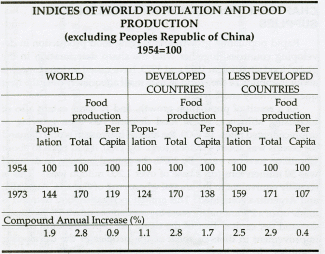
[Dan Skow, D.V.M., Veterinarian, Agricultural Consultant] This system has done a very, very good job of educating people into the need for GMO grains, because we can't feed the world. It's just the opposite. I just finished a season in my community where we were running trials, and putting in test plots for corn. We're doing better than the GMOs, hands-down.
[Eric Holt-Gimenez, Executive Director of Food First, Author of Food Rebellions!] The mythology that somehow the people of the world are starving, because there's not enough food, is very strong, and has been drummed into us for 30 years now, 40 years. In fact, there is over 1-1/2 times more food on the planet than we need for every man, woman and child. Even Josette Sheeran of the World Food Program admitted at the height of the food crisis that the problem wasn't lack of food. There's plenty of food. People couldn't afford it.
[Jeffrey M. Smith, Founder, Institute for Responsible Technology] I was at a conference of some of the experts who actually know how to feed the world,
and we had Secretary Vilsack there to speak to us. And when he started talking about how GMOs could feed the world,
he was actually booed and hissed by these experts.
[Marcia Ishii-Eiteman, Ph.D., Senior Scientist, Pesticide Action Network North America] The evidence does not exist to support the claim that GMOs are going to be the way forward, to feed the world, in a way that's sustainable and equitable in the future.
[Shiv Chopra, Former Health Canada Microbiologist and Author] The world can feed itself. The world has always fed itself. The world has enough food. But due to corruption, people may not be getting food. But there's plenty of food. Monsanto's whole drive to create GMOs is a disaster in front of us now. The world can get rid of it. The world should get rid of it. The sooner the better. Now.
GMO MYTHS
[Jeffrey M. Smith, Founder, Institute for Responsible Technology] There's a lot of GMO myths about what GMOs are supposed to do, or can do. They are supposed to increase yields. Well, in actuality, they reduce average yield.
[Failure to Yield: Evaluating the Performance of Genetically Engineered Crops, by Doug Gurian-Sherman]
Look at the Union of Concerned Scientists report, "Failure to Yield." There have been studies done on millions of farms in developing nations showing average increase of yield of 79%
for sustainable techniques. Not for GMOs.
In the United States, GMOs grown side by side with organic, show no difference for soy and corn, except in times of drought, when the organic outperforms the GMOs. They also say that GMOs are supposed to increase farmer profit. Well, that's not true.
[Charles Benbrook, Ph.D., Chief Science Consultant, Organic Center] Essentially, all of the independent studies, and by that I mean a study not paid for, directly or indirectly, by the biotech industry, all independent studies conclude that GM technology has been close to an economic wash.
[Jeffrey M. Smith, Founder, Institute for Responsible Technology] They said GMOs would increase U.S. exports.
[The Loss of Corn Exports to Europe: Something to Chew on At The Commodity Classic, by Robert Schubert]
The opposite happened. We lost 99% of our corn exports to Europe.
[U.S. CORN PRODUCERS SHUT OUT OF EUROPEAN MARKET
BY JENNIFER VINCENT
MARCH 30, 1999
MICHIGAN FARM NEWS
Corn producers lost another share of the global market this month, as a U.S. Department of Agriculture top official reported that corn produced in the United States is effectively "shut out of the EU market" due to Europe's delays in approving new genetic modified varieties.
Tim Galvin, administrator of USDA's Foreign Agriculture Service, told a House agriculture subcommittee that the presence of non-approved varieties in U.S. fields effectively blocks all U.S. corn from the European Union.
Because of Europe's concerns over genetically engineered crops, the EU bought only 3 million bushels of U.S. corn last year sharply [down] from 70 million the previous year.
"Education and discussion are going to be the keys to opening that market," said Bob Boehm, Michigan Farm Bureau commodity and marketing department manager. "Since is moving at a rapid pace right now -- faster than many of us are able to absorb.
According to National Corn Growers Association President Roger Pine, only about 2.5 percent of the 1998 U.S. corn crop was ...]
[Charles Benbrook, Ph.D., Chief Science Consultant, Organic Center] The biotech industry has claimed for years that herbicide tolerant crops reduce the pounds of herbicides applied.
[GM Crops Could Reduce Need for Herbicides, by Crop Biotech Update]
And while that's true for the first few years after a new herbicide-tolerant crop variety is introduced,
after a few years there are shifts in weeds, and the beginning of resistance emerges.
And we see a steady, incremental rise in herbicide use.
[Report Documents Pesticide Use Increases on GE Crops, by Union of Concerned Scientists]
[Michael Hansen, Ph.D., Senior Staff Scientist, Consumers Union -- Publisher of Consumer Reports] A study found that 323 million more pounds of pesticides ...
have been applied on genetically engineered crops compared with their non-engineered counterparts in the U.S.
[Glyphosate Resistant Weeds a Reality for Cotton Growers, by Roy Roberson]
We've got 10,000 acres of cotton in Georgia that are now resistant to all herbicides, including glyphosate.
[Monsanto's Crops Spawning Superweed Epidemic in U.S., by GM Watch]
So guess how they're controlling them? They're having to use machetes.
Glyphosate's no longer working. So now they want to get crops that are engineered with 2,4-D. For those of you who are too young to know that, that was one of the components of Agent Orange. So that's not a benign herbicide.
[Jeffrey M. Smith, Founder, Institute for Responsible Technology] There is so much increase in the use of Roundup.
It's now found by the U.S. Geological Survey in 60-100% of the air samples, the rain samples, and the water samples.
It's in the urine of city dwellers. It's in the blood of pregnant women. It's in their fetuses. It's everywhere.
[Eric Herm, Cotton Farmer, Author of Son of a Cotton Farmer] It's a scam. This is a money-making scam for these billion-dollar corporations. It's not going to improve our quality of life. It's not going to improve anything that happens within nature.
[Andrew Kimbrell, Executive Director, Center for Food Safety, Author of Your Right to Know] It's not about feeding the world. It's not about the blind will see and the lame shall walk. It's about chemical companies selling chemicals.
[Bill Witherspoon, Entrepreneur] When I heard the Monsanto Master Plan,
I was stunned.
The goal of Monsanto was to replace all natural seed, to have all global agriculture, completely driven by genetically modified seed. And to create a market for the chemicals associated with those genetically modified seed.
There was no sense of nature. There was discussion of how to eliminate natural seed.
[Charles Benbrook, Ph.D., Chief Science Consultant, Organic Center] When I get in discussions with people, they say, "Well, the government reviewed them. The government's approved them. There were mountains of studies done. They couldn't have gotten it that wrong. And if it was so bad, somebody would speak up about it." But in reality, the few people who have spoken up about it have paid a high personal and professional price for it.
[Urgent Action Needed Against Pro-GM Abuse of Science and Scientist, by Institute of Science in Society]
The attacks on people who have raised questions about this technology are very well covered. They are no secret.
[Battlefield: Papers Suggesting that Biotech Crops Might Harm the Environment Attract a Hail of Abuse From Other Scientists. Emily Waltz Asks if the Critics Fight Fair.]
-- Battlefield: Papers Suggesting that Biotech Crops Might Harm the Environment Attract a Hail of Abuse From Other Scientists. Emily Waltz Asks if the Critics Fight Fair.
-- Monsanto's Dirty Tricks Campaign: Interview with GM Watch Editor, Johathan Matthews
-- The Fake Persuaders, by George Monbiot
-- The New Thought Police: Suppressing Dissent in Science, by Mae-Wan Ho and Jonathan Mathews
[Researcher Sacked, Others Threatened Over GM Protest, by GMWatch]
And they've had a very chilling effect on the willingness of other scientists to even want to carry out the work.
One way to discourage scientists from working in an area is to show them that if they happen to come up with findings that don't jive with the PR message from the biotech industry, and if they were to go on and publish their results, and talk about them at a professional meeting, that their dean is going to be visited by a contingent from the companies. Politicians at the state level will be visited, and say, "Gee, you know what's going on in the Agronomy Department at the University?
There's this professor, and he's out to hurt your farmers. You better call the dean up, and get that person back on message."
[Monsanto's College Stranglehold: A New Report Has Shocking Findings About the Connection Between Corporate Funding and Agricultural Research, by Jill Richardson]
And this happens absolutely routinely.
[Eric Holt-Gimenez, Executive Director of Food First, Author of Food Rebellions!] And quite frankly, because of the direct investments of these companies in our universities,
[Monsanto Commits $250,000 to University of Illinois Ag Communications Program, by cropsci.illinois.edu]
new professors know very well that if you expect to get tenure,
don't do any negative research on GMOs.
[Monsanto Donates $1 Million for UMSL Community Education Center, by Greta Weiderman]
[Elaine Ingham, Ph.D., Chief Scientist, Rodale Institute] When I spoke to the United Nations about the dangers of genetically engineered organisms, and then I returned to my department at Oregon State University,
I soon afterwards received a letter from a past president of Oregon State University, basically saying that, "If you didn't believe in the technology, if you weren't heart and soul into this industry, this technology,
that you really didn't belong at Oregon State University."
[Charles Benbrook, Ph.D., Chief Science Consultant, Organic Center] It's just remarkable the degree to which a single company ...
has been able to dominate what gets discussed, how it's discussed,
[Monsanto Threatens Vermont Legislature Over GMO Labeling Bill, Says It Will Sue State, by Jonathan Benson]
and who is willing to participate in that debate.
[Monsanto Blocks Research on GMO Safety, by Jeremy Bloom]
All of the important evidence from the disaster was destroyed, illegally, before the investigation was concluded, some before it began ...
The investigation of the WTC is a half-baked farce ...
WTC Collapse Forensics: Cores Not in Whitehouse Investigation ...
Shortly afterward, in August of 2001, the Minneapolis FBI Field Office questioned recently arrested Zacarias Moussaoui, later alleged to the be 20th hijacker. As the investigation intensified in the weeks before 9/11, one Minneapolis agent claimed he was worried Moussaoui would try to fly a hijacked airliner into the World Trade Center. But the Minneapolis investigation was so vigorously blocked that agents joked Osama Bin Ladin must have a mole at FBI headquarters ...
Department of Justice, Federal Bureau of Investigation: Called Off the Trail? FBI Agents Probing Terror Links Say They Were Told, "Let Sleeping Dogs Lie" ...
In January of 2001, Chicago Field Agent Robert Wright saw his three-year investigation of a terrorist cell abruptly halted ...
The Guiding Theory, that Al-Qaeda was Solely Responsible for 9/11, Framed the Entire Investigation. It did not argue for that theory. It simply assumed its truth from the outset, and throughout its work. And it uses this theory to decide which events are relevant ...
Some people have also called it a Whitewash. And it is. But this term assumes that the Commission should have investigated the White House, that is, various kinds of evidence, suggesting that there was complicity by The White House. But given Zelikow's position, the investigation of the White House would have been carried out by essentially The White House itself.
-- Confronting the Evidence -- A Call to Reopen the 9-11 Investigation, by reopen911.org, directed by Jimmy Walter
-- Monsanto Blocks Research on GMO Safety, by Jeremy Bloom
-- War Over Monsanto Gets Ugly, by Mike Ludwig
-- Glyphosate-Based Herbicides Produce Teratogenic Effects on Vertebrates by Impairing Retinoic Acid Signaling, by Alejandra Paganelli, Victoria Gnazzo, Helena Acosta, Silvia L. Lopez, and Andres E. Carrasco
-- Water Pollutants Investigation Committee Report, by Dra. Ana Otaño, Beatriz Correa, Shirley Palomares
-- GM Soy - Sustainable? Responsible?: A summary of Scientific evidence showing that genetically modified (GM) soy and the glyphosate herbicide it is engineered to tolerate are unsustainable from the point of view of farming, the environment, rural communities, animal and human health, and economies, by Michael Antoniou, Paulo Brack, Andrés Carrasco, John Fagan, Mohamed Habib, Paulo Kageyama, Carlo Leifert, Rubens Onofre Nodari, Walter Pengue
Statistics: Posted by admin — Sat Apr 09, 2016 10:32 am
]]>
GENETIC ROULETTE: THE GAMBLE OF OUR LIVES -- ILLUSTRATED SCREENPLAY
directed by Jeffrey M. Smith
Narrated by Lisa Oz
© 2012 Institute for Responsible Technology
[Doris Rapp, M.D., Environmental Medical Specialist and Pediatric Allergist, Author] Should you be concerned? I should think you'd be scared silly. Not only for your children, but for you. Why do you think so many people are sick now? We cannot tolerate what's going on any longer. We must stand up and be counted. We must write our politicians. We must talk to the people at the store, and say, "I'm not going to buy it unless it says, 'Not Genetically Engineered.'"
-- Genetic Roulette: The World's Most Dangerous Food Scam Exposed, directed by Jeffrey M. Smith
GENETIC ROULETTE
[Transcribed from the movie by Tara Carreon]
[Narrator] America: bountiful, innovative, entrepreneurial,
diverse,
progressive --
sick?
Americans get sick more often than Europeans and people in other industrialized countries. And they are getting sicker.
Since the mid-90's, the number of Americans suffering from at least three chronic illnesses nearly doubled.
And America's international ranking for infant mortality and lifespan also plunged.
There are many reasons why this is taking place.
One may be right in front of you.
GENETIC ROULETTE: THE GAMBLE OF OUR LIVES
Directed by Jeffrey M. Smith
Narrated by Lisa Oz
[Robin A. Bernhoft, M.D., Medical Director, Bernhoft Center for Advanced Medicine] Over the past 20 years, there has been enormous logarithmic increase ...
in a whole series of chronic illnesses.
[Don Huber, Ph.D., Professor Emeritus of Plant Pathology, Purdue University] Things we're seeing today aren't normal. We didn't see them 30 years ago, or 50 years ago.
[Doris Rapp, M.D., Environmental Medical Specialist and Pediatric Allergist, Author] Illnesses that weren't epidemic before are now epidemic, and at a scale that is just monumental.
[Jeffrey M. Smith] People are getting sicker. What's changed?
Well, one thing that has changed is the food.
And the most radical change is the genetic engineering of our food supply.
[Ashley Koff, R.D., Celebrity Dietician, Author of Mom Energy] We have gone from food
in its whole-food form,
to food undergoing a scientific experiment.
88% OF U.S. CORN IS GENETICALLY MODIFIED
94% OF U.S. SOY IS GENETICALLY MODIFIED
[Dennis Kucinich, U.S. Congressman, Former Presidential Candidate] We have hundreds of millions of acres of genetically modified crops have been planted in the United States. And yet most people are not aware.
[Woman] The normal consumer, unfortunately,
especially these days,
is just busy trying to hold on to their house,
or put their kids through school.
And they are not aware of anything being genetically modified.
[David Bronner, President, Dr. Bronner's Magic Soaps] Obama's USDA is owned by the biotech, just as much as every previous administration.
And if we don't do anything, like within a decade, every single major crop with any significant market size, is going to be genetically modified. And we're not going to know it.
WHAT IS A GMO?
GMO: Genetically Modified Organisms.
[Jeffrey M. Smith, Founder, Institute for Responsible Technology] They take genes from one species and force it into the DNA of other species. And they can mix and match between species that have never normally mated.
So they have spider genes that they put into goats, in the hopes that they can milk the goat
to get spider-web protein to make bullet-proof vests. I'm not making this up.
They've taken cow genes and put them into pigs so that the pigs have cow hides.
They've taken human genes and put them into corn to make spermicide. And for the food we eat, there are two main categories:
(1) the herbicide-tolerant crops:
they can spray them with herbicide
and not kill them, or (2) the pesticide-producing crops
that produce their own toxic insecticide, that if a bug bites those plants, it breaks open the stomach
and kills them.
So they are completely swapping genes between the normal species barriers, creating new organisms that were not part of the evolutionary process.
HOW ARE GMOS MADE?
[Robin A. Bernhoft, M.D., Medical Director, Bernhoft Center for Advanced Medicine] The general public has the impression that genetic engineering is somehow a precise science. More accurately, it's submicroscopic shooting from the hip.
[Jeffrey M. Smith, Founder, Institute for Responsible Technology] The very process of genetic engineering creates unpredicted side effects. You take a gene and make millions of copies.
And they put them in a gun, literally. And then shoot that gun into a plate of millions of cells.
And then you clone those cells
into a plant.
[Arden Anderson, Ph.D., D.O., M.P.H., Author of Real Medicine, Real Health] Typically, what they will put onto that, is a virus, or a part of a virus, in order to turn that gene on.
[Jeffrey M. Smith, Founder, Institute for Responsible Technology] Now the process of insertion, plus cloning, creates massive collateral damage.
There can be hundreds, or thousands of mutations up and down the DNA.
And hundreds, or thousands of genes, can change their levels of expression in the naturally functioning plant. This creates unpredicted side effects.
[Arden Anderson, Ph.D., D.O., M.P.H., Author of Real Medicine, Real Health] From a biophysics perspective, when we look at the signature now of that entire gene sequence, it's foreign. It does not exist anywhere in nature. And therefore, our immune system, which is truly a grand, electromagnetic sensor system, looks at that material, that gene sequence, that is supposed to be food, whether it's soy, or corn, or whatever it might be, looks at that and says, "I've never seen that sequence ever." It doesn't exist in nature. It's foreign. It attacks. It creates an inflammatory reaction, and attacks that sequence.
[Martha Grout, M.D., Medical Director of The Arizona Center for Advanced Medicine] Many of the diseases that we deal with, in fact, most of the diseases that we deal with,
have, as a source, inflammation.
[The Fires Within: Inflammation is the Body's First Defense Against Infection, But When It Goes Awry, It Can Lead to Heart Attacks, Colon Cancer, Alzheimer's and a Host of Other Diseases, by Christine Gorman and Alice Park]
Many of them, the source is inflammation in the gut,
which is, of course, the first interface between the body and any kind of food, including GMO food.
[Narrator] In 1996, genetically engineered corn and soy were introduced into the American diet.
Since then, numerous digestive disorders related to gut inflammation have been on the rise in the U.S. population. Is this just a coincidence?
But inflammation creates additional serious disorders unrelated to digestion.
[Martha Grout, M.D., Medical Director of The Arizona Center for Advanced Medicine] So I think we should probably look at allergies. I'm sure we should look at auto-immune diseases. And you know, basically, anything that's related to inflammation:
heart disease, kidney disease, diabetes. I mean, it doesn't stop. Thyroid disease.
HOW GMOs CAME TO YOUR TABLE
[Michael Taylor, Deputy Commissioner for Foods, FDA] Protecting the food supply, making it safe, making it nutritious, is one of the most fundamental duties of government, and then of course of FDA. When you think about the importance of food to public health, to the health of people, there is really nothing more fundamental.
[Statement of Policy: Foods Derived from New Plant Varieties: Biotechnology Guidance Documents, by U.S. Food and Drug Administration]
[Jeffrey M. Smith, Founder, Institute for Responsible Technology] The current FDA policy on GMOs, created in 1992,
says that the agency is not aware of any information showing that GMOs are significantly different; therefore, no safety studies are necessary.
[Landmark Lawsuit Challenges FDA Policy on Genetically Engineered Foods, by Center for Food Safety]
It turns out that in 1998, a lawsuit forced 44,000 secret internal memos into the public domain, and they showed a different story.
[Steven M. Druker, Public Interest Attorney, Initiator of FDA lawsuit] As I combed through those 44,000 pages of memoranda and other documents, I was shocked,
because it became clear that the FDA had been lying repeatedly since 1992. Because they claimed that there was an overwhelming consensus within the scientific community that these foods were safe. But the overwhelming consensus within their own scientific staff was exactly opposite. These foods could not be presumed safe.
[Jeffrey M. Smith, Founder, Institute for Responsible Technology] The overwhelming consensus among the scientists working at the FDA were not only that GMOs were different,
but that they were dangerous. They could lead to allergies, toxins, new diseases, and nutritional problems, they said over and over in their memos. They urged their superiors to require long term studies, but were ignored. Why?
[Trouble in the Garden: More Bad News for Monsanto & Biotech, by Peter Montague]
The person in charge of policy at the FDA was Michael Taylor, Monsanto's former attorney, later Monsanto's Vice-President, now back at the FDA as U.S. food safety czar.
[Steven M. Druker, Public Interest Attorney, Initiator of FDA lawsuit] What Monsanto and the biotech industry wanted from the FDA,
was a policy that created the illusion that genetically engineered foods were being diligently regulated, but that in fact imposed no burdens at all; that in fact had zero regulation. And the FDA has pulled that off masterfully.
[Stage Set for "Biotech" Debut at Grocery Store: U.S. Policy to Be Unveiled Today Regulates Food Created by Genetic Engineering Like Other Varieties, by Marlene Cimons and Donna K.H. Walters]
[Jeffrey M. Smith, Founder, Institute for Responsible Technology] And so the FDA has not approved any genetically modified crops. There's a voluntary consultation process where companies like Monsanto can produce whatever science it wants. If the FDA asks for further information, they are typically ignored.
At the end of this meaningless exercise, the FDA produces a letter which reminds Monsanto that it's its responsibility to determine if the foods are safe.
[Biotechnology Consultation Agency Response Letter BNF No. 000035, by Alan M. Rulis, Ph.D.]
So the same company, Monsanto, who told us that PCBs, Agent Orange,
and DDT were safe, and lied,
can tell us if GMOs are safe. In fact, they don't even have to tell us. They can put it on the market without telling the FDA or the consumers.
[DDT -- WEAPON AGAINST DISEASE]
["DDT IS GOOD FOR ME-E-E!"]
[Steven M. Druker, Public Interest Attorney, Initiator of FDA lawsuit, Author of Altered Genes, Twisted Truth] If they have been creating the kinds of problems that the FDA scientists warned that there could be,
that the various scientists in our lawsuit warned about,
that the expert panel of the Royal Society of Canada has warned about,
that the British Medical Association has warned about,
that scores and scores of other scientific experts
have warned about,
then there already could have been major damage created to the health of every American, and to the health of coming generations.
[Declaration of Philip J. Regal, Ph.D., Alliance for Bio-Integrity, et al. v. Donna Shalala, et al.]
[Elements of Precaution: Recommendations for the Regulation of Food Biotechnology in Canada, by The Royal Society of Canada]
[The Impact of Genetic Modification on Agriculture, Food and Health: An Interim Statement, by British Medical Association]
[Doctors' Call for Ban on GM Crops Rejected, by BBC News]
[British Medical Association Statement on GM Foods, by CropBiotech Net]
[Nick Pasco, Owner, Bear Foods Natural Market] The FDA, the USDA, and the EPA, are all responsible for different aspects of our food production. And they are signing off on this in a way that is, I mean, it is beyond outrageous.
They've appointed known advocates of GMO food to positions like Secretary of Agriculture, Food Czar, important positions in which independent decision-making should be done.
And appointing people that work for the main offender on this to those positions is insane.
Biotech Industry / People / Government
Leading GM Advocate: "Governor of the Year 2001, Biotechnology Industry Association / Thomas Vilsack / U.S. Secretary of Agriculture, 2009 (Obama)
Former Monsanto Attorney and Vice President / Michael Taylor / FDA Deputy Commissioner, 1991 & 2010 (Bush, Obama)
Director, Danforth Center (Monsanto)/ Roger Beachy / Director, USDA NIFA, 2009 (Obama)
Board of Directors, Monsanto Subsidiary / Ann Veneman / U.S. Secretary of Agriculture, 2001 (Bush)
Monsanto Scientist on Bovine Growth Hormone / Margaret Miller / FDA Branch Chief that Evaluated rBGH, 1989 (Bush)
V.P., Government & Public Affairs, Monsanto / Linda Fisher / EPA Deputy Administrator, 2001 (Clinton)
[Lawrence Plumlee, M.D., Former Medical Science Advisor, EPA Office of Research and Development] I think this is the most alarming thing that I have seen in Washington, that we would clear new, unique products for human consumption, without careful independent testing of these products. I can only think that money is the reason.
[Robin A. Bernhoft, M.D., Medical Director, Bernhoft Center for Advanced Medicine] The American Academy of Environmental Medicine took a very strong position against GMO, because such research as has been done is very disturbing.
[Genetically Modified Foods Position Paper, by Amy Dean, D.O. and Jennifer Armstrong, M.D.]
[Narrator] The American Academy cited animal studies showing infertility, immune problems, accelerated aging, complications with cholesterol and insulin, and changes in the liver, kidney, spleen, and gastrointestinal system.
[Steven M. Druker, Public Interest Attorney, Initiator of FDA lawsuit, Author of Altered Genes, Twisted Truth] And unfortunately, the American consumer,
for 20 years now, has been consuming the foods
that the FDA scientists said should not be on the market
until they are proven safe. Because the FDA continues to lie about the truth.
[Tom Newmark, Founder of Sacred Seeds] When you have the power to manipulate the entire structure of evolution, it would be irresponsible for any scientist, no matter how wise, or nobel laureate, or otherwise, to take that power, and to use it without a full appreciation of its consequences.
[Jeffrey M. Smith, Founder, Institute for Responsible Technology] The biotech companies do their own research. I call it "tobacco science." They use the wrong control group, the wrong detection method, the wrong statistics. And their feeding trials are so short they could never identify things like cancer, or reproductive disorders, or birth defects. They've got bad science down to a science.
[Tom Newmark, Founder of Sacred Seeds] No one has the right to play dice, to play roulette, with the entire genetic integrity of life on the planet.
INSECTICIDE IN FOOD
[Jeffrey M. Smith, Founder, Institute for Responsible Technology] There's a soil bacterium called "bacillus thuringiensis," or "Bt."
And if you take that bacteria, and gather it up and use it as a spray, the Bt toxin produced by the bacteria will kill insects.
So engineers take the gene that produces the toxin, and insert it into corn and cotton, and allow the plants to do the killing.
[Elaine Ingham, Ph.D., Chief Scientist, Rodale Institute] Every single cell within that plant is producing a toxic protein.
[Jeffrey M. Smith, Founder, Institute for Responsible Technology] Bt is designed to break open the stomach of insects and kill them. So when the doctors hear about this, that Bt corn was introduced into our diet in the mid-90's, they say this may explain the increase in gastro-intestinal problems that they are seeing in their practice.
But the EPA says, "Don't worry about Bt toxin, it's completely harmless to human beings and animals,
because it only affects insects."
[Bacillus Thuringiensis, by Extension Toxicology Network]
[1. PRODUCT CHARACTERIZATION AND HUMAN HEALTH ASSESSMENT
This section provides information on the specific transformation systems that were used for each product, the characterization of the DNA insert, the inheritance and stability characteristics of the product line, and the protein characterization and levels of Bt protein expression for the various plant tissues. Specific information and data for each of the registrations seeking renewal are included in tabular and descriptive formats.
The health effects assessment confirms EPA's original findings that there are no unreasonable adverse health effects from these products. The human health assessment for the Bt plant-incorporated protectants draws heavily on the science and toxicology of proteins. All the currently registered Bt plant-incorporated protectants are proteins. The source bacterium has been a registered microbial pesticide which has been approved for use on food crops. The Bt proteins approved for use in food are expected to behave as would be expected of a dietary protein. The Bt microbial pesticides have a long history of safe use without adverse health or environmental effects. Several ...]
[Crucial Paper 27: BT Proteins Are Toxic To Human Cells: Cytotoxicity on Human Cells of Cry1Ab and Cry1Ac Bt Insecticidal Toxins Alone or With a Glyphosate-Based Herbicide, by Mesnage R., Clair E., Gress S., Then C., Szekacs A., Seralini G.]
However, a study that came out in February, 2012 shows that the EPA got it wrong.
[BT Toxin Kills Human Kidney Cells: Cry1Ab Biopesticide Kills Human Cells at Low Doses as Does Roundup Herbicide, by Dr. Eva Sirinathsinghji]
It does break open little pores in human cells, and it might cause the same kind of disruption in our guts as it's causing in the insects that it kills.
[Garry Gordon, M.D., D.O., Author of The Chelation Answer] If Bacillus thuringiensis is causing an increased propensity for our intestine to become permeable, or leaky, and for foods to be presented to our bloodstream in a premature fashion,
the havoc that it will cause will be across the entire spectrum of disease, from premature aging and alzheimer's, to parkinson's, to autism, to cancer, to asthma. There is no part of the spectrum [that is not affected]. Because if we start, the same as if you buy a brand new car, and it says on that that it's meant to run on gas, and you go put diesel in it, you can expect it won't go very far. So when you put the wrong fuel into your body, and by making your intestine leaky, we are permitting building blocks to go into our body that are "the wrong fuel." They have not been adequately prepared by our digestive processes, and by the simple fact
that the healthy flora in our body converts our food to active things. Like the right form of Vitamin K is only elaborated in your body.
Many of the foods that we eat are not in their active form until the healthy flora begins to work on them. And disrupting that flora is why we see so much of the eczema,
so much of the asthma, so much of the allergies in our population.
[Jeffrey M. Smith, Founder, Institute for Responsible Technology] There's only been one human feeding study on genetically modified foods, and they found that part of the gene inserted into soybeans, that make the soybeans Roundup Ready, transferred into the DNA of bacteria living inside our intestines, and stayed there. Furthermore, that bacteria was not killable with Roundup, suggesting that the gene remained active. This means that long after we stop eating genetically modified foods, we may still have these genetically modified proteins produced continuously inside of us.
They never checked to see if the Bt toxin gene, transferred from, say, corn chips, into our gut bacteria,
continued to function.
If it does, it might turn our intestinal flora into living pesticide factories.
This might explain why 93% of pregnant women tested in Canada
had the Bt toxin in their blood
as well as in the blood of 80% of their unborn fetuses.
[GMO Toxins Are in Nearly All Pregnant Women & Fetuses, by Heidi Stevenson]
[Toxic Pesticides from GM Food Crops Found in Unborn Babies, by Andy Bloxham]
The authors of the study suggested that the Bt toxin came as a result of eating the milk and meat of animals that ate Monsanto's Bt corn. But I think a more plausible explanation is that the Bt toxin was produced continuously inside their own digestive tract.
INTESTINAL DAMAGE
[Myrto Ashe, M.D., M.P.H., Family Practitioner] What's happening in the research article that I'm reading is that a lot of the conditions that seem to be on the rise are connected to intestinal permeability.
To me, I think that this is actually one of the important parts of why GMOs might be harmful.
[Possible Links Between Intestinal Permeability and Food Processing: A Potential Therapeutic Niche for Glutamine, by Jean Robert Rapin and Nicolas Wiernsperger]
[Michelle Perro, M.D., Named one of "America's Top Pediatricians"] One of the things that really I see a lot in children now, is that kids come in with leaky guts. They are usually, in an intestine there should be tight junctions in the intestine.
But these kids are coming in, their guts are not in these tight junctions. The foods they are eating
are leaking into their bloodstream.
They are creating an antibody response to those foods.
And so they are coming in with food intolerances,
and food allergies.
[Myrto Ashe, M.D., M.P.H., Family Practitioner] Once intestinal permeability rises, then it's possible for larger bits of food to go through, bits that really should have been digested fully before getting assimilated. Once these go into the bloodstream, the body develops a reaction to them. And this reaction is an allergic reaction.
ALLERGIES
[Maria Mills, Founder, Monkey Sea Monkey Doo] I have a son who has severe food allergies. And he got the food allergies back in '09, August 25, 2009, to be exact.
And I have literally, from that day forward,
been on a mission trying to figure out how did my son get these food allergies. I found out that our food supply is genetically modified. And guess what? The food that my son ate on August 25, 2009 was raw corn, the corn that almost killed him.
All I could hear him go was like, "ucchh, ucchh, ucchh,"
and like itching [his neck]. And I'm like, "What the heck is going on?" And he turned red. He couldn't breathe properly. I was in panic. I called 911. I was just like, "I think my son is having a food allergy attack."
And I immediately took him to the doctors. And I got all of these tests done. And sure enough, he's deadly allergic to corn now.
[Gary Hoyer, Chef and Educator] 25, 30, 35 years ago, no one was allergic to anything. And now you have allergies. I have people with black pepper [allergies]. They couldn't have black pepper today. There's celiacs who have wheat and gluten allergies. People who have allergies to, of course, you know, the basics, like dairy and seafood. But everything.
I have people who are allergic to parsley,
and just regular, natural, chlorophyll plants.
[Woman] We're talking about food that's become harmful.
How did that happen?
So when you link it to the GMO issue,
it resonates like you would not believe.
[John Boyle, M.D., Allergist, Immunologist] Patients with allergies, I try to keep them away from GMO foods, because they will react to them. And they'll tell you that.
[Robyn O'Brien, Founder, Allergy Kids Foundation, Author of The Unhealthy Truth] It's my fourth child who has food allergies. We have no family history of this. I knew I had taken care of myself through every pregnancy the exact same way. And as friends kept saying, "What did you do differently? What did you do differently?" I had no answer. And suddenly, in learning of this relationship between GMOs and food allergies, I finally had my answer. And in learning about genetically modified foods, I was also able to do something about it. And literally, within a 24-hour period, we cleaned out the entire kitchen. The items that we had been feeding our children for the last six years, we just literally threw into the trash.
And so at first where I was excited, and I was relieved at having discovered all of this, I then went through a really hard stage where I just cried. Because I thought, "What have I done to my children? And what has been done to them without my consent?"
[Michelle Perro, M.D., Named one of "America's Top Pediatricians"] And I have kids that are allergic to every food group. How is that possible? And not just a few of them, but quite a few of them. It's almost impossible to manage. Moms are coming in and saying, "What do I feed my kid?"
[Ashley Koff, R.D., Celebrity Dietician, Author of Mom Energy] I have seen first hand, exponential growth in allergies. And yet, when I improve the quality of my patients' diets, meaning, prescribing a non-GMO diet, prescribing organic food, their symptoms go away.
[Emily Lindner, M.D., Internal Medicine Specialist] In most of my patients, because they have some sort of immune or inflammatory response to the GMO foods, I have to take them off the non-GMO foods that are related. So I have to take them off of all corn. I have to take them off of all grains. Because my experience is that once the immune system has been inspired to have a response, that they react to GMO and non-GMO.
[Ashley Koff, R.D., Celebrity Dietician, Author of Mom Energy] You know, I had a healthy patient come in, a 30-year-old woman, who told me now when she eats any food, her skin literally overheats. Literally, anything that she is eating is causing a problem in her skin. And she says to me, "What could this be?" Well, what we do is we take her off of all of the food that she is eating, and she starts back, adding in highest quality organic foods in their base forms, right? As she is doing that, she suddenly is getting better. You know, we might have to use enzymes, or other things to help her. But if she starts to get better, guess what?
When we add back in corn or soy, she can consume it if it's not genetically modified.
AUTISM
[Michelle Perro, M.D., Named one of "America's Top Pediatricians"] I'm concerned about all the health issues that I'm seeing. But the one that I am most alarmed about is
autistic spectrum, which has literally skyrocketed.
[New CDC Numbers: Autism Rates Continue to Skyrocket, by Richard Moore]
[CDC Estimates 1 in 88 Children in United States Has Been Identified As Having an Autism Spectrum Disorder, by Centers for Disease Control and Prevention]
[Autism's Mysterious Rise, by Paige Blankenbuehler]
[Jeffrey M. Smith, Founder, Institute for Responsible Technology] We can't say for sure that GMOs have anything to do with autism,
but we can't say for sure that it doesn't.
In fact, there's been an increase in autism since GMOs were introduced.
And animals that eat GMOs, both in laboratory and in livestock situations, have shown some telltale signs that some practitioners say are linked with autism.
[Inside the Autistic Mind, by Claudia Wallis]
[Don Huber, Ph.D., Professor Emeritus of Plant Pathology, Purdue University] Studies with pigs showed the allergy response
from the GMO food reproduced all of the physiological changes that we see in the intestine,
the inflammatory response in the stomach to those foreign proteins, that we see with autistic children.
When I reported this in a symposium in Germany, a doctor that has spent his entire career working with autistic children, he came up and asked me a few questions. When I reported exactly what we were seeing symptom-wise, behavior-wise, with the rats and with the pigs, and with the cattle that are being fed GMO vs. non-GMO,
he said, "That's exactly what we're finding in our autistic children."
And why, when I can modify the diet of an autistic child ten years ago, and have a very excellent response, and remediation and recovery, why am I not getting that response now? Because we're no longer able to change that microflora back,
because we are continuing to feed our GMO-contaminated food to our children.
[Gastrointestinal Problems Common in Children With Autism, by American Academy of Pediatrics]
[Autism and the Diet Connection, by Susan Moffitt]
[Typical American Diet May Fuel Autism, by Deborah Mitchell]
[Michael Williamson, M.D., Oncologist, Hematologist, Autism Patient Consultant] Our son is 9-1/2, and he was diagnosed with autism spectrum disorder about six years ago. And we've used many interventions in his therapy. But about two years ago, we learned about GMO foods, and the potential harm of this kind of food in ourselves and in our son. And particularly in the last two years we've seen some nice improvements, in combination with other things. That keep cleaning up his diet with non-GMO foods has been a big success for us.
[Laura Hirsch, Mother of Autistic Child] I just always felt there had to be a connection to autism, and all the gut-related problems that our kids have.
My son, in particular, always had GI problems:
fungal infections, and parasites, bacteria, viruses in his GI tract, that we have been treating over the years.
But not until we took GMO completely out of his diet,
did I see the biggest change in him, behaviorally especially.
[Curt Linderman, Sr., Radio Show Host and Owner of Box Organix] My son is 10 years old now. He's autistic.
And about five years ago we learned at an autism conference about GMOs. And we just decided immediately that that was one of the things that we were going to have to change about his diet. And when we did, the change was quite profound. He had a lot of gut issues, as do most children with autism. And we noticed immediately a relief in the symptoms of the bloating. And the horrible bowel movements seemed to subside substantially. And now his gut is like a normal typical kid. It's really amazing.
And we haven't done much to his gut other than get him on an organic diet, and get him away from the GMOs.
[Narrator] The vast majority of genetically modified crops
are engineered to make it easier for farmers to kill weeds. For example, Monsanto's Roundup-ready crops,
which comprise most of today's GMOs, can survive applications of
Monsanto's best-selling weed killer, Roundup.
By 1933, the SS numbered 52,000 members. Strict membership requirements ensured that all members were of Hitler's Aryan Herrenvolk ("Aryan master race"). Applicants were vetted for Nordic qualities—in Himmler's words, "like a nursery gardener trying to reproduce a good old strain which has been adulterated and debased; we started from the principles of plant selection and then proceeded quite unashamedly to weed out the men whom we did not think we could use for the build-up of the SS."
-- Heinrich Himmler, by Wikipedia
ROUNDUP
[Jeffrey M. Smith, Founder, Institute for Responsible Technology] The active ingredient of Roundup is called glyphosate.
It was patented as an herbicide by Monsanto in 1974.
But 10 years earlier, it was patented as a broad-spectrum chelator.
Now chelation is the molecular level of hugging, and not letting go.
The way that it kills weeds is that it makes the nutrients unavailable to the plant.
So it weakens the defenses of the plant.
And it promotes the diseases in the soil which end up killing the plant.
Now this means that plants treated with Roundup have a reduction in available nutrients. They are weak, and they are sick.
The animals that eat the nutrient-deficient plants,
they become nutrient-deficient, and weak and sick.
Then we eat the animals
and the plants that are nutrient deficient, and we may become weak and sick.
In addition, the residues of the Roundup in the plant can end up in our bodies where they can chelate -- hug -- some of the nutrients that are in our bodies, making them less available as well.
Latta Ramesh, 38, drank insecticide after her crops failed -- two years after her husband disappeared when the GM debts became too much.
She left her ten-year-old son, Rashan, in the care of relatives. 'He cries when he thinks of his mother,' said the dead woman's aunt, sitting listlessly in shade near the fields.
Village after village, families told how they had fallen into debt after being persuaded to buy GM seeds instead of traditional cotton seeds.
The price difference is staggering: £10 for 100 grams of GM seed, compared with less than £10 for 1,000 times more traditional seeds.
But GM salesmen and government officials had promised farmers that these were 'magic seeds' -- with better crops that would be free from parasites and insects.
Indeed, in a bid to promote the uptake of GM seeds, traditional varieties were banned from many government seed banks.
The authorities had a vested interest in promoting this new biotechnology. Desperate to escape the grinding poverty of the post-independence years, the Indian government had agreed to allow new bio-tech giants, such as the U.S. market-leader Monsanto, to sell their new seed creations.
In return for allowing western companies access to the second most populated country in the world, with more than one billion people, India was granted International Monetary Fund loans in the Eighties and Nineties, helping to launch an economic revolution.
But while cities such as Mumbai and Delhi have boomed, the farmers' lives have slid back into the dark ages.
Though areas of India planted with GM seeds have doubled in two years -- up to 17 million acres -- many farmers have found there is a terrible price to be paid.
Far from being 'magic seeds', GM pest-proof 'breeds' of cotton have been devastated by bollworms, a voracious parasite.
Nor were the farmers told that these seeds require double the amount of water. This has proved a matter of life and death.
With rains failing for the past two years, many GM crops have simply withered and died, leaving the farmers with crippling debts and no means of paying them off.
-- The GM genocide: Thousands of Indian farmers are committing suicide after using genetically modified crops, by Andrew Malone
[Bob Streit, M.S., Consulting Agronomist] In areas, very often right to the row specifically where the glyphosate was applied,
those plants are getting sicker earlier.
Tissue tests are documenting deficiencies in manganese, copper and zinc. As a result, the food is less nutritious. It's showing up in the animals, and glyphosate use is doing it. And it's working its way right up the food chain.
[Glyphosate Effects on Diseases of Plants, by G.S. Johal, D.M. Huber]
[Don Huber, Ph.D., Professor Emeritus of Plant Pathology, Purdue University] Those deficiencies are very well documented
as being factors in animal diseases, as well as in human diseases.
[Scientists Trace Diseases and Ailments to Mineral Deficiency, by yourdiyhealth.com]
You really need a balance of all the nutrition, all the nutrients, to keep this physical body really functioning in all the areas. Because all of them are mutually supportive and interdependent.
[Dan Skow, D.V.M., Veterinarian, Agricultural Consultant] Basically, if you had one trace mineral, and you were looking at a specific disease, you would see an animal survive and respond to treatment. This type of thing. If you've got two trace minerals that were deficient, you had a more virulent, in other words, a more aggressive disease pattern, even with the same, identical disease.
And when you got to the three elements that were severely deficient, then things really got serious, to the point that they probably wouldn't respond to treatment. And we'd have a very, very high death loss.
[Jeffrey M. Smith, Founder, Institute for Responsible Technology] What do livestock in the United States eat? Roundup ready crops:
Roundup ready soy, corn, cotton seed, canola meal, sugar beet pulp,
and now alfalfa.
The bulk of their diet is Roundup ready crops.
And those crops are nutrient deficient, and have high concentrations of Roundup.
BIRTH DEFECTS
[Arden Anderson, Ph.D., D.O., M.P.H., Author of Real Medicine, Real Health] The glyphosate problem has a number of issues for us.
[Roundup and Birth Defects: Is the Public Being Kept in the Dark?, by Michael Antoniou, Mohamed Ezz El-Din Mostafa Habib, C. Vyvyan Howard, Richard C. Jennings, Carlo Leifert, Rubens Onofre Nodari, Claire Robinson, John Fagan]
And one of the very sad side effects of glyphosate are birth defects. In the towns where people were workers on the farms, particularly the soybean farms, we had as much as 70 times increase in the number of birth defects in these sprayed areas.
[Monsanto's Toxic Herbicide Glyphosate: A Review of its Health and Environmental Effects, by Andre Leu]
And in fact, research of looking at studies around the world
show that glyphosate is in fact geno-toxic,
which means it does directly cause birth defects.
[Weed-Whacking Herbicide Proves Deadly to Human Cells: Used in Gardens, Farms, and Parks Around the World, the Weed Killer Roundup Contains an Ingredient That Can Suffocate Human Cells in a Laboratory, Researchers Say, by Crystal Gammon]
[Death by Multiple Poisoning, Glyphosate and Roundup, by Dr. Mae-Wan Ho and Brett Cherry]
And that doesn't necessarily mean exposure directly to the body, in other words the person was under the sprayer and got sprayed. So exposure can also be ingestion, because that is an exposure of the body to glyphosate.
[Jeffrey M. Smith, Founder, Institute for Responsible Technology] Lab animals fed Roundup Ready soy have had serious reproductive disorders.
In mice, the testicles change, including damage to the young sperm cells. In rats, there were changes in the uterus and ovaries. The DNA function differently in the embryo offspring of mice.
[Ultrastructural Analysis of Testes From Mice Fed on Genetically Modified Soybean, by L. Vecchio, B. Cisterna, M. Malatesta, T.E. Martin, M. Biggiogera]
When female rats were fed genetically modified soy, more than half of their babies died within three weeks.
The babies were also smaller, and could not reproduce.
[Monsanto's Best-Selling Herbicide Roundup Linked to Infertility, by Andre Evans]
When mice were fed genetically modified Roundup ready and Bt corn,
they had fewer babies, and smaller babies.
[A glyphosate-based herbicide induces necrosis and apoptosis in mature rat testicular cells in vitro, and testosterone decrease at lower levels."
by Clair E, Mesnage R, Travert C, Séralini GÉ.
Toxicol In Vitro. 2012 Mar;26(2):269-79. doi: 10.1016/j.tiv.2011.12.009. Epub 2011 Dec 19.
Copyright © 2011 Elsevier Ltd. All rights reserved.
Abstract
The major herbicide used worldwide, Roundup, is a glyphosate-based pesticide with adjuvants. Glyphosate, its active ingredient in plants and its main metabolite (AMPA) are among the first contaminants of surface waters. Roundup is being used increasingly in particular on genetically modified plants grown for food and feed that contain its residues. Here we tested glyphosate and its formulation on mature rat fresh testicular cells from 1 to 10000ppm, thus from the range in some human urine and in environment to agricultural levels. We show that from 1 to 48h of Roundup exposure Leydig cells are damaged. Within 24-48h this formulation is also toxic on the other cells, mainly by necrosis, by contrast to glyphosate alone which is essentially toxic on Sertoli cells. Later, it also induces apoptosis at higher doses in germ cells and in Sertoli/germ cells co-cultures. At lower non toxic concentrations of Roundup and glyphosate (1ppm), the main endocrine disruption is a testosterone decrease by 35%. The pesticide has thus an endocrine impact at very low environmental doses, but only a high contamination appears to provoke an acute rat testicular toxicity. This does not anticipate the chronic toxicity which is insufficiently tested, and only with glyphosate in regulatory tests.]
-- Human Cell Toxicity of Pesticides Associated to Wide Scale Agricultural GMOs, by Breckling, B. & Verhoeven, R.
-- Is It Time to Acknowledge Round-Up as a Contraceptive?, by Sayer Ji
-- Endocrine Disruption and Cytotoxicity of Glyphosate and Roundup in Human JAr Cells in Vitro, by Fiona Young, Dao Ho, Danielle Glynn and Vicki Edwards
-- Ecotoxicology of Glyphosate and Glyphosate-Based Herbicides: Toxicity to Wildlife and Humans, byPaul K. Mensah, Carolyn G. Palmer and Oghenekaro N. Odume
Preliminary evidence that's not yet published can be even worse.
In rats, the testicles changed from pink to blue.
In hamsters, by the third generation, most lost the ability to have babies.
Some had hair growing in their mouths.
[A New Example of Ectopia: Oral Hair in Some Rodent Species, by A.S. Baranov, O.F. Chernova, N. Yu. Feoktistova, and A.V. Surov]
This is astounding research.
[Reproductive Toxicity: Glyphosate, by Right Diagnosis]
And yet it's never followed up. Typically, the industry distorts or denies the findings, pretending that there's no problem.
[Don Huber, Ph.D., Professor Emeritus of Plant Pathology, Purdue University] Where we used to have one fertility clinic for people, we now have an average of 14.
[Dan Skow, D.V.M., Veterinarian, Agricultural Consultant] In our community where I live,
within 100 miles of my house, there are 50 infertility clinics.
20 years ago there probably wasn't any.
[Infertility Resources: All Your Fertility Help In One Place, by ihr.com fertility websites]
One of the ladies in our local community, who works in a hairdressing shop where the ladies get to talking and this type of thing, anyway they just accept the fact that to bring forth one healthy baby they may have one, two, three, four miscarriages before they finally have one that takes. So what does that all mean long term? I don't know.
It's scary. We just know that fertility is declining.
[U.S. Fertility in Decline, by Mary Mederios Kent]
There may be other reasons. I don't know the answer to that.
[U.S. Birth Rate Hits All-Time Low, by usgovinfo.about.com]
[BEEF-CATTLE
Beef-Cattle.com
Beef Cattle Information & Resources
Beef Cattle Infertility
Beef cattle infertility is a very serious problem in beef cattle industry. Infertility and abortion lead to heavy losses in cattle production. There are many causes that may lead to infertility in animals and many a times it may be difficult to identify the underlying reasons for the same. Abortion may happen to due to some infections and cattle having abortions must be separated from the rest of the herd to prevent the spread of infections.
Bovine brucellosis or Bang's disease is one of the leading causes of beef cattle infertility. It affects the udder, uterus, lymph nodes, testicles and accessory sex glands. The bacterium Brucella abortus causes this disease. Symptoms in cows include abortion, reduced weight gain and reduced milk production. Epididymitis in bulls indicates bang's disease. Healthy animals coming in contact with infectious animals can easily catch the disease causing bacteria, especially from aborted fetuses, placental membranes, placental fluids and the vaginal discharges. The fluids and discharges remain infected with bacteria for many days, even after the abortion. Also potential dangers are the milk and colostrums from infected animals. Even humans consuming them are at risk. Once infected the cows may have reduced fertility and may not give birth to healthy calves even later in their life.]
But in the livestock world, we definitely know that there is a decline.
[Reproductive Loss in High-Producing Dairy Cattle: Where Will It End?
M.C. Lucy
Department of Animal Sciences, University of Missouri, Columbia 65211
DOI: http://dx.doi.org/10.3168/jds.S0022-0302(01)70158-0
Abstract
The dairy industry in the United States has changed dramatically in the last decade. Milk production per cow has increased steadily because of a combination of improved management, better nutrition, and intense genetic selection. Dairy farms are larger, and nearly 30% of the dairy cows in the United States are on farms with 500 or more cows. The shift toward more productive cows and larger herds is associated with a decrease in reproductive efficiency. Cows with the greatest milk production have the highest incidence of infertility, but epidemiological studies suggest that, in addition to milk production, other factors are probably decreasing reproductive efficiency in our dairy herds. The reproductive physiology of dairy cows has changed over the past 50 yr, and physiological adaptations to high milk production may explain part of the reproductive decline. Critical areas for new research include control of the estrous cycle, metabolic effects of lactation on reproduction, mechanisms linking disease to reproduction, and early embryonic mortality. Solving reproductive loss in dairy cows will not be easy because only a small number of research groups study reproduction in postpartum dairy cows. Therefore, the present research base will need to be expanded. For this to occur, research funding must be increased above its current level and a renewed emphasis must be placed on solving the emerging crisis of infertility in dairy cows.]
Statistics: Posted by admin — Sat Apr 09, 2016 10:30 am
]]>
directed by Jeffrey M. Smith
Narrated by Lisa Oz
© 2012 Institute for Responsible Technology
NOTICE: THIS WORK MAY BE PROTECTED BY COPYRIGHT
YOU ARE REQUIRED TO READ THE COPYRIGHT NOTICE AT THIS LINK BEFORE YOU READ THE FOLLOWING WORK, THAT IS AVAILABLE SOLELY FOR PRIVATE STUDY, SCHOLARSHIP OR RESEARCH PURSUANT TO 17 U.S.C. SECTION 107 AND 108. IN THE EVENT THAT THE LIBRARY DETERMINES THAT UNLAWFUL COPYING OF THIS WORK HAS OCCURRED, THE LIBRARY HAS THE RIGHT TO BLOCK THE I.P. ADDRESS AT WHICH THE UNLAWFUL COPYING APPEARED TO HAVE OCCURRED. THANK YOU FOR RESPECTING THE RIGHTS OF COPYRIGHT OWNERS.
Statistics: Posted by admin — Sat Apr 09, 2016 10:28 am
]]>