Part 2 of 3
In Attendance
He appointed me as an extra attendant, and this meant I could simply be present with him during a great deal of the day and accompany him when he went out. Thus I was led into many amazing situations, a few of which I shall tell you about. But it was the greatest privilege I have ever had in my life – just to be allowed to be in his presence. Mostly I had no idea what was going on because people were talking in Japanese, but I was there.
Soen Roshi was famous for his calligraphy and his haiku poems, several books of which had been published.
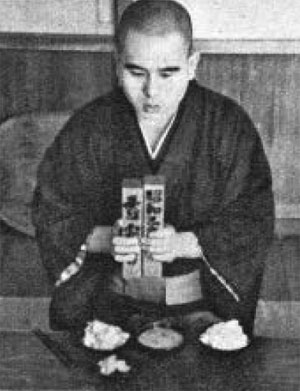
Many people brought gifts for the monastery. Exchanging gifts is a Japanese custom upon all occasions, but a monk owns nothing. Thus Soen Roshi occasionally had a session of writing some of his poems on square cards, called shikishi. This meant that he always had a gift of his own to give visitors.
Calligraphy is one of the Zen arts. The ink is in solid blocks, and you put a little water in the palette, grinding the ink block round and round. You go on adding a little more water or grinding a little more ink until you have the right quantity and the right thickness. The characters are written from top to bottom on the page and from right to left; and you will probably have noticed that the characters at the top are usually thicker, and that the bottom ones fade away. This is because when the brush is dipped into the ink, just enough is picked up to write one thought or sentence. Naturally the ink runs out and fades towards the end. Then the brush is refilled with enough ink for the next thought and so on. An important point is that in Zen nothing at all must be wasted. Therefore precisely the necessary amount of ink must be mixed, so that there will be not a drop left over. To grind ink for your teacher is one of those wonderful timeless occupations. For over 2,000 years, pupils have been doing this in exactly the same way, ready for their teacher to write or draw.
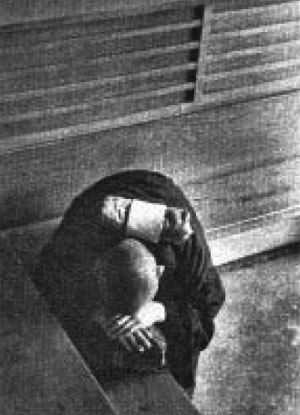
The Zen training is this: one sits peacefully grinding ink, koan held somewhere in awareness. Roshi will write something or other; you have no idea what or how much. Are you receptive enough to the universal need of the moment to know intuitively when to stop grinding? If there is ink left over, you are a bad and wasteful Zen student. But believe me, no one can be ruder than a Zen roshi, if the ink runs out before his new poem is finished. To be attendant to a roshi is a special kind of training.
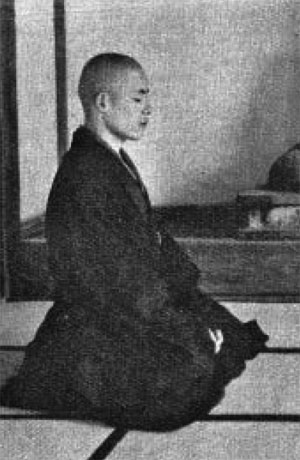
Then there was the frequent ceremony of whisking thick green powdered tea to be offered to guests. This was infinitely more simple and austere than the court-style tea ceremony. At first he whisked the tea for me on several occasions to demonstrate. Sitting alertly in zazen, I realized by some kind of osmosis that during each whisking he was meditating on one of the elements. I responded in Japanese fashion by murmuring a quotation to show my recognition of the element. ‘Earth has not anything to show more fair,’ or ‘Not I, not I, but the wind that blows though me.’ Although his spoken English was poor, he was very well read and was familiar with much English and German poetry. He knew Carlisle and Emerson, and once asked me wistfully, ‘Have you read all of Paradise Lost?’
I soon noticed that usually Roshi gave me brusque instructions, but that when he prefaced his words with ‘Gempo-Roshi told me . . .’, these teachings were things for which I was not yet ready. What had been passed to him by his teacher was to be held in my mind for future years. What richness for the future!
As a small example: when Soen Roshi washed his hands in a running stream, he always did so quickly and displaced little of the water. ‘Gempo Roshi told me no waste’ – this long before the days of ‘ecology’. It did not seem to be wasteful simply to change the direction of the water, but I stored it up.
One day someone gave Roshi a very fine melon, and he called some monks in to share it with him. I went to the kitchen for a large plate and knife. Oh dear – how to divide the melon into eleven equal parts? – Don’t think about it: look, meditate and cut. As I offered the plate first to Roshi he said ‘I take this piece, it cut with most zazen.’
When he made visits to the village and the nearest town, I often accompanied him, walking three steps behind and carrying any parcels. But on our early morning walks in the mountains, he liked to play at being a Western gentleman and we walked together. (However, I made sure my foot never touched the ground in front of his.)
One morning, a farmer dressed in his best came to pay a formal visit. His cow had calved during the night, and he was hoping Roshi would come and see it. That afternoon we visited the farm, and I have never been anywhere so dirty. This surprised me greatly, as usually everywhere in Japan is spotless. The barn and the cow were filthy. We accepted a cup of tea, and Roshi said a blessing over the calf. As we went back to the monastery he told me ‘Last year, farmer’s wife died. No woman to clean anything.’
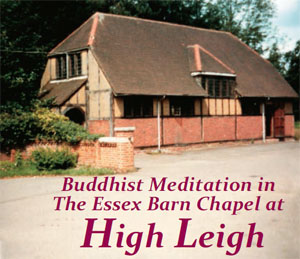 Buddhist Meditation in The Essex Barn Chapel at High Leigh
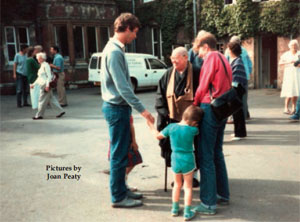
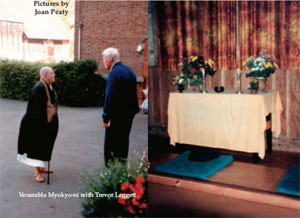 Pictures by Joan Peaty.
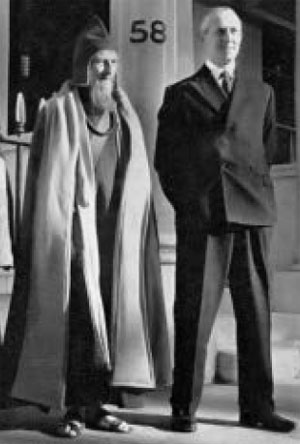
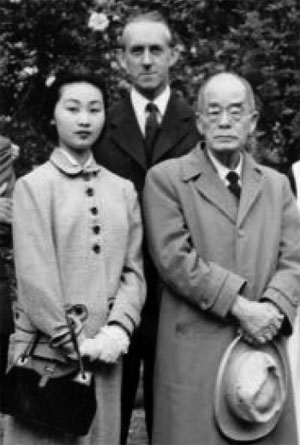
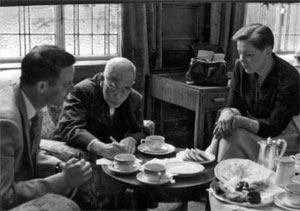
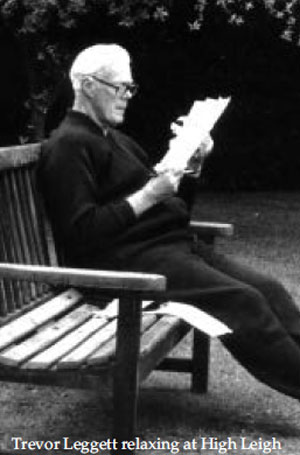
Venerable Myokyo-ni with Trevor Leggett
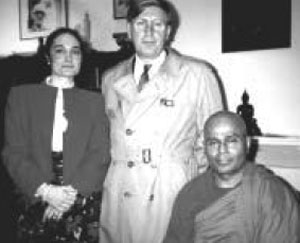
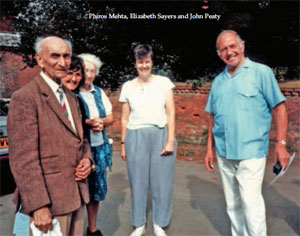 Phiros Mehta, Elizabeth Sayers and John Peaty
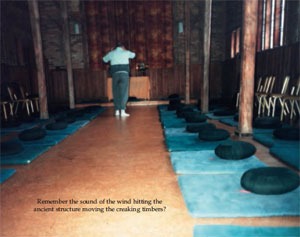 Remember the sound of the wind hitting the ancient structure moving the creaking timbers?
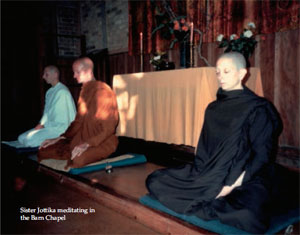 Sister Jottika meditating in the Barn Chapel
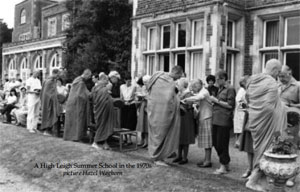
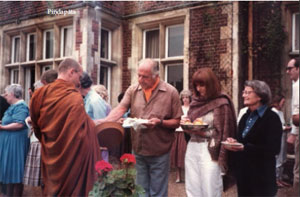
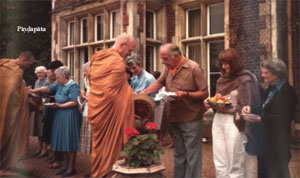
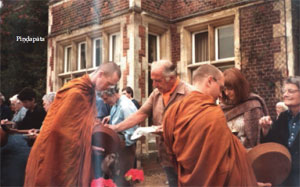 Pindapata
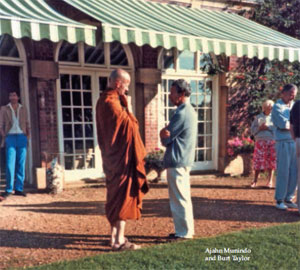
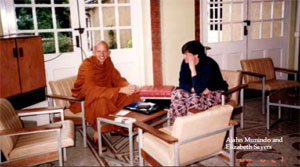 Ajahn Munindo and Elizabeth Sayers
Sometimes there was an old layman wandering around the monastery. He was stone deaf and had an old-fashioned hearing aid. He ran messages for the monks and did other odd jobs. Everyone had to shout to make him hear. Sometime later a monk told me his history. He was an old lag, but while in prison he had read a volume of Roshi’s poems. As soon as he got out, he came straight to Ryutakuji and had lived there ever since. He was not deaf at all, but listened to a radio through earphones all the time because he could not stand the silence.
Ryutakuji is in a steep valley of rice-paddies. Many with little terraced fields all the way down. At certain times of year there is so much work that every able-bodied person must help. I happened to be there at rice-planting time. While other crops are growing, a few fields are set aside for rice-seedlings; and, when the crops are harvested, the seedlings must be thinned and replanted in water. The fields must be dealt with in order – the highest field in the valley cleared, flooded, and planted, then the next field cleared, water allowed in from the top one, then planted; and so on, all the way down. A great communal effort is needed. Of course the monks help; after all, the villagers help them all the year round. Monks and farmers are mutually dependent.
All of us from the monastery went up to the highest field. A team of villagers was clearing, and another team was letting water in; but planting the seedlings was the really back-breaking work. By the time we arrived, soon after sunrise, the field was two inches deep in water with huge baskets of seedlings all along one side. Monks mingled with villagers, picked up handfuls of tiny rice plants, and stood ready in a long line. At the other end of the field was a long rope.
Everyone was ready and alert, monks still mindful of their koan. Roshi picked up one end of the rope, the oldest farmer the other. Roshi called HO, and the plunging rope marked a straight line in the mud. The planters ran across, planting seedlings along the straight line, and raced back for more plants. Roshi and the farmer pulled up the rope, moved forward a few inches – HO – down came the rope, the planters ran forward and the next row was planted. Back they ran – HO – and so it went on all day.
I was not nearly swift and efficient enough for this. My job was going up and down the steep hillside from paddy-field to monastery kitchen, fetching huge buckets of tea. The work went on steadily hour after hour, and the planters took breaks in turn for tea. How tired we all were by the end of the day, but: ‘The spirit of Zen is everyday life.’
My koan was simmering, but it never came to the boil. The only thing that consoled me was that once, before I came into the monastery, a monk had told me, ‘It’s like going for a walk across the moor. Some people experience a great storm, and others just walk on steadily through fine mist for hour after hour; but by the time they reach home, they are both equally soaked through.’
One day Roshi said, ‘Today, I go to people with leprosy. You want to come?’ Of course I said, ‘Yes, please.’ ‘You understand word, “leprosy’? Very bad. You sure you come?’ So he took me instead of the monk who would normally have attended him.
It seemed that he gave the twenty-fifth day of each month to the leper colony. We set off immediately after breakfast. The colony was a whole valley, walled in by mountains and accessible by only one road. The first part inside was like a very small town: a large hospital, houses for doctors and staff, a dispensary, one or two shops, a Shinto shrine and a Buddhist temple.
Further on, set in fields and gardens, were long, low pleasant buildings for those who were completely crippled. They needed constant care and nursing within easy reach of doctors, but did not have to be in the hospital itself.
Higher up came an area of paddy-fields separating off the rehabilitation area. Unfortunately, even when leprosy is cured or goes into remission, people are very damaged, especially if the case was not found in its earliest stage; and often people are too frightened to go to a doctor at first. They hide it as long as they can. As soon as the disease seems to be under control, patients are sent to this rehabilitation centre. They tend the rice paddies, as they would at home, or are taught new crafts according to the amount of damage to their limbs. Trained staff work with them, and keep an eye out for possible recurrence.
Near the top of the valley is a perfectly ordinary village. When people are cured they may go home if they wish, but many are too disfigured to face the outside world. In one kind of leprosy, the head and face become distorted into a dreadful baboon or lion shape. In this village, healthy but disfigured people may live out the rest of their lives in peace, and their families may join them if they wish. Right at the top of the valley is a large statue of Kannon, the Bodhisattva of Compassion. (Kannon is the Japanese name for Kuan-yin.)
When we arrived, Roshi, followed by me walking three steps behind, went straight to the temple, where those who wanted to come and were able to walk, were waiting. We all knelt or sat cross-legged on the matting while Roshi conducted a simple ceremony. Your heart would have wept had you been there. Those terrible lion-shaped heads, noseless faces, stumps of limbs. Couples sharing sutra-books, the one with fingers or finger stumps turning the pages. Such patient eyes. Never again will I call them lepers. They are people who happen to have leprosy. They obviously could not sit still for very long, so the ritual ceremony was short.
Then Roshi introduced me. They were nervous, as they had never seen a Westerner before and I could not speak Japanese. But I had brought a large box of sweets and we soon made friends. They rarely have visitors.
Then we all sat round comfortably while Roshi told them the story of Hui Neng. You may know the story of this woodcutter who was enlightened when he overheard a sentence quoted from the Diamond Sutra: ‘Let the mind abide nowhere.’ He was inspired to go to a monastery where he matured his Enlightenment and eventually became the Sixth Patriarch of Rinzai Zen.
We Zen students are very familiar with his adventures in the monastery and afterwards, but monastic life and higher training were right outside the orbit of these people. And, not knowing Japanese, I wondered what Soen Roshi was telling them.
He told them about Hui Neng while he was still a wood-cutter. He happily invented things that happened in the forest, and what he said to his mother when he got home and what she said to him making up stories that were meaningful to his audience. He talked for nearly an hour while we all sat sucking sweets. Every now and then, he threw in an English sentence for me – ‘He STILL cutting wood’ – and a happy chuckle.
After that came one of those special moments. Roshi said, ‘Now we chant to Kannon.’ There is a very short verse to Kannon, which fortunately I knew by heart in Japanese.
We started very slowly with Roshi’s deep sonorous voice leading us in chanting this little verse over and over again. In the monastery, we usually repeated it three or seven times, but now over and over, over and over, faster and faster. By the time we had chanted it a few hundred times, we were chanting so fast that the whole world was spinning. And, with the catalyst of his voice, we were all spun right up out of existence. All those people were lifted right out of their sad, unhappy bodies. Then slower and slower, until we dropped back again and saw that the incense stick he had lit to Kannon had burnt right down.
Afterwards we walked slowly in procession up the valley, visiting each of the areas with as many as could walk coming with us. On the way, we all chanted. Then at each place, Roshi was joking, telling stories and obviously they loved him deeply. Right at the top was a statue of Kannon, with a huge bronze bell. Japanese bells do not have tongues, but by the side is a great wooden beam or tree-trunk, slung on a rope. Roshi pulled back the beam and struck the bell, then again. I struck it twice; then so did all the others who had formed the procession. Boom, Boom. I shall never forget the sound of Kannon’s voice booming right across the valley.
After we went down again the doctors gave us lunch. For them too, living in this isolated valley, Roshi’s visit was a great treat. Then he motioned me not to follow him, and I was left behind talking to the doctors, while he went on a round of the hospital visiting the very ill patients.
Zen in Martial Arts
Zen appeals very deeply to all those who practise martial arts. Soen Roshi himself came from an old samurai family and was greatly respected, especially by all sumo wrestlers, because Tai-Ho, a National Sumo Champion of Japan, was one of his Zen pupils. Sumo wrestlers are huge men, and every ounce is muscle. They have splendid robes and fantastic hair-styles. This form of wrestling is very civilized as no one tries to injure his opponent. A circle is demarcated, purified with salt and water and then, with great ceremony the contenders and the referee take their place.
The wrestlers take deep inhalations, perform majestic ceremonial lunges, and approach the centre of the circle. As their heads near each other, their deep breathing should be in harmony. If not, they withdraw and start again. If the breathing corresponds, they flash into action, each trying to force the other to touch the ground outside the ring with any part of his body. Sometimes the match is over instantaneously, as one man prods with iron fingers at a point that will disturb his opponent’s centre of gravity. Sometimes the bout lasts several minutes as the massive weights force each other relentlessly to a conclusion.
It was the sumo season, and Tai-Ho was defending his championship for the third time. Of course there was no television at Ryutakuji. So when the matches were on, Roshi liked to go down to a local farm and watch how his pupil was progressing. He would go into the kitchen, fetch a saucer of salt and a saucer of water and place them ritually in front of the set – the television ceremony – and then we would sit in zazen while the contest lasted. I was very impressed: fancy having a Dharma brother who was a sumo champion!
One morning on an early walk we came to a small, flat area, and Roshi, who was a little dot of a man, said with great dignity, ‘Once I fought Tai-Ho here.’ ‘Who won?’ I asked in my crass Western manner. ‘I did, of course,’ came the rejoinder, and I did not doubt it for a moment.
During one sesshin week a trainer had permission to bring his whole team of sumo wrestlers to practise zazen for the week with the other laypeople. After all, if Soen was Tai Ho’s Zen teacher, maybe one of this group would be a future champion. I shall never forget the picture of the Great Hall with small shaven monks meditating opposite a row of huge sumo wrestlers with combs in their hair – a wonderful contrast.
After the end of the sesshin, I was in attendance while Roshi was saying goodbye to the visitors. He had a long talk with the sumo-trainer, and the upshot of it was that one of the young men was to be left behind as a layman for a fortnight. Roshi introduced me. He explained that Hana was a very fine fighter, but there was just a little something missing that it was hoped more Zen training would provide. Hana blushed a fiery red at being introduced to a Western woman. He was so shy and gentle, and the name ‘Hana’ means flower – I was irresistibly reminded of Ferdinand the Bull.
As there was no opportunity in the timetable for special training for a sumo wrestler, Hana joined our early morning walks. Naturally he must not stop his normal training, so we joined in: a huge sumo wrestler, a tiny roshi, and a Western woman, all practising sumo lunges and stances on the mountainside in early morning star-shine. What a sight it would have been for any passer-by!
Before he left, Hana drew me his name on a shikishi calligraphy card, and signed it with a huge thumb-print dipped in red ink. I had acquired yet another Dharma brother.
On one occasion, I visited Kyoto because I had promised Toby to see how Irmgard,1 another of his students, was getting on at her monastery. Then I had to choose a gift to take back to Roshi. This was a nerve-wracking experience because when I arrived, I had presented a formal gift to Roshi and he had rudely returned it to me. What should I take? With all my heart I wanted to take him the best gift I could possibly find.
One shop in Kyoto is famous for incense, and I smelt all their finest ones, but none seemed right. Desperate, with my very poor Japanese, I asked for the owner – haven’t you anything better? He showed me the best in the shop, but I had already smelt that and said no. He looked at me rather respectfully and then invited me into a room behind the shop and sent for tea. Then he produced five or six really superb things; and one was exactly what I wanted. It was just a piece of natural wood from a tree whose name I did not recognize, but the fragrance was wonderful. A small piece of the incense wood was cut off with a jeweller’s saw, ceremoniously wrapped in red paper and placed in a box; a simple box made of white pine, but pleasantly shaped. This incense was so rare and precious, that the sawdust was wrapped in a special paper and given to me separately. Now I was ready to return to the monastery.
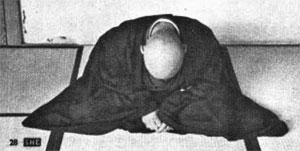
I reported back, made my prostrations and offered my gift. Soen Roshi welcomed me and placed the unopened packet on his Buddha-shrine.
The next day he looked at me suspiciously and said, ‘Who chose incense: it very good.’ I replied ‘I did.’ ‘Well, who helped choose?’ ‘No one I simply chose what I hoped you would like.’
‘Ah, zo desu! You have very good nose. It worth training.’ And, to my astonishment, he trained it! He sent to Tokyo for one of his pupils who teaches incense smelling.
When she arrived the next day we had a delightful party. She was a charming person, in the most beautiful kimono. We had a special tea ceremony from Soen Roshi, and then my incense-smelling lesson. My new teacher lit a small charcoal brazier and produced a tiny pan and a box containing many little packets.
One pinch at a time, powders were dropped in the pan and wafted over the heat: cherry-wood, gingko, apple, sandal-wood, camphor and many things whose name I did not know.
It was like a concert – a heavy perfume, slowly allowed to drift away, then two or three light ones quickly after each other, another slow, heavy one, then some allowed to overlap and form a fragrant chord. At the end, Roshi said ‘Thank you for very good incense. Here is memento.’ He gave me back the white pine box, and had written on the lid:
Every day is a good day.
He then said,
‘Be like this box – empty inside. Every day a good day on outside.’
O-BON
One day it was getting near O-bon, a Shinto folk festival when for ten days in mid-July each year the dead come back to visit. Houses are decorated. The family members who have died are especially remembered; stories are told about them, and their favourite food is served at meals. There are ceremonies at the family shrines in each house. On the last night huge bonfires on the surrounding hill-tops light the way as all the spirits depart.
Roshi said to me, ‘You know what O-bon is?’ I nodded. ‘During O-bon two monks visit every family in the village. Two monks visit every family in the town. You and I,’ he ended triumphantly, ‘we do Tokyo!’
I gulped, bowed obediently, and went off to pack a bag for a few days. Ryutakuji is about 60 miles from Tokyo. Train journeys with Roshi were a delight. Sometimes we would tuck up our feet cross-legged and meditate. Then I would receive a few words about my koan; occasionally encouraging, always pithy; and sometimes downright rude. Sometimes he told me stories (usually about people who worked HARD on their koan, not like Dew, the name he used for me.) ‘Dew not last very long on flower. You better hurry with koan. No time for wasting!’
He had a travelling tea-ceremony kit, and expected me to whisk the thick green tea in a properly formal manner – not easy on a fast train. But we both enjoyed it all immensely. He enjoyed everything in life, and I’m not too bad at enjoying things either.
When we arrived in Tokyo, we went to a Pure Land temple where we would stay for the night. Pure Land, or Jodo, is a Faith School of Buddhism in which one recites the name of Amida Buddha over and over again, hoping to be reborn in his Western Paradise after death. I never could cope with this idea, and one day during one of our early morning mountain walks, I had said to Roshi, ‘I don’t understand Pure Land Buddhism. How can one start with faith in Amida Buddha first before knowing there is something to believe in?’ He did not answer, but changed the subject.
Now, here we were, arriving at a Pure Land temple. This was his Zen answer. We would stay here and I could see for myself. An elderly nun came to offer us supper before settling us into rooms next to each other. She brought Roshi a typical Japanese tray of soup, rice etc. but she had met Westerners before and brought for me the most wonderful food I had seen for weeks. A tray with bread and cheese and an apple and a glass of milk. Roshi looked horrified and waved it away, but I explained that this was the food monks ate in Western Monasteries, and managed to save my supper. Japanese people dislike milk and all milk products. They say it makes Westerners smell very odd.
Next morning I was awakened about 3 a.m. by Roshi’s sonorous voice singing Wagnerian opera in the next room, in German. I recognized this as my get-up bell, and hastened into my clothes, wondering what the day would bring. Slipping quietly through the temple corridors, I met him at the main gate, and off we went in the dark in the suburbs of Tokyo – quite a change from Mount Fuji.
Tied to a house was a guard dog that started barking. Houses in Japan are made of wood with paper windows. They are so easily broken into that guard dogs are common. They are never taken out, but kept tied all the time so that they are fierce. Roshi looked at dog. Dog went on barking. ‘Dog wants walk.’ He stepped into this stranger’s garden, unhooked barking dog, passed me the chain and on we went. Me three paces behind and dragging surprised dog. In public I always walked three paces behind the abbot and carried any parcels.
After a mile or two, we reached a hilly parkland area with a steep waterfall. Roshi announced ‘Fudo Temple’, as though that explained everything, and stepped straight into the heart of the cascade, chanting! He looked surprised that I had fallen more than three steps behind and said ‘Come!’ I thought of the rest of the day in Tokyo, I only had two cotton dresses with me, and said firmly: ‘No, I’m holding dog.’ He looked very disapproving, but continued to chant for about five minutes, and then he came out of the water and shook himself. It was the only time during my stay I was disobedient to my teacher.
Up the hillside we went to a temple dedicated to the Bodhisattva Fudo, the aspect of ourselves that stands firm in the heat and cold of Samsara. Ah, yes, heat and cold. Heat and cold opposites. That explained the waterfall! Because here was a wonderfully beautiful fire ceremony being performed on the altar. There was a certain mystery, and gradually a profound sense of universal presence focused and polarized between the fire altar with the robed monks chanting around it and Roshi, silently majestic next to me. Even the dog sat peacefully. Quietness, dawn colours over Tokyo spread out beneath us. Then a huge flare from the altar at first sight of the rising sun. Nothing could have been more primaeval. The chanting took on a new tone as we all prostrated.
What a start to my first full day in Tokyo!
On our way back, a strange woman suddenly noticed the shocking sight of an abbot in robes that were dripping wet. She clucked like a hen, hustled us both into her house. (I hitched dog to gate-post.) In a few seconds, she had Roshi out of those robes and in a dressing-gown. She washed the robes, and while we were having a good breakfast, well – rice and seaweed, she ironed them dry. We set off again back to the Pure Land temple, returned dog to his own home, and went in to find a ceremony in process.
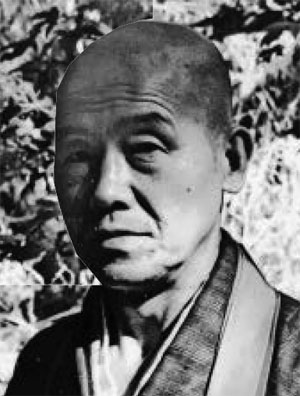
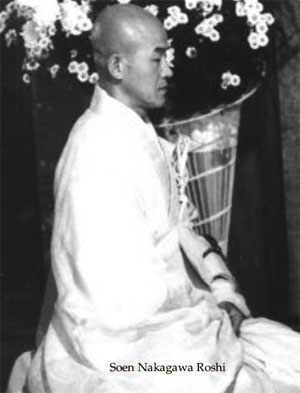 Soen Nakagawa Roshi
Pure Land – calling upon the name of Buddha in pure faith, knowing that, if you do so, when you die you will be reborn in a lotus in the Western Paradise of Amida. This was why Roshi had brought me, to experience it for myself. He found us two little drums shaped like wooden fish, and we happily sat down on the floor and started banging our drums and calling rhythmically upon the name of Amida: Namu Amida Buddha, namu amida butsu, namu amida butsu, The chant quickened: namuamidabu, namuamidabu, namuamidabu. But for a moment my concentration flickered. I felt a painful nudge in the ribs. ‘Be Interested!’ came a fierce whisper. Namu amidabu, namu amidabu for the next hour.
Outside afterwards, I was firmly told, ‘You understand now. Western Paradise inside you. Amida Buddha inside you too. You call him hard enough, he wake up inside you; and you wake up too. Faith Path all right.’
Later on that morning I was sent off to fetch something; and while I was out the heavens opened, I got completely drenched. There was no kind lady to iron my dress dry, I just stayed wet and dripped.
When I returned, Roshi just looked at me and said, ‘Ah! Zo!’ Yes, ‘I know,’ I thought. ‘That will teach me not to do as I’m told. I might just as well have gone under the waterfall. Maybe that cold wet shock would have sharpened my susceptibilities, so that I would have experienced the fire ceremony in a still deeper dimension. One day I’ll learn to be obedient.’
O-bon in Tokyo! We went to house after house, performing ceremonies at family shrines. Try to imagine the biggest room in the house with the shrine decorated and all the family in their most beautiful kimono seated on cushions in neat rows. Roshi was seated facing the shrine chanting with his bell and a little wooden drum and looking wonderful in his best robes; I was kneeling on a cushion directly behind him, feeling silly wearing a Western cotton dress in such formal surroundings. What was far worse, I had not the slightest idea of what I was supposed to do as attendant at such a ceremony.
I knew the chanting must be non-stop and, as there were only two of us chanting, I anxiously watched the back of Roshi’s neck so that we didn’t both stop for breath at the same time. I had never done any chanting at all until two months before, and I was nowhere near word perfect. I had never worked very hard at learning the words by heart because without understanding the language it was parrot-like anyway; and one among all those monks in the monastery didn’t seem to matter. Now my sins of omission were finding me out. I wasn’t even sure which ones were prayers, for which I should have my hands together; and which ones were not – for them, my hands should be in meditation position. I could not follow Roshi’s example because he was too busy banging his drum. Then I realized that all the family were copying my position, so my mistakes were being compounded – oh dear! Then, while all this was going on, I was frantically counting heads in order to have the right number of incense sticks prepared, ready for each person to take up to the shrine.
Most families were all right, but sometimes there was real grief if someone had died during the year. In one family, the mother had died very recently and left seven small children. It was heart-breaking to see their little faces as I gave each one his incense stick to light for mother at the shrine. The smallest was only about three; but when it was his turn, he clutched his stick and went up all by himself like a hero. He stood solemnly there for a minute making his prayer and then scampered back to hide his face in his sister’s skirt, so that no one should see tears and think him a baby.
The ceremony itself never seemed to be the same in two houses running. Once, taking my cue from Roshi, I found myself chanting Namu Amidabu Namu Amidabu. When we got outside afterwards, I asked why. ‘Oh,’ said Roshi cheerfully, ‘Most of the family are Zen, but an uncle who died this year was Pure Land, so I put that bit in for him.’
Of course each family had prepared a special meal for us. Wonderful food, course after course, – and I had been on rice and pickled radish for two months. But just as I started to enjoy myself, Roshi nudged me in the ribs: ‘Not eat much, more next house.’
He was so right. There was more next house, and the next. How do you politely do justice to 10 – 15 meals a day for five days, when they have been specially cooked for you – and straight after a sparse monastic diet?
By now I had visited with Roshi several poor houses in our own village near the monastery. But these houses in Tokyo were very different: they were beautiful mansions. One family we visited was the Mikimoto pearl people. Imagine what kind of house they had! Traditional homes that no Westerner ever visited. These families were shocked because Roshi was always attended by a monk on his ceremonial visits. But Roshi thoroughly enjoyed the opportunity to shake his people out of their traditional ways. He would say ‘I knew you would like me to bring Daw-san,’ knowing they hated it. ‘I should like you to show her your treasure-house.’ And I would be shown the most wonderful works of art you can imagine. I was so fortunate.
Zen and the arts are closely related and many of Roshi’s pupils were extremely gifted. One of them made and played the Bamboo Flute. He was very famous, and I felt honoured when we visited his home and he played specially for me. Another time we visited an Academy of Music, and the principal told his students to arrange a concert of koto-playing especially for me while he talked to Roshi.
Hours and hours at each place were spent sitting and kneeling. Often I had a sudden panic in case my legs would not support me in getting up, but somehow I managed.
One family was celebrating the centenary of a famous ancestor, and there was a grand reception in an enormous long room. My Japanese manners were hardly suitable for such a social occasion. However, I knew my position as an attendant [and a woman at that] so I sat down on a cushion just inside the door. Our hostess welcomed me and invited me further in. After the usual three refusals I allowed myself to be taken further into the hall, continued to excuse myself from further importance and sat on a cushion half-way up the room. More and more guests arrived, and then more. Gradually, to my horror, I realized that our host was talking to Roshi at the far end, which was otherwise empty, and everyone else was crowded into the area between me and the door. I had not realized that as Roshi’s attendant I was in the position of second guest, and no-one else could pass me until I moved further into the room!
Fortunately I recognized a young girl who had attended the last sesshin at Ryutakuji, but had ended up by sobbing her heart out during the last night. I went over to talk to her, which broke the impasse. Her English was very meagre, and my Japanese was practically non-existent, but we managed to understand each other, and I discovered that she was the daughter of the house. For three years now her family had wanted her to wed, but she had begged to wait until she had achieved kensho, the first break-through of Enlightenment. This time, her family had said, ‘One more sesshin only, and then you must marry.’ Alas, she had failed to break through her koan, and now would not have another chance till she was 60 years old. (The oriental zodiac has twelve animals and five elements, each sign travelling through a succession of elements until a cycle of 60 years is completed. After that, it is reckoned that a person has fulfilled all natural duties, and has the freedom to behave independently.) A young bride is given many instructions, including the fact that it is not permissible for her to die before her husband. Otherwise who would look after him?
Anyway, she performed some delightful dances to entertain the company and then we adjourned to the banquet. Now I was really in trouble. In front of each seated guest was placed a small lacquered chest of drawers. Each drawer held one beautifully prepared course, and I had no idea which food should be dipped in which sauce, nor in what order they should be eaten. I was, of course, sitting next to Roshi and looked at him helplessly. Bless him, he saw my difficulty and immediately changed from being a brusque Zen master [whom everyone expected to behave in an extreme manner] into a polite well-mannered gentleman who ate his food with great decorum. I was saved. All I had to do was to watch him and copy to the best of my ability. After all, I am used to doing that.
Afterwards people were talking, moving about, signing books. Then, suddenly, came the peak point of the whole day as far as I was concerned. Whatever else I was doing, part of my consciousness was with Soen Roshi all the time. He picked up his brush to write in a book for someone. As he held the brush poised, the whole universe filled with a silent grandeur. Voices in the room died away. Even people who were not watching found their conversation coming to a halt. As the brush moved on the paper, the whole universe disappeared, and there was only this. Suddenly, someone found it too much, said something quickly: and all the thousand and one things flowed back into being again. No more can be said about this. This was the true Centre, and this I shall find for myself.
That night we stayed at the house of Roshi’s younger brother. His wife offered us an exquisite court tea ceremony that I appreciated very much, especially having practised the austere monastic version.
We had a family memorial ceremony for the mother of these two brothers who had died a few years before. During the service, Roshi smiled at me and said ‘Daw-san will recite the Heart Sutra in English for my mother.’ In my heart I smiled too. Yes, he had known all along which of Toby’s pupils had come to Ryutakuji.
Next morning, Roshi said to his brother, ‘Take Daw-san out this morning and show her Tokyo.’ Brother worked for one of the large computer firms, and he phoned his boss to explain that his elder brother wished him to take a visitor sight-seeing. This surprised me, as it would hardly have been a suitable excuse in England for not coming to work. When I thought about it, I realized that, in their view, complete loyalty within his family would be the equivalent of complete loyalty to the firm, and therefore quite acceptable.
I enjoyed the tour, and it was wonderful to spend a few hours without sitting or kneeling on the ground. He taught English in his firm to people on the foreign sales staff: and when we returned home, I was able to make a special cassette for him by reading aloud computer technical terms that were not on the ordinary commercial language tapes. I was happy to be able to do something for his company to repay them.
It was just as well my knees were a little better, because that evening Roshi visited the Tokyo University Zen Group. I found this fascinating. While in Japan I was able to watch his technique when teaching such extremely different groups as university students, middle class lay people in the Mishima Group, factory workers, and people with leprosy.
It was a joy to see the different approach to teaching each group. No Kannon chant hundreds of times at the university! He met each group on its own level. How helpful such experience would be for my own teaching later on.
A very rich man had died recently who was one of Roshi’s Zen pupils. Also he had been a patron of several Zen artists. At the O-bon memorial ceremony, naturally his protégés were present with the family. One of the artists, Mr Murashima, had become famous. Indeed, I already owned a book bought in England The Iron Flute, illustrated by him, so he was internationally known. Mr Murashima also was a Zen pupil and an old friend of Soen Roshi.
When the ceremony was over I hoped I had not made too many mistakes with so many people present who really knew what they were doing and naturally there was a very fine feast.
After the food, and while the saki was still being enjoyed, the widow bowed low to Roshi and said, ‘This has been a very special day. I should be most grateful for some mementoes of the occasion.’ Roshi nodded benignly, and out came papers, cards, ink-palettes and brushes.
Now a Zen pupil always has the right to challenge his teacher. He may, on any occasion, give one of the formal challenges, such as ‘Why did Bodhidharma come from the West?’ or he may make his own, a challenge suitable for the occasion. Naturally, he is not factually asking for information about Bodhidharma. What he is really saying is: ‘You are my master. Show me your Zen. Let me see your real nature, your original self in action. I am eager to experience it. Show me.’
Mr Murashima took his opportunity. He bowed low to Roshi and said, ‘I challenge you to a picture.’
Not a moment’s hesitation ‘Certainly’ said Roshi. Dead silence throughout the room – here was an impossible situation. A famous artist and Roshi would each brush-paint a picture. Naturally the skilled and famous artist would paint the better picture. But naturally the master would paint a better picture than his pupil.
How could a non-artist paint a finer and more outstanding picture? And yet he is the master. There was complete silence as our hostess spread a 3 foot length of paper in front of each man. Deep meditation – both duellists sinking deep into their origin.
I sat grinding the ink for Roshi. Here was a test of my Zen too. Roshi had brought me here as an adequate attendant. Here is a 3 foot length of paper; and for all I know, he may draw something in fine line, or it may be a great powerful heavy picture. Let me not disgrace him. There must be just the amount of ink he wants, and of just the right thickness.
I, too, try to sink deep into the origin of things and open to the need of the moment. In English duels, the man challenged had the choice of weapons, and here in Japan too. With a sudden, tiger-swift movement Roshi was in action. ‘We will draw A ROSE with a rose.’
He strode over to a vase of roses in the niche, took one out, deftly stripped off the loose outer petals, sat down, dipped the heart of the rose in the ink, and using it as a brush, made a few quick strokes. There on the paper was a rose. The famous artist, stripped of the skilful use of his own paintbrush, also drew a rose with a rose. There was no doubt in the situation as to who was the master, and who was the pupil.