Page 5 of 5
Re: India A History, by John Keay
Posted: Sun Dec 29, 2024 10:14 pm
by admin
Part 2 of 2
DEMOLITION WORK
Observing events from across the border, Indians could perhaps be excused for indulging in that malicious enjoyment of another’s misfortunes known as Schadenfreude. While Pakistan was being bombed and burned, ‘lethargic, underfed’ India, though itself beset by countless insurgencies and a major identity crisis, was somehow being reincarnated as a potential superpower. Pakistanis, of course, saw these developments as connected. They suspected all manner of unholy but well-funded alliances between RAW, the Indian intelligence service, and their own dissident elements – Sindhis, Baluchis and mohajirs as well the mainly Pathan mujahidin. They also noted New Delhi’s close relations with the NATO-backed Karzai government in Kabul. A 2005 Indo-US agreement to exchange civil nuclear technology heightened Pakistan’s sense of international isolation, while the growing presence in Afghanistan of Indian counsellors, technocrats and corporate investors revived the spectre of encirclement. Bhutto’s ‘defence in depth’ had become a sick joke, Zia’s ‘defence in Islam’ likewise.
Though little acknowledged in Delhi, there were, however, other grounds for supposing that developments in India had contributed to the crisis in Pakistan. For just as most Indians liked to imagine that Pakistan was finally paying for the presumption of Partition, most Pakistanis detected confirmation of the fear that had led to Partition in the first place – namely that an independent India would degenerate into a ‘Hindu raj’ with Muslims there becoming second-class citizens. This perception owed everything to the sensational rise in India’s political firmament of the Hindu-nationalist Bharatiya Janata Party (BJP), together with the outrages and atrocities that accompanied it and an Indian military offensive in Kashmir that was partly informed by it.
Back in 1988 the prospects for Indo-Pak bilateral relations had seldom looked brighter. In Rajiv Gandhi, Benazir Bhutto and Dr Farooq Abdullah (son of Sheikh Abdullah, the ‘Lion of Kashmir’) a new generation of more photogenic leaders approached the Kashmir conundrum minus all the hardline baggage of their parents and at the head of comfortable majorities in their respective national and state assemblies. Their relations were cordial and their first exchanges promising. Only the timing was wrong. In Kashmir the recent victory of Farooq Abdullah’s National Conference/Congress coalition in the state elections had benefited from outrageous vote-rigging and been hotly challenged by the opposition Muslim United Front. Failing to win redress, and so despairing of Indian democracy, some of the Front’s more militant supporters had then crossed into Pakistan in search of arms and support for the campaign of terror that began the following year.
Meanwhile in India, the nation was being held hostage by its television sets. In 1987 the state broadcaster had begun relaying a lavishly dramatised serialisation of the Ramayana. Broadcast of a Sunday, it ran to seventy-two episodes, lasted a year and a half and was watched by an unprecedented 80 million viewers. Cities fell silent, lunch went uncooked and markets were deserted as each screening took on the sanctity of an act of worship. Sets were garlanded for the occasion; sales and rentals rocketed. India was discovering not just the joys of family viewing but the excitement of a wider, more contentious identity. Muslims viewers were said to be equally entranced, but among those who thought of themselves as Hindus this TV rendering of an epic of uncertain provenance, many recensions and questionable historicity acquired nearcanonical status. More scripture than catechism, it served to define Hindu values and instil a sense of India as one great Ram-worshipping Hindu congregation. Ram himself was elevated above other avatars of Lord Vishnu, and attention then turned to such snippets as tradition preserved of his possible place in history.
Ayodhya in UP is mentioned as the site of his capital; and there, according to a later local tradition, beneath a Mughal mosque built on the orders of Babur to celebrate the Muslim triumph over India’s idolators, lay the actual ground (the Ramjanmabhumi or ‘Ram’s-life-giving-earth’) where Lord Ram had been born. A small and suspiciously recent image of the baby Ram within the Baburi (or Babri) mosque marked the spot. But the mosque was locked and no longer in use, preventing access to this shrine. Then in 1986, at the behest of a World Hindu Council (VHP) demanding Lord Ram be liberated from his ‘Muslim gaol’, the locks had been opened. Coming hard on the heels of the Shah Bano decision placating Muslim orthodoxy, it looked as if Rajiv Gandhi’s government now sought to placate Hindu radicalism. Primed by this success and emboldened by the impact of the TV series, the VHP and its affiliates (including the paramilitary RSS and the vote-hungry BJP) scented a once-in-a-century opportunity.
The BJP, a reincarnation of the post-Independence Jan Sangh and the pre- Independence Mahasabha, had seldom won more than a handful of seats in a national election. But in 1989 its tally shot up to 86 with 11 per cent of the vote, in 1991 to 120 with 20 per cent of the vote, and by the late 1990s it had increased to 25 per cent of the vote and enough seats to head a coalition government in New Delhi. The agitation over the Babri mosque was the making of the party. For though the VHP led the cry for the mosque to be replaced with a gleaming new temple, it was the BJP’s leaders, especially L. K. Advani and A. B. Vajpayee, who capitalised on the issue.
In the run-up to the 1989 elections, BJP men were prominent in a campaign to fund and consecrate bricks from all over north India for the construction of the proposed temple. The ‘bring-a-brick’ ceremonies triggered serious Hindu- Muslim strife and massacres in Bihar, but they won the BJP support among TV-savvy middle-class voters thoughout the populous north. A year later, Advani upped the stakes by staging a rath yatra, a chariot procession, from Somnath in Gujarat (where a magnificent new temple had lately been built to replace that destroyed by Mahmud of Ghazni in 1025) to Delhi, Bihar and Ayodhya. The chariot, a Toyota utility van festooned in saffron and customised to resemble the prehistoric wagons seen on TV, wound its way amid massive crowds to Delhi. When the new government, a coalition National Front, failed to stop it, it continued on, leaving in its wake more riots and massacres. Advani was eventually arrested by the anti-BJP government in Bihar and the cavalcade itself was halted by its counterpart in UP. But enough fanatical ancillaries reached the Ayodhya site to give the security forces a tough battle and provide the movement with its first martyrs.
In December 1992 the BJP leaders headed for the Babri mosque yet again, this time to attend a foundation-laying ceremony for the proposed new temple. By now the VHP had acquired some adjacent land and had poured a certain amount of concrete, all in contravention of a standstill court order that UP’s new BJP government declined to enforce. Emboldened by the state government’s apparent sympathy and unimpressed by Delhi’s efforts to have the matter referred to the Supreme Court, 100,000 saffron-clad zealots turned up for the ceremony on 6 December. According to the BJP, things then got out of hand; according to a later inquiry, the BJP leaders had ensured that they would.7 The flag-waving mob scaled the mosque’s protective railings and then the mosque itself. Picks, sledgehammers and grappling irons materialised. As the mosque’s three Mughal domes came crashing down in a tableau worthy of Goya, the foundation-laying ceremony degenerated into a demolition spectacle. The state police had fled; 20,000 troops stationed near by were not even summoned. The wreckers rounded off their day by torching Muslim homes in the vicinity.
Courtesy of the media, the events in Ayodhya instantly excited such Hindu triumphalism and Muslim resentment that ‘communal rioting’ – a euphemism for sectarian atrocities – broke out right across northern and central India on a hitherto unprecedented scale. Muslims were more often the victims than the perpetrators. Of the 800 massacred in Bombay’s ‘riots’, two-thirds were Muslims. There and elsewhere Muslims would strike back, targeting the police and national institutions like the Stock Exchange and the metropolitan railway. But they risked a greater retaliation. The worst came in Gujarat in 2002 when a train carrying ‘pilgrims’ back from Ayodhya caught fire as it left Godhra station. The fire claimed fifty-eight lives, and because the passengers had used the halt to abuse local Muslim vendors it was assumed to be a case of retaliatory arson. The retribution that followed left less room for doubt. All over southern Gujarat death squads sallied forth to dispossess, maim, rape and murder Muslims. With a BJP government in power in Delhi and another in power in the state, the victims felt especially vulnerable. At least 2000 died horribly, with many more losing limbs, virginity, property and livelihoods. As in Delhi during the pogrom of Sikhs in 1984, officials reportedly aided the destruction by distributing electoral registers, the police had orders to make themselves scarce and government ministers took over control posts to orchestrate the attacks.
Eight years later, a bandannaed gunman in Bombay’s Taj Hotel was asked by one of his hostages why he was about to kill them all. He reportedly replied: ‘Have you not heard of Babri Masjid? Have you not heard of Godhra?’ Then he opened fire.
The demolition of the Babri mosque, the massacres that followed and the state’s complicity in them antagonised all South Asia’s Muslims, whether mujahidin or moderates, Sunni or Shi’i, Indian, Kashmiri, Pakistani or Bangladeshi. Comparisons were again drawn with the dreadful events of Partition. But few paused to consider how the logic of the BJP’s demand for Hindutva, or ‘Hinduness’, merely mirrored that of Jinnah’s two-nations theory. BJP ideologues insisted that in the name of secularism the Indian state had been appeasing Muslim sentiment for too long; for India to realise its potential it needed to reject such policies and embrace and assert its overwhelming ‘Hinduness’; Muslims and Christians had dominated the country’s past by dividing and oppressing Hindus; it was time for the Hindu nation to reunite, rediscover its prior identity and its glorious heritage, and take pride in celebrating them; non-Hindus merited only suspicion and must accept a subordinate status. All of which, after juggling ‘India’ for ‘Pakistan’ and ‘Muslim’ for ‘Hindu’, could have come from the textbook of Jinnah’s Muslim League.
Liberal opinion in India was also horrified. In the English-language press the Babri affair was portrayed as the greatest ever threat to the state, worse even than Mrs Gandhi’s Emergency or the Chinese incursion. For as of 1992 India could no longer call itself a secular nation. The dark forces of sectarian conflict had been unleashed, the noble legacy of Gandhi and Nehru rejected. The state was irrevocably tainted with the bigotry it had so long decried. Intellectual and press freedom would suffer – and did – under the BJP’s chauvinist rule. And the political process that had brought that party to power seemed itself thereby discredited. One by one, the founding principles of the nation were falling. Socialism had died in the 1970s, secularism was expiring in the 1990s and democracy looked doomed by association.
But to Muslim minds secularism was just a red herring. They had no more time for it than did the BJP. To their way of thinking the main casualty of the Babri affair was not some suspect Western liberal value but Islam, their lifeforce and their identity. In the cities of Pakistan every anti-Muslim outrage in India brought thousands on to the streets and swelled the ranks of the jihadist lashkars. The mujahidin in Kashmir became national heroes. Outbidding one another in their promises of support, the civilian governments of Benazir and Sharif brazenly countenanced the despatch of Pakistani volunteers to stiffen the resolve of the Kashmiri ‘freedom-fighters’.
There, in Indian-held Kashmir, the liberationist movement prompted by the vote-rigging of 1987 and the 1989 dismissal of Farooq Abdullah’s government had taken both Delhi and Islamabad by surprise. Electoral malpractice had seemingly achieved what forty years of Pakistani prompting and Indian provocation had failed to elicit – a militarisation of the Kashmiris themselves. Self-determination was initially the goal, but in the early 1990s, as the BJP ramped up its rhetoric in India and jihadist lashkars in Afghanistan were redirected to Kashmir, the struggle turned increasingly sectarian. The liberation movement was subsumed in a jihadist bloodbath. Mujahidin targeted the Valley’s Hindu minority, hundreds of whom were horribly massacred while most of the remainder were removed to safety. With the state now under President’s Rule, the exodus was organised by Kashmir’s controversial governor, a man associated with Sanjay Gandhi’s excesses during the 1975-7 Emergency who had been despatched to Kashmir in 1989 by a Delhi government that included the BJP and who would later himself join the BJP.
The impression that India was clearing the decks for action in Kashmir was heightened by the despatch of ever more troops. Following a Pakistani infiltration of the Line of Control near Kargil (between Srinagar and Leh) in 1999 – itself a test of whether Pakistan’s recently demonstrated nuclear capability was insurance against a disproportionate Indian response – the number of Indian troops in Kashmir approached half a million. The Valley was now clearly under military occupation, and if not technically a war zone was certainly a ‘dirty war’ zone. One of the main reasons for India’s claiming Kashmir in the first place – to demonstrate the secularist credentials of the Indian republic – had become as redundant as secularism itself. Hindu fundamentalism and Islamic fundamentalism were feeding off one another. ‘The two processes began independently, yet each legitimised and furthered the other.’8
In 2001 ‘Kashmiri terrorists’ mounted an attack on the state assembly in Srinagar, then followed it with an attempted suicide bombing of the Indian parliament in New Delhi. Neither succeeded, and the latter, a murky affair involving a one-time Indian informer, raised questions that have yet to be answered. Together they occasioned an eruption of national outrage, followed by warlike deployments along the Pakistan frontier that came to nothing. But perhaps it was the terrorists’ targets that were most instructive. Chosen for maximum impact, they yet hinted at an ongoing grudge against electoral mismanagement as much as the nation responsible. A year later the state elections in Kashmir went ahead regardless. Generally reckoned fair and well organised under the circumstances, they attracted a surprising 48 per cent of voters. Subsequent polls improved still further on this. Though the bombings and shootings continued, Kashmiris had clearly not given up on the democratic process.
Nor had the governments of India and Pakistan given up on improving their bilateral relationship. Despite war scares over Kargil in 1999, the attack on the Indian parliament in 2001 and the terrorist rampage through Bombay in 2008, both governments fitfully pursued a normalisation of relations. Of all people it was Prime Minister Vajpayee of the first BJP-led government in Delhi who in 1999 epitomised the launch of these overtures with a well-publicised visit to Lahore to meet Prime Minister Nawaz Sharif. International pressure following the previous year’s nuclear tests played its part in the meeting; nothing substantial was achieved; and the Kargil incursion seemed to scupper further progress. But in 2001 Vajpayee welcomed a return visit, this time of Musharraf who had by then taken over as president of Pakistan. Again little was achieved. But later in the year the events of 9/11 and Washington’s re-engagement in Afghanistan revived what was now being called a ‘process’. Under American pressure to end Pakistan’s support of the mujahidin, Musharraf needed a face-saving quidproquo of talks on Kashmir; and Vajpayee, needing something to show for his previous efforts, was prepared to have one last go.
Thus direct dealings were resumed in 2004 at a heads-of-state meeting of the South Asian Association for Regional Co-operation (SAARC), a body set up in the days of Rajiv and of the Indian involvement in Sri Lanka that had led to his 1991 assassination. Political progress remained minimal. But the setting did encourage confidence-building agreements on cultural contacts, travel links, social concerns and anti-terrorism measures. Above all, the enormous potential of regional trade and economic development was recognised in a commitment to establish a South Asian Free Trade Area.
Expectations of what might yet become the world’s most populous trading group have still to be realised. On the other hand, the impact of globalisation and of India’s growing economic clout had at last entered the bilateral equation. Optimists hoped that Delhi’s new-found confidence promised an end to its obsession with Pakistan. Prosperity, whether feared or shared, could conceivably trump political intransigence; and, sixty years on, the conundrum that is Kashmir could yet be laid to rest by an Indian-led surge in cross-border trade, investment and collaboration. Pessimists might retort that with Pakistan looking ungovernable, Bangladesh looking submersible and both of them mired in postmilitary recriminations, the outlook for regional co-operation could scarcely be bleaker. Yet if recent history is anything to go by, all such forecasts merely invite contradiction. Expect the unexpected.
Though the great turnaround in India’s economic fortunes had become selfevident by the turn of the century, it had not been at all widely foreseen. Nor for that matter is it easily explained. The gradual deregulation of the economy and the enthusiasm with which the Indian private sector, both at home and abroad, embraced the opportunities of globalisation were undoubtedly critical. So too were India’s vast human resources; thanks to the industrialisation and language policies of the Nehru era, Midnight’s grandchildren outnumbered any other modestly remunerated but technically proficient English-speaking generation in the world. The West’s earlier outsourcing of its technology, economic thinking and favoured language had made possible India’s insourcing of the West’s service industries.
Necessity, too, played its part. By 1991 India’s financial deficit, accumulated over decades of state-run inefficiency, had threatened to bring the country to a standstill. The national debt topped $70 billion and foreign exchange reserves were sufficient for just two weeks. Narasimha Rao, the Congress prime minister who had just replaced Vajpayee, had little choice but to invite his chosen finance minister, Manmohan Singh, to embrace the market. Although Rajiv Gandhi, A. B. Vajpayee and others had got the engine of reform started, it was Rao and Singh who released the handbrake of state control and let private enterprise run riot.
Less obviously, a variety of social and political factors provided a context and climate in which the reforms could thrive. One such was a gradual restoration of the federalist principles enshrined in the original constitution. Rajiv Gandhi, though no great thinker, had concluded from the turmoil of his mother’s later years that government had become too interventionist. The people and their elected representatives had grown accustomed to looking to the state for every imaginable provision and facility. It was time they rediscovered their own potential through the exercise of private initiative, local endeavour and personal responsibility. In terms of the economy this had meant a first tentative simplification of the licensing raj with a reduction of tariffs, the freeing of some quotas and a little encouragement for private investment. At the grass-roots level it led to the revival of locally elected bodies that could be entrusted with community responsibilities, plus the funds to perform them. And at the constitutional level it led to a reining in of the central government’s propensity for interfering in the states.
The circumstances under which President’s Rule might be imposed were more closely defined, legislation was introduced to discourage elected representatives from changing their party allegiance whenever the inducements of office, cash or concessions directed, and efforts were made to provide state governments with a more equitable share of federal revenues. States run by governments that were of the same party as that in power in Delhi still tended to be better funded than others, and centre-state tensions were by no means reduced. But with post-electoral digvijayas like that conducted by Mrs Gandhi becoming a thing of the past, state governments enjoyed greater stability and generally responded by behaving more responsibly. Instead of pandering to New Delhi, they increasingly competed with one another to attract investment, improve infrastructure and, in the best cases, extend social provision.
These trends anticipated a wider decentralisation of the political process and encouraged a dramatic maturation of Indian democracy. Rajiv Gandhi’s landslide victory in 1984 would not be repeated. In fact the one-party domination by Congress became the exception rather than the rule as minority governments, multi-party coalitions and electoral fronts trooped through the corridors of power in Delhi. In some states Congress became an irrelevance, in others it survived through local alliances. Everywhere it was parties based on caste allegiance, sectarian sentiment and regional or linguistic solidarity that were in the ascendant. Instead of simply deciding between Congress or a non-Congress party of one’s choice, voters now encountered a great electoral bazaar stocking a political style to suit every identity. In reflecting the numerical balance of Indian society as well as its diversity, the bazaar naturally empowered those parties identified with the hitherto uncultivated masses that comprised the lower castes and the Dalits (Harijans, outcastes). This was especially evident in the great northern states of UP and Bihar where, by 2000, the votes of Dalits and Yadavs were consistently returning caste-based governments pledged, above all, to uplifting their own communities. As chief minister of UP, the formidable Ms Mayawati of the (Dalit) Bahujan Samaj Party ordained Dalit theme parks and festooned the state with statues of distinguished Dalits, herself among them.
Not everyone approved. A degeneration in standards of political conduct was widely remarked and often attributed to these new caste-based parties. Studying a 2004 analysis of the affidavits filed by elected MPs, Ram Guha reports that 35 per cent of the (Yadav) Rastriya Janata Dal members and 27 per cent of the (Dalit) Bahujan Samaj Party members confessed to having once faced criminal charges. The Congress party and the Hindu nationalist BJP fared slightly better with 17-20 per cent having faced criminal charges. Yet to judge by the assets and loans the latter saw fit to declare, members of these two mainstream parties had much stickier fingers. For a Congress member, assets of 31 million rupees were the average. ‘We may conclude’, says Guha, ‘that, while in power, the Congress and BJP have systematically milked the system.’9
With the Delhi parliament sitting for no more than seventy or eighty days a year and seldom well attended, it could be argued that a decline in the probity of its members and in the quality of debate scarcely mattered. Legislation was preapproved behind closed doors, parliament’s job being simply to pass it. Getting elected was what mattered; and what with by-elections, state elections and local elections providing an almost continuous commentary on the political scene, the counting of ballots had become a constant of political life.
But by the same token India’s democracy could not be considered unresponsive. If it empowered the underprivileged and inducted the hitherto under-represented, then that surely was what democracy was all about. The exigencies and expenses of office, whether above-board or not, generally had a sobering effect. The chauvinism of the BJP had sent shivers down secular spines in the early 1990s, but in government the party, though obdurate in matters dear to its heart, proved far from irresponsible. Likewise Kashmir’s unimpeded participation in the electoral bazaar increased hopes for a solution to South Asia’s most intractable problem. In 2010, with elected governments once again in power in all the successor states of pre-Partition India, democracy looked far from doomed. Arguably its promise of a better tomorrow was never brighter.
Re: India A History, by John Keay
Posted: Sun Dec 29, 2024 10:53 pm
by admin
SOURCE NOTES
Publication details of most of the cited works will be found in the bibliography. The following abbreviations refer to works listed in the General section of the bibliography: CEHI – The Cambridge Economic History of India, vol.1, c1200-c1750 (ed. Raychaudhuri, T. and Habib, I.) HCIP – The History and Culture of the Indian People (ed. Majumdar, R.C. et al) HOIBIOH – The History of India as Told by its Own Historians (ed. Elliot, H.M. and Dowson, J.) NCHI – The New Cambridge History of India (ed. Johnson, G. et al)
INTRODUCTION
1 Majumdar, R.C., in HCIP, vol.1, ‘The Vedic Age’ p.47
2 Keay, J., India Discovered, HarperCollins, London, 1988
3 Stein, B., A History of India, Blackwell, Oxford, 1998, p.5
4 Braudel, F. (trans. Maine, R.), A History of Civilisations, Penguin, New York, 1993, p.217
CHAPTER 1
1 Adapted from the Satapatha Brahmana as rendered by A.D. Pusalkar, in HCIP, vol.1, ‘The Vedic Age’, pp.271–2
2 Thapar, R., ‘The Study of Society in Ancient India’, in Ancient Indian Social History, p.212
3 Bhandarkar, D.R., quoted in Possehl, G. (ed.), Harappan Civilisation, p.405
4 Allchin, B. and F.R., Birth of Indian Civilisation, p.131
5 Ibid, p.132
6 Ghosh, A., The City in Early Historical India, p.83
7 Lal, B.B., ‘The Indus Civilisation’, in Basham, A.L. (ed.), A Cultural History of India, p.16
8 Pusalker, A.D., in HCIP, vol.1, ‘The Vedic Age’, p.181
9 Ratnagar, S., Enquiries into the Political Organisation of Harappan Society, p.152
10 Ratnagar, S., Encounters: The Westerly Trade of the Harappan Civilisation, p.247
CHAPTER 2
1 Thapar, R., ‘The Image of the Barbarian in Early India’, repr. in Ancient Indian Social History, p.140
2 Thapar, R., ‘The Study of Society in Ancient India’, repr. in ibid, p.190
3 Asiatick Researches, vol.1, 1788, quoted in Keay, John, India Discovered, p.30
4 Muller, F. Max, Chips from a German Workshop, vol.1, 1867, p.63
5 Wheeler, R.E. Mortimer, ‘Harappan Chronology and the Rig Veda’, repr. in Possehl, G.L. (ed.), Ancient Cities of the Indus, p.291
6 Dales, G.F., ‘The Mythical Massacre at Mohenjo Daro’, repr. in ibid, p.293
7 Elphinstone, Mountstuart, The HistoryOf India etc., p.54
8 Majumdar, R.C., Ancient India, p.30
9 Ghosh, B.K., ‘Language and Literature’, in ‘The Age of the Rik-Samhita’, bk v in HCIP, vol.1, ‘The Vedic Age’, pp.347-8
10 Rig Veda, Mandala I, 175
CHAPTER 3
1 Kosambi, D.D., The Culture and Civilisation of Ancient India in Historical Outline, p.89
2 Kosambi, D.D., An Introduction to the Study of Indian History, p.2
3 Ibid, p.146
4 Ghosh, A., The City in Early Historical India, p.34
5 Thapar, R., From Lineage to State, pp.16-17
6 Quoted in Meyer, J.T., Sexual Life in Ancient India
7 Thapar, R., From Lineage to State, p.22
8 Ibid, p.134
9 Sharma, J.P., Republics in Ancient India, p.9
10 Thapar, R., From Lineage to State, p.73
11 Ghosh A., The City in Early Historical India, p.64
12 Thapar, R., From Lineage to State, pp.102-3
13 Rig Veda, X, 90
14 Thapar, R., From Lineage to State, p.170
15 Spelman, J.W., Political Theory of Ancient India, p.69
CHAPTER 4
1 Mountbatten, quoted in Collins, L. and Lapierre, D., Mountbatten and the Partition of India, p.70
2 Lane Fox, R., Alexander the Great, p.56
3 Marshall, J., Taxila, vol.1, p.12
4 Basham, A.L., The Wonder that was India, p.390
5 Bechert, H., in When did the Buddha Live?: The Controversy of the Dating of the Historical Buddha (ed. Bechert, H.), p.286
6 Sharma, J.P., The Republics in Ancient India, pp.123-4
7 Mookerji, R.K., in HCIP, vol.2, ‘The Age of Imperial Unity’, p.25
8 Thapar, R., A History of India, vol.1, p.59
9 Majumdar, R.C., Ancient India, p.101
10 Lane Fox, R., Alexander the Great, p.331
11 Mookerji, R.K., in HCIP, vol.2, ‘The Age of Imperial Unity’, p.44
CHAPTER 5
1 Asiatick Researches, 1793, quoted in Keay, J., India Discovered, p.35
2 Wells, H.G., A Short History of the World, 1922, repr. Penguin, Harmondsworth, 1946, p.114
3 Kautilya (ed. and trans. Rangarajan, L.N. etc.), The Arthasastra, p.21
4 Trautmann, Thomas R., Kautilya and the Arthasastra, p.186
5 Fergusson, J., A History of Indian Architecture, London, 1897
6 Yazdani, G., The Early History of the Deccan, vol.1, p.69
7 Kosambi, D.D., An Introduction to the Study of Indian History …, 1975, preface and pp.17–53
8 Tod, James, Travels in Western India, W.H. Allen, London, 1839, p.76
9 Prinsep, James, in Journal of the Asiatic Society of Bengal, vol.8, 1838, quoted in Keay, John, India Discovered, p.53
10 As trans. in Thapar, Romila, Asoka and the Decline of the Mauryas, p.256
11 Mookerji, R.K., ‘Asoka the Great’, in HCIP, vol.2, ‘The Age of Imperial Unity’, p.74
12 Wells, H.G., A Short History of the World, 1922, repr. Penguin, Harmondsworth, 1946, p.115
13 Kautilya (ed. and trans. Rangarajan, L.N. etc.), The Arthasastra, p.741
14 McCrindle, J.W., Ancient India as Described by Megasthenes and Arrian, Trubner, London, 1877, p.84
15 As trans. in Thapar, Romila, Asoka and the Decline of the Mauryas, p.254
16 Ibid, p.266
17 Thapar, R., ‘Asokan India and the Gupta Age’, in Basham, A.L. (ed.), A Cultural History of India, p.42
CHAPTER 6
1 Narain, A.K., The Indo-Greeks, p.viii
2 Kulke, H. and Rothermund, D., A History of India, p.83
3 S[h]astri, K.A. Nilakantha, A Comprehensive History of India, vol.2, The Mauryas and the Satavahanas, p.102
4 Thapar, Romila, A History of India, vol.1, p.93
5 Narain, A.K., The Indo-Greeks, p.11
6 Harle, J.C., The Art and Architecture of the Indian Subcontinent, p.70 7 Bagchi, P.C., India and China: A Thousand Years of Cultural Relations, p.10
8 Dani, A.H., Human Records on the Karakoram Highway, p.49
9 Ibid, p.77
10 S[h]astri, K.A. Nilakantha, A History of South India from Prehistoric Times to the Fall of Vijayanagar, 1955, p.130
11 Hart, George L., ‘Ancient Tamil Literature: Its Scholarly Past and Future’, in Stein, Burton (ed.), Essay son South India, pp.41-2
12 Maloney, Clarence, ‘Archaeology in South India: Accomplishments and Prospects’, in ibid, p.24
13 Wheeler, R.E. Mortimer, Rome Beyond the Imperial Frontiers, p.147
14 Glover, I.C., Early Trade Relations Between India and South East Asia, pp.47-8
15 Coedes, G., The Indianised States of Southeast Asia, p.18
16 Quoted in Sarkar, H.B., Cultural Relations Between India and Southeast Asian Countries, p.87
17 Quoted in Coedes, G., The Indianised States etc., p.37
18 Ray, Himanshu Prabha, Monastery and Guild: Commerce Under theSatavahanas, p.108
CHAPTER 7
1 Williams, L.F. Rushbrook (ed.), A Handbook for Travellers in India,Pakistan, Nepal, Bangladesh and SriLanka, p.278
2 Banerjea, J.N., ‘The Satraps of Northern and Western India’, in S[h]astri, K.A. Nilakantha (ed.), A Comprehensive History of India, vol.2, p.283
3 Ghoshal, U.N., ‘Political Organisation (Post-Mauryan)’, in ibid, p.350
4 Kosambi, D.D., An Introduction to the Study of Indian History, p.285
5 Ibid, p.279
6 Ibid, p.286
7 Bagchi, P.C. and Raghavan, V., ‘Language and Literature’, in S[h]astri, K.A. Nilakantha (ed), A Comprehensive History of India, vol.2, pp.632-3
8 Smith, V.A., The Early History of India, p.266
9 Majumdar, R.C., ‘The Rise of the Guptas’, in HCIP, vol.3, ‘The Classical Age’, p.4
10 Fleet, J.F., Corpus Inscriptionum Indicarum, vol.3, ‘Inscriptions of the Early Gupta Kings and their Successors’, pp.10—17
11 Smith, V.A., The Early History of India, p.274
12 Kosambi, D.D., An Introduction etc., p.313
13 Mookerji, R.K., The Gupta Empire, p.38
14 Inden, R., Imagining India, pp.239-40
15 See Williams, J.G., The Art of Gupta India, p.25
16 Beal, S., in Heuen Tsang, Si-Yu-Ki, Buddhist Records of the Western World, vol.1, pp.xxxvii—xxxviii
17 Ibid, p.lvii
18 Altekar, A.S., ‘Religion and Philosophy’, in The Vakataka-GuptaAge (ed. Majumdar, R.C. and Altekar, A.S.), p.341
19 Devahuti, D., Harsha, A Political Study, pp.114-15
20 Quoted in Keay, J., India Discovered, pp.151-2
21 Williams, J.G., The Art of Gupta India, p.3
22 Harle, J.C., Art and Architecture etc., p.87
23 Basham. A.L., The Wonder that was India, p.442
24 Keith, A.B., A History of Sanskrit Literature, p.94
25 Kosambi, D.D., An Introduction etc., p.284
CHAPTER 8
1 Kosambi, D.D., The Culture and Civilisation of Ancient India, p.191
2 Gaur, A., Indian Charters on Copper Plates in the Department of Oriental Manuscripts and Books, p.viii
3 Fleet, J.F., Corpus Inscriptionum Indicum etc., p.169
4 Heuen Tsang (trans. Beal, S.), Si-Yu-Ki, Buddhist Records etc., vol.1, pp.120, 137
5 See Sudhir Ranjan Das, ‘Types of Land in North-Eastern India (from the Fourth Century to the Seventh Century)’, in Chattopadhyaya, B. (ed.) Essays in Ancient Indian Economic History, pp.62—3
6 Basham, A.L., The Wonder that was India, p.449
7 Devahuti, D., Harsha etc., p.71
8 Bana (trans. Cowell, E.R. and Thomas, F.W.), Harsa-Carita
9 Heuen Tsang (trans. Beal, S.), Si-Yu-Ki: Buddhist Records etc., vol.1, p.213
10 Ibid, vol.2, p.256
11 Michell, G., Monuments of India, vol.1, p.332
12 Satianathaier, R., ‘Dynasties of South India’, in HCIP, vol.4, ‘The Classical Age’, p.262
13 Coedes, G., The Indianised States of South East Asia, p.66
14 Lamb, A., ‘Indian Influence in South East Asia’, in A Cultural History of India (ed. Basham, A.L.), p.446
15 Smithies, M., Yogyakarta, p.60
16 Dumarcay, J., The Temples of Java, p.5
17 Inden, R., Imagining India, p.230
CHAPTER 9
1 Heuen Tsang, Si-Yu-Ki, Buddhist Records etc., vol.2, pp.272-3
2 Chach-nama or Tarikh-i Hind wa Sind, in HOIBIOH (ed. Elliot, H.M. and Dowson, J.), vol.1, pp.142—4
3 Al-Biladuri, in HOIBIOH, vol.1, p.119
4 Majumdar, R.C., ‘Northern India during AD 650—750’, in HCIP, vol.3 ‘The Classical Age’, p.170
5 Chach-nama etc., as above, pp.209-11
6 Al-Biladuri quoted in Ray, H.C., The Dynastic History of Northern India, vol.1, p.12
7 See Puri, B.N., The History of the Gurjara-Pratiharas, pp.445—6
8 Quoted in Thapar, R., A History of India, vol.1, p.239
9 See Inden, R., Imagining India, pp.217—28
10 Suleiman, in HOIBIOH, vol.1, p.7
11 Altekar, A.S., ‘The Rashtrakutas’, in The Early History of the Deccan (ed. Yazdani, G.), vol.1, p.256
12 As rendered in Inden, R., Imagining India, p.260
13 Puri, B.N., The History of the Gurjara-Pratiharas, p.94
14 Majumdar, R.C., ‘The Palas’, in HCIP, vol.4, ‘The Imperial Age of Kanauj’, p.53
15 Williams, L.F. Rushbrook (ed.), A Handbook for Travellers etc., p.698
16 Munshi, K.M., in HCIP, vol.4, The Imperial Age of Kanauj, p.xiv
17 Majumdar, R.C., Ancient India, p.266
18 See Altekar, A.S., ‘The Rashtrakutas’, in The Early History of the Deccan etc., vol.1, p.273
19 Inden, R., Imagining India, p.259
CHAPTER 10
1 Sulaiman, as quoted in HOIBIOH, vol.1, p.4
2 Tabaqat-i-Akbari, as quoted in Ray, H.C., The Dynastic History of Northern India, vol.1, p.81
3 Al-Utbi, Shahr-i Tarikhi Yamini, as quoted in HOIBIOH, vol.2, p.20
4 Ferishta (trans. Dow, A.), The History of Hindoostan, vol.1, p.34
5 Al-Utbi, as above, p.48
6 Ibn Asir, Kamilu-t Tawarikh, quoted in HOIBIOH, vol.2, p.470
7 Ferishta, The History of Hindoostan etc., vol.1, pp.33—4
8 Al-Biruni, quoted in Ganguly, D.C., ‘Ghaznavid Invasion’, in HCIP, vol.5, p.17
9 Keay, J., India Discovered, pp.98—9
10 See Punja, S., Divine Ecstasy: The Story of Khajuraho
11 Harle, J.C., Art and Architecture etc., p.311
12 Champakalakshmi, R., ‘State and Economy: South India c.AD 400-1300’, in Recent Perspectives of Early Indian History (ed. Thapar, R.), p.282
13 Duby, G. (trans. Clarke, H.B.), The Early Growth of the European Economy:Warriors and Peasants from the Seventh to the Twelfth Century, Ithaca, 1974, pp.51-2
14 Spencer, G.W., The Politics of Expansion: The Chola Conquest of SriLanka and Sri Vijaya, p.11
15 Karashima, N., South Indian History and Society: Studies from InscriptionsAD 850—1800, pp.37—40
16 Narayanan, M.G.S. and Kesuvan Veluthat, ‘Bhakti Movement in South India’, in Indian Movements: Some Aspects of Dissent, Protest and Reform (ed. Malik, S.), p.37
17 Champakalakshmi, R., ‘State and Economy’, as above, p.298
18 Spencer, G.W., The Politics of Expansion etc., p.39
19 S[h]astri, K.A. Nilakantha, The Colas
20 Harle, J.C., Art and Architecture etc., pp.321-5
21 Verma, H.C., ‘The Ghaznavid Invasions, Part 2’, in The Indian History Congress, A Comprehensive History of India, vol.4, pt 1 (ed. Sharma, R.S.), p.365
22 Sharma, R.S., Indian Feudalism, pp.195-6
23 Quoted in Ray, H.C., The Dynastic History of Northern India, vol.2, p.857
24 Keith, A.B., A History of Sanskrit Literature, p.53
25 Sharma, D., ‘The Paramaras of Malwa’, in Indian History Congress, A Comprehensive History of India’, vol.5, pp.420-2
CHAPTER 11
1 Yule, H. and Burnell, A.C., Hobson-Jobson: A Glossary of Colloquial Anglo-Indian Words and Phrases, p.754
2 Ferishta (trans. Briggs, J.), The History of the Rise of Mohammedan Power in India, vol.1, p.xx and e.g. p.175
3 Tod, J., Annals and Antiquities of Rajas’than, vol.1, p.155
4 Ray, H.C., Dynastic History of Northern India, vol.2, p.1086
5 Elliot, H.M. and Dowson, J. (eds), HOIBIOH, vol.2, p.251
6 Nizami, K.A., Some Aspects of Religion and Politics in India during the Thirteenth Century, pp.76-7
7 Ferishta (trans. Briggs), History of the Rise etc., vol.1, p.177
8 Tod, J., Annals and Antiquities etc., vol.1, p.210
9 Nizami, Khaliq Ahmed, Some Aspects etc., p.91
10 Munshi, K.M., in HCIP, vol.5, The Struggle for Empire, p.xv
11 Minhaju-s Siraj, Tabakat-i Nasiri, in HOIBIOH, vol.2, p.329
12 Habib, I., in CEHI, p.67
13 Nizami, K.A., Some Aspects etc., p.90
14 Nigam, S.B.P., The Nobility Under the Sultans, p.183
15 Minhaju-s Siraj, Tabakat-i Nasiri, in HOIBIOH, vol.2, p.306
16 Abu Imam, ‘Bengal in History’, in India: History and Thought (ed. Mukherjee, S.N.), pp.76-7
17 Minhaju-s Siraj etc., as above, p.332
18 Habib, I., as above, p.78
19 Ziau-u Din Barani, Tarikh-i Feroz Shahi, in HOIBIOH, vol.3, p.103
20 Ferishta (trans. Dow), The History of Hindoostan, vol.1, p.197
21 Derrett, J.D.M., The Hoysalas, p.33
22 Ziau-d Din Barani, Tarikh-i-Feroz Shahi etc., p.155
23 Ibid, p.163
24 Venkataramanyya, N., The Early Muslim Expansion in South India, p.31
25 Ibid, p.57
26 Digby, S., in CEHI, p.97
27 Ziau-d Din Barani, Tarikh-i-Feroz Shahi etc., p.204
28 Lal, K.S., History of the Khaljis, p.275
29 Ziau-d Din Barani, Tarikh-i-Feroz Shahi etc., p.195
30 Ferishta (trans. Dow), The History of Hindoostan, vol.1, p.267
CHAPTER 12
1 Ziau-d Din Barani, Tarikh-i-Feroz Shahi etc., p.235
2 Majumdar, R.C. et al, An Advanced History of India, p.317
3 Ibn Batuta (Muhammad ibn ‘Abd Allah) (trans. Gibb, H.A.R.), Travels in Africa and Asia, p.196
4 Ziau-d Din Barani, Tarikh-i-Feroz Shahi etc., pp.241—2
5 Majumdar, R.C., ‘Muhammad Bin Tughluq’, in HCIP, vol.6, The Delhi Sultanate, p.64
6 Ziau-d Din Barani, Tarikh-i-Feroz Shahi etc., p.238
7 Digby, S., in CEHI, p.97
8 Husain, A.M., The Rise and Fall of Muhammad Bin Tughluq, p.134
9 Ibn Batuta etc., Travels etc., p.204
10 Shams-i Siraj Afif, Tarikh-i Firoz Shahi, in HOIBIOH, vol.3, p.312
11 Davies, P., The Penguin Guide to the Monuments of India, vol.2, p.138
12 Malfuzat-i Timuri (Autobiography of Timur), in HOIBIOH, vol.3, p.446
13 Ibn Batuta etc., Travels etc., p.207
14 Polo, Marco (trans. and ed. Yule, H.), The Book of Ser Marco Polo, vol.2, p.313
15 ‘The Travels of Athanasius Nikitin’, in India in the Fifteenth Century (ed. Major, R.H.), p.8
16 ‘Narrative of the Journey of Abd-er-Razzak’, in ibid, p.31
17 Ferishta (trans. Dow), The History of Hindoostan, vol.2, p.292
18 Haroon Khan Sherwani, ‘The Bahmani Kingdom’, in The Indian History Congress, A Comprehensive History of India, vol.5, pt ii, p.974
19 ‘The Travels of Athanasius Nikitin’, in India in the Fifteenth Century etc., pp.23-8
20 Harle, J.C., Art and Architecture etc., p.429
21 Tod, J., Annals etc., vol.1, p.231
CHAPTER 13
1 Ferishta (trans. Briggs), History of the Rise etc., vol.1, p.579
2 Lal, K.S., Twilight of the Sultanate, p.176
3 Ibid, p.180
4 Ross, D., Cambridge History of India, vol.5, p.236
5 Babur (trans. Beveridge, A.S.), Babur-nama, vol.2, p.459
6 Ibid, p.463
7 Ibid, p.477
8 Tod, J., Annals etc., vol.1, p.245
9 Babur, Babur-nama etc., vol.2, pp.628, 637
10 Ferishta (trans. Briggs), History of the Rise etc., vol.2, p.70
11 Ibid, p.79
12 Richards, J.F., ‘The Mughal Empire’, in NCHI, Pt 1, vol.5, p.11
13 Habib, I., ‘Monetary System and Prices’, in CEHI, p.360
14 Harle J.C., Art and Architecture etc., p.427
15 Babur, Babur-nama etc., vol.2, p.482
16 Stein, B., Vijayanagara, in NCHI, pt 1, vol.2, p.30
17 Paes, D., in Sewell, R., A Forgotten Empire, pp.246-7
18 Majumdar, R.C. et al, An Advanced History of India, p.366
19 Stein, B., Vijayanagara etc., p.43
20 Pearson, M.N., The Portuguese in India, in NCHI, pt 1, vol.1, p.29
21 Sewell, R., A Forgotten Empire, p.207
22 Abu’l-Fazl (trans. Beveridge, H.), Akbar-nama, vol.1, pp.620-1
23 Lane-Poole, S., The History of the Moghul Emperors of Hindustan Illustrated by their Coins, Constable, London, 1892, p.lii
24 Abu’l-Fazl, Akbar-nama etc., vol.2, p.59
25 Ibid, pp.62-4
26 Ibid, vol.1, pp.27—8
27 Ibid, vol.2, pp.271—2
28 Ibid, p.236
29 Richards, J.F., The Mughal Empire etc., p.23
30 Tod, J., Annals and Antiquities etc., vol.1, p.253
CHAPTER 14
1 See especially CEHI
2 Babur, Tuzak-i Babari (Babur-nama), in HOIBIOH, vol.4, p.223
3 Habib, I., ‘North India’, in ‘Agrarian Relations and Land Revenue’, CEHI, p.238
4 Bernier, F. (trans. Constable, A.), Travels in the Mogol Empire AD 1656- 1668, pp.225—7
5 Raychaudhuri, T., ‘The Mughal Empire’, in ‘The State and the Economy’, CEHI, p.173
6 Richards, J.F., The Mughal Empire etc., p.63
7 Raychaudhuri, T., in CEHI, p.179
8 Richards, J.F., The Mughal Empire etc., p.86
9 Roe, Sir T. (ed. Foster, W.), The Embassy of Sir Thomas Roe to India,1615-19, pp.283-4
10 Bernier, F., Travels etc., p.222
11 Thevenot, J. de, ‘The Third Part of the Travels’, in Indian Travels of Thevenot and Careri (ed. Surendranath Sen), p-7
12 Jehangir, Waki’at-i Jahangiri, in HOIBIOH, vol.6, pp.292, 385
13 See Tod, J., Annals and Antiquities, vol.1, pp.278-92
14 Jehangir, Waki’at-i Jahangiri etc., p.374
15 Roe, Sir T., The Embassy etc., pp.270, 337
16 Asher, C.B., Architecture of Mughal India, in NCHI Pt 1, vol.4, p.200
17 Mundy, P., The Travels of Peter Mundy in Europe and Asia, 1608-67, vol.2, p.213
18 Richards, J.F., The Mughal Empire etc., p.127
19 Sarkar, J., History of Aurangzib, vol.1, p.302
20 Richards, J.F., The Mughal Empire etc., p.152
21 Khafi Khan, Muntakhabu-l Lubab, in HOIBIOH, vol.7, p.246
22 Khafi Khan (ed. and trans. Moinul Haq, S.), History of Alamgir, p.159
23 See Moinul Haq, S., introduction to ibid, p.xxvii
24 Bernier, F., Travels etc., p.334
25 Khafi Khan, Muntakhabu-l etc., p.296
26 Richards, J.F., The Mughal Empire etc., p.178
27 Gascoigne, B., The Great Moghuls, p.227
28 Tod, J., Annals and Antiquities, vol.1, p.302
CHAPTER 15
1 Gordon, S., The Marathas 1600-1818, in NCHI, pt 2, vol.4, p.67
2 Khafi Khan, History of Alamgir etc., pp.122-4
3 Ibid, p.125
4 Gordon, S., The Marathas etc., p.74
5 Sardesai, G., ‘Shivaji’, in HCIP, vol.7, The Mughal Empire, p.264
6 Gordon, S., The Marathas etc., p.92
7 Richards, J.F., The Mughal Empire etc., p.220
8 As quoted in Gascoigne, B., The Great Moghuls, p.238
9 Khafi Khan, Muntakhubu-l Lulab, in HOIBIOH, vol.7, p.485
10 Richards, J.F., The Mughal Empire etc., p.256
11 Muzaffar Alam, The Crisis of Empire in Mughal North India: Awadh and the Punjab, 1707—48, p.134
12 Bayly, C.A., Indian Society and the Making of the British Empire, in NCHI, pt 2, vol.1, p.3
13 ‘The Mahratta Manuscripts’, as quoted in Duff, J.C. Grant, A History of the Mahrattas, vol.1, p.322
14 Khafi Khan, Muntakhubu-l Lubab, in HOIBIOH, vol.7, p.432
15 Gordon, Stewart, The Marathas etc., p.110
16 Khafi Khan, Muntakhubu-l Lubab etc., P.483
17 Ghulam Husain, Siyar-ul-Mutakherin, as quoted in Majumdar, R.C. et al, An Advanced History of India, p.529
18 Gordon, S., The Marathas etc., p.114
19 Duff, J.C. Grant, History of the Mahrattas, vol.1, p.354
20 Hunter, W.W., History of India, vol.7, p.284
21 As quoted in Keay, J., The Honourable Company, pp.145—7
22 Bayly, C.A., Indian Society and the Making of the British Empire etc., p.48
23 Marshall, P.J., Bengal: The British Bridgehead, in NCHI, pt 2, vol.2, p.55
24 As quoted in Keay, J., The Honourable Company, p.215
25 Bayly, C.A., Indian Society etc., p.46
26 Gordon, S., The Marathas etc., p.138
CHAPTER 16
1 See Keay, John, The Honourable Company, p.398
2 Elphinstone, Mountstuart, History of India etc., p.720
3 Duff, J.C. Grant, A History of the Mahrattas etc., vol.1, p.511
4 Quoted in Chaudhuri, Nirad C., Clive of India, p.465
5 Marshall, P.J, East Indian Fortunes: The British in Bengal in the Eighteenth Century, pp.32-3
6 As quoted in Marshall, P.J., East Indian Fortunes etc., p.30
7 Marshall, P.J., Bengal: The British Bridgehead, pt 2, vol.2 of NCHI, p.75
8 As quoted in Keay, J., The Honourable Company, p.303
9 Marshall, P.J., Bengal: The British Bridgehead, p.77
10 Marshall, P.J., East Indian Fortunes etc., p.235
11 Moon, P., The British Conquest and Dominion of India, p.114
12 Barnett, R.B., North India Between Empires: Awadh, the Mughals and the British 1720-1801, p.64
13 Mohibbul Hasan, The History of Tipu Sultan, p.6
14 Moon P., The British Conquest etc., p.203
15 Mohibbul Hasan, The History etc., p.120
16 Ibid, p.349
17 As quoted in Majumdar, R.C. et al, Advanced History of India, p.715
18 Moon, P., The British Conquest etc., p.261
19 Duff, J.C. Grant, A History of the Mahrattas, vol.1, p.507
20 Ahmad Shah Abdali to Madho Singh, letter (trans. Jadunath Sarkar), in
Modern Review, May 1946, quoted in HCIP, vol.8, The Maratha Supremacy, p.199
21 Malcom, J., A Memoir of Central India, quoted in Kamath, M.B. and Kher, V.B., Devi Ahalyabhai Holkar: The Philosopher Queen, p.85
22 Gordon, S., The Marathas etc., p.162
23 Ibid, pp.172—3
24 Moon, P., The British Conquest etc., p.409
CHAPTER 17
1 Bayly, C.A., Indian Society and the Making of the British Empire etc., p.138
2 Kaye, Sir J., as quoted in Moon, P., The British Conquest etc., p.497
3 Mason, P., A Matter of Honour: An Account of the Indian Army, its Officers and Men, p.210
4 Sita Ram (trans. Norgate, J.T.), From Sepoy to Subedar: Being the Life and Adventures of a Native Officer in the Bengal Army, p.68
5 Moon, P., The British Conquest etc., pp.567-75
6 Hugel, Baron C. von, Travels in Kashmir and the Punjab, London, 1845, p.293
7 Cunningham, A., Ladak, Physical,Statistical and Historical, London, 1854, quoted in Keay, J., When Men and Mountains Meet, John Murray, London, 1977, p.170
8 Griffin, Lepel, Ranjit Singh and the Sikh Barrier between Our Growing Empire and Central Asia, pp.9—10
9 Mason, P., A Matter of Honour etc., p.229
10 Grewal, J.S., The Sikhs of the Punjab, pt 2, vol.3 of NCHI, p.115
11 Ibid, p.127
12 Quoted in Balfour, I., Famous Diamonds, 3rd edn, London, 1997, p.168
13 Sardesai, G.S., Marathi Riyasat, Bombay, 1925, quoted in Kamath, M.V. and Kher, V.B., Ahalyabai Holkar etc., p.126
14 Nehru, Jawaharlal, The Discovery Of India, p.266
15 Malcolm, Sir J., The Political History of India, 1784-1823, London, 1826, vol.2, pp.cclxiii—iv, quoted in Cohn, B.S., Colonialism and its Forms of Knowledge: The British in India, pp.41-2
16 Munro, Sir T., quoted in Moon, P., The British Conquest etc., p.427
17 Quoted in Stokes, E., The English Utilitarians in India, p.28
18 Mill, J., The History of British India, vol.2, pp.166—7, cited in Metcalf, T.R., The Aftermath of Revolt: India 1857-70, pp.8-9
19 Trevelyan, G.O., The Life and Letters of Lord Macaulay, London, 1908 edn, pp.329-30
20 Davies, P., The Penguin Guide to the Monuments of India, vol.2,
Islamic,Rajput and European, p.243
21 As quoted in Pemble, J., The Raj, the Indian Mutiny and the Kingdom of Oudh 1801-1859, p.59
22 Moon, P., The British Conquest etc., p.652
23 Metcalf, T.R., The Aftermath etc., p.46
24 Bayly, C.A., Indian Society and the Making of the British Empire etc., p.196
25 Sen, Surendra Nath, Eighteen Fifty-Seven, p.411
26 Ibid, p.113
27 Pemble, John, The Raj, the Indian Mutiny and the Kingdom of Oudh,1801- 59 etc., p.215
28 Lowe, T., Central India During the Rebellion of 1857 and 1858: A Narrative of Operations…, London, 1860, p. 236
29 Cohn, B.S., ‘Representing Authority in Victorian India’, in The Invention of Tradition (ed. Hobsbawn, E. and Ranger, T.), p.193
CHAPTER 18
1 Chandra, B. et al, India’s Struggle for Independence 1857—1947, p.52
2 Keay, J., Last Post: The End of Empire in the Far East, John Murray, London, 1997, p.23
3 Seal, A., The Emergence of Indian Nationalism: Competition and Collaboration in the Late Nineteenth Century, p.52
4 Sumit Sarkar, Modern India, pp.30-2
5 Bayly, C.A., Rulers, Townsmen and Bazaars: North Indian Society in the Age of British Expansion 1770—1870, p.450
6 Ibid, p.450
7 Cohn, B.S., ‘Representing Authority’etc., p.209
8 Seal, A., The Emergence etc., p.165
9 Quoted in ibid, p.265
10 Sayid, K.B., Pakistan: The Formative Phase 1857—1948, p.5
11 Seal, A., The Emergence etc., p.276
12 Ibid, p.278
13 Gilmour, D., Curzon, John Murray, London, 1994, p.135
14 Moon, P., The British Conquest etc., p.912
15 Quoted in Gilmour, D., Curzon, p.271
16 Quoted in Wolpert, S., A New History of India, p.273
17 Sarkar, S., Modern India, p.134
18 Ibid, p.125
19 Mukherjee, H., India Struggles for Freedom, Bombay, 1948, p.96, quoted in Chandra, B. et al, India’s Struggle for Independence 1857-1947, p.145
20 Quoted in Moon, P., The British Conquest etc p.968
21 Sarkar, S., Modern India, p.148
22 Brown, J.M., Gandhi’s Rise to Power: Indian Politics 1915—1922, p.184
23 Robb, P.G., The Government of India and Reform: Policies Towards Politics and the Constitution 1916-21, p.179
24 Hardy, P., The Muslims of British India, p.198
25 Ibid, p.198
26 Moon, P., The British Conquest etc., p.1012
CHAPTER 19
1 Moon, P., The British Conquest etc., p.1039
2 Quoted in Chandra, B. et al, India’s Struggle etc., p.270
3 Brown, J.M, Modern India: The Origins of an Asian Democracy, p.265
4 Ibid, p.277
5 Chatterji, J., Bengal Divided: Hindu Communalism and Partition, 1932— 47, p.24
6 Talbot, I., ‘The Unionist Party and Punjabi Politics’, in The Political Inheritance of Pakistan (ed. Low, D.A.), pp.89—90
7 Copland, I., The Princes of India in the Endgame of Empire, 1917-47, pp.166-7
8 Sarkar, S., Modern India, pp.351, 371
9 Moon, P., The British Conquest etc., pp.1092-3
10 Sarkar, S., Modern India, p.406
11 The Times, London, 4 September 1947
12 Viceroy’s Personal Report No.17, 16 August 1947, quoted in Collins, L. and Lapierre, D., Chatterji, J.,Bengal Divided: Hindu Mountbatten and the Partition of India Communalism and Partition, p.177
CHAPTER 20
1 Tully, M., No Full Stops in India, p.13
2 Quoted, for example, in Jalal, A., The State of Martial Rule p.279
3 Ibid, p.159
4 Guha, R., Moon, P., India after Gandhi, p.393
5 Chandra, B. et al, India after Independence, p.96
6 Guha, R., India after Gandhi, p.333
CHAPTER 21
1 Jalal, A., The State of Martial Rule, p.98
2 Quoted in ibid, p.106
3 Ziring, L., Pakistan in the Twentieth Century, p.161
4 Ibid, p.168
5 Talbot, I., Pakistan: A Modern History, p-145
6 Ziring, L., Pakistan in the Twentieth Century p.218
7 Sen, A., The Argumentative Indian, p.188
8 Guha, R., India after Gandhi, pp.446-7
9 Bhutto, Z.A., If I am Assassinated…’, pp.142-3
10 Ziring, L., Pakistan in the Twentieth Century, p.,352
CHAPTER 22
1 Khilnani, S., The Idea of India, pp.48-9
2 Ibid, p.48
3 Bhutto, Z.A., ‘If I am Assassinated…’, p.125
4 Ziring, L., Pakistan in the 20th Century
5 Jalal, A., The State of Martial Rule, p.328
6 Bhutto, Z.A., ‘If I am Assassinated. ..’, p.234
7 Chandra, B. et al, India after Independence, p.260
8 Guha, R., India after Gandhi, p.559
9 Tully, M. and Jacob, S., Amritsar: Mrs Gandhi’s Last Battle, pp.190-7
10 Guha, R., India after Gandhi, p.571
CHAPTER 23
1 ‘The aid workers who really matter’, The Economist, 10 October 2009
2 Cohen, S.P., The Idea of Pakistan, p.125
3 Shaikh, F., Making Sense of Pakistan, p.99
4 Duncan, Emma, ‘Pakistan: Living on the edge’, The Economist, 17 January 1987
5 Shaikh, F., Making Sense of Pakistan, p.165
6 Council on Foreign Relations report, ‘The Taliban in Afghanistan’, 03/08/09
7 Puniyani, R., ‘Liberhan Commission Report: Better Late than Never’, Tehelka, 04/12/09
8 Guha, R., India after Gandhi, p.654
9 Ibid, p.684
Re: India A History, by John Keay
Posted: Sun Dec 29, 2024 11:51 pm
by admin
BIBLIOGRAPHY
The bibliography lists only those works which have proved of most help in writing the text. It is divided into seven sections. The first section lists mainly general histories, and the remaining six correspond to groups of chapters. The periodisation of Indian history into ‘classical’, ‘medieval’ and so on has not been used in the text but, since much extant scholarship falls into these categories, they have been resurrected for the chapter groupings in the bibliography.
The following abbreviations are used in the chapter groupings and refer to works
specified in full in the General section:
HCIP = The History and Culture of the Indian People (ed. Majumdar, R.C. et al)
HOIBIOH – The History of India as Told by its Own Historians (ed. Elliot, H.M. and Dowson, J.)
NCHI – New Cambridge History of India (ed. Johnson, G. et al)
GENERAL
Basham, A.L., The Wonder that was India, 1967, repr. Rupa, New Delhi, 1981
Basham, A.L. (ed.), A Cultural History of India, OUP, Oxford, 1975
Davies, Philip, The Penguin Guide to the Monuments of India, vol.2, Islamic, Rajput, European, Penguin, London, 1989
Dodwell, H.H. et al (eds), Cambridge History of India, 6 vols, CUP, Cambridge, 1922-37 (no vol.2)
Elliot, H.M. and Dowson, J. (eds.), The History of India as Told by its Own Historians (HOIBIOH), 7 vols, Trubner, London, 1867-
Elphinstone, Mountstuart, The History of India: The Hindu and Mahometan Periods, 6th edn, John Murray, London, 1874
Harle, J.C., The Art and Architecture of the Indian Subcontinent, Penguin, Harmondsworth, 1986
Hunter, W.W., The History of India, London, 1899-1900
Hunter, W.W., A History of British India, London, 1912
Johnson, Gordon, Bayly, C.A., Richards, John F. (eds), The New Cambridge History of India (NCHI), 4 pts, numerous vols, CUP, Cambridge, 1987-
Keay, John, India Discovered, Windward, London, 1984, repr. HarperCollins, London, 1988
Kulke, H. and Rothermund, D., A History of India, Routledge & Kegan Paul, London, 1990
Kumar, Dharma (ed.), The Cambridge Economic History of India, vol.2, c1757-c1970, CUP, Cambridge, 1963
Majumdar, R.C. et al, The History and Culture of the Indian People (HCIP), 11 vols, Bharatiya Vidya Bhavan, Bombay, 1950-
Majumdar, R.C., Raychaudhuri, H.C., Datta, K.K. (eds), An Advanced History of India, Macmillan, London, 1961
Michel, George, The Penguin Guide to the Monuments of India, vol.1, Buddhist, Jain, Hindu, Penguin, London, 1989
Mill, James, The History of British India, London, 1826
Panikkar, K.M., Survey of Indian History, London, 1960
Raychaudhuri, Tapan and Habib, Irfan (eds), The Cambridge Economic History of India, vol.1, c1200-1750, CUP, Cambridge, 1982
Rizvi, S.A.A., The Wonder that was India, vol.2, London, 1987, repr. Rupa, New Delhi, 1993
S[h]astri, K.A. Nilakant[h]a, A History of South India from Prehistoric Times to the Fall of Vijayanagar, 1955, repr. OUP, Delhi, 1975
Smith, V.A., Oxford History of India, OUP, London, 1919
Smith, V.A., The Early History of India from 600BC to the Muhammadan Conquest, OUP, Oxford, 1924
Spear, Percival, A History of India (vol.2), Penguin, Harmondsworth, 1965
Stein, Burton, A History of India, Blackwell, Oxford, 1998
Thapar, Romila, A History of India (vol.1), Penguin, Harmondsworth, 1966
Tod, James, Annals and Antiquities of Rajasthan, London, 1960
Watson, Francis, A Concise History of India, Thames & Hudson, London, 1979
Williams, L.F. Rushbrook (ed.), A Handbook for Travellers in India, Pakistan, Nepal, Bangladesh and Sri Lanka, 22nd edn, John Murray, London, 1975
Wolpert, Stanley, A New History of India, OUP, New York, 1982
Yule, H. and Burnell, A.C., Hobson-Jobson: A Glossary of Colloquial Anglo-Indian Words and Phrases, 1886, repr. Routledge & Kegan Paul, London, 1985
CHAPTERS 1-4
Prehistory
Allchin, B. and F.R., The Birth of Indian Civilisation: India and Pakistan Before 500 BC, Penguin, Harmondsworth, 1968
Allchin, B. and F.R., The Rise of Civilisation in India and Pakistan, Cambridge, 1982
Basham, A.L., History and Doctrine of the Ajivikas: A Vanished Indian Religion, Luzac, London, 1951
Bechert, Heinz (ed.), When did the Buddha Live?: The Controversy of the Dating of the Historical Buddha, Sri Satguru Publications, Delhi, 1994
Dani, A.H. (ed.), Indus Civilisation: New Perspectives, Islamabad, 1984
Deshpande, M.M. and Hook, P.E. (eds), Aryan and Non-Aryan in India, University of Michigan, 1979
Drekmeier, C., Kingship and Community in Early India, Stanford, 1962
Dutt, N., Early Buddhist Monasticism, Calcutta, 1973
Edwardes, M., In the Blowing out of a Flame: The World of the Buddha and the World of Man, George Allen & Unwin, London, 1976
Fick, R., Social Organisation of North Eastern India in the Buddha’s Time, Calcutta, 1920
Ghosh, A., The City in Early Historical India, Indian Institute of Advanced Studies, Simla, 1973
Ghosh, B.K., in HCIP, vol.1, The Vedic Age, Allen & Unwin, London, 1951
Kautilya (ed. Rangarajan, L.N.), The Arthasastra, Penguin India, Delhi, 1992
Kosambi, D.D., The Culture and Civilisation of Ancient India in Historical Outline, 1950, repr. Vikas, New Delhi, 1996
Kosambi, D.D., An Introduction to the Study of Indian History, 1956, repr. Popular Prakarshan, Bombay, 1975
Lal, B.B. and Gupta, S.P. (eds), Frontiers of the Indus Civilisation, Books & Books, Delhi, 1984
Lane Fox, R., Alexander the Great, Allen Lane, London, 1973
McCrindle, J.W., The Invasion of India by Alexander the Great as Described by Arrian etc., Constable, London, 1893
Majumdar, R.C., Ancient India, repr. Motilal Banarsidass, Delhi, 1994
Marshall, J., Mohenjo-daro and the Indus Civilisation, Probsthain, London, 1931
Marshall, J., Taxila, CUP, Cambridge, 1951
Meyer, J.T., Sexual Life in Ancient India, London, 1952
Mookerji, R.K., in HCIP, vol.2, The Age of Imperial Unity, Bharatiya VidyaBha van, Bombay, 1951
Mukerjee, S.N. (ed.), India: History and Thought, Subarnarekha, Calcutta, 1982
Piggott, S., Prehistoric India, Penguin, Harmondsworth, 1962
Possehl, G.L. (ed.), Ancient Cities of the Indus, Vikas, New Delhi, 1979
Possehl, G.L. (ed.), Harappan Civilisation: A Contemporary Perspective, New Delhi, 1982
Pusalker, A.D., in HCIP, vol.1, The Vedic Age, George Allen & Unwin, London, 1951
Ratnagar, Shireen, Encounters: The Westerly Trade of the Harappan Civilisation, OUP, Delhi, 1981
Ratnagar, Shireen, Enquiries into the Political Organisation of Harappan Society, Ravish, Pune, 1991
Sankalia, H.D., The Prehistory and Protohistory of India and Pakistan, Bombay, 1963
Sharma, J.P., The Republics in Ancient India, E.J. Brill, Leiden, 1968
Spellman, J.W., Political Theory of Ancient India, Clarendon Press, Oxford, 1964
Thapar, R., ‘Asokan India and the Gupta Age’, in A Cultural History of India (ed. Basham, A.L.), OUP, Oxford, 1975
Thapar, R., ‘The Historian and the Epic’, in Annals of the Bhandarka Oriental Research Institute, LX, 1979
Thapar, R., ‘The Ramayana: Theme and Variations’, in Mukherjee, S.N., India: History and Thought, Calcutta, 1982
Thapar, R., From Lineage to State, OUP, Bombay, 1984
Thapar, R., Cultural Transaction and Early India, Delhi, 1987
Thapar, R., Interpreting Early India, OUP, Delhi, 1992
Thapar, R. (ed.), Recent Perspectives of Early Indian History, Popular Prakarshan, Bombay, 1995
Thapar, R., Ancient Indian Social History: Some Interpretations, repr. Sangam, London, 1996
Varma, V.P., Early Buddhism and its Origins, Munshiram Manoharlal, New Delhi, 1972
Wagle, K.N., Society in the Time of the Buddha, Bombay, 1966
Wheeler, R.E. Mortimer, Early India and Pakistan, London, 1959
Wheeler, R.E. Mortimer, Civilisation of the Indus Valley and Beyond, Thames & Hudson, London, 1966
CHAPTERS 5-8
‘The Classical Age’
Ahir, D.C., Ashoka the Great, BR Publishing, Delhi, 1995
Altekar, A.S., in The Gupta-Vakataka Age (ed. Majumdar, R.C. and Altekar, A.S.), Motilal Banarsidass, Varanasi, Benares, 1946
Bagchi, P.C., India and China, 1944, repr. Hindi Kitabs, Bombay, 1950
Bana (trans. Cowell, E.R. and Thomas, S.W.), Harsa-Carita, Royal Asiatic Society, London, 1897
Burrow, T., The Sanskrit Language, London, 1965
Chattopadhyaya, B.D. (ed.), Essays in Ancient Indian Economic History, Munshiram Manoharlal, New Delhi, 1987
Chattopadhyaya, B.D., Aspects of Rural Settlements and Rural Society in Early Medieval India, Calcutta, 1990
Coedes, G. (trans. Wright, H.M.), The Making of South East Asia, Routledge & Kegan Paul, London, 1966
Coedes, G. (trans. Cowing, S.B.), The Indianised States of South-East Asia, East-West Center Press, Honolulu, 1968
Dani, A.H., Human Records on the Karakoram Highway, Islamabad, 1983 Devahuti, R., Harsha: A Political Study, OUP, Delhi, 1983
Dumarcay, Jacques (trans. Smithies, M.), The Temples of Java, OUP, Singapore, 1986
Fa Hian, in Hiuen Tsang (trans. Beal, S.), Si-Yu-Ki, Buddhist Records of the Western World, vol.1, Trubner, London, 1884
Fleet, J.F., Corpus Inscriptionum Indicarum, vol.3, Inscriptions of the Early Gupta Kings and their Successors, Government of India, Calcutta, 1888
Gaur, A., Indian Charters on Copper Plates in the Department of Oriental Manuscripts and Books, British Library, London, 1975
Glover, I.C., ‘Early Trade Relations Between India and South East Asia’, in Occasional Papers No.16, Centre for Southeast Asian Studies, University of Hull, 1983
Heuen Tsang, see Fa Hian
Inden, Ronald, Imagining India, Blackwell, Oxford, 1990
Kautilya (ed. Rangarajan, L.N.), The Arthasastra, Penguin India, Delhi, 1992
Keith, A.B., History of Sanskrit Literature, OUP, Oxford, 1920
Kosambi, D.D., An Introduction to the Study of Indian History, 1956, repr. Popular Prakarshan, Bombay, 1975
Kosambi, D.D., The Culture and Civilisation of Ancient India in Historical Outline, 1950, repr. Vikas, New Delhi, 1996
McCrindle, J.W., Ancient India as Described by Megasthenes and Arrian, Calcutta, 1877
Majumdar, R.C., Ancient Indian Colonies in the Far East, Lahore, Dacca, Madras, 1927-44
Majumdar, R.C., ‘The Rise of the Guptas’, in HCIP, vol.3, The Classical Age, Bharatiya Vidya Bhavan, Bombay, 1954
Mookerji, R.K., The Gupta Empire, Hind Kitabs, Bombay, 1947
Mookerji, R.K., ‘Ashoka the Great’, in HCIP, vol.2, The Age of Imperial Unity, Bharatiya Vidya Bhavan, Bombay, 1951
Morton-Smith, R., Dates and Dynasties in Earliest India, Delhi, 1975
Narain, A.K., The Indo-Greeks, OUP, Oxford, 1957
Ray, H.P., Monastery and Guild: Commerce Under the Satavahana, OUP, Delhi, 1986
Raychaudhuri, H.C., The Political History of Ancient India, Calcutta, 1953
Sarkar, H.B., Cultural Relations Between India and South East Asian Countries, Indian Council for Cultural Relations and Motilal Banarsidass, New Delhi, 1985
Satianathaier, R., ‘Dynasties of South India’, in HCIP, vol.4, The Classical Age, Bharatiya Vidya Bhavan, Bombay, 1954
Sharma, R.S., Indian Feudalism, Calcutta, 1965
S[h]astri, K.A. Nilakantha (ed.), A Comprehensive History of India, vol.2, The Mauryas and the Satavahanas, Orient Longmans, Calcutta, 1957
S[h]astri, K.A. Nilakantha, A History of South India from Prehistoric Times to the Fall of Vijayanagar, 1955, repr. OUP, Oxford, 1975
Sircar, D.C., Successors of the Satavahanas, University of Calcutta, 1939
Smithies, Michael, Yogyakarta, OUP, Singapore, 1986
Stein, B. (ed.), Essays on South India, Asian Studies Program, University of Hawaii, 1975
Subramaniam, N., Sangam Polity, Asia Publishing, London, 1966
Thapar, R., Ashoka and the Decline of the Mauryas, OUP, Oxford, 1961
Thapar, R., ‘Asokan India and the Gupta Age’, in A Cultural History of India (ed. Basham, A.L.), OUP, Oxford, 1975
Trautmann, T.R., Kautilya and the Arthasastra, E.J. Brill, Leiden, 1971
Trautmann, T.R., Kinship and History in South Asia, Michigan, 1974
Warmington, E.H., The Commerce Between the Roman Empire and India, CUP, 1928, repr. Curzon Press, London, 1974
Wheeler, R.E. Mortimer, Rome Beyond the Imperial Frontiers, G. Bell, London, 1954
Williams, J.G., The Art of Gupta India, Princeton University Press, Princeton, 1983
Yazdani, G. (ed.), The Early History of the Deccan, 2 vols, OUP, London, 1960
CHAPTERS 9-12
‘The Medieval Period’
Abd-er-Razzak, ‘Narrative of the Journey of Abd-er-Razzak’, in India in the Fifteenth Century (ed. Major, R.H.), Hackluyt Society, London, 1857
Abraham, Meera, Two Medieval Merchant Guilds of South India, Munshiram Manoharlal, New Delhi, 1988
Aiyangar, S. Krishnaswami, South India and her Muhammadan Invaders, OUP, Madras, 1921
Al-Biladuri, in HOIBIOH, vol.1, Trubner, London, 1867
Altekar, A.S., ‘The Rashtrakutas’, in The Early History of the Deccan (ed. Yazdani, G.), OUP, London, 1960
Al-Utbi, Shahr-i Tarikhi Yamini, in HOIBIOH, vol.2, Trubner, London, 1867
Bosworth, C.E., The Ghaznavids, 2nd edn, Librairie du Liban, Beirut, 1993
Chach-nama or Tarikh-i Hind wa Sind, in HOIBIOH, vol.1, Trubner, London, 1867
Champakalakshmi, R., ‘Urbanisation in Medieval Tamil Nadu’, in Situating Indian History (eds Bhattarcharya, S. and Thapar, R.), OUP, Delhi, 1986
Champakalakshmi, R., ‘Urbanisation in South India: The Role of Ideology and Polity’, in Indian History Congress, Proceedings of 47th Session, Srinagar, 1986
Champakalakshmi, R., ‘State and Economy: South India c400-1300’, in Recent Perspectives of Early Indian History (ed. Thapar, R.), Popular Prakarshan, Bombay, 1995
Coedes, G. (trans. Cowing, S.B.), The Indianised States of South East Asia, East-West Center Press, Honolulu, 1968
Derrett, J.D.M., The Hoysalas, OUP, London, 1957
Digby, S., in The Cambridge Economic History of India, vol.1, c1200-1750 (eds Raychaudhuri, T. and Habib, I.), CUP, Cambridge, 1982
Ferishta (trans. Dow, A.), The History of Hindoostan, Walker, J. et al, London, 1812
Ferishta (trans. Briggs, J.), History of the Rise of Mohammedan Power in India, Longman, London, 1829
Ganguly, D.C., ‘Ghaznavid Invasion’, in HCIP, vol.5, The Struggle for Empire, Bharatiya Vidya Bhavan, Bombay, 1957
Habib, Irfan, in The Cambridge Economic History of India, vol.1, c1200-1750 (eds Raychaudhuri, T. and Habib, I.), CUP, Cambridge, 1982
Hall, K.R., Trade and Statecraft in the Age of the Colas, Abhinav, New Delhi, 1980
Huen Tsang (trans. Beal, S.), Si-Yu-Ki, Buddhist Records of the Western World, 2 vols, Trubner, London, 1884
Husain, A.H., The Rise and Fall of Muhammad bin Tughluq, Luzac, London, 1938
Ibn Asir, Kamilu-t Tawarikh, in HOIBIOH, vol.2, Trubner, 1867
Ibn Batuta (Mohamed ibn ‘Abd Allah) (trans. Gibb, H.A.R.), Travels in Africa and Asia, Routledge & Kegan Paul, London, 1929
Imam, Abu, ‘Bengal in History’, in India: History and Thought (ed. Mukherjee,~
S.N.), Subaranarekha, Calcutta, 1984
Inden, Ronald, Imagining India, Blackwell, Oxford, 1990
Karashima, Noboru, South Indian History and Society: Studies from Inscriptions AD 850-1800, OUP, Delhi, 1984
Keith, A.B., History of Sanskrit Literature, OUP, Oxford, 1920
Lal, K.S., History of the Khaljis, Asia Publishing, London, 1967
Majumdar, R.C. et al, An Advanced History of India, Macmillan, London, 1946
Majumdar, R.C., ‘The Palas’, in HCIP, vol.4, The Imperial Age of Kanauj, Bharatiya Vidya Bhavan, Bombay, 1957
Majumdar, R.C., ‘Muhammad bin Tughluq’, in HCIP, vol.6, The Delhi Sultanate, Bharatiya Vidya Bhavan, Bombay, 1960
Majumdar, R.C., Ancient India, repr. Motilal Banarsidass, Delhi, 1994
Minhaju-s Siraj, Tabakat-i Nasiri, in HOIBIOH, vol.2, Trubner, London, 1867
Narayanan, M.G.S., and Veluthat Kesavan, ‘Bhakti Movement in South India’, in Indian Movements: Some Aspects of Dissent, Protest and Reform (ed. Malik, S.), Indian Institute of Advanced Studies, Simla, 1976
Nigam, S.B.P., The Nobility Under the Sultans, Munshiram Manoharlal, New \Delhi, 1968
Nikitin, Athanasius, ‘Travels of Athanasius Nikitin’, in India in the Fifteenth Century (ed. Major, R.H.), Hackluyt Society, London, 1857
Nizami, Khaliq Ahmed, Some Aspects of Religion and Politics in India During the Thirteenth Century, Asia Publishing, New Delhi, 1961
Polo, Marco (trans. and ed. Yule, H.), The Book of Ser Marco Polo, John Murray, London, 1871
Punja, Shobita, Divine Ecstasy: The Story of Khajuraho, Viking, New Delhi, 1992
Puri, B.N., The History of the Gurjara-Pratiharas, Munshiram Manoharlal, New Delhi, 1986
Ray, H.P., The Dynastic History of Northern India, 2 vols, Calcutta University Press, Calcutta, 1931
Sewell, R., A Forgotten Empire (Vijayanagar), Swan Sonnenschein, London, 1900, repr. Asia Education Services, New Delhi, 1980
Shams-i Siraj Afif, Tarikh-i Firoz Shahi, in HOIBIOH, vol.3, Trubner, London, 1871
Sharma, Dasharata, ‘The Paramaras of Malwa’, in Indian History Congress, A Comprehensive History of India, vol.5 (ed. Sharma, R.S.), People’s Publishing House, New Delhi, 1992
Sharma, R.S., Indian Feudalism, Calcutta, 1965
S[h]astri, K.A. Nilakantha, The Colas, 2nd edn, University of Madras, Madras, 1955
S[h]astri, K.A. Nilakantha, A History of South India from Prehistoric Times to the Fall of Vijayanagar, 1955, repr. OUP, Oxford, 1975
Sherwani, H.K., ‘The Bahmani Kingdom’, in Indian History Congress, A Comprehensive History of India (ed. Sharma, R.S.), vol.5, pt 2, People’s Publishing House, New Delhi, 1992
Spencer, G.W., The Politics of Expansion: The Chola Conquest of Sri Lanka and Sri Vijaya, New Era, Madras, 1983
Stein, B., Peasant, State and Society in Medieval South India, New Delhi, 1980
Stein, B., Vijayanagara, in NCHI, pt 2, vol.1, Cambridge, 1994
Sulieman, in HOIBIOH, vol.1, Trubner, London, 1867
Venkataramanyya, N., The Early Muslim Expansion in South India, University of Madras, Madras, 1942
Verma, H.C., ‘The Ghaznavid Invasions, Part 2’, in Indian History Congress, A Comprehensive History of India, vol.4, pt 1 (ed. Sharma, R.S.), People’s Publishing House, New Delhi, 1992
Yazdani, G. (ed.), The Early History of the Deccan, 2 vols, OUP, London, 1960
Ziau-d Din Barani, Tarikh-i-Feroz Shahi, in HOIBIOH, vol.3, Trubner, London, 1871
CHAPTERS 13-15
Mughal Rule
Abu’l-Fazl (trans. Beveridge, A.S.), Akbar-nama, Baptist Mission Press, Calcutta, 1907
Alam, Muzaffar, The Crisis of Empire in Mughal North India: Awadh and the Punjab 1707-48, OUP, Delhi, 1997
Asher, Catherine B., The Architecture of Mughal India, in NCHI, pt 1, vol.4, Cambridge, 1992
Babur, Tuzak-i Baburi (Babur-nama), in HOIBIOH, vol.4, Trubner, London, 1872
Babur (trans. Beveridge, A.S.), Babur-nama, Luzac, London, 1921
Bayly, C.A., Indian Society and the Making of the British Empire, in NCHI, pt 2, vol.1, Cambridge, 1987
Bernier, Francois (trans. Constable, A.), Travels in the Mogol Empire AD 1656-68, OUP, London, 1914
Duff, J.C. Grant, A History of the Mahrattas, 3 vols, 1826, repr. OUP, London, 1921
Eraly, A., The Great Mughals, Viking, New Delhi, 1997
Ferishta (trans. Dow, A.), The History of Hindoostan, Walker, J. et al, London, 1812
Ferishta (trans. Briggs, J.), History of the Rise of Mohammedan Power in India, Longman, London, 1829
Gascoigne, B., The Great Moghuls, Jonathan Cape, London, 1971
Grewal, J.S., The Sikhs of the Punjab in NCHI, pt 2, vol.3, Cambridge, 1990
Habib, Irfan, ‘Monetary System and Prices’, in The Cambridge Economic History of India (eds Raychaudhuri, T. and Habib, I.), vol.1, c1200-1750, CUP, Cambridge, 1982
Jehangir, Waki’at-i Jahangiri, in HOIBIOH, vol.6, Trubner, London, 1875
Karashima, Noboru, Towards a New Formation: South Indian Society under Vijayanagar Rule, OUP, Delhi, 1992
Keay, John, The Honourable Company: A History of the English East India Company, HarperCollins, London, 1991
Khafi Khan (ed. and trans. Moinul Haq, S.), History of Alamgir, Pakistan Historical Society, Karachi, 1975
Khafi Khan, Muntakhabu-i Lulab, in HOIBIOH, vol.7, Trubner, London, 1977
Lal, K.S., The Twilight of the Sultanate, Asia Publishing House, London, 1963
Lane-Poole, S., The History of the Moghul Emperors of Hindoostan Illustrated by their Coins, London, 1892
Majumdar, R.C. et al, An Advanced History of India, Macmillan, London, 1946
Marshall, P.J., Bengal: The British Bridgehead, in NCHI, pt 2, vol.2, Cambridge, 1987
Mundy, P., The Travels of Peter Mundy in Europe and Asia, 1608-67, 2 vols, Hackluyt Society, London, 1914
Paes, D., ‘Narrative of’, in Sewell, R., A Forgotten Empire (Vijayanagar), Swan Sonnenschein, London, 1900, repr. Asia Education Services, New Delhi, 1980
Pearson, M.N., The Portuguese in India, in NCHI, pt 1, vol.1, Cambridge, 1987
Qanungo, K.R., Sher Shah, Calcutta, 1921
Qureshi, I.H., Administration of the Moghul Empire, Karachi, 1966
Raychaudhuri, T., ‘The Mughal Empire’, in ‘The State and the Economy’, The Cambridge Economic History of India, vol.1, c1200-1750 (eds Raychaudhuri, T. and Habib, I.), Cambridge, 1982
Richards, John F., The Mughal Empire, in NCHI, pt 1, vol.5, Cambridge, 1993
Roe, Thomas (ed. Foster, W.), The Embassy of Sir Thomas Roe to India, 1615-19, Hackluyt Society, London, 1926
Ross, D., in Cambridge History of India, vol. 5, Cambridge, 1929
Sardesai, G.S., New History of the Marathas, Bombay, 1946
Sardesai, G.S., ‘Shivaji’, in HCIP, vol.7, The Mughal Empire, Bharatiya Vidya Bhavan, Bombay, 1974
Sarkar, Jadunath, History of Aurangzib, 4 vols, Sarkar & Sons, Calcutta, 1912
Sewell, R., A Forgotten Empire (Vijayanagar), Swan Sonnenschein, London, 1900, repr. Asia Education Services, New Delhi, 1980
Spear, Percival, Twilight of the Moghuls, Cambridge, 1951
Stein, B., Vijayanagara, in NCHI, pt 2, vol.1, Cambridge, 1994
Stewart, Gordon, The Marathas 1600-1818, in NCHI, pt 2, vol.4, Cambridge, 1993
Thevenot, J. de, ‘The Third Part of the Travels’, in Indian Travels of Thevenot and Carreri (ed. Sen, S.), National Archives of India, Delhi, 1949
CHAPTERS 16-17
British Rule
Barnett, Richard B, North India Between Empires: Awadh, the Mughals and the British 1720-1801, University of California, Berkeley, 1980
Bayly, C.A., Indian Society and the Making of the British Empire, in NCHI, pt 2, vol.1, Cambridge, 1987
Chaudhuri, Nirad, Clive of India, London, 1975, repr. Jaico, Bombay, 1977
Cohn, Bernard S., ‘Representing Authority in Victorian India’, in The Invention of Tradition (ed. Hobsbawm, E. and Ranger, T.), CUP, Cambridge, 1983
Cohn, Bernard S., Colonialism and its Forms of Knowledge: The British in India, Princeton University Press, Princeton, 1996
Duff, J.C. Grant, A History of the Mahrattas, 3 vols, repr. OUP, London, 1921
Grewal, J.S., The Sikhs of the Punjab, in NCHI, pt 2, vol.3, Cambridge, 1990
Griffin, Lepel, Ranjit Singh and the Sikh Barrier Between our Growing Empire and Central Asia, Clarendon, Oxford, 1905
Gupta, P.C., Baji Rao II and the East India Company 1796-1818, OUP, Oxford, 1939
Hasan, Mohibul, The History of Tipu Sultan, World Press Pvt Ltd, Calcutta, 1951
Hibbert, Christopher, The Great Mutiny: India 1857, Allen Lane, London, 1978
Kamath, M.B. and Kher, V., Devi Ahalyabhai Holkar: The Philosopher Queen, Bharatiya Vidya Bhavan, Bombay, 1995
Keay, John, The Honourable Company: A History of the English East India Company, HarperCollins, London, 1991
Majumdar, R.C. et al, An Advanced History of India, Macmillan, London, 1946 Malcolm, John, A Memoir of Central India Including Malwa and Adjoining Provinces, Murray, London, 1824
Malcolm, John, The Political History of India 1784-1823, London, 1826
Marshall, P.J., East Indian Fortunes: The British in Bengal in the Eighteenth Century, OUP, London, 1976
Marshall, P.J., Bengal: The British Bridgehead, in NCHI, pt 2, vol.2, Cambridge, 1987
Mason, Philip, A Matter of Honour: An Account of the Indian Army, its Officers and Men, Jonathan Cape, London, 1974
Metcalf, Thomas R., The Aftermath of Revolt: India 1857-70, Princeton University Press, Princeton, 1964
Moon, Penderel, The British Conquest and Dominion of India, Duckworth, London, 1989
Moorhouse, Geoffrey, India Britannica, Harvill, London, 1983
Nehru, Jawaharlal, The Discovery of India, Meridian Books, London, 1946
Pemble, John, The Raj, the Indian Mutiny and the Kingdom of Oudh 1801-59, Associated University Press, Cranbury, NJ, 1977
Sen, Surendra Nath, Eighteen Fifty-Seven, Publications Division, Government of India, Delhi, 1957
Sita Ram (trans. Norgate, J.T.), From Sepoy to Subedar: Being the Life and Adventures of a Native Officer in the Bengal Army, 1873, 3rd edn, London, 1911
Spear, Percival, Twilight of the Moghuls, CUP, Cambridge, 1951
Stewart, Gordon, The Marathas 1600-1818, in NCHI, pt 2, vol.4, Cambridge, 1993
Stokes, Eric, The English Utilitarians in India, OUP, Oxford, 1939
Stokes, Eric, The Peasant and the Raj: Studies in Agrarian Society and Peasant Rebellion in Colonial India, CUP, Cambridge, 1978
Stokes, Eric, The Peasant Armed (ed. Bayly, C.A.), Clarendon, Oxford, 1986
CHAPTER 18-23
To Independence and After
Adams, J. and Whitehead, P., The Dynasty: The Nehru-Gandhi Story, Penguin/BBC, London, 1997
Bayly, C.A., Rulers, Townsmen and Bazaars: North Indian Society in the Age of British Expansion 1770-1870, CUP, Cambridge, 1983
Bhutto, Z. A., ‘If I am Assassinated …’, Vikas, New Delhi, 1979
Brass, Paul, Cambridge, The Politics of India since Independence, in NCHI, pt 4, vol.1, Cambridge, 1990
Brown, Judith M., Gandhi’s Rise to Power: Indian Politics 1915-22, CUP, Cambridge, 1972
Brown, Judith M., Modern India: The Origins of an Asian Democracy, OUP, Oxford, 1985
Chanda, Ashok, Federalism in India: A Study of Union-State Relations, Allen & Unwin, London, 1965
Chandra, Bipan et al, India’s Struggle for Independence 1857-1947, Viking, London, 1988; Penguin, New Delhi, 1989
Chandra, Bipan et al, India after Independence, Viking/Penguin, New Delhi, 1999
Chatterjee, Partha (ed.), State and Politics in India, OUP, Delhi, 1998
Chatterji, Joya, Bengal Divided: Hindu Communalism and Partition, 1932-47, CUP, Cambridge, 1994
Chatterji, Joya, The Spoils of Partition: Bengal and India, CUP, Cambridge, 2007
Cohen, S.P., The Idea of Pakistan, OUP, New Delhi, 2006
Cohn, Bernard S., ‘Representing Authority in Victorian India’, in The Invention of Tradition (ed. Hobsbawm, E. and Ranger, T.), CUP, Cambridge, 1983
Collins, Larry and Lapierre, Dominique, Mountbatten and the Partition of India, Vikas, Delhi, 1982
Copland, Ian, The Princes of India in the Endgame of Empire, 1917-47, CUP, Cambridge, 1997
Ganguly, Sumit, Conflict Unending: India-Pakistan Tensions since 1947, OUP, New Delhi, 2001
Ghosh, Papiya, Partition and the South Asian Diaspora: Extending the Subcontinent, Routledge, New York, 2007
Gilmour, David, Curzon, John Murray, London, 1994
Grewal, J.S., The Sikhs of the Punjab, in NCHI, pt 2, vol.3, CUP, Cambridge, 1990
Guha, Ramachandra, India after Gandhi: The History of the World’s Largest Democracy, Macmillan, London, 2007
Hardy, P., The Muslims of British India, CUP, Cambridge, 1972
Jalal, Ayesha, The State of Martial Rule, Vanguard, Lahore, 1971
Jalal, Ayesha, The Sole Spokesman: Jinnah, the Muslim League and the Demand for Pakistan, CUP, Cambridge, 1985
Khilnani, Sunil, The Idea of India, Hamish Hamilton, London, 1997
Kumar, Radha, Making Peace with Partition, Penguin, New Delhi, 2005
Lifschultz, Lawrence, Bangladesh: The Unfinished Revolution, Zed, London, 1979
Low, D.A. (ed.), Congress and the Raj, London, 1977
Low, D.A. (ed.), The Political Inheritance of Pakistan, Macmillan, London, 1991
Luce, Edward, In Spite of the Gods: The Strange Rise of Modern India, Little, Brown, London, 2006
Mayaram, Shail, Resisting Regimes: Myth, Memory and the Shaping of a Muslim Identity, OUP, New Delhi,1997
Moon, Penderel, The British Conquest and Dominion of India, Duckworth, London, 1989
Naipaul, V.S., India: A Million Mutinies Now, Heinemann, London, 1990
Philips, C.H. and Wainwright, M.D. (eds), The Partition of India: Policies and Perspectives 1935-47, Allen & Unwin, London, 1970
Robb, P.G., The Government of India and Reform: Policies Toward Politics and the Constitution, 1916-21, OUP, Oxford, 1976
Sarkar, Sumit, Modern India, Macmillan (India), Delhi, 1983
Sayid, Khalid B., Pakistan: The Formative Phase 1857-1948, OUP, London,1968
Seal, Anil, The Emergence of Indian Nationalism: Competition and Collaboration in the Late Nineteenth Century, CUP, Cambridge, 1968
Sen, Amartya, The Argumentative Indian, Allen Lane, London, 2005
Shaikh, Farzana, Making Sense of Pakistan, Hurst, London, 2009
Sisson, Richard and Rose, Leo E., War and Secession: Pakistan, India and the Creation of Bangla Desh, University of California Press, Berkeley, 1990
Talbot, Ian, Pakistan: A Modern History, St Martin’s Press, New York, 1998
Tully, Mark and Jacob, Satish, Amritsar: Mrs Gandhi’s Last Battle, Jonathan Cape, London, 1985
Tully, Mark, No Full Stops in India, Viking, London, 1991
Wolpert, Stanley, A New History of India, OUP, New York, 1982
Ziring, Lawrence, Pakistan in the Twentieth Century, OUP, Karachi, 1977
Re: India A History, by John Keay
Posted: Mon Dec 30, 2024 12:12 am
by admin
Part 1 of 2
INDEX
Abbasid Caliphate of Baghdad, 180, 187
Abdullah, Dr. Farooq, Kashmir chief minister, 597, 601
Abdullah, Shaikh Muhammad, Kashmiri patriot, 513–6, 536, 547
Abdu-r Razzak, 15th c ambassador, 277
Abu’l-Fazl, Mughal chronicler, 309, 310, 311, 312, 317, 320, 325, 327
Achaemenids, kings of Persia, 57–9, 60–2, 71, 88
Achyuta-Deva-Raya, 16th c Vijayanagar ruler, 307
Adham Khan, Mughal general, 310–12
Aditya, 9–10th c Chola king, 215
Adivasis, ‘Aboriginals’, 28, 587
Advani, L.K., BJP leader, 598
Afghanistan 15, 21, 26, 71, 84, 96, 104, 106, 180, 203–5, 225–6, 291, 308–9,
417–20, 451, 479, 566, 569, 587, 592–6
Afzal Khan, Bijapur general, 351, 461
Aga Khan, Ismaili leader, 468
‘Agarthala Conspiracy’, 533
Agni, Vedic deity, 21, 25, 40, 43
Agra, Uttar Pradesh, 289, 293, 296, 315, 319, 334–6, 340, 353, 410, 439
Ahalyabhai Holkar, ‘Philosopher Queen’ of Malwa, 407, 408, 425
Ahmad Shah Abdali (Durrani), 18th c Afghan adventurer, 367, 385–6, 403–4,
418
Ahmad Shah, 15th c Sultan of Gujarat, 285, 298–9
Ahmadabad, Gujarat, 279, 285, 298, 406, 471, 487
Ahmadnagar, Maharashtra, 302, 319, 331, 348, 359
Ahmedi (Ahmadiyya) Muslims, 566
Aihole, Karnataka, 3, 169, 174, 195, 222
Ajanta, Maharashtra, 125, 149–51, 153
Ajatashatru, 5th c BC king of Magada, 66–70
Ajaya-Raja, Chahamana rajput king of Ajmer, 233
Ajit Singh, Rathor rajput ruler of Marwar, 345, 360
Ajivikas, sect, 64, 89, 99, 104
Ajmer, Rajasthan, 206, 233, 235, 239, 241, 315, 334, 347
Akali Dal, Sikh political party, 575, 576–9
Akbar, Mughal emperor, 136–7, 309–19, 325, 327, 331, 334
Akbar, Prince, son of Aurangzeb, 346–7, 355
Akbar-nama see Abu’l-Fazl
Aksai Chin, Ladakh, 534–5
Alamgirpur, Harappan site, 10
Ala-ud-din Husain Shah, 15–16th c Sultan of Bengal, 287–8
Ala-ud-din Khalji, 13–14th c Delhi Sultan, 250, 254–60, 293
Al-Biladuri, Muslim chronicler of Sind, 184, 185, 187
Al-Biruni, (‘Alberuni’) 15th c scholar, 188, 189, 203, 210, 212
Alexander the Great of Macedonia, 59, 63, 70–7, 78–9, 82, 83, 106
Al-Hajjaj ibn Yusuf, 8th c governor of Iraq, 183, 185
Aligarh, Uttar Pradesh, 239, 294, 458
Alivardi Khan, 18th c Nawab of Bengal, 387–8
Aliwal, Battle of (1846), 423
Allahabad, Uttar Pradesh, 136–7, 153, 327, 334, 392, 439, 441, 453–4, 477
Allard, Colonel, Napoleonic officer, 422
Al-Masudi, 10th c Muslim chronicler, 196
Alor (Rohri), Sind, 185
Alptigin, Turkish general, 204
Al-Utbi, 11th c Muslim chronicler, 205, 206, 207, 208
Amar Das, Sikh Gutu, 317
Amar Singh, Rana of Mewar, 328–30
Amaravati Stupa, 102, 125
Amber, Rajasthan, 313
Ambhi, 4th c BC ruler of Taxila, 71, 82
Amir, a member of the Mughal nobility, a Muslim prince, 313, 321, 324, 356
Amrapali (Ambarapali), courtesan, 67–8
Amritsar, Panjab, 317, 411, 475–7, 578–9
Amyntas, Bactrian Greek king, 107
Anandapala, 11th c Shahi king, 207–8
Anandpur Sahib, Sikh shrine, 360, 577, 578
Andaman Islands, 495
Andhra Pradesh, 105, 118, 125, 170, 220, 252, 303, 377, 474, 520
Anga Kingdom, Bengal, 50, 65, 68, 83
Angkor, Cambodia, 124, 176, 214
Anglo-French Wars, 377–82, 388, 393–4, 396
Anhilwara (Patan), Gujarat, 239
Antialcidas, Bactrian Greek king, 108
Anuradhapura, Sri Lanka, 215
Aornos, Battle of (326 BC), 71
Arabs, 167, 172, 180–7, 196, 202
Aranya, forest, wilderness, 40
Archaeological Survey of India, 7, 9, 462
Architecture, xviii–xix, 24
Buddhist 51, 102–3, 125, 178–9, 194
Gupta, 141, 169
Harappan, 8–9, 12, 13–14;
Jain, 241
Mughal, 315–6, 334–6;
Muslim, 240–1, 259, 262–3, 272, 285–6, 301–2, 337, 433–5;
Temples, 168–9, 173–4, 178–9, 200–1, 213, 216–7, 223–5, 252, 278
Arcot, Tamil Nadu, 377, 379
Argaon, Battle of (1803), 410
Arikamedu, Tamil Nadu, 121–3
Arjan Singh, Sikh Guru, 344, 345
Arjuna, hero, 4, 39, 73
Arrian, Romano-Greek historian, 73, 78
Arthasastra, Sanskrit manual of statecraft attrib. to Kautilya, xx, 60, 63, 80–2, 83,
92, 94, 97–8, 103, 119, 170–1
Artillery, 282, 284, 291, 310, 339, 350, 395
Arunachal Pradesh, 528
Arya, (‘Aryans’), 19–29
Arya Samaj, Hindu revivalist movement, 458, 467, 481
Arya-varta, ‘land of the arya’, 26, 159, 233
Aryanisation, xxvi-xxvii, 28–9, 42, 43, 44, 46–7, 49, 53, 120–1, 127–8, 132,
176–7, 200, 233
Asaf Khan, Mughal general, 333
Ashoka, 3rd c BC Maurya emperor, 63, 88–100, 106, 114, 119, 127, 129, 136,
140, 233, 272
Asiatic Society of Bengal, 79, 426
Askari, Prince, brother of Humayun, 298, 299
Assam, 137, 163, 193, 239, 244, 330, 341, 416, 448, 464–5, 535
Assaye, Battle of (1803), 410
Asvaghosha, Buddhist writer, 103, 104
Aswamedha, Vedic horse-sacrifice, 32–3, 139, 147, 168
Atlee, Clement, British Prime Minister 497, 500
Auckland, Lord, British Governor-General, 418
Augustus, Roman Emperor 121
Aurangabad, Maharashtra, 348, 359, 369
Aurangzeb, Mughal Emperor, 327, 328, 330, 332, 336, 338–47, 355–9, 362, 371–
2, 387
Avanti, ancient name for Malwa, 42, 50, 84, 90
Avatar, descent, incarnation or manifestation as with Vishnu’s (q.v.) nine avatars
Avitabile, General, Napoleonic officer, 422
Awadh (Oudh), Uttar Pradesh, 242, 272, 287, 294, 362, 391–2, 393, 404, 433–6,
439, 440–3, 446
Awami League, Bangladeshi political party, 528, 541, 548, 553–60, 564–5, 590
Ayanar, deity, xxvii
Ayodhya, Uttar Pradesh, 44, 45, 46–7, 102, 165, 202, 301, 598–600
Ayuthia, Thailand, 47
Azad Hind (‘Free India’), 495
Azad Kashmir, 515, 547
Azes, Shaka king, 109, 130
Babri (Baburi) Masjid, Ayodhya, Babur’s mosque which became 1990s
Hindu/Muslim flashpoint, 301, 598–600
Babur, Mughal emperor, 289–96, 297–8, 301, 302, 320, 598
Bactria, Northern Afghanistan, 84, 102, 106–9, 114, 117, 143
Badami, Karnataka, xx, 168–9, 170, 172, 191
Bahadur Shah (Muazzam, Shah Alam) Mughal emperor, 359–60, 361, 364, 374
Bahadur Shah Zafar, the last Mughal, 439–40
Bahman Shah (Hasan), founder of Bahman dynasty, 281–2
Bahmanid Kingdom, 275–6, 280–2, 302–3
Bahujan Samaj Party (BSP) 604
Baji Rao I, Maratha peshwa, 367, 368
Baji Rao II, Maratha peshwa, 408–9, 412–3
Bakhtiyar, Muhammad – see Muhammad
BAKSAL, Bangladeshi party, 565
Baksar (Buxar), battle of (1764), 391–2, 404, 437
Balaji Baji Rao, Maratha peshwa, 403, 404
Balaji Vishvanath, Maratha peshwa, 363–4, 366, 367
Balban, Ghiyas-ud-Din, Delhi sultan, 242, 248–9
Balfour, Arthur, British prime minister, 462
‘Balhara’, The, Muslim rendering of Vallabha, a title of the Rashtrakuta kings
(q.v.)
Bali, Indonesia, 172, 277
Balkh, Afghanistan, 206
Ballala II, 13th c Hoysala king, 252
Ballala III, 14th c Hoysala king, 258
Baluchistan, 118, 181, 518, 543, 567, 592
Bamiyan, Afghanistan, 114
Bana, biographer of Harsha, 161–4, 167
Banda Bahadur, 18th c Sikh leader, 361, 364
Bandung Conference (1955), 533
Banerji, R.D., archaeologist, 9
Bangalore, Karnataka, 400
Bangladesh, 7, 193, 330, 465, 508, 511, 528, 553–60, 561, 564–5, 582, 587, 589–
90
Bangladesh National Party (BNP), 590
Barani, Ziau-ud-Din, 14th c Muslim chronicler, 249, 257, 258–9, 260, 263–5,
266–7, 268, 271
Bareilly, Uttar Pradesh, 137
Baroda, Gujarat, 368
Bartuh, 13th c Hindu leader, 242
Basham, A.L., historian, 151
‘Basic Democracy’ (Pakistan), 545–6, 554
Bassein, Maharashtra, 306, 348, 405, 408
Bayana, near Agra, 294, 295
Bayly, Christopher, historian, 453–4
Bayram Khan, Akbar’s guardian, 310, 311
Baz Bahadur, 16th c sultan of Malwa, 311–2, 313
Beas River, 73, 423
Belur, Karnataka, 251
Benares see Varanasi
Bengal xxiv, 43, 50, 65, 137, 140, 143, 165, 176, 192–4, 220, 239, 243–5, 248,
263, 270, 275, 287–8, 300, 318, 341, 362, 371, 375–6, 381–2, 385, 386–93,
448–9, 456, 463–6, 491–2, 499, 504, 505, 506, 508–9, 517–8, 528 see also
Bangladesh
Bentinck, Lord William, British governor-general, 417, 429–31
Berar, Maharashtra, 348, 354
Bernier, François, 17th c French traveller, 321–2, 326–7, 336
Besant, Annie, freedom fighter, 473–4
Betwa River, xxv, 90
Bhadralok, the Bengali Hindu intelligentsia, 473, 504
Bhagavad Gita, ethical and devotional Sanskrit text, 42, 148
Bhagwant Das, Kacchwaha rajput, 313
Bhaja, cave site in Maharashtra, 125
Bhakti, Hindu devotional movement, 148, 194, 219–10, 287–8, 316
Bhandarkar, D.R., archaeologist, 7–8
Bharat, Bharatas, Vedic lineage whence alternative for ‘India’ derives, 35, 56, 61
Bharata-varsha (‘Kingdom of the Bharatas’) see Bharat
Bharatiya Janata Party (BJP) (‘Indian People’s Party), 454, 576, 589, 597–601,
604
Bharatpur, Rajasthan, 416
Bharhut Stupa, 68, 102
Bhasa, Sanskrit playwright, 103
Bhashani Maulana, Bangladeshi politician, 555
Bhaskara-varman, 7th c ruler of Assam, 163
Bhatia, Panjab, 207
Bhatvadi, battle of (1624), 331
Bhilsa, Madhya Pradesh, 254
Bhima, hero, 39, 42
Bhimpal, Pratihara rajput, 208
Bhindranwale, Sant Jarnail Singh, Sikh activist, 578–9
Bhoj of Dhar, 11th c ‘philosopher king’ 226–30
Bhoja of Kanauj, 9th c Pratihara king, 199, 202
Bhonsles of Nagpur, Maratha family, 368, 387–8, 402, 410
Bhopal, Madhya Pradesh, 426, 583–5
Bhutan, 244
Bhutto, Benazir, Pakistan prime minister, 569, 592, 594, 595, 596, 600
Bhutto, Shahnawaz, 512
Bhutto, Zulfiqar Ali, prime minister of Pakistan, 544, 546–8, 549, 553–60, 562–
3, 565–9, 593
Bhuvaneshwar, Orissa, 213, 220
Bidar, Karnataka, 283, 284, 302
Bihar, 40, 41, 43, 49, 61–70, 134, 193, 239, 243–4, 263, 296, 391–2, 449, 465,
471, 550, 587
Bihari refugees, 508–9, 558
Bijapur, Karnataka, 216, 302–3, 307, 331, 332, 337–9, 351, 355
Bimbisara, king of Magada, 65, 66, 67–8
Bin Laden, Usama, 595
Bindusara, Maurya emperor, 80, 89, 90, 91
Birla family, industrialists, 531
‘Black Hole of Calcutta’, 389–90
Boigne, Count Benoît de, general, 408
Bombay (Mumbai), 126, 348, 370–1, 372, 381, 393, 405, 456, 461, 586, 594, 599
Borobudur, Java, 177–8
Bose, Rashbehari, nationalist revolutionary, 468
Bose, Subash Chandra, Congress radical & ‘Azad Hind’ leader, 493, 494–5, 504,
518
Brahma, deity, 33
Brahmadeya, land or revenue grant made to brahmans, 159, 219
Brahmanabad, Sind, 185, 186
Brahmanas, Sanskrit texts dealing with sacrificial ritual, 2, 26, 30, 40, 43
Brahamans, members of the priestly/scholarly caste, 28, 31, 32, 38, 47, 52–4, 86,
97, 99, 105, 120, 124, 146–7, 148–9, 152, 159–60, 166, 219, 344, 364, 454
Brahmaputra River, 341
Brahmo Samaj, Hindu reformist movement, 457
Braudel, F., historian xxiv
Brhadratha, last Maurya emperor, 104
Briggs, John, scholar, 231–2, 236
British perceptions of India, xxviii, 22, 426–32
Broach, Gujarat, 90, 126, 130, 187
Buchan, John, writer, 471
Buddh Gaya, Bihar, 65, 146, 169
Buddha (Siddhartha Gautama), 39, 47, 62–7, 102, 117, 125, 145, 150–1, 194
Buddhism, 47, 62–70, 87, 89, 97, 99, 105, 120, 124, 146–7, 148–9, 152, 158,
166, 182, 193–4, 223, 534
Budha-Gupta, 5th c Gupta king, 144
Bukka, 14th c founder of Vijayanagar kingdom, 281, 282
Bulandshahr, Uttar Pradesh, 239
Burdwan, Bengal, 450
Burhanpur, Maharashtra, 332, 348
Burma, 123, 194, 416, 451
Burt, Captain, antiquarian, 214
Bussy, Charles de, French commander, 357–81, 393
Cakravartin, Buddhist ideal of universal emperor or cosmic ‘wheel-turner’, 70,
139, 140, 159, 170
Calanus, renunciate, 76–7
Calcutta (Kolkota), 370, 371, 372, 374, 381, 388–9, 392–3, 482, 505, 508–9, 517
Calicut, Kerala, 277, 306, 481
Cambay, Gujarat, 257, 298, 348
Cambodia, 176–7
Candala, Harijan community, 54, 145
Cannanore, Kerala, 481
Cape Comorin (Kanya Kumari), Kerala, 122
Carnatic Wars, 377–81
Caste, 28, 34, 52–5, 120, 145, 189, 279, 419, 432, 586–7
Catherine of Braganza, 371
Central Treaty Organisation (CENTO), 533
Ceraman Perumal, Tamil saint, 219
Chach, 7th c ruler of Sind, 182–3
Chahamanas, rajput lineage, 206, 233–8
Chaitanya, Bengali religious leader, 287–8
Chalukyas, 7–8th c Deccan dynasty, 168–70, 172–6, 181, 190–1, 305
Chalukyas, Later Western, 11–12th c Deccan dynasty, 216, 220, 223, 227, 251,
see also Eastern Chalukyas
Chambal River, xxv, 192
Champa, Bengal, 65
Cham-pa, Indian kingdom in Vietnam, 124, 177
Champaner, Gujarat, 286, 298
Chand, rajput bard, 233, 234
Chanda Sahib, 18th c claimant to Arcot, 379
Chandelas, rajput rulers of Bundelkhand, 199, 206, 209, 213–4, 227, 234
Chanderi, Uttar Pradesh, 296
Chandernagore, Bengal, 377, 381, 390
Chandigarh, Panjab/Haryana, 577–8
Chandra-Gupta I, Gupta emperor, 134–6
Chandra-Gupta II, Gupta emperor, 134, 141–3, 145
Chandragupta, Maurya emperor, 69, 79–80, 81, 82–6, 130, 134
Charles II of England/Scotland, 348
Charsadda, Panjab, 51
Chashtana, 2nd c Shaka satrap, 131
Chatterjee, Bankim Chandra, writer, 457, 467
Chaul, Maharashtra, 277
Chausa, battle of (1529), 299
Chauth, Maratha claim to 25% of revenue, 357, 366
Chedi, district & dynasty in central India, 50, 227
Chelmsford, Lord, British Viceroy, 473
Chenab River, 72, 73
Chennai, xxviii, see Madras
Cheras, people & dynasty of Kerala, 170, 173, 181, 199, 215, 218, 220
Chidambaram, Tamil Nadu, 223–5, 258
Chilas, Jammu & Kashmir, 115
Child, John, East India Company merchant, 371–2
Child, Sir Josiah, East India Company governor, 371–2
Chillianwala, battle of (1849) 424
China, 104, 110, 113–7, 123, 134, 146, 161, 167, 176, 177, 221, 223, 421, 533–6,
558, 563
Chishti, Shaikh Salim, Sufi saint, 315
Chishti, Shaikh Muin-ud-Din, Sufi saint, 235, 315
Chitor, Rajasthan, 256, 279, 287, 300, 313–5
Chittagong, Bangladesh, 557
Chola dynasty of Tanjore, xix, xxviii, 119, 121, 170, 201, 214–23, 225, 252
Christians, Indian, 122, 429, 432, Missions, 428–9, 438, 445
Chunar, Uttar Pradesh, 298, 299, 392
Churchill, Winston, British Prime Minister, 488, 489, 493
Clive, Robert, Colonel & Governor of Bengal, 375, 379–82, 383, 386, 393, 486
Cochin, Kerala, 306, 348
Coinage and currency, 52, 61, 101, 105, 106–7, 111, 131, 135, 139, 144, 269,
275, 301, 317, 333, 342, 361, 373, 433, 538
Colbert, Jean-Baptiste, French finance minister, 322, 377
Commonwealth, British, 524, 538
Communist Party (CPI & CPM), 481, 518, 530–1, 550–1, 552, 557, 575
Compagnie des Indes, 350, 373, 376, 377, 393–4
Congress Party, 453, 454, 455, 456–61, 464, 465, 466–7, 470, 477, 480–3, 491,
493–5, 500–2, 513–4, 520, 527, 529, 549–52, 575–6, 604
Constitutional Reform & Representation (1880–1947), 455, 459, 468, 469, 480,
489–90, 490–1
Constitutions, Indian, 525–7, 564, 573–4;
Pakistani, 526, 538–46, 554, 564, 568
Bangladeshi, 562–5
Coorg, Mysore, 416
Copland, Ian, historian, 493
Cornwallis, Lord, British Governor-General, 399–400, 430
Cotton & Textiles, 13, 85, 119, 245–7, 276, 323, 350, 372–3, 448, 450, 452
Court, Colonel, Napoleonic officer, 422
Crafts & Industry, xxvi, 10, 13, 55, 127, 145, 272, 323, 451, 466, 530–2, 538
Cranganore, Kerala, 122
Cripps, Sir Stafford, British politician, 497, 498
Cuddalore, Tamil Nadu, 393
Cults, 14, 31–2, 53, 96, 147–8, 194
Cunningham, Alexander, archaeological surveyor, 136
Curzon, Lord, Viceroy, xxviii, 459, 461–4, 468
Cyrus, Achaemenid king, 58
Dacca (Dhaka), Bangladesh, 340, 341, 371, 464, 466, 528, 541–3, 555, 559
Dahar (Dahir), 8th c ruler of Sind, 183–5
Daksinapatha, ‘the southern route’ – hence ‘Deccan’, 43, 90, 119, 169
Dalai Lama, 534
Dales, George F., archaeologist, 23
Dalhousie, Lord, Governor-General, 424, 432–5
Damaji Gaikwad, Maratha leader, 368
Danda, ‘force’, ‘coercion’, 149
Dandi, Gujarat, 487
Dani, Dr Ahmad Hassan, archaeologist, 114–7
Dantidurga, 8th c founder of the Rashtrakuta dynasty, 190–1, 200
Dara Shikoh, Mughal prince, son of Shah Jahan, 338, 339, 340, 345
Darius I, Achaemenid king, 57–8, 60
Dasa, pre-Arya peoples of India, 21, 23, 24, 28, 29, 35, 53–4
Dasaratha, Maurya emperor, 104
Dasyu, interchangeable with dasa (q.v.)
Datia, Madhya Pradesh, 443
Daulat Khan, governor of Panjab under Lodi sultanate, 292, 316
Daulat Rao Scindia, Maratha leader, 408
Daulatabad see Devagiri
Day, Francis, East India Company merchant, 332
Debal, Sind, 183–4, 234
Dehra Dun, Uttar Pradesh, 415
Delhi, 42, 131, 136, 142–3, 206, 233, 239, 240, 247–8, 259–61, 262–6, 292, 301,
309, 310, 335, 340, 366, 374–5, 385–6, 403, 410, 439–40, 447, 465, 489, 503,
509, 517, 574, 580–1
Delhi Sultanate, 213, 240–50, 262–276
Demetrius II, Bactrian Greek king, 107
Desai Morarji Indian prime Minister, 575–6
Deshmukhs, landed nobles of Maharashtra, 338, 355
Deva Raya I, 15th c king of Vijayanagar, 282
Deva Raya II, 15th c king of Vijayanagar, 282, 303
Devagiri (Daulatabad), Maharashtra, 252–5, 257, 269, 270, 281, 283
Devapala, 9th c Pala king, 193, 195
Devnimori, Gujarat, 141
Dhaka see Dacca
Dhalip Singh, last Maharaja of Panjab, 423, 424
Dhamma see Dharma
Dhanga, 10–11th c Chandela king, 213
Dhar, Madhya Pradesh, 226–30, 285
Dharma, ‘religion’, ‘duty’, ‘order’, 46, 94–100, 131, 147, 149, 171, 225
Dharmapala, 8th c Pala king, 192–3, 195
Dhingra, Madanlal, patriot & assassin, 468
Dholpur, Rajasthan, 294
Dhruva, 8th c Rashtrakuta king, 192, 197, 199, 201
Dhruvadevi, Gupta queen, 141
Digvijaya, ‘conquest of the four quarters’ of the globe, 160, 171, 182, 191, 192,
199, 215, 217, 235, 258, 409, 576–7
Dilawar Khan Ghori, 15th c founder of Malwa sultanate, 284–5
Disraeli, Benjamin, British prime minister, 447
Diu, Gujarat, 306
Divodasa, ancient king of Varanasi, 33, 35
Diwan, finance minister of a Muslim ruler, or the office of same, 382, 387, 392
Doab, region between rivers Jamuna & Ganga in Uttar Pradesh, xxiv, 26, 41–2,
44, 256, 268, 294, 413
Dorasamudra see Halebid
Dost Muhammad, 19th c Amir of Kabul, 418, 420
Dow, Alexander, historian, 232
Draupadi, heroine, 39, 46
Dravida Munnetra Kazhaghan (DMK) Tamil political party, 529, 550, 575
Dravidian languages, xxvii, 6, 28, 118–9, 527–30
Dryden, John, playwright, 326
Duby, Georges, historian, 218
Duff, James Grant, administrator & historian, 367, 403, 426
Dufferin, Lord, Viceroy, 455, 458–95
Dupleix, Joseph, Governor of Pondich- erry, 379, 393
Durand Line (Pak-Afghan frontier), 598
Dyer, Brigadier-General Reginald, soldier & butcher, 475–7
East India Company, Dutch, (Vereenigde Oostindische Compagnie) 323, 348, 373
East India Company, English, 323, 332, 350, 361, 364, 370–82, 383–5, 404–8,
414, 419, 427–31, 446, 448, 486
East Pakistan, 538, 539, 541–3, 546, 548, 553–60;
see also Bangladesh
Eastern Chalukyas, 7–11th c dynasty, 170, 191, 216
Economy, 259–60, 269, 320–4, 384, 448–51, 482, 530–2, 538, 544–5, 551, 562–
3, 591–2, 602–4
Egypt, 121
Elections (1937) 491, 493, (1946) 500;
Indian, 525–6, 530, 550, 551–2, 573, 575, 576, 598, 601–2, 604
Pakistani, 537, 541, 542, 545–6, 552–5, 567
Elephanta Island, Maharashtra, 169
Elephants, 27, 58, 65, 70, 73, 84, 109, 168, 185, 189–90, 220, 237, 271, 284, 310
Ellora, Maharashtra, xx, xxviii, 125, 191, 200–1
Elphinstone, Mountstuart, administrator & historian, 26–7, 404, 412, 420, 426
‘Emergency’, The, constitutional suspension of 1975–7, 528, 564, 572–4
Emigration, 451–3, 508–9, 521, 546, 578–9, 591
Epic of Gilgamesh, 3
Eran, Madhya Pradesh, 148
Ershad Mohammad, Bangladeshi prime minister, 544, 566, 590
Eucratides, Bactrian Greek king, 107
Euthydemus, Bactrian Greek king, 106
Fa Hian (Fa Hsien), 5th c Chinese visitor, 145–7, 152, 158, 160, 176
Famine, 86, 268, 454, 459, 504
Farman, Mughal imperial directive, 366, 369–77
Farrukhsiyar, Mughal emperor, 364–6, 369–70, 375
Fatehpur Sikri, Uttar Pradesh, 308, 315–6, 319
Fazl-ul-Huq, E. Pakistani politician, 541
Federation, aborted constitutional proposal, 488–95, 499
Fergusson, James, architectural historian, 262, 336
Ferishta, Muslim historian, 204, 206, 207, 210, 231–2, 236–7, 240, 241, 249,
258, 260, 281, 282, 286, 289, 297, 299, 307, 337
Feroz Shah I Khalji (Jalal-ud-Din), 13th c Delhi sultan, 249–50, 254–5
Feroz Shah II Tughluq, 14th c Delhi sultan, 136, 242, 271–4
Ferozepur, Panjab, 537
Ferozepur, battle of (1845), 423
Feudalism, 132, 159–60, 226, 232, 305
Firdausi, poet, 210
Flood, The, 1–5
Fort Derawar, Harappan site, 9
Funan, Indic kingdom in Vietnam, 124, 128, 176
Gama, Vasco da, 306
Gana-Sangha (early republic) 47–8, 49, 51, 64, 67
Gandak River, 43
Gandhara, people, region & artistic genre of the north-west, 50, 58–62, 71, 84,
103, 117, 121, 143
Gandhi, Indira, prime minister, 477, 517, 529, 549–52, 557–60, 562–4, 578–81,
593
Gandhi, M.K., ‘Mahatma’, 100, 247, 449, 452, 453, 455, 471–2, 475, 477, 479–
83, 484, 486, 492, 497, 498, 514, 521, 524–5
Gandhi, Rajiv, prime minister, 580–1, 588–9, 598, 602, 603–4
Gandhi, Sanjay, younger son of Indira, 573–6, 578–9
Ganesh, Sultan Raja of Bengal, 287
Ganga dynasty of Mysore, 169, 191, 192, 199
Ganga dynasty of Orissa, 220, 271, 278
Ganga River, xxiv, 26, 36, 40, 43, 44, 61, 70, 73–5, 106, 135, 164, 192, 201, 208,
220–1
Gangaikondacholapuram, Tamil Nadu, 221
Garhgaon, Assam, 341
Garhwal, Uttar Pradesh, 330
Gauda, Bengal, 162, 163
Gaur, Bengal, 244, 279
Gautamiputra Satakarni, 1st–2nd c AD Shatavahana ruler, 131
‘Ghadr’, ‘Mutiny’ movement of c1914, 472–3
Ghaggar River, 13
Ghakkars, warrior community in Panjab, 240, 247
Ghatotkacha Gupta, early Gupta ruler, 134
Ghazni, Afghanistan, 204, 207, 209, 210, 225–6, 235–6, 239, 256
Ghenghiz Khan, Mongol leader, 239, 243, 248
Gheriah see Vijayadurg
Ghiyas-ud-Din Tughluq, 14th c Delhi sultan, 261, 262–5
Ghor, Afghanistan, 225, 284
Ghose (Ghosh), Aurobindo, nationalist & reformer, 461, 467
Ghosh, Dr B.K., scholar, 29, 30
Gilgit, Northern Areas of Pakistan, 115, 463
Girnar, Gujarat, 84, 88, 129–30, 144, 286–7
Goa, 169, 283, 306, 348, 355, 533–4
Gobind, last Sikh Guru, 345, 360–1
Godavari River, 149, 190, 200
Godhra, Gujarat, 599–600
Godse, Nathuram, assassin, 524–5
Gokhale, Gopal Krishna, teacher & Congress leader, 461, 465–6, 468, 471, 474
Gol Gumbaz see Bijapur
Golconda, Andhra Pradesh, 293, 302, 332, 337, 338, 355
Gomateshwara, Jain saint, 85
Gondophares, 1st c AD Parthian king, 109–10, 115
Gopala, 8th c founder of Pala dynasty, 192, 195
Gosala, Ajivika founder, 64
Goverment of India Act (1935), 490–1, 502, 526, 539
Govinda III, 8–9th c Rashtrakuta king 199
Govinda-Raja, 12th c ruler of Delhi, 235, 237
Graeco-Roman perceptions of India, 58–9, 76–7, 78, 85
Great Rebellion (Indian Mutiny) of 1857–8, 436–47
Greeks, Ancient, 59, 70–77, 78–9, 104, 106–9, 117, see also Graeco-Roman
‘Green Revolution’, 544, 561–2, 563
Gresley, Captain, explorer of Ajanta, 149–50
Grhpatis, ‘house-holders’, 30, 53
Guha, Ram, historian, 604
Guhasena, 6th c Maitraka ruler of Saurashtra, 157
Gujarat, 36, 42, 84, 88, 129–33, 141–2, 195–6, 209, 231, 234, 256–7, 275, 284–7,
298–9, 306, 316, 352, 368, 405, 574, 599–600
Gujars, community of herdsmen, 195, 263
Gujranwala, Panjab, 476
Gujrat, Panjab, 424
Gulab Singh, first Maharaja of Jammu & Kashmir, 423
Gulbarga, Karnataka, 279, 283, 284
Gulf states, 587
Gungu, brahman minister, 281
Guptas, 4th–5th c dynasty, 104, 132, 133, 134–54, 157
Gurjara-Pratiharas, composite rajput dynasty of 8–10th c Kanauj, 169, 187, 195–
9, 202–3, 206, 231, 233
Gurgaon, Delhi, 578
Gurkha War of 1814–16, 415, 435
Gwalior, Madhya Pradesh, 144, 199, 211, 239, 286, 289, 293, 368, 406, 408, 439,
444
Habib, Irfan, historian, 245, 320
Haidar Ali Khan, 18th c sultan of Mysore, 394–7
Hakim, half-brother of Akbar, 318
Halebid, Karnataka, 251–2, 258
Hampi, Karnataka, 282
Harappa, Panjab, 9, 13, 15, 23, 24
Harappan Civilisation, 5–18, 19, 22–4
Hardinge, Lord, Viceroy, 468
Hari Singh, Maharaja of Jammu & Kashmir, 512
Harihara I, 14th c founder of Vijayanagar kingdom, 281
Harihara II, 14th c king of Vijayanagar, 282
‘Harijans’, ‘children of God’, ‘untouchables’, ‘Dalits’, 482, 492, 604
Harisena, Gupta minister & panegyrist, 151
Harsha-vardhana, 7th c emperor, 159, 160–7, 168, 169–70, 182
Haryana, 233, 577
Hasina Wajed, Bangladeshi prime minister, 565, 590
Hastinapura, Uttar Pradesh, 4, 40, 42, 44
Hastings, Warren, Governor-General, 383, 392–3, 396, 404–6, 426
Hawkins, Captain William, East India Company emissary, 370
Hedges, William, East India Company director, 371
Heliocles, Bactrian Greek king, 107
Heliodorus, Bactrian Greek ambassador, 108
Hemu, ‘raja Vikramaditya’, 16th c adventurer, 309–10
Herodotus, historian, 58, 59, 60, 78
Himachal Pradesh, 208, 415, 577
Himalayas, xxii, 27, 113–7, 182, 244, 267–8, 421, 535
Hinayana School of Buddhism, 115–7, 182
Hindal, Mughal prince, brother of Humayun, 298
Hindi Language 44, 132, 457, 527–30
‘Hindu’, ‘Hindustan’, 57–8
Hindu Kush, 113–7
Hinduism, 133, 147–8, 189, 304
Hindutwa (Hindu-ness), 600
Hindustani, language, 527
Hisb-ul-Mujahidin, 594
History & Culture of the Indian People, 3, 155
Ho Chi Minh, 485
‘Hostage Theory’, 521–2
Horses, 25, 29, 32, 70, 109, 158, 181, 211, 276–7, 306, 398
Hoysalas, 10–13th c dynasty in Karnataka, 251–2, 258
Hsuan Tsang, 7th c Chinese visitor, 158, 161, 162, 164–7, 168, 170, 182, 195,
203
Hughli, river & town in Bengal, 371, 372, 390
Hulagu, Mongol leader, 248
Humayun, Mughal emperor, 293, 294, 296–9, 308–9, 316, 332
Hume, Allan, Congress leader, 457–8
Hund (Ohind), Panjab, 203
Huns, 110, 117, 143–4, 158–9, 167
Hunza, Pakistan’s Northern Areas, 114, 115
Husain Ali Khan see Saiyid Hyderabad, Andhra Pradesh, 276, 338, 355–6, 357,
369–70, 377, 379, 381, 393–4, 395, 400–1, 488, 496, 512–3
Hyderabad, Sind, 184, 567
Hydrography, xxiii-xxv
I’Tsing (I’Ching) 7th c Chinese visitor, 177
Ibn Asir, 11th c scholar, 235
Ibn Batuta, 14th c traveller, 265, 266–7, 270, 275–6
Ibrahim Adil Shah, 16–17th c sultan of Bijapur, 337
Ibrahim Lodi, 16th c sultan of Delhi, 292–3
Ilbert Bill (1883), 456
Iltumish, Shams-ud-Din, 13th c sultan of Delhi, 240–1, 243–4
Independence, (of India, Pakistan, Bangladesh), 483, 497, 502–3, 509, 526
‘India’, etymology of, 56–9
India Councils Acts of 1892 & 1909, 459, 469
India Office, 455
India, Republic of, 7, 56–7, 89, 112, 51 off passim
‘Indian Mutiny’ see Great Rebellion
‘Indian National Army’, (INA) 495, 505
Indian National Congress see Congress Indigo, 350, 372, 391, 448, 471
Indo-Aryans, xxvi-xxvii, 19–36, 42, see also arya & Aryanisation
Indo-European languages, 21
Indonesia, 20, 176, 177–8, 415, 515
Indo-Pakistan Wars and relations, 515–6, 536, 545. 546–8, 556–60
Indore, Madhya Pradesh, 368
Indra III, 10th c Rashtrakuta king, 199
Indra, Vedic deity, 21, 23, 25, 26
Indraprastra, Delhi, 41–2, 301
Indus River, xxiv, 4–5, 56–60, 71, 75–6, 107, 114–7, 143, 180–7, 417–8
Indus Valley Civilisation – see Harappan Civilisation
Indus Waters Agreement (1960), 544–5
Industry see Crafts & Industry
Inscriptions, xx-xxi, 84, 87–9, 91–6, 101–2, 111, 114–7, 129–30, 136–7, 144–5,
169, 216–8, 222–3, 305
Inter-Services Intelligence (ISI), 594–6
Iqta, a military fief, 244, see also Jagir
Iron, 41, 142, 154, 466
Irrigation, xxiv-vi, 118, 130, 144, 272, 288, 450, 463, 518, 544
Irwin, Lord, Viceroy, 486, 487–8
Isami, historian, 245, 247
Islam Shah Sur, son & successor of Sher Shah, 309
Islamabad, Pakistan, 523, 545, 583, 594
Islamicisation 518–9, 569, 588–93
Itimad-ud-Daula, Jahangir’s minister, 332–4
Jagat Singh, 17th c Rana of Mewar, 330
Jagir, a revenue right over specified lands as granted by a Mughal ruler to one of
his amirs for the maintenance of troops, 321–6, 345, 346, 359, 362, 364, 387,
390
Jagirdar, the holder of a jagir (q.v.)
Jahandah Shah, 18th c Mughal emperor, 364
Jahangir, Mughal emperor, 136–7, 315, 319, 326, 328, 332–3, 334, 345, 370
Jai Singh, Kacchwaha rajput of Amber, 9, 336, 339, 353, 360
Jains, 47, 64, 76, 85–6, 99, 120, 129, 219, 285, 316
Jaipur, Rajasthan, 9, 313
Jalal, Ayesha, historian, 578
Jalalabad, Afghanistan, 203
Jalal-ud-Din (Jadusen), 15th c sultan of Bengal, 287
Jalal-ud-Din Feroz see Feroz Shah I Khalji
Jallianwala Bagh, site of 1919 Amritsar massacre, 475–7
Jamal-ud-Din Yakut, African companion of Raziya, 245
Jamaat-i-Islami, 589–91, 594
Jammu & Kashmir, 423, 463, 488, 511–6, 536, 546–8, 559, 562, 572, 585, 597,
600–2
Jamshedpur, Bihar, 466
Jamuna River, xxv, 26, 136, 164, 263
Jan Sangh, Hindu nationalist party, 454, 530, 550, 575, 576, 598
Janapada, a post-Vedic clan (jana) territory, 35, 43, 44, 48, 50, 58, 143
Janata Party, ‘People’s’ party & front, 575–6
Jati, family & profession-based caste (cp. varna) 54, 55, 98, 145, 189
Jats, caste of cultivators in Panjab, Rajasthan, UP, 344, 410, 415
Jauhar, the ritualised abandonment of a fortress or palace, 256, 296, 315
Jaunpur, Uttar Pradesh, 272–4, 279, 287, 292, 294, 298, 318
Java, Indonesia, 28, 47, 120, 133, 152, 177–9, 194, 415, 449
Jaxartes River, 71
Jayapala (Jaipal), 10–11th c Shahi king, 204–6, 207
Jayappa Scindia, 18th c Maratha leader, 403
Jhansi, Uttar Pradesh, 433, 443–4
Jhelum River, 72, 75
Jinji, Tamil Nadu, 337, 354, 356
Jinnah, Mohammed Ali, Quaid-i-Azam of Pakistan, 56–7, 453, 469, 481, 482,
483, 487, 494, 495–6, 501–3, 506, 514, 518–22, 528
Jizya, a tax imposed by Muslim rulers on non-Muslims, 185, 242, 274, 282, 343,
356
Jodha, Raja, Rathor rajput ruler of Marwar, 287
Jodhpur, Rajasthan, 287, 300, 345, 360
Jogiakarta, Java, 47, 177, 415
Jones, Sir William, scholar & judge, 20–21, 79, 86, 151, 383, 385, 426
Joshi, J.P., archaeologist, 9
Junagadh, Gujarat, 84, 129–30, 131, 144, 145, 512
Junaid ibn Abdur Rahman al-Marri, 8th c governor of Sind, 186, 187
Junejo, M.K. Pakistani prime minister, 583, 592
Junnar, Maharashtra, 131
Jurz, probably Gujarat, 195–6 see Gurjara-Pratiharas
Jute, 451, 485, 518, 522, 538
Kabir, 15th c poet & reformer, 316, 344
Kabul, Afghanistan, 71, 158, 181, 203–4, 205, 256, 290–1, 308, 318, 418–9
Kacchwahas, rajput clan of Amber/Jaipur, 199, 313, 318, 336, 360
Kadamba kings of Mysore 168, 169
Kadaram (Kedah), Malaya, 222, 223
Kafur, Malik, 14th c general, 257–9, 260
Kakatiyas, 12–14th c dynasty in Andhra Pradesh, 252, 257–8
Kakshivant, Vedic brahman, 30, 32, 35
Kalachuris, 10–13th c dynasty in Madhya Pradesh, 227, 252
Kalhana, historian, 203, 211, 212
Kali Yug, (‘the Dark Era’) 2, 46, 48, 102
Kalibangan, Harappan site, 13
Kalidasa, poet & playwright, xx, 103–4, 151–2, 153, 169, 170
Kalinga (Orissa), 50, 84, 91–2, 94, 106, 108, 109, 220
Kalinjar, Madhya Pradesh, 206, 211, 213, 239, 298, 300
Kalyan, Karnataka, 126, 130
Kalyana, Maharashtra, 216, 252
Kamarapura see Assam
Kamasutra, 81, 103
Kambujas/Kamboja, ancient lineage & territory, 50, 176–7
Kamran, Prince, brother of Humayun, 298
Kanauj, Uttar Pradesh, xx, 159, 162, 164, 181, 192–201, 206, 208, 234, 239, 299
Kanchipuram, Tamil Nadu, xx, 110, 137, 156, 170, 172, 173–4, 199, 215
Kandahar, Afghanistan, 96, 256, 308, 319, 330–1
Kangra, Himachal Pradesh, 208, 330
Kanheri, Maharashtra, 150
Kanhoji Angria, Maratha naval commander, 364, 372, 381
Kanishka, Kushana emperor, 103, 111–2, 114, 115, 203
Kannada language, xxvii, 118
Kanpur, Uttar Pradesh, 413, 428, 439, 440–2
Kanva Dynasty of Magadha, 105–6, 125
Kapilavastu, Nepal, Buddha’s birthplace, 64, 146
Kara, Uttar Pradesh, 254, 255
Karachi, Sind, 183, 420, 502, 508, 518, 521–2, 523, 542, 567, 586, 592
Karakoram Highway, 113–7, 134, 145, 158, 463, 517
Kargil ‘war’ (1999) 515, 601–2
Karli, cave site, Maharashtra, 125, 150
Karma, ‘deed’, ‘fate’, the causal effect of conduct in one life on status in the next,
189
Karnal, Haryana, 385
Karnataka, xxvii, 85–6, 105, 118, 168, 191, 251–2, 302–8, 474, 517
Kashmir, 97, 107, 111, 144, 158, 166, 182, 202–3, 211–12, 288, 318, 330, 334,
341, 385, 420, 423, 493, see also Jammu & Kashmir
Kaundinya, brahman adventurer, 124, 177
Kauravas, descendents of Kuru (q.v.) Kaushambi, Uttar Pradesh, 51, 69, 136
Kautilya, supposed author of the Arthasastra, xx, 60, 63, 80–3, 92, 103, 119,
170–1
Kaveri River, xix, 118, 122, 214–5
Kelat, Baluchistan, 545
Kerala, 28, 118, 119, 120, 121, 122, 170, 277, 396, 398, 448, 481, 530–1, 550
Khadi, homespun cotton textiles, 481
Khafi Khan, Muslim chronicler, 350–1, 352, 364, 366, 533
Khajuraho, Madhya Pradesh, 151, 213–4
Khaleda Zia, Bangladeshi prime minister, 590
‘Khalistan’, 578, 579
Khaljis (Khiljis), Afghan lineage & Delhi dynasty, 243–5, 249, 253–61
Khalsa, (1) land revenues reserved to the king, 321, 387
(2) the Sikh brotherhood of ‘the pure’, 361
Khan, General Ayub, President of Pakistan, 540–8, 553, 554
Khan, General Yahya, President of Pakistan, 553–60
Khan, Liaqat Ali, prime minister of Pakistan, 501, 519–20, 540
Khan, Sir Sayyid Ahmad, Muslim reformer & educationalist, 458, 459
Khan, Wali, Pathan leader, 566–7
Khanua, battle of (1526), 295–6
Kharavela, King of Kalinga, 106, 108, 119
Khilafat Movement in support of Ottoman caliphate, 477–9, 482
Khilnani, Sunil, political scientist, 563
Khizrabad, Haryana, 136
Khmers, Cambodian dynasty & people, 124, 176, 223
Khunjerab Pass, between Pakistan & China on Karakoram Highway, 113, 115
Khurram, Prince, see Shah Jahan Khusrau, Prince, son of Jahangir, 328, 345
Khyber Pass, between Pakistan & Afghanistan, 71, 181, 206
Kingship, 32–3, 39, 47, 48–9, 70, 111, 131, 139, 140, 159, 170–2, 220, 248, 350,
354
Kipling, Rudyard, 336
Kistna River, 200, 283
Kitchener, Lord, Commander-in-chief of Indian army 468
Koh-i-Nur Diamond, 293, 299, 308, 386, 418, 424–5
Kolhapur, Maharashtra, 368, 413
Kolkota, xxviii, see Calcutta Konarak, Orissa, 213, 275
Kosambi, D.D., historian, xvii, 38–9, 86, 132, 133, 134, 154, 159
Koshala, ancient kingdom in Uttar Pradesh, 44, 50, 66, 67–70
Krishna I, 8th c Rashtrakuta king, 191, 200
Krishna, III, 10th c Rashtrakuta king, 215
Krishna, deity, 42, 46, 73, 147, 208
Krishan-Deva-Raya, I, 16th c king of Vijayanagar, 294, 303–5
Krishna-Deva-Raya III, 18th c Maharaja of Mysore, 425
Ksatriya, the warrior & ruling caste, 52, 70, 120, 131, 197, 231, 345
Kshtrapas, ‘satraps’, subordinate rulers, see esp. Western Satraps
Kujula Kadphises, Kushana king, 111, 115
Kumaradevi, 4th c queen, consort of Chandra-Gupta I, 135
Kumara-Gupta, 5th c Gupta emperor, 142, 143–4
Kumbalgarh, Rajasthan, 287
Kumbha, 15th c Rana of Mewar, 287
Kuru, Vedic clan, 41, 42, 46, 50
Kurukshetra, battle of (c950BC), 46
Kushanas, 1–2nd c AD dynasty, 110–12, 113–4, 115–6, 117, 130, 137
Kutch, Rana of, 557
Re: India A History, by John Keay
Posted: Mon Dec 30, 2024 12:14 am
by admin
Part 2 of 2
Ladakh, Jammu & Kashmir, 288, 341–2, 420, 513, 515, 534–5
Lahore, Panjab, 73, 203, 225, 226, 233, 247, 292, 318, 334, 403, 411, 422, 476,
483, 508, 523, 548, 602
Lake, Gerard, British general, 410
Lakhnauti, Bengal, 244
Lakshmana, hero, xxvii, 39
Lakshmanasena, 12–13th c Sena king of Bengal, 244
Lakshmi Bai, 19th c Rani of Jhansi, 443–4
Lal Kunwar, 18th c mistress of Jahandah Shah, 364
Lal, B.B., historian, 9
Lalliya, 9th c king of Kabul, 203
Lamghan (Lughman), Afghanistan, 203, 205
Lashkar-i-Taiba, 594
Language issues, 527–30, 577
Laswari, battle of (1803), 410
Lawrence, John, Governor-General, 424
Licchavis, tribe & republic, 48, 49–50, 52, 67–70, 135–6
Lingam, the phallic icon of Shiva, 209, 216, 343
Linlithgow, Lord, Viceroy, 498, 504
Literature, 103, 119–20, 151–2, 161, 229
Lodi, Afghan tribe & Delhi dynasty, 274, 288, 289–90, 298
Lohara, 11th c Kashmiri dynasty, 212
Lokayats, sect, 64
Lop Nor, China, 114
Lothal, Harappan site, 10, 13
Louis XVI, French king, 397–8
Lucknow, Uttar Pradesh, 428, 435, 440–3
Lucknow Pact (1916), 470, 474
Lytton, Lord, Viceroy, 447, 454, 455
Macaulay, Thomas, author, stateman & legal adviser in India, 171, 431, 503
Machchlipatnam, Andhra Pradesh, 357
Mackay, Ernest, archaeologist, 9
Mackenzie, Colin, surveyor & antiquarian, 426
McMahon Line, Sino-Indian frontier 535, 536
Madhava Rao, Maratha Peshwa, 404
Madho Singh, Raja of Jaipur, 404
Madhya Pradesh, 130, 227, 584
Madras, 121, 122, 156, 332, 370, 373, 376, 377–9, 393–4, 396, 472, 529
Madurai, Tamil Nadu, 119, 120, 172, 215, 252, 258, 308, 337
Magadha, Bihar, 50, 61–70, 73, 79, 82–3, 90–100, 105, 106, 111, 134, 135, 147,
165
Mahabharata, Sanskrit epic, xxvii, 2, 3, 4, 34, 37–46, 54, 60, 73, 120
Mahadji Scindia, 18th c Maratha leader, 368, 406–9
Maha-janapada, ‘great clan-territories’, embryonic states, 50, 58
Maha-kshtrapa, ‘great satrap’, see esp. Western Satraps Mahapadma Nanda, 4th c
BC king, 70, 78
Maharajadhiraja, ‘great king of kings’, 134, 137, 140, 160, 169, 195, 197
Maharashtra, 118, 125–8, 168, 191, 252–5, 338, 454, 474, 520
Mahasabha, Hindu revivalist party, 454, 481, 504, 598
Maha-samanta, ‘great vassal’, ‘great neighbour’, 160
Mahavira Nataputta, Jain founder, 47, 62, 64, 86
Mahayana school of Buddhism, 115–7, 194
Mahendrapala, 9–10th c Gurjara-Pratihara king, 199
Maheshwar, Madhya Pradesh, 407
Mahinda, son of Ashoka & Buddhist missionary to Sri Lanka, 90, 96
Mahipala I, 11th c Pala king of Bengal, 220
Mahmud Gawan, chief minister in Bahmanid sultanate, 284
Mahmud Khalji, 15th c Sultan of Malwa, 286
Mahmud of Ghazni, 11th c invader, 205–12, 213, 235
Mahmud Shah, 15–16th c Bahmanid Sultan, 302
Mahmud Shah Begarha, 15–16th c Sultan of Gujarat, 286–7
Maitrakas, 6–8th c dynasty in Gujarat, 157, 166, 181, 187
Majumdar, Prof R.C., historian, xvi, 28
Makran, coastal region of Baluchistan, 10, 76, 182, 183
Malaviya, Madan Mohan, founder of Hindu mahasabha, 481
Malaya, 104, 123, 124, 152, 176, 222
Malayalam language, 118
Malcolm, Sir John, British administrator, 407, 408, 426–7
Maldive Islands, 215
Malhar Rao Holkar, 18th c Maratha leader, 368, 403, 407
Malik Ambar, 17th c general, 331–2, 348
Malik Sowar, 14th c founder of Sharqi sultanate of Jaunpur, 272–4
Malla, early tribe & republic, 50, 66
Malwa, western half of Madhya Pradesh, 130, 131, 137, 141, 148, 152, 162, 169,
192, 197, 243, 256–7, 283, 284–6, 296, 311–2, 368, 407, see also Avanti
Mamallapuram, Tamil Nadu, 156, 174, 176
Man Singh, Kacchwaha ruler of Amber, 313, 318
Man Singh, Tomar rajput ruler of Gwalior, 289, 316
Mandala, concentric diagram of geo-political & cosmic relations, 170–2, 179,
225
Mandelso, Albert de, 17th c German visitor, 231
Mandu, Madhya Pradesh, 227, 279, 285–6, 298, 311, 331
Mangalore, Karnataka, 397
Manjanik, catapult-like siege-engine, 184, 255, 270
Mansabdars, those with a ranking (mansab) in the Mughal hierarchy, 324–5, 327,
347, 353, 355
Mansehra, Panjab, 96, 114
Mansurah, Sind, 185, 187, 202, 234
Manu, royal progenitor & law-giver, 1–2, 27, 49, 103, 164, 169
Manyakheta, Maharashtra, 200, 216
Mao Tse Tung, Chinese leader, 567
Marathas, people, kingdom & confederacy from upland Maharashtra, xxii, 331,
338, 347, 350–59, 363–4, 367–9, 388, 394, 396, 402–13, 521
Marathi language, xxvii, 132, 461, 520
Marco Polo, Venetian traveller, 257–8, 276–7, 278
Marshall, Sir John, archaeologist, 9, 60
Martand, Kashmir, 288
Marwar, rajput kingdom based round Jodhpur, 346
Masud of Ghazni, successor of Mahmud (q.v.), 225
Mathura, Uttar Pradesh, xx, 42, 103, 111, 137, 151, 208, 219, 343, 386
Matsya-nyaya, state of anarchy, 2, 49, 171, 225
Maues, 1st c BC Shaka king, 109, 115, 130
Maukharis, 6–7th c Kanauj dynasty, 159, 162, 163
Mauryas, 4–3rd cBC imperial dynasty of Magadha, 69, 78–100, 101, 104–5, 120,
139–40
Mayawati, Ms, Chief minister of UP, 604
Meds, piratical tribe, 183
Meerut, Uttar Pradesh, 239, 438–9
Megasthenes, Greek ambassador to Magadha, 79, 80, 85, 92–4, 97, 98, 119, 190
Meghalaya, 528
Mehrauli Pillar, ‘Iron pillar’, 142–3, 154
Mehta, Ferozeshah, Congress leader, 461, 468, 474
Meluhha, possible name of Harappan country, 16, 23
Menander, 2nd c BC Bactrian Greek king, 107–8
Mewar, Rajput kingdom based round Chitor & Udaipur, 286, 313–5, 328–30, 345
Mewatis, elusive tribe of Delhi region, 248, 508
Mihirakula, 6th c Hun leader, 158
Mill, James, historian, 429–30
Mill, John Stuart, philosopher & political economist, 429
Minhaju-s Siraj, Muslim chronicler, 244, 245
Minto, Lord, Governor-General, 468, 469
Mir Jafar, 18th c Nawab of Bengal, 390–1
Mir Jumla, 17th c adventurer & general, 338, 339, 341, 386
Mir Qasim (Kasim), 18th c Nawab of Bengal, 391–2
Mirpur, Azad Kashmir, 587
Mirza, Iskander, Pakistani president, 542–4
Mizoram, 557
Mlechha, disparaging name for non-arya peoples, 24, 43, 59, 143, 187–8, 211,
233
Mofussil, hinterland, upcountry provinces, 432, 453, 471
Mohajirs, refugees, 521–2, 528, 567, 586
Mohenjo-daro, Sind, 7, 8, 9, 13, 15, 22–3, 182
Money, J.W.B., businessman & author, 449
Mongols, 239, 242–3, 247–8, 249, 256, 270, 274, 288
Montagu, Edwin, Secretary of State for India, 473
Mont-Ford Reforms (1921), 473, 474, 480, 483
Mookerji, R.K., historian, 92
Moon, Penderel, administrator & historian, 397, 413, 497–8
Moore, Thomas, poet, 514
Morley, John, Secretary of State for India, 468
Mouhot, Henri, French explorer & naturalist, 214
Mount Abu, Rajasthan, 197, 233, 239, 241
Mount Kailas, Tibet, 200–1
Mount Meru, mythical axis of the world, 170–1
Mountbatten, Lord, Viceroy, 57, 468, 501–3, 509
Muazzam, Prince see Bahadur Shah
Mubarak Khalji, son and successor, briefly, of Ala-ud-Din Khalji, 260
Mughal empire, xxviii, 256, 289–363
passim, 382, 385, 387, 391, 439–40
Mughal, M. Rafique, archaeologist, 9
Muhammad Adil Shah, 17th c sultan of Bijapur, 337, 338
Muhammad Ali, 18th c ruler of Arcot, 379, 381
Muhammad Ali, Maulana, 464
Muhammad Bakhtiyar Khalji, 13th c conqueror of Bengal, 243–4
Muhammad bin Tughluq, 14th c sultan of Delhi, 263–71, 281, 319
Muhammad ibn Qasim, 8th c conqueror of Sind, 183–6, 187
Muhammad of Ghor, 12th c invader & conqueror, 213, 226, 233, 234–8, 239–40
Muhammad Shah, 18th c Mughal emperor, 366–7, 385–6
Muhammad, The Prophet, 157, 180
Muizzudin Muhammad bin Sam see Muhammad of Gaur
Mukti Bahini, Bangladeshi ‘Liberation Force’, 558–9
Mujibnagar, Bangladesh, 557, 560
Mujib–ur–Rahman, Bangladeshi patriot, 548, 553–60, 561–5
Muller, Friedrich Max, scholar, 21, 458
Multan, Sind, now Pakistan, 185, 187, 196, 202, 207–8, 234, 275, 420, 424
Mumbai, xxviii, see Bombay
Mumtaz Mahal, wife of Shah Jahan, 333–4, 335, 352
Mundy, Peter, East India Company merchant, 335–6
Munro, Hector, British officer, 392, 397, 437
Munro, Thomas, administrator, 399, 410, 426, 427, 430, 437
Murad Baksh, Mughal prince, son of Shah Jahan, 339, 340
Musharraf, Pervez, Pakistani President, 544, 594, 596, 602
Murshid Quli Khan, Mughal governor of Bengal, 387
Murshidabad, Bengal, 387, 392
Muslim Conquests 180–7, 187–9, 202–12, 232–3, 234–8, 243–4, 354–6, 254–9,
271–2, 295–6, 341–2
Muslim League, 454, 468–9, 470, 483, 494, 495–7, 500–2, 504, 519–21, 528,
539, 541, 546
Muslim perceptions of India, 188–9, 207–10, 241–3, 244, 275–9, 294, 312
Mussoorie, Uttar Pradesh, 415
Muttra see Mathura
Muzaffar Jang, 18th c Nawab/Nizam of Hyderabad, 381
Mysore, 337, 394–401, 416, 488
Nabobs, British officials & officers personally enriched by their service in India,
384, 390, 428
Nadia, Bengal, 244
Nadir Shah of Persia, 367, 385–6, 553
Nagaland, 528
Nagas, tribe, 40, 557
Nagasena, Buddhist philosopher, 108
Naghabhata II, 8–9th c Gurjara-Pratihara king, 199
Nagpur, Madhya Pradesh, 190, 368, 413, 433
Nahapana, 1st c ad Shaka satrap, 131
Naini Tal, Uttar Pradesh, 415
Naipaul, V.S. 579, 587
Nalanda, Bihar, 167, 169, 176, 193
Namazga Culture of Turkestan, 15
Nana Phadnavis, 18th c minister of several Pune peshwas, 405–6, 407, 408
Nana Sahib, adopted son of peshwa Baji Rao II, 413, 433, 440–2, 444
Nanak, Guru, first Sikh guru, 100, 316
Nandas, 4th c BC dynasty of Magadha, 70, 73, 78–9, 80, 82, 83, 102, 120
Nandangarh, Bengal, 179
Naoroji, Dadabhai, Congress president, 450, 453, 455, 459, 466
Napier, Major-General Sir Charles, British conqueror of Sind, 419–20
Napoleon, 400, 414, 421–2
Narain, Raj, socialist politician, 552, 574, 575
Narasimha Tuluva, 15–16th c Vijayanagar king, 303
Narasimha-varman I, 7th c Pallava king, 172, 174
Narasimha-varman II, 8th c Pallava king, 174
Narayan J.P., Gandhian activist & reformer, 573–5
Narmada River, xxv, 84, 90, 126, 192, 227, 357
Narwar, Madhya Pradesh, 239, 289
Nasik, Maharashtra, 125, 131
Nasir-ud-Din, son of Slave Sultan Iltumish, 244
Natal, S. Africa, 452
Nayaks, military commanders of the Vijayanagar kingdom & later independent
rulers, 305, 307, 308, 337
Naxalites, Maoist guerillas, 587
Nazimuddin, Kwaja, Pakistani prime minister, 528, 546
Negapatnam, Tamil Nadu, 223
Nehru, Jawaharlal, Prime Minister, 56–7, 89, 137, 426, 453, 481, 483, 484–6,
491, 494, 498, 501, 502–3, 512, 513, 514–7, 521, 527, 529, 530–6, 551
Nehru, Motilal, President of Congress Party, 477, 482, 486
Nepal, 64, 97, 135, 137, 194, 415, 587
Nicobar Islands, 222
Nikitin, Athanasius, 15th c Russian visitor, 277, 284
Nizam Ali, 18th c Nawab/Nizam of Hyderabad, 395
Nizam-ud-Din Auliya, Delhi Shaikh, 263
Nizam-ul-Mulk, Mughal governor & then Nawab in the Deccan, 363, 368–70,
377, 379, 395
Non-Alignment, 532–4, 566
Northern Areas (Pakistan), 516
Northern Circars, coastal belt in Andhra Pradesh, 381, 393–4
North-West Frontier Province, Pakistan, 462–3, 499, 500, 518, 566, 592, 593, 596
Nuclear weapons, 515, 563–4, 566, 584–5, 592, 602
Nur Jahan, Jahangir’s queen, 332–4
Oc-Eo, Indian site in Vietnam, 124
Odantapuri, Bihar, 244
O’Dwyer, Sir Michael, Lieutenant-Governor of Panjab, 475
Ojhri explosion (1988), 583–4
Omirah, the nobility, the class of amirs, 313
Operation Bluestar (1984), 579–80
Operation Searchlight (1971), 556–7, 565
Opium, 448
Orchha, Madhya Pradesh, 443
Organisation of Islamic countries, 566
Orissa, 50, 70, 91, 106, 166, 170, 176, 220, 271–2, 287–8, 303, 318, 388, 416,
464, 490
Oudh, see Awadh
Oxus River, 10, 71
Paes, Domingo, 16th c Portuguese visitor to Vijayanagar, 304
Pagan, Burma, 194
Paharpur, Bengal, 179, 193
Pahlavas, ‘Parthians’, 109
Paithan, Maharashtra, 127
Pakistan, 7, 56–7, 113–7, 183, 234, 416, 459, 496–7, 499, 500, 502–3, 506, 511–
24, 536, 537–49, 551–60, 561, 565–9, 583, 585, 589–96
Pakistan People’s Party, 549, 555–60, 566–9
Pal, Bipin Chandra, radical Bengali journalist, 467
Palas, 8–11th c dynasty in Bengal, 192–4, 199, 220
Pali language, 87
Palkhed, battle of (1728), 368
Pallavas, 5–9th c dynasty of Tamil Nadu, 110, 137, 156, 170, 172–7, 190, 192,
215
Panchala, tribe & territory in the Doab, 108
Pandavas, sons of Pandu, heroes of Mahabharata, 39, 41, 42, 44, 46
Pandyas, long-lasting dynasty of Madurai, 119, 120, 121, 170, 172, 199, 215,
218, 220, 223, 252, 258
Panhala, Maharashtra, 352, 354
Panini, Sanskrit grammarian, 60–1, 71, 103, 153
Panipat, battles of (1526, 1556 & 1761), 292–3, 301, 310, 386, 403–4
Panjab, xxiv, 21, 26, 43, 57–61, 70–7, 82, 84–5, 106–12, 144, 202–5, 225–6,
233–5, 247, 256, 288, 289–90, 316–7, 361, 362, 385, 417, 420–4, 445, 472,
473, 475–7, 492, 499, 505–9, 517–24, 539, 547, 567, 572, 577–80
Panth, the Sikh brotherhood, 317, 360–1
Paramaharajadhiraja, ‘king of all other great kings’, 134
Paramaras, rajput lineage & rulers of Malwa, 201, 226–30, 257
Paramesvara, ‘lord of other [lords]’, 169, 195, 197
Parantaka, 10th c Chola king, 215
Parsees, Zoroastrian community, 455
Parthia, eastern Iran, 102, 109, 110
Partition, of India in 1947 & Pakistan in 1971, 56–7, 502, 506–9, 510–11, 517–
24, 526–7, 558, 577, 585
Pataligrama see Pataliputra
Pataliputra, Bihar, xx, 68–9, 79, 80, 82–3, 85, 90, 96, 97, 100, 104–5, 108, 135,
146
Patan see Anhilwara
Patanjali, Sanskrit grammarian, 103, 153
Patel, Vallabhai, Congress leader, 472, 505, 515, 521
Pathans, 514, 566, 587, 593, 595
Patna, Bihar, 69, 386
Pattadakal, Karnataka, 169, 174
Periplus of the Erythraean Sea, The, 1st c ad description of Indian Ocean, 121,
126, 127, 130
Persepolis, Iran, 57, 71
Peshawar, North-West Frontier, 26–7, 95, 114, 158, 206, 419, 420, 592
Peshwas of Pune, Maratha ministers & rulers, see Baji Rao, Balaji Vishvanath,
etc.
Pindaris, 19th c freebooters, 411–3
Pir Panjal, outer range of Himalayas (q.v.)
Pitt, Thomas, Governor of Madras, 373–4, 376
Plantations, 448–9
Plassey, battle of (1757), 381, 390
Pliny the Elder, Roman author, 121
Plutarch, Greek historian, 78, 79
Polilur, Tamil Nadu, battle of (1780), 172, 396–7
Pondicherry, Tamil Nadu, 121, 377, 379, 393, 394, 467, 533
Poona see Pune
Population, 320, 586
Portuguese, 287, 305–6, 317, 323, 348, 355, 373, 533–4
Porus, king, adversary of Alexander the Great, 72–3, 82
Pottery: Black and Red Ware, 42, 43
Harappan, 8, 12, 13, 14
Northern Black Polished, 51–2;
Ochre Glazed, 37
Painted Grey Ware, 42, 43
Roman, 121–3
Prabhakara-Vardhana, father of Harsha, 162
Prabhavati, daughter of Chandra-Gupta II & Vakataka queen, 142
Prambanam, Java, 194
Prasad, Rajendra, President, 472, 482
Prasenajit, 5th c BC King of Koshala, 66, 67
Pratabgarh, Maharashtra, 351
Pratapa-Rudra, 14th c Kakatiya king, 258, 263
Pratihara, ‘gate-keeper’, a rajput dynasty, 202, & see Gurjara-Pratiharas
Prayaga (Allahabad), Uttar Pradesh, 135, 165
President’s/Governor’s Rule, constitutional device, 526, 530, 542, 575, 576–7,
601, 603
Prinsep, James, antiquarian, 87–9, 136
Prithviraj III, 12th c Chahamana ruler of Ajmer, 233–8, 241
Ptolemy, Egyptian geographer, 121
Pudukottai, Tamil Nadu, xxvii Pulakesin I, founder of Chalukya dynasty, 168
Pulakesin II, 7th c Chalukya king, 168–70, 172
Pundra, Bengal, 165
Pune (Poona), Maharashtra, 86, 338, 352, 354, 368, 402, 405–6, 409, 412, 461
Purana Qila, Delhi, 301
Puranas, ancient Sanskrit texts dealing with genealogies & traditions, 3, 38–9,
42, 46, 79, 89, 135, 148, 152
Purandhar, Treaty of (1665), 353
Puri, Orissa, 213, 219, 271
Purushpura (Peshawar), iii
Pushyamitra of Malwa, 5th c opponent of Guptas, 143
Pushyamitra, 2nd c BC, founder of Shunga dynasty, 105 Quetta, Baluchistan, 181
Quilon, Kerala, 276
Quit India Movement of 1942, 498–9, 504
Qutb Minar, Delhi, 142, 240–1
Qutb-ud-din Aybak, first Delhi sultan, 240, 244
Quwwat-ul-Islam mosque, Delhi, 240–1, 259
Radcliffe, Sir Cyril, judge, 507–8
Rae Bareli, UP 552, 574, 583
Raffles, Thomas Stamford, Lieut-Governor of Java, 415
Raghu, King of Ayodhya, 152, 170
Raghunath Rao, 18th c Maratha peshwa, 403, 405–6, 408
Rai Dynasty of Sind, 182
Rai, Lala Lajpat, Arya Samaj leader, 467
Raichur Doab, between Kistna & Tungabhadra Rivers in Andhra Pradesh, 283,
303
Rajanya, clan leadership, 32, 35, 36, 52
Rajaraja I, 10th c Chola king, 215–9, 220, 222
Rajaram, 17th c Maratha ruler, 356, 357
Rajasthan, 130, 131, 137, 169, 196–7, 231–4, 233, 238, 270, 287, 295, 313–5,
345–6, 360, 411
Rajasuya, royal consecration ritual, 46
Rajendra I, 11th c Chola king, 214, 216–23
Rajgir (Rajagriha), Bihar, 51, 62, 64, 66, 67
rajputs, 53, 196–7, 206, 227–30, 231–4, 237–8, 256–7, 284, 295, 313–5, 329–30,
345–6, 360, 408, 413
Rajya-Sri, sister of Harsha, queen of Maukharis, 162–4
Rajya-vardhana, brother of Harsha, 162
Ralph, Mr, explorer of Ajanta, 149–50
Rant Lila see Ramayana
Rama Raja, 17th c Vijayanagar king, 307
Rama, King of Ayodhya, xxvii, 39, 44, 45, 46, 102, 597–8
Rama-Chandra, 13–14th c Seuna king of Devagiri, 254–5, 257
Rama-Gupta, 4th c Gupta king, 141
Rama-rajya (Ram-raj), the utopian government of Rama, 46
Ramayana, Sanskrit epic, xxvii, 2, 37–8, 44–7, 60, 597–8
Ranjit Singh, Maharaja of Panjab, 410–11, 418–9, 420–3, 424
Ranoji Scindia, 18th c Maratha leader, 368
Ranthambor, Rajasthan, 239, 256
Rao, P.V. Narasimha, Prime Minister, 603
Rao, S.R., archaeologist, 9
Rashtrakutas, 8–10th c Deccan dynasty, xxviii, 157, 190–2, 196, 199–201, 202,
215
Rastriya Janata Party (RSP) 604
Rastriya Swyamsevak Sangh (RSS) 524–5, 598
Rathors, rajput lineage of Marwar, 345
Ratnagar, Shireen, historian, 17
Ratuins, ‘jewels’ or ministers of early kings, 55
Ratri, Vedic deity, 30
Ravi River, 73
Ravikirti, poet, 169
Rawalpindi, Panjab, 523, 540, 583
Ray, Hemachandra, historian, 155, 233
Raychaudhuri, Tapan, historian, 324, 325
Raziya, 13th c Delhi Sultan (ess), 245–7
Reinaud, M., French historian, 109
Rewari, Rajasthan, 508
Rig Veda, the earliest & most revered collection of Vedas, 23, 25, 26, 29, 31, 32,
35, 53
Ripon, Lord, Viceroy, 455–6
Risis (rishis), ‘seers’, 52
Roe, Sir Thomas, English Ambassador in 17th c, 326, 329, 333, 370
Rohilkand, district in NW Uttar Pradesh, 393
Rome, contacts with India, 104, 111, 117, 121–3, 124–5, 126
Round Table Conference (1930–1), 488, 489–90
Rowlatt Bills (1918–19), 474
Rudra, Vedic deity, 142
Rudrabhuti, brahman, 159
Rudradaman, 2nd c Western Satrap (Shaka), 130–3, 144
Rudrasena II, 4th c Vakataka king, 142
Rupmati, rajput princess beloved of Baz Bahadur, 311–12
Russia, 417–9, 457, 463, see also USSR
Russo-Japanese War (1905), 466
Sabuktigin, 9th c Sultan of Ghazni, 204–5, 206
Sacrifice, 29–34, 46
Sailendra, Javanese dynasty, 177
Saiyyid Husain Ali Khan, one of the Saiyyid brothers, 364–6, 367
Saiyyids, king-making brothers in early 17th c, 274
Sakyas, tribe & territory to which the Buddha belonged, 48, 64, 66
Salbai, Anglo-Maratha treaty (1782), 406, 408
Salim see Jahangir
Salsette, Maharashtra, 405
Salt, 486–7
Samarkand, Uzbekistan, 291, 296, 316
Samatasimha, Guhila rajput ruler of Mewar, 237
Samgramaraja, 11th c king of Kashmir, 211, 212
Samrat, over-lord, ‘emperor’, 139
Samudra-Gupta, 4th c Gupta emperor, 134, 136–41, 146, 151, 152
San Tomé, Portuguese settlement in Madras, 332
Sanchi, Madhya Pradesh, xx, 87, 90, 102, 108, 141, 169, 254
Sangam, ‘assembly’ of Tamil poets & collections of their verses, 119–20
Sangha, Rana, 16th c rajput ruler of Mewar, 292, 295–6
Sangha, the Buddhist monastic community, 65, 99, 115, 166, 194
Sangharama, a Buddhist monastery, 182
Sanjaya, Javanese dynasty, 177
Sankara, 9th c philosopher & theologian, 194–5
Sanskrit, language, xxvi–xxvii, 2, 19–21, 24–5, 28, 57, 61, 103, 120–1, 132–3,
149, 151–4, 157, 161, 431
Saraswati River, 26
Sardeshmukh, Maratha leader’s claim to 10% of revenue, 357, 366
Sargon the Great, Sumerian king, 16
Sarnath, Varanasi, 65, 151
Sasana, charters or grants recorded in stone or on copper plates, 156–7, 160, 164,
171, 187, 191
Sasanka, 7th c king of Gauda, 162, 163, 165
Sasaram, Uttar Pradesh, 301–2
Sastri, Prof Nilakantha, historian, 221
Satapatha Brahmana, one of the Brahmana texts, 2, 40
Satara, Maharashtra, 357, 413, 433
Sati, the cremation of a widow on the death of her husband, 429
Satiyaputras, South Indian people or tribe, 119
Satlej River, 410–11, 423
Satyagraha, Gandhian ‘truth force’ or passive resistance, 471, 475, 477, 487
Saudi Arabia, 566, 587–8
Saurshtra, Gujarat, 111, 129, 157, 209, 287, 512
Savarkar, V.D., revolutionary nationalist, 468
Science, 33, 131, 153–4, 188, 228
Scripts: 336: Aramaic, 60
Ashoka Brahmi, 6, 87–8, 104, 120, 121, 129–30;
Gupta Brahmi, 136–8, 152
Harappan, 6, 13, 16
Kharosthi, 96, 104
South-East Asian, 124, 152
Sculpture: Buddhist, 103, 104, 112, 114, 117, 125, 147, 194
Gupta, 141, 148, 150–1, 176
Harappan, 14–15, 16
Hindu, 200–1;
Mauryan, 88
Seleucus Nikator, Alexander the Great’s successor in his eastern conquests, 84,
106
Senas, 11–12th c dynasty in Bengal, 244
Sesodias, rajput lineage of Mewar (Udaipur), 287, 313–5, 328–30, 354, 360
Seunas, 12–13th c Yadava dynasty of Devagiri, 252–5, 257
Shah Alam I, see Bahadur Shah
Shah Alam II, 18th c Mughal emperor, 382, 391–2, 410
Shah Bano case, 588–9
Shah Jahan, Mughal emperor, 328–30, 331, 332, 333–6, 338–40, 343, 370
Shah Jahan ll, 18th c Mughal emperor, 366
Shah Shuja, 19th c claimant to throne of Kabul, 418–19, 424
Shahbazgarhi, North West Frontier Province, 95
Shahis, 9–11th c dynasty in Kabul & Panjab, 202–7, 211–2
Shahjahanabad, i.e. Old Delhi, 335, 343, 366
Shahji Bhonsle, 17th c Maratha leader, father of Shivaji, 332, 337
Shahuji, 18th c Maratha leader, grandson of Shivaji, 363, 364, 366
Shaista Khan, Mughal commander, brother of Mumtaz Mahal, 352, 371
Shaiva, Shaivite, ‘pertaining to Shiva’ (q.r.)
Shakas, ‘Scythian’ dynasty of kings & satraps, 109, 110, 111, 130–3
Shamasastry, Dr R., scholar, 81
Shambhaji, I, Maratha king, son of Shivaji, 354–5, 356
Shambhaji II, 18th c Maratha leader, grandson of Shivaji, 357, 363
Shams-ud-Din, Muhammad, 15th c Bahmanid Sultan, 284
Sharia law, 529, 590–1
Sharif, Nawaz, Pakistani prime minister, 592, 594, 595, 600, 602
Shariyar, Mughal Prince, son of Jahangir, 334
Sharqi Kings, 14–15th c dynasty of Jaunpur, 272–4
Shastri, Lal Bahadur, Prime Minister, 536, 549
Shatavahana, 1st–3rd c Deccan dynasty, 106, 125–8, 130, 133
Sher Shah Sur, 16th c Afghan rival of Mughals, 298, 299–302, 308–9, 325
Sherwani, Prof, historian, 282
Shiv Sena, militant Hindu nationalist party, 586
Shiva, deity, xxvii, 14, 33, 109, 147, 151, 200–1, 209, 212, 216
Shivaji, 17th c Maratha king & patriot, 338, 339, 350–4, 457, 461, 533
Shore, Sir John, Governor-General, 428
Shortughai, Afghanistan, 10
Shuja, Mughal Prince, son of Shah Jahan, 339, 340–1
Shunga Dynasty, 2nd–1st c BC rulers of Magadha, 105, 106, 108
Siachen glacier, 515
Siddhartha Gautama, see Buddha
Sidi Yakub, naval commander in alliance with Aurangzeb, 372
Sikander Lodi, 15th c Delhi Sultan, 289, 291–2
Sikhs, 316–7, 344–5, 360–1, 404, 411, 417, 418–19, 420–5, 439, 472, 506–8,
523, 572, 576–9, 586
Sikkim, 563–4
Simla Accorod (1972), 562
Simla Conference (1945), 500
Simla, Himachal Pradesh, 415, 517
Simon, Sir John, UK politician & chairman of 1927 Commission, 483
Sind, 58, 131, 166, 167, 180–7, 202, 210, 256, 271, 318, 419–20, 490, 518, 554,
567
Singapore, 415, 452, 472, 473, 495
Singh, Hari, Maharajah of Kashmir 514, 536
Singh, Manmohan, Indian prime minister, 603
Singh, Vishwanath Pratap, prime minister, 532
Sinkiang, 104, 112, 114
Siraj-ud-Daula, 18th c nawab of Bengal, 381, 388–90
Sircar, D.C., historian, 155
Sirhind, Panjab, 235, 309
Sita Ram, brahman NCO in Bengal army, 419
Sita, deity, xxvii
Skanda-Gupta, 5th c Gupta emperor, 130, 144, 145
‘Slave’ Dynasty, the first Delhi sultanate founded by Qutb-ud-Din Aybak, 240–50
Sobraon, battle of (1846), 423
Solankis of Gujarat, rajput dynasty of 11th–13th c, 227, 234, 241
Somapura (Paharpur), Bengal, 193
Somnath, Gujarat, 209, 257, 598
Sopara, Maharashtra, 126, 127
South Asian Association for Regional Cooperation (SAARC), 602
South East Asian Treaty Organisation (SEATO) 533, 541
Sowars, mounted soldiers, troopers, 275, 324, 325, 379
Spices, 122–3, 188, 306
Sramanas, renunciates, members of heterodox sects, 97, 184
Sravana Belgola, Karnataka, 85–6
Sravasti, capital of Koshala, 51, 64, 66, 165
Sreni, guilds of urban artisans, 125–6, 145
Sri Gupta, 3rd c precursor of imperial Guptas, 134
Sri Lanka, 89, 90, 119, 121, 137, 146, 172–3, 177, 215, 220, 223, 531, 602
Srinagar, Kashmir, 514, 602
Sriangam, Tamil Nadu, 252, 258
Srirangapatnam, Karnataka, 396, 397, 398–9
Srivijaya, SE Asian naval kingdom, 222
Stupa a hemispherical mound, often clad in stone, commemorating the Buddha &
containing Buddhist relics – see esp. Amaravati, Barhut, Sanchi
Suddhodana, father of Buddha, 64
Sudraka, playwright, 151
Sudras, the labouring caste, 53, 182
Sufis, Islamic saints & miracle workers, 279, 316
Suhrawardy, Husayn Shaheed, Bengali politician & founder of Bangladesh’s
Awami League, 505, 509, 528, 543, 546
Sukarno, President of Indonesia, 484–5, 533
Suleiman, merchant, 190, 191, 195
Sultaniyeh, Iran, 308
Sumatra, Indonesia, 104, 123, 133, 177, 222
Sumeria, ancient Mesopotamian kingdom, 3, 9, 16
Sundara Pandya, 13th c Pandya king of Madurai, 252
Sundramurti, Tamil saint, 219
Surat, Gujarat, 323, 339, 348–50, 352, 354, 371–2, 375
Surman, John, East India Company factor, 374–5, 376
Suryadevi, princess of Sind, 185–6
Sutkagen-dor, Makran, 10
Suvarnagiri, Andhra Pradesh, 98, 100
Suvisakha, Rudradaman’s minister, 130, 133
Swadeshi, nationalist focus on ‘homeproduced’ goods & the boycott of imported
manufactures, 466, 467, 477, 487
Swaraj, ‘self-rule’, 467, 470, 479, 480, 481, 483, 486
Swat, Pakistan, 71, 107, 108, 114, 158, 596
Sylhet, Bangladesh, 587
Tagore, Rabindranath, Bengali philosopher & poet, 336, 461, 467, 471, 477
Taj Mahal, xxviii, 241, 335–6
Takla Makan, Sinkiang, 104, 114
Taliban, 595–6
Talikota, Battle of (1565), 307–8
Tamasp, Shah of Persia, 299, 308, 386
Tamil Nadu, xxv, 118, 172, 212, 214–23, 252, 258, 332, 337, 354, 529
Tamil language, 106, 118, 119–20, 121–2, 219–20, 529
Tamluk (Tamralipti), Bengal, 65, 145, 176
Tamralipti see Tamluk
Tanjore, Tamil Nadu, xix, 215, 216–7, 218, 222–3, 337, 379
Tantras, Hindu-Buddhist texts on the rites of supernatural communion, 194
Tarabai, Maratha consort & regent, 357, 363, 368
Tarain, Battles of (1191 & 1192), 235–7
Tashkent, Treaty of (1966), 548, 549
Tashkurgan, Sinkiang, 115
Tata, Jamshed, industrialist, 466, 531
Tatya Topi (Tantia Topi), military leader in 1857 Rebellion, 442, 444
Taxation, 50, 97–8, 185, 218–9, 235, 242, 268, 272, 276, 313, 321–4, 325, 342–3,
357–9, 375–6, 387, 390, 414, 430, 436, 526
Taxila, Panjab, 51, 60–2, 71, 79, 90, 96, 98, 100, 103, 107, 114, 158
Tea, 448
Tegh Bahadur, Sikh Guru, 345
Telugu language, 118
Terrorism, 572, 579–80, 585–6, 600–1
Thailand, 123
Thanesar, Haryana, 159, 160, 162, 208, 235
Thapar, Romila, historian, 4, 19, 38–9, 99
Thar Desert, Sind/Rajasthan, 182
Theosophy, 457, 458, 473
Thevenot, Jean de, 17th c French visitor, 327
Thomas, St, apostle, 109–10, 115, 122
Tibet, 194, 420–1, 463, 533–6
Tilak, Bal Gangadhar, radical nationalist, 461, 467, 470, 473–4
Timur ‘the Lame’, Mongol leader, 274, 290, 320
Tipu Sultan, 18th c ruler of Mysore, 394, 396, 397–401, 407
Tod, James, officer & antiquarian, 88, 196, 231–3, 237–8, 287, 296, 315, 408,
426
Todar Mal, Akbar’s finance minister, 318, 325–6, 331
Tomars, rajput lineage of Delhi & Gwalior, 199, 206
Tondaimandalam, district in Tamil Nadu, 156, 215
Toramana; Hun leader, 144, 158
Tosali, Orissa, 98, 100
Trade & Commerce, xxvi, 52, 55, 60, 84, 90, 117, 118–28, 145–6, 158, 181, 188,
275, 305–6, 323, 370, 372–3, 391, 398, 414, 428–9, 449, 451, 531, 538, 562,
603
Harappan, 12, 15–17
Trautman, Thomas, historian, 81
Travancore, southern Kerala, 400, 488
Trilochanapala, 11th c Shaka king, 211–2
Tripura, 528
Tughluq Dynasty, Delhi sultans, 261
Tughluqabad, 262–5, 269
Tully, Mark, journalist & author, 511, 579
Tulsi Das, Hindi poet, 44
Tunga, 11th c Kashmiri commander, 211–2
Tungabhadra River, 283
Turfan, China, 104
Turks (Turuskas) 203–4, 234, 235, 238, 240, 243, 247, 249, 255, 291
Udai Singh, rajput rana of Mewar, 313–5
Udaipur, Rajasthan, 315, 330, 346
Udayagiri, Orissa, 148
Ujjain, Madhya Pradesh, 42, 51, 90, 98, 100, 105, 111, 130, 146, 187, 227, 339,
368
Ulema, the legal, academic & religious ‘establishment’ in Muslim society, 231,
275, 282, 287, 316, 318, 342, 344
Uma, deity, 109
Umarkot, Sind, 312
Umayyad Caliphate, 180, 186
United States of American, 533, 540, 548, 558, 559, 569, 592–5, 602
United Nations, 515–6, 534, 547, 561, 594
USSR, 533, 548, 558, 559, 569, 592–3
Union Carbide, 583–5
Unionist Party of Panjab, 492, 500, 506
Upanisads, ancient Sanskrit texts concerned with metaphysics & mysticism, 26,
30, 66, 147, 339
Urdu language, 336, 435, 457, 528
‘Usmanistan’, 512–3
Ushas, Vedic deity, 30
Utkala, kingdom in Orissa, 193
Uttar Pradesh, 40, 135, 159, 296, 415, 519–20, 598–9
Uttarapatha, the ‘northern route’ of arya settlement or traffic, 43, 44, 61, 169
Vaishnava, Vaishnavite, ‘pertaining to Vishnu’ (q.v.)
Vaisali, capital of the Licchavi republic, 52, 64, 67–8, 69
Vaisya, the wealth-creating & mercantile caste, 52–3, 82, 120
Vajpayee, Atul Behari, prime minister, 575–6, 598, 602, 603
Vakatakas, 3rd–5th c Deccan dynasty, 142, 150
Vallabhi, Gujarat, 144, 157, 159, 166
Vanga, kingdom in Bengal, 142, 193
Varanasi, Uttar P’radesh, xx, 33, 44–5, 51, 67, 157, 239, 241, 244, 342, 392, 439,
441
Vardhanas, 7th c dynasty of Thanesar & Kanauj, 159, 160–7
Varna, the fourfold division of post-Vedic society into classes or castes, 54, 64,
98, 145, 189, see also brahmans, ksatriya, vaisya, sudras
Varnaramadharma, social order based on varna and on the ages of man, 64
Varuna, Vedic deity, 25
Vasudeva, deity, 108
Vasudeva, 1st c BC Kanva king, 105
Vatsaraja, 8th c Gurjara-Pratihara ruler, 197
Vatsyana, supposed author of Kamasutra, 103
Vedas, collections of early Sanskrit hymns, 1, 6, 19, 21–2, 23, 24, 27, 29–34, 37,
52, 148, 149
Vellore, Tamil Nadu, 354, 437
Ventura, General, Napoleonic officer, 422
Vengi, kingdom in Andhra Pradesh, 170, 216, 220
Victoria, Queen, 446–7
Videha, clan & territory in Bihar, 43, 48
Vidisha, Andhra Pradesh, 90, 108
Vietnam, 104, 123, 124, 133, 177, 515
Vigraha-raja, 12th c Chahamana king of Ajmer, 233
Vijayaditya, 8th c Chalukya king, 174
Vijayadurg, Maharashtra, 381
Vijayanagar (Hampi), Karnataka, 277, 279, 280–3, 294, 302–8
Vikramaditya, 16th c Tomar ruler of Gwalior, 293
Vikramaditya I, 7th c Chalukya king, 172, 174
Vikramaditya II, 8th c Chalukya king, 173–4, 190
Vikramashila, Bihar, 193
Vinayaditya, 11th c Hoysala king, 251
Vindhya Hills, 43, 84, 163
Vishnu, deity, xvii, 2, 49, 108, 124, 139, 147–8, 191
Vishnugopa, 4th c Pallava king, 137
Vishwa Hindu Parishad (V.H.P), World Hindu Council, 598–9
Vitashoka, brother of Ashoka, 91
Vivekananda, 19th c Hindu reformist & teacher, 458
Vratya, ‘degenerate’ or quasi, as in vratyaksatriya, 59
Wadgaon, Battle & Convention of (1779), 405
Walid, Caliph, 185–6
Wandiwash, Battle of (1760), 394
Warangal, Andhra Pradesh, 252, 258, 263
Watson, Admiral Charles, 381, 390
Wavell, Lord, Viceroy, 500–1, 504
Waziristan, 596
Wellesley, Arthur, Duke of Wellington, 400, 409–10
Wellesley, Richard, Governor-General, 399–400, 401, 408, 410, 416
Wells, H.G., writer, 92
West Bengal, 550, 552
‘West Pakistan’, 539, 542, 554, 555
Western Ghats, xxii, 127, 168, 338, 350, 356–7
Western Satraps, Shaka rulers of Gujarat/Malwa, 111, 126, 130–3, 137, 141
Wheeler, Sir Mortimer, archaeologist, 9, 14, 22–3
Wilberforce, William, philanthropist & propagandist, 429
Wima Kadphises, Kushana king, 111, 115
Wodeyars, Mysore dynasty, 394–5, 401, 426
World War I, 470–1
World War II, 495, 498, 504
Wyllie, Sir Curzon, political secretary to Secretary of State for India, 468
Xenophon, historian, 58
Xerxes, Achaemenid king, 58–9
Yadavas, arya lineage descended from Yada, 35, 42–3, 147, 251, 252
Yale, Elihu, American-born employee of East India Company, 373
Yasodharman of Malwa, 6th c victor over the Huns, 158
Yaswant Rao Holkar, 18th c Maratha leader, 408
Yaudheyas, tribe of Rajasthan, 131, 137
Yavanas, Sanskrit term for Greeks & other western foreigners, 59, 106, 107, 108,
121, 127, 187, 193
Younghusband, Francis, officer & explorer, 463
Yudhisthira, one of the five Pandava heroes, 39, 46
Yueh-chi, Central Asian tribe, 110, 113
Zahir-ud-Din Mohammed see Babur Zamindars, ‘land-holders’, rural magnates &
revenue officers, 321, 325, 362, 376, 386, 392, 430, 450
Zardari, Asif Ali, Pakistani President, 569
Zayn-ul-Abidin, 15th c Kashmiri sultan, 288
Zia-ul-Haq, Pakistani president, 544, 567–9, 584, 590–4
Zia-ur-Rahman, Bangladeshi president, 544, 565, 589–90
Zorawar Singh, 19th c Dogra general, 420–1
Re: India A History, by John Keay
Posted: Mon Dec 30, 2024 12:26 am
by admin
Part 1 of 3
PICTURES
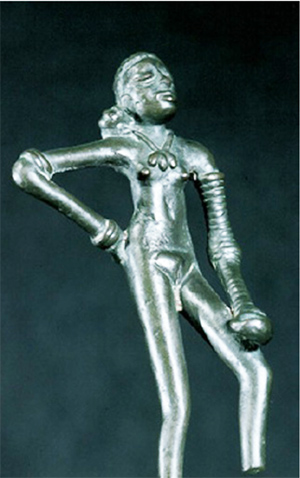 Bronze ‘dancing girl’ from Mohenjo-daro in Sind province, Pakistan. Although not dancing, this tiny and justly famous figurine is probably Harappan and has been dated to c.2000 BC.
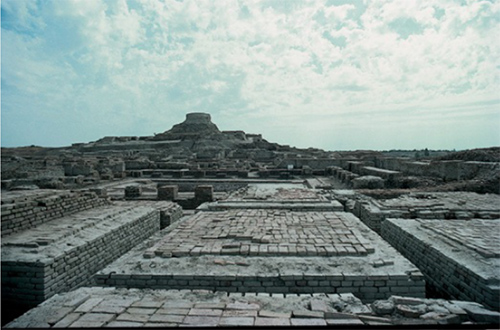 Mohenjo-daro, the ‘Mound of the Dead’. The largest of the excavated Harappan city-sites has typical brickwork, but the foreground ‘granary’ and the background ‘citadel’ are conjectural designations.
 Sunrise at Dashashwamedh Ghat on the Ganga (Ganges) at Varanasi (Benares). The name of the ghat recalls the tenfold aswamedha (horse-sacrifice) of the saintly King Divodasa which so discomfited Lord Shiva.
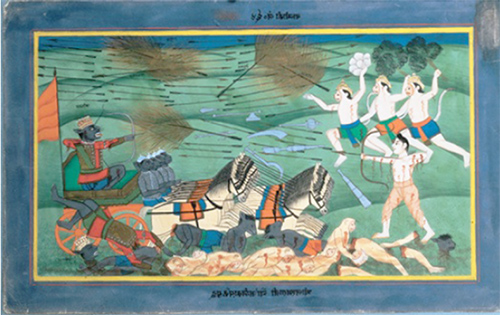 A scene from the Ramayana by an early-nineteenth-century artist. The Sanskrit epic shows a growing familiarity with peninsular India, as here in ‘The Battle of [Sri] Lanka’ between Lord Rama and the demon-king Ravana.
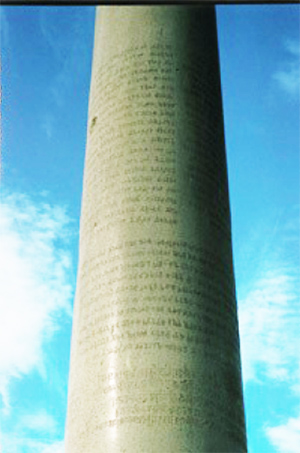 The Ashoka column atop Feroz Shah Khalji’s fort in Delhi. Inscribed in the third century BC, it was transported to Delhi by a fleet of barges in the fourteenth century. The famous inscription remained undeci-phered until the 1830s.
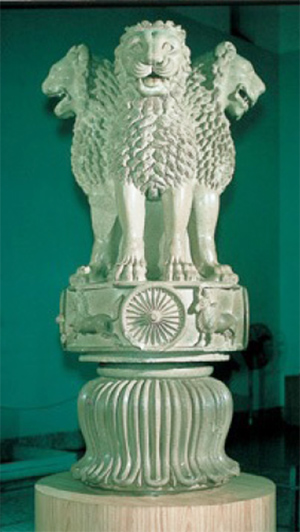 The Lion capital from Sarnath (near Varanasi). Now the national emblem of the Republic of India, it originally capped an Ashoka column erected at the site of the Buddha’s first sermon.
 The rock at Shahbazgarhi (Panjab province, Pakistan) bearing Ashoka’s Edicts. One of the Maurya emperor’s many rock-cut inscriptions, this one flanks the Karakoram route by which Buddhism spread to China.
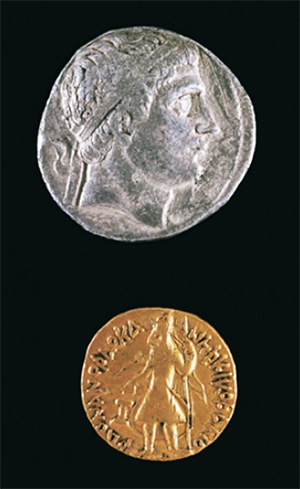 Bactrian coins of a Bactrian Greek king of the second century BC, and of Kanishka, the great Kushan king of uncertain date. The history of the northwest from the third century BC to the third century AD has been largely reconstructed on the basis of such coins.
 Bracket carved as a yakshi on one of the Sanchi gateways. The incorporation of fertility spirits, like the voluptuous tree-entwining yakshi, broadened Buddhism’s appeal.
 Relief panel from one of the gateways to the Great Stupa at Sanchi, first century BC. As with most stupa iconography, this eloquent processional scene is drawn from the life of the Buddha.
 Seated Buddha of the Gandhara school, second century AD. The treatment of costume and countenance betrays the Graeco-Roman contacts of Gandhara and other kingdoms in the north-west.
 Seated Buddha from Sarnath, fifth century AD.Such Buddhas of the Gupta period rank supreme. Found as far away as Borneo and Vietnam, they testify to the early diffusion of Indic culture.
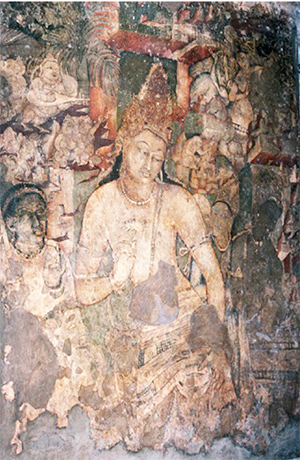 Fresco of a Bodhisattva in Cave I at Ajanta, Maharashtra, fifth century AD. A religio-commercial centre under the Shatavahanas, Ajanta was extended and embellished with its world-famous frescoes under the Vakataka kings, allies of the ‘golden’ Guptas.
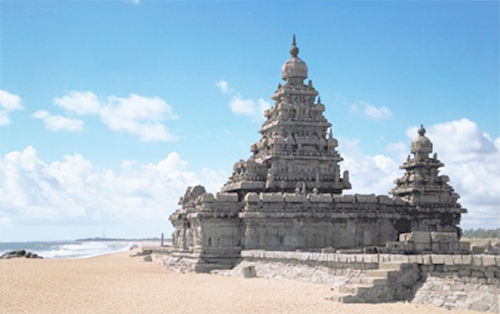 The early-eighth-century Shore Temple at Mamallapuram near Madras. One of the first structural temples in the south, it was built by Narasimha-varman II in what was then the main port of his Pallava kingdom.
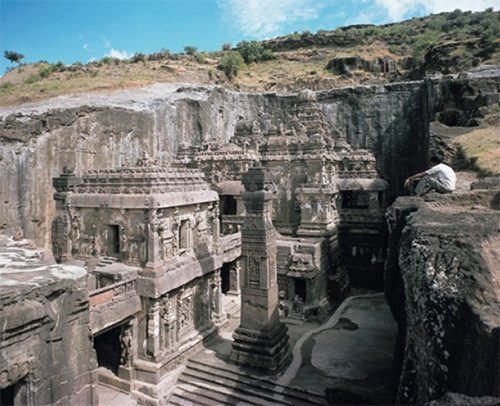 The eighth-century Kailasa temple at Ellora in Maharashtra. Cut from solid rock for the Rashtrakuta king Krishna I, it is not architecture but the world’s most monumental sculpture. ‘Oh, how was it that I created this?’ exclaimed its designer.
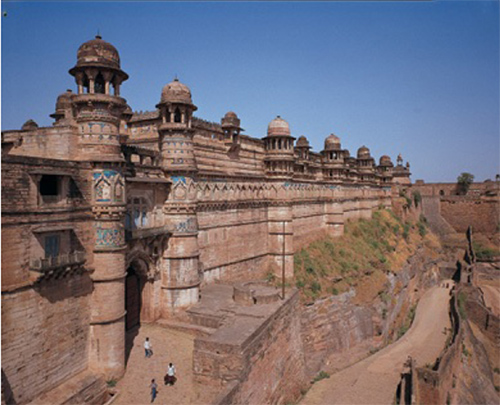 Man Singh palace in Gwalior fort, Madhya Pradesh, 1486-1516. Northern India’s most commanding fortress changed hands repeatedly. Occupants included numerous rajput clans, Delhi sultans, Mughals, Marathas, British and, in 1858, Lakshmi Bai of Jhansi.
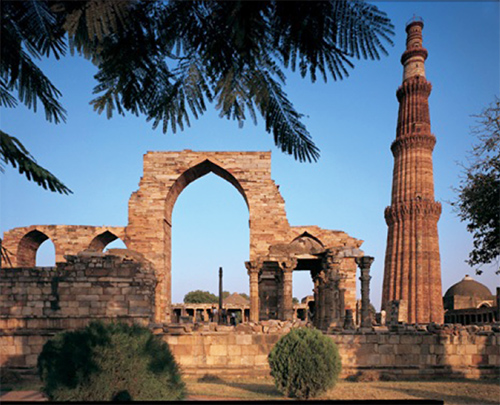 Qutb Minar, Delhi. Celebrating the triumph of Islam, the world’s most massive minaret was begun beside Delhi’s first mosque by Qutb-ud-din Aybak, continued by Iltumish, and completed by Feroz Shah Tughluq.
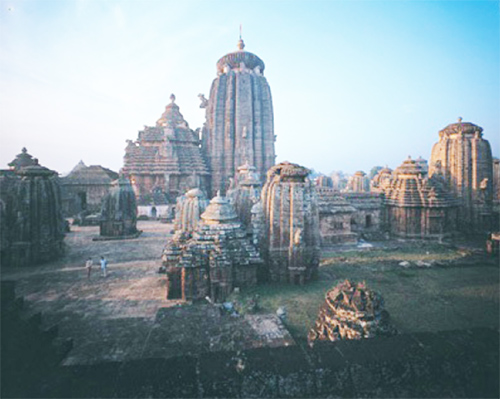 Lingaraja temple, Bhuvaneshwar, Orissa, c.noo. Spectacular temple-building at Bhuvaneshwar, Khajuraho and elsewhere coincided with the triumph of Islam and may have been a response to it.
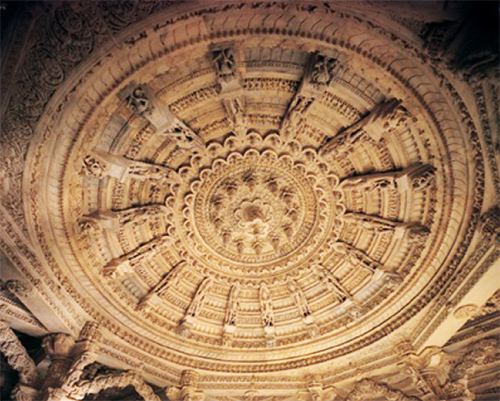 Interior dome of Adinatha (Vimal Vasahi) temple, Mount Abu, Rajasthan, eleventh-twelfth century. The Jain temples of Mount Abu, exquisitely fretted in white marble, belie the notion that Islamic conquerors habitually destroyed all temples.
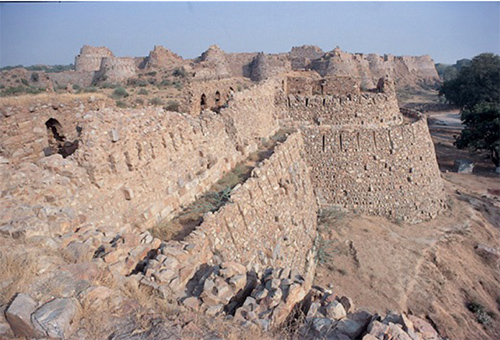 Tughluqabad Fort, Delhi, 1321-5. Ghiyas-ud-din Tughluq massively fortified his new Delhi but was forestalled in its enjoyment by his maligned son Muhammad bin Tughluq, ‘the Bloody Sultan’.
Re: India A History, by John Keay
Posted: Thu Jan 02, 2025 7:21 am
by admin
Part 2 of 3
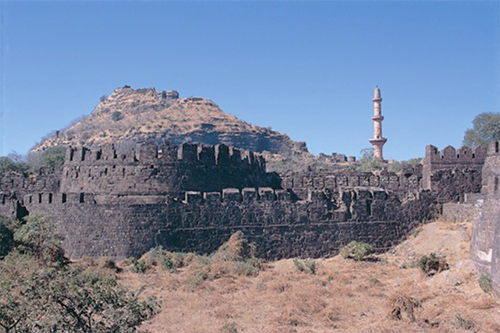 Daulatabad (Devagiri, Deogir) Fort, Maharashtra. A stronghold of the Seuna kings, Daulatabad became the springboard for Islamic raids into peninsular India and was briefly adopted by Muhammad bin Tughluq as his capital.
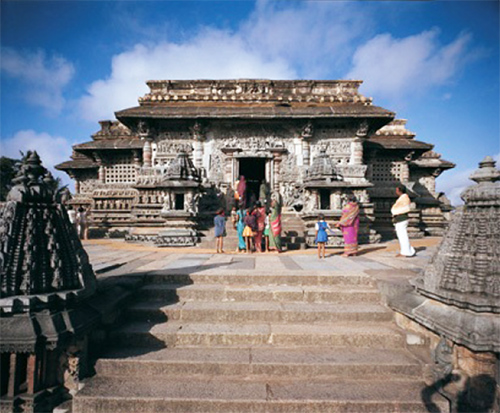 Hoysaleshwara temple at Dorasamudra (Halebid), Karnataka, mid-twelfth century. The Hoysala capital, first occupied by Muslim forces under Malik Kafur in 1310, was supposedly destroyed in 1326.
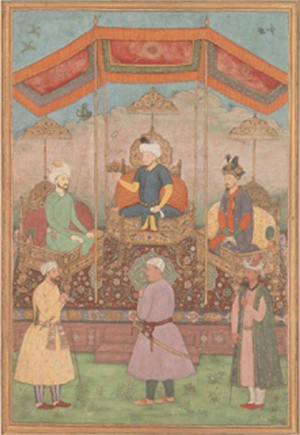 Babur and his son Humayun, sixteenth-century miniature. The Indian empire won by Babur, first of the six Great Mughals, was lost but eventually reclaimed by Humayun, the second Great Mughal.
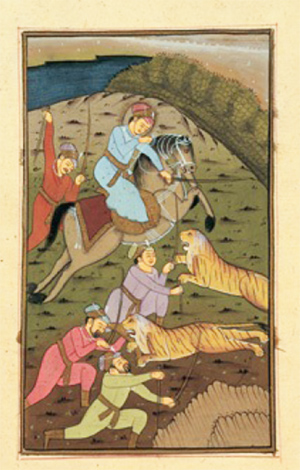 Akbar hunting tigers, from the Akbar-nama, c.1590. Akbar, the third Great Mughal and the most fearless campaigner and sportsman, could neither read nor write. He was probably dyslexic.
 Akbar giving an audience, from the Akbar-nama. The supplicant (below throne, left) presents the emperor with customary gifts including a bolt of cloth (below throne, right).
 Rejoicing over the birth of Salim (Jahangir) at Fatehpur Sikri, from the Akbarnama. Akbar’s gratitude for the birth of an heir resulted in the selection of Sikri as the site of his new Fatehpur (‘City of Victory’).
 Taj Mahal, Agra, from across the Jamuna river, 1630–52. Dynastic pride and Islamic symbolism, not romantic heartbreak, inspired Shah Jahan’s tomb for Mumtaz Mahal who had died giving birth to their fourteenth child.
 Equestrian portrait of Shah Jahan, seventeenth century. The exaltation of the Mughal sovereignty by Shah Jahan included the creation of dazzling architectural settings and the adoption of quasidivine symbols, like the Christian halo.
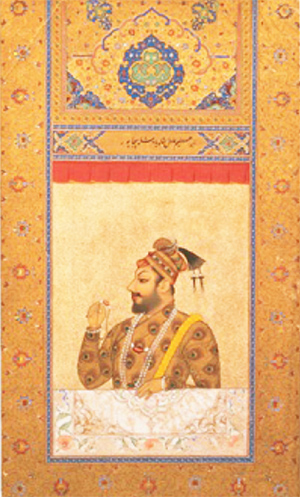 Ali Adil Shah II of Bijapur, Deccani miniature of c.1660. In architecture as in portraiture, the Deccan sultanates of Bijapur and Golconda vied with the Great Mughals. Ali Adil Shah’s riposte to the Taj was the Gol Gumbaz.
 St Mary’s Anglican church, Fort St George, Madras, 1679. The English East India Company’s fort at Madras dates from 1640 and is contemporary with the Taj, but not till the 1740s did the Company espouse territorial ambitions.
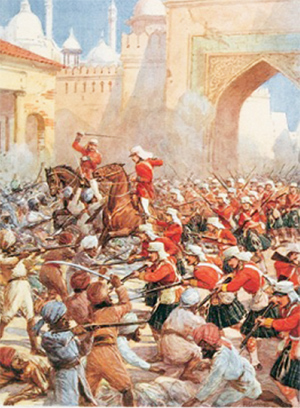 Sir Henry Havelock relieving the British besieged in Lucknow in i857,from an illustration by Howard Davie of c.1910. Lucknow and Awadh evidenced the popular appeal of the Great Rebellion while steeling British resistance to the ‘Indian Mutiny’.
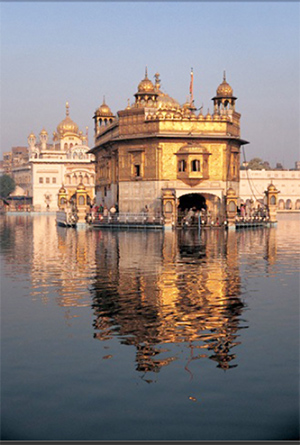 The Golden Temple (Hari Mandir) at Amritsar, eighteenth century and later. The holiest shrine of the Sikh faith houses the original Granth Sahib. Much restoration has been undertaken since the temple was stormed in 1984.
 Statue of the Jain saint Gomateshwara, Sravana Belgola, Karnataka. The largest monolithic statue in the world, it faces the hill on which Chandragupta, founder of the Maurya empire, may have spent his declining years.
 Relief medallion from the Bharhut stupa, originally in Madhya Pradesh. Such scenes from the jataka (birth) legends of the Buddha reveal the costumes, architecture and transport of the second century BC
 The Great Stupa (no. 1) of Sanchi, near Vidisha in Madhya Pradesh. The firstcentury BC stone stupa, with its balustrades and gateways, encases a brick stupa of Maurya times which enshrined a Buddhist relic.
 Relief panel from the Amaravati stupa, originally in Andhra Pradesh, second– third century AD. As reconstructed from such illustrations of the original, the Amaravati stupa may have been the greatest monument in Buddhist Asia.
 Relief panel from the Amaravati stupa. Early Buddhist narrative scenes do not depict the Buddha in human form but suggest his presence by symbols, like a throne, a footprint or, as here, the Boddhi tree.
 Relief panel from the Amaravati stupa, second – third century AD. Musicians and dancers celebrate the descent to earth of a Bodhisattva, or Buddha incarnation.
 Exterior of cave temple (no. 2), Badami, Karnataka, late sixth century AD. As Vatapi, Badami was adopted by the Chalukya dynasty as the core site of their seventh-to-eighth-century Deccan empire.
 The Jyotirlinga group of temples, Aihole, Karnataka. An inscription here tells of the conquests of Pulakesin II, the Chalukya king who withstood the might of Harsha-vardhana.
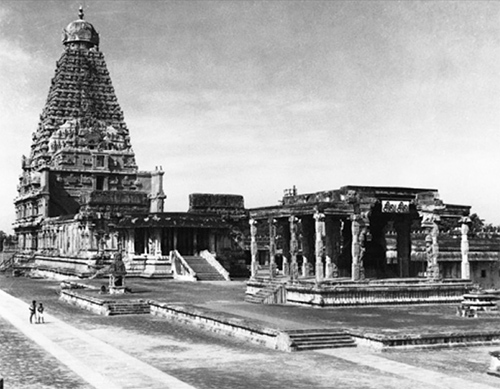 The Rajarajeshwara temple at Tanjore, Tamil Nadu, early eleventh century. Largest and loveliest of temples, it was richly endowed by the Chola king Rajaraja I with booty from his peninsular and Sri Lankan conquests.
Re: India A History, by John Keay
Posted: Thu Jan 02, 2025 7:30 am
by admin
Part 3 of 3
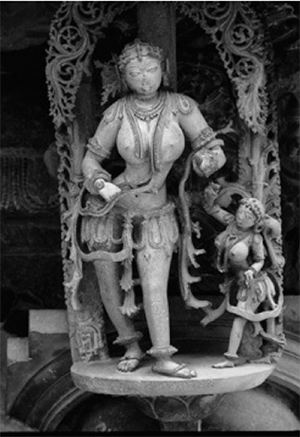 Sculptural panel from the Chenna Kesava temple, Belur, Karnataka, twelfth century. Traditions of ivory-carving are evident in the statuary of both Dorasamudra (Halebid) and Belur, the twin capitals of the Hoysala dynasty.
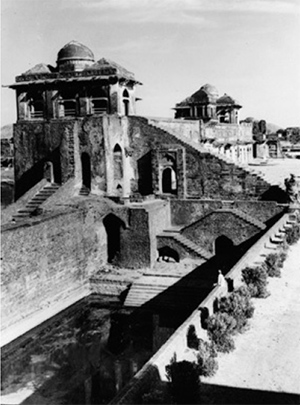 Jahaz Mahal (‘Ship Palace’), Mandu, Madhya Pradesh, late fifteenth century. On the heights of Mandu, the sultans of Malwa built fancifully. With its moat full and access only by stepped ‘gangplanks’, this palace appeared to float.
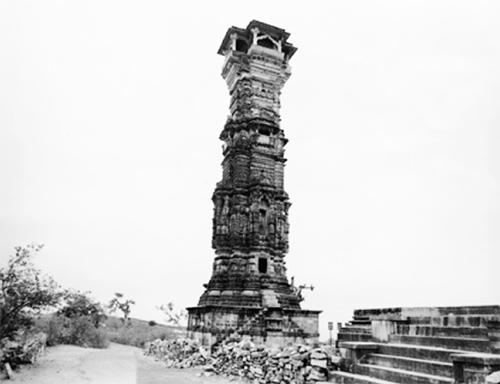 Jaya Stambha (‘Victory Tower’) at Chitor(garh), Rajasthan, 1457—68. It was erected to commemorate the victory of the rajput Rana Kumbha of Mewar (later Udaipur) over Mahmud Khalji, the Muslim sultan of Malwa.
 The tomb of Humayun in Delhi, completed 1565. The second of the Great Mughals spent much of his reign in exile in Afghanistan and Persia, whence came the architect of his tomb and its inspiration.
 The tomb of Itimad-ud-Daula in Agra, completed 1628. Itimad-ud-Daula was Jahangir’s minister, the father of Nur Jahan (Jahangir’s wife), and the grandfather of both Shah Jahan and his wife Mumtaz Mahal.
 Gol Gumbaz (‘Great Tomb’) of Muhammad Adil Shah II in Bijapur, Karnataka, c.1659. Contemporary with the Taj Mahal, but with a dome second only to St Peter’s in Rome, the tomb epitomised the ambitions of the Bijapur sultanate.
 The City Palace, Udaipur, Rajasthan, from 1567. Udaipur was adopted by the (Maha)rana of Mewar after Akbar’s sacking of Chitor. Here James Tod gathered the materials for his epic account of the rajput clans.
 Robert, Baron Clive of Plassey, engraving after a portrait by J. Drummond. While engineering British supremacy in Bengal, Clive realised a colossal fortune, yet, with reason, stood ‘astonished at my own moderation’.
 Warren Hastings, first British governor-general of India, from a painting by Sir Joshua Reynolds. A reluctant imperialist, Hastings found himself elevating the British presence in India to a position of paramountcy.
 Lakshmi Bai, Rani of Jhansi. The Indian Joan of Arc, Lakshmi Bai’s exploits during the Great Rebellion won her even British regard as ‘the only man amongst the rebels’.
 The Indian National Congress at Allahabad, December I888.George Yule, president (seated centre), with local convenor Pandit Ayodhia Nath (on his right), and William Wedderburn and secretary A.O. Hume (on his left).
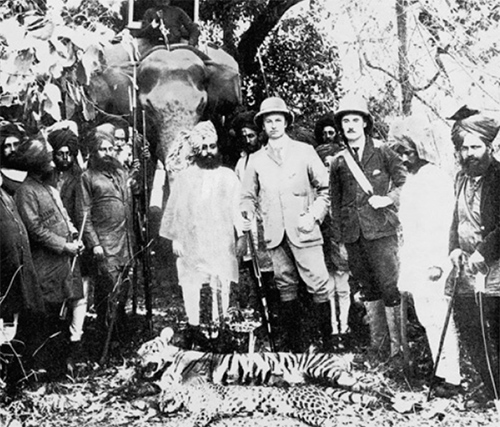 George Nathaniel, Lord Curzon (centre), on a tiger-shoot. Curzon, the most brilliant of British viceroys, precipitated the first great surge of nationalist resistance with his ill-judged partition of Bengal.
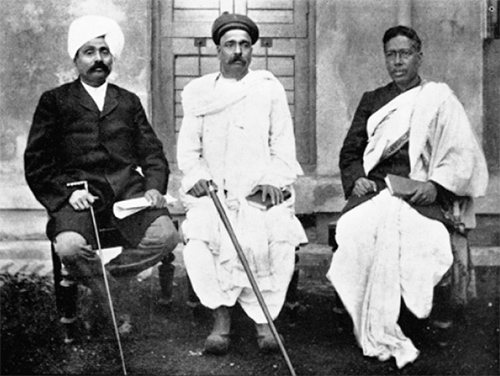 Lala Lajpat Rai, Bal Gangadhar Tilak and Bipin Chandra Pal. As ‘Lal-Bal-Pal’, the Panjabi Arya Samaj leader, the great Maharashtrian firebrand and the radical Bengali editor spearheaded swadeshi protest in 1907.
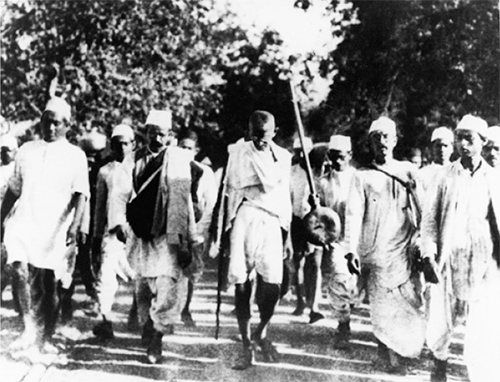 M. K. (‘Mahatma’) Gandhi leading the April 1930 Salt March. In the set-piece which launched the civil disobedience movement, Gandhi upheld man’s inalienable right to the untaxed enjoyment of a common condiment.
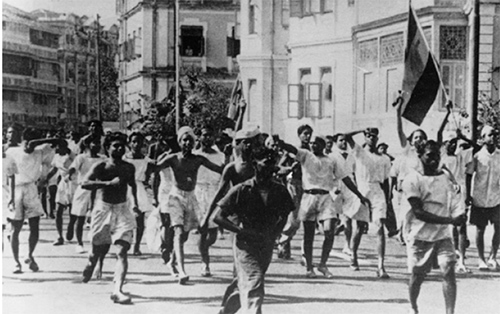 Protestors on the streets of Calcutta during the Quit India movement of 1942. In this wartime protest the British recognised the most violent phase of the independence struggle and reacted accordingly.
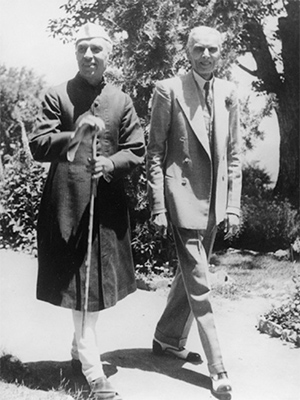 Jawaharlal Nehru and Mohammed Ali Jinnah at the Simla Conference, 1945. The Partition of British India into Jinna’s Pakistan and Nehru’s Republic of India would provoke one of the twentieth century’s greatest tragedies.
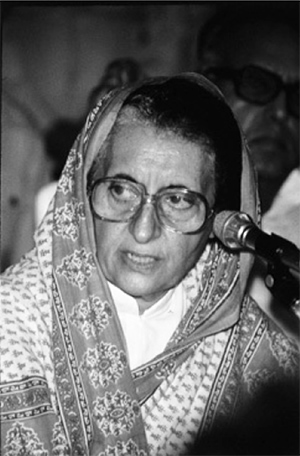 Prime Minister Indira Gandhi. The most controversial of the Nehru-Gandhi dynasty, Mrs Gandhi dominated the political scene for nearly twenty years, but suborned the consensus on which it rested.
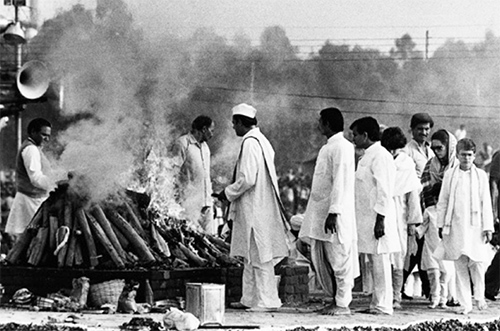 Rajiv Gandhi (third from left) at the cremation of his mother, Indira Gandhi. Mrs Gandhi’s 1984 assassination by Sikh extremists, and a retaliatory massacre of Sikhs in Delhi, plunged India into crisis and precipitated Rajiv’s elevation to office.