|
AMPHITHEATRUM SAPIENTIAE AETERNAE |
|||||||||||||
|
by Heinrich
Khunrath UNDER CONSTRUCTION
Heinrich Khunrath, Amphitheatrum sapientiae aeternae [Hamburg: s.n., 1595] is an alchemical classic, the best known of Heinrich Khunrath's works. The work is infused with a strange combination of Christianity and magic, illustrated with elaborate, hand-colored, engraved plates heightened with gold and silver. The tension between spirituality and experiment, and the rich symbolism of Khunrath's writings and their engravings brought condemnation of the book by the Sorbonne in 1625, and now attracts attention from scholars. Located in the Duveen Collection in the Department of Special Collections, University of Wisconsin-Madison, this is a rare copy of the first edition of this work, published probably in Hamburg in 1595. There are several other editions, some with additional plates, though lacking in general the generous margins and hand-coloring of the copy in Madison. Only two other copies of this first edition, described by Denis Duveen as "one of the most important books in the whole literature of theosophical alchemy and the occult sciences," are known to exist. With funding generously provided by the Brittingham Fund, the Department of Special Collections has undertaken the construction of this Web-based introduction to Heinrich Khunrath's Amphitheatrum sapientiae aeternae (1595). Because the engraved illustrations are packed with symbolic as well as textual information arrayed either on radii or concentric circles, we have provided for close-up examination of important iconographic features, and also transcribed the engraved text surrounding the circular images. A version of the text on all four engraved plates, encoded according to TEI (Text Encoding Initiative) standards, is forthcoming. Table of Contents:
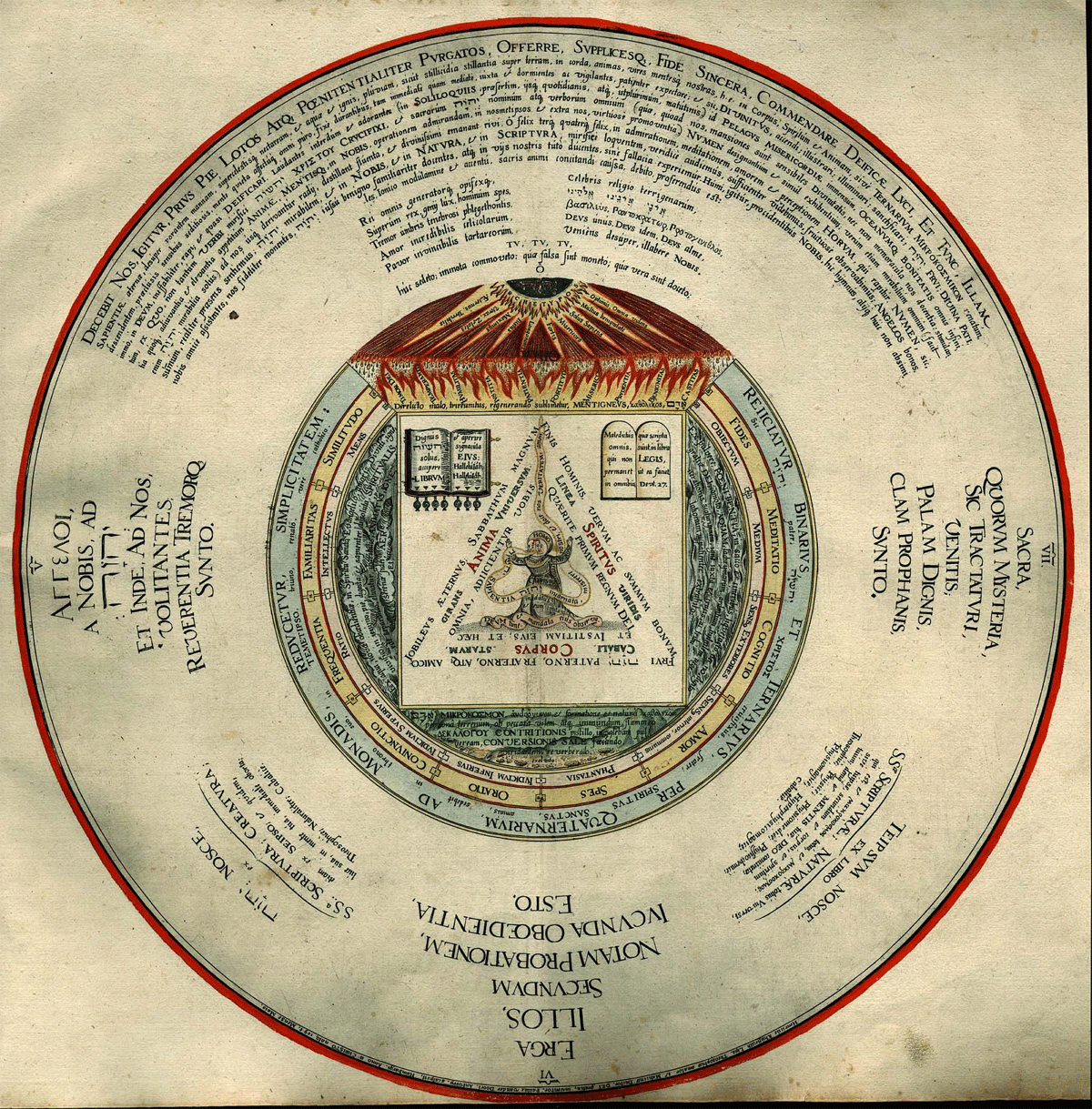
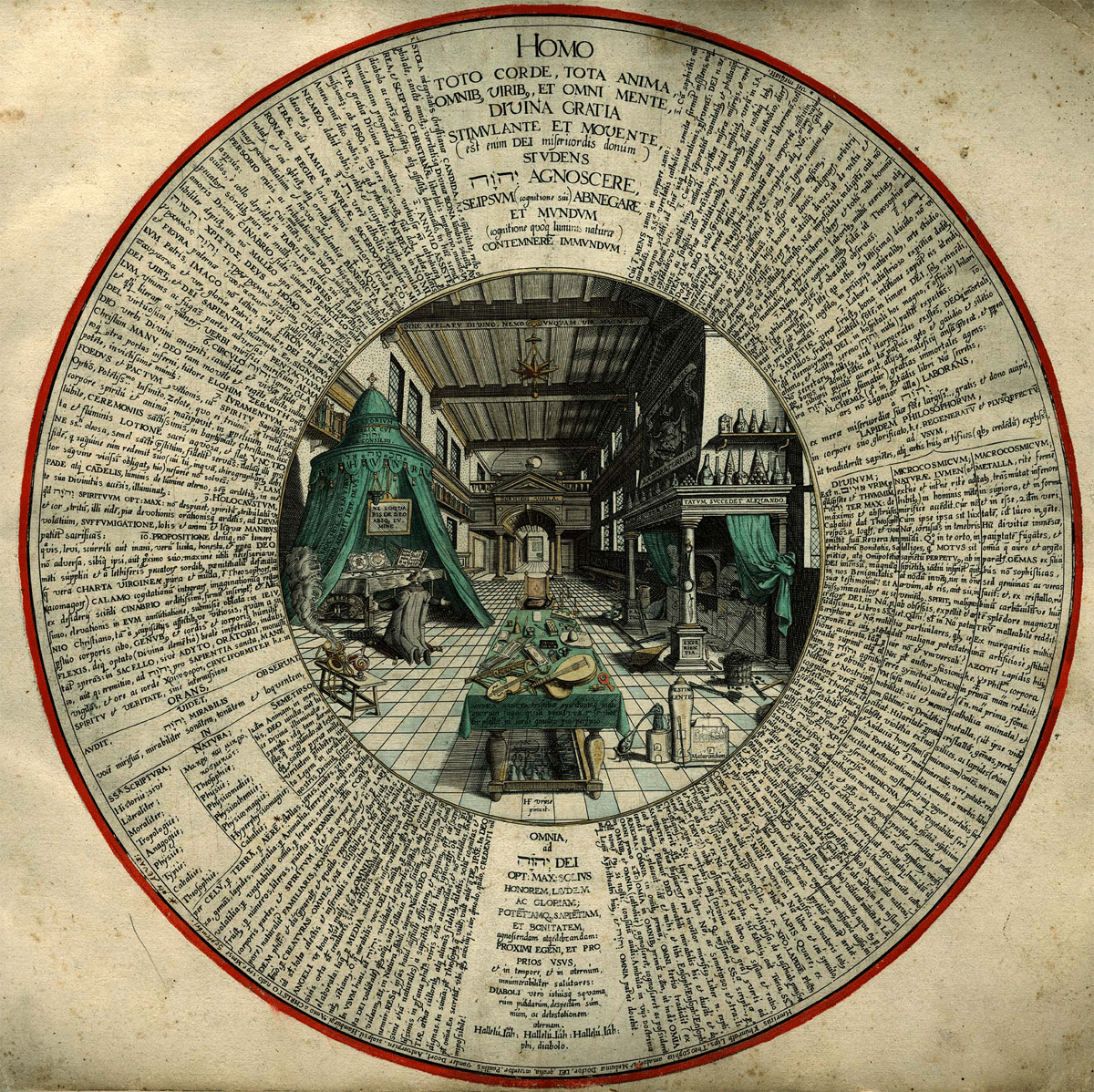
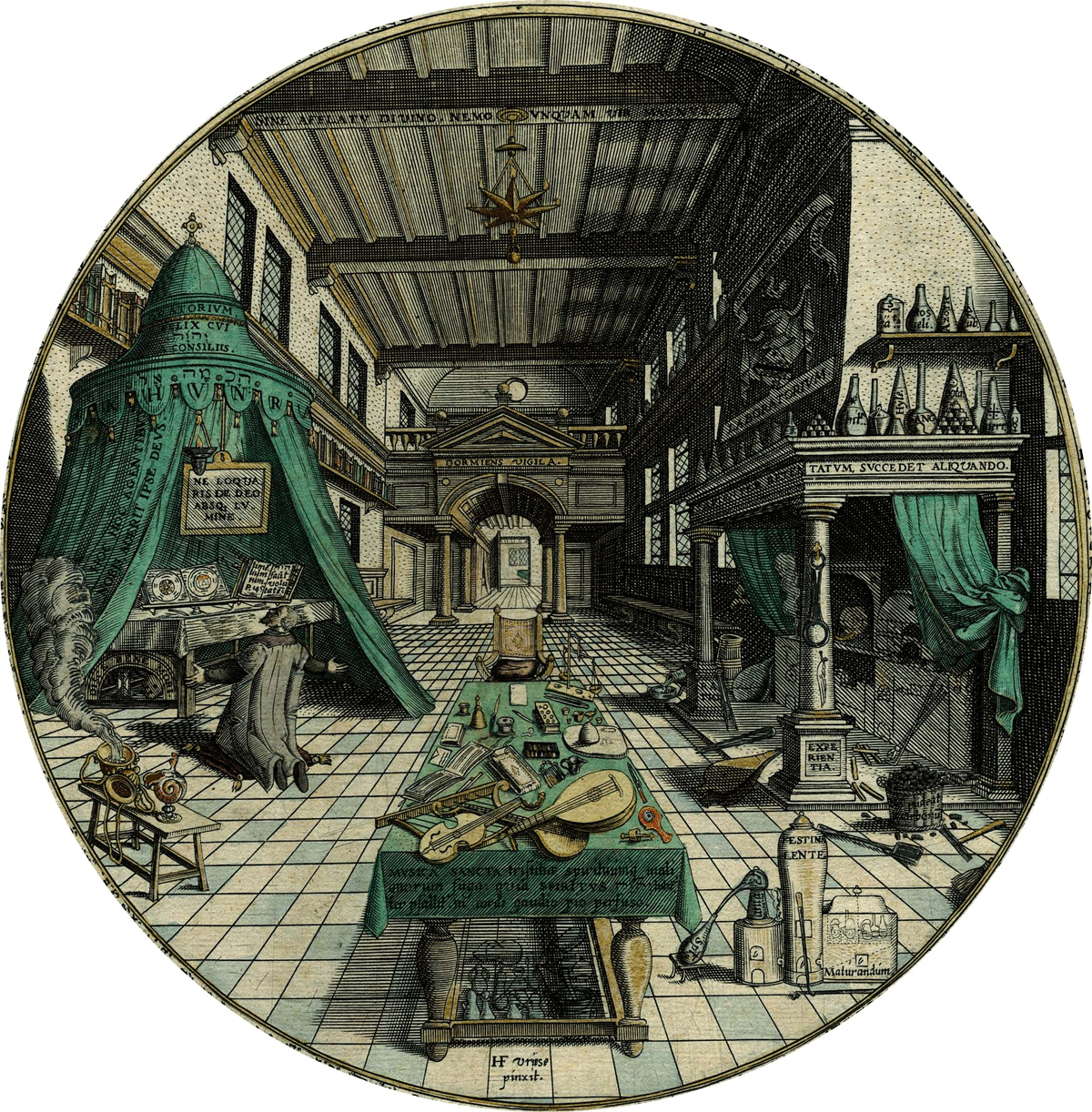
Alchemist's Laboratory Surrounding the circular image of the alchemist's laboratory and oratory is engraved text. Homo toto corde, tota anima, omnibus uiribus, et omni mente, diuina gratia stimulante et mouente, (est enim Dei misericordis donum) studens yhvh[1] agnoscere, se ipsum (cognitione sui) abnegare, et mundum (cognitione quoque luminis naturae) contemnere immundum: [Google translate: A man with his whole heart, whole soul, with all our strength, and to every mind, by divine grace and the instigation of moves, (for it is the gift of God most merciful) yhvh striving to acknowledge himself (knowledge of) to deny, and the world (also light the knowledge of nature) unclean to despise:] 1. Stola integritatis Christianae candida, hoc est simplicitate, recto et probitate, sancte amictus; ueritatisque diuinae zona lumbis succinctus aurea, et sceptro Christianae libertatis imperatorio, mundo uidelicet, diabolo ac carnis concupiscentiis atque affectibus dominando, in hanc scenam mundanam progrediens. [Google translate: Integrity of the Christian white robe, that is simplicity, the nominative case and integrity, of the holy attire; girded about the loins with a girdle of gold ueritatisque divine, Christian liberty, scepter, and the empire, namely the world, the devil and the lusts of the flesh and emotions sway, on this worldly stage to proceed further. 2. Anulo assistentiae gratiae Diuinae admonitorio, uirtuosae uidelicet catholicaeque promissionis, ab ipso, in cuius ore non inuentus fuit dolus, datae, dicentis, Amen, amen dico uobis, si quid petieritis Patrem in nomine meo, dabit uobis, petite et accipietis: digito anulari decoratus. [Google translate: Ring insurance admonitorio to divine grace, namely virtuous catholicaeque of promise, by him, in whose mouth was no guile was found, given to them, saying, Verily, verily, I say unto you, Whatsoever ye shall ask the Father in my name, will give you, ask and you shall receive: the finger with the RING-MAKER.] 3. T, uere catholici signatura, mitrae, aut laminae aureae sacerdotalis, coronaeue regiae loco, hominis interioris fronte, diuinitus notatus, et ceu obtectus atque ornatus. [Google translate: T, truly Catholic Signatura, bonnets, with plates of gold, or priestly, royal coronaeue place, the inner man, the forehead, divinely noted, and as covered by its treasures and ornaments.] 4. Aqua lachrymarum paenitentialium et nouae oboedientiae benedicta, aspersorio crucis ac tribulationum uere hyssopico, Christiane aspersus. [Google translate: Tears of penance for water and blessed the new obedience, truly hyssopico aspersorio with crosses and tribulations, sprinkled with the Christian.] 5. Cui, ante mentis suae, Deo, coniunctae atque unitae, oculos, e collo dependet, in tabulis cordis sui, a lethiferis peccatorum sordibus puri ac mundi, uere aureis, flagrantissimi amoris Diuini cinabrio, fidei sincerae penicillo indelibiliter depictus, nec non malleo spei firmae fortiter impressus yehoshua Christos, Deus et homo, crucifixus; pentagrammos yhvh tetragrammos ipsissimus character, et figura paternae hypozateôs siue subsisentiae: sigillum Patris, imago non tantum, uel eikôn sed et apaugasma et uerus gloriae Patris splendor, Dei uerbum, Dei uirtus, et Dei sapientia incarnata. En, signaculum, uincens ac fugans partes aduersas! Pentaculum et quinque literarum ac uulnerum, uerbi mirifici mirificum! Almadel uirtuosum! [Google translate: To whom, before the of his mind, God, joined together and united, the eyes, from his neck depends, in the tables of his heart, from the pure filth of sins and the world's lethiferis, truly golden, divine love cinabrio his ardent, sincere faith indelibiliter brush painted, he would not be impaired with the hammer of hope strongly imprinted on yehoshua Christos, God and man, was crucified; pentagrammos yhvh tetragrammos ipsissimus a character, and the figure of his father's or hypozateôs subsisentiae: seal of the Father, not only the image, or eikôn apaugasma and true but also the splendor of the Father of glory, the Word of God, the power of God and of God the wisdom incarnate. Behold, a seal, and scatters uincens parts and adversity! Pentaculum and the wounds and five letters, the word wonderfully wonderful! Almadel virtuous! 6. Circulo yhvh igneo, gladio uerbi Diuini ancipiti, candidae et uiuae fidei in Christum manu, Deo eam mouente et regente, ducto, inclusus eoque contra portas inferni, tutore Elohim Zebaoth omnipotente, inuictissime munitus. [Google translate: Yhvh a fiery circle, two-edged sword of the word divine, bright and living faith in the hand of Christ, and God was governing it moves, drawing, and so shut up against the gates of hell, guardian Almighty Elohim of Hosts, protected by the invincible. 7. Iramentum, ob foedus et pactum conuentionis, cum Spiritu sapientissimo optimo, potentissimo, infinito, zelote, quo ei triuni, se triunum totum corpore, spiritu, et anima, mancipauit, in perpetuum indissolubile, ceremoniis sanctissimis, in baptismate Christiano, iuxta et fluminis lotione sacri aquosa, et flatus unctione sacrosancti oleosa, semel sancte praestitum, fideliter seruans: datamque illi ipsi fidem, qui sanguine eum redemit suo (cui tu, inquam, chirographarius debitor sanguine uicissim obligatus tuo) nefarie non soluens. [Google translate: Iramentum, because of his covenant and the covenant conuentionis, when the Spirit of wisdom and the best, most powerful, the infinite, the Zealot, which triuni him, he triunum the whole body, spirit, and soul, devoted, for ever indissoluble, most holy ceremonies, in the Baptism the Christian, and of the river, according to lotione sacred watery, oily substances and breath of the anointing of the Most Holy, holy once performed, faithfully keeper: datamque, these very men the faith who redeemed him his blood (to whom you, I say, a debtor chirographarius bound to turn your blood) is not unfolding wickedly.
8. Lampade atque candelis, luminis de lumine aeterno, semper ardentibus, in mente sua Diuinitus accensis, illuminatus. [Google translate: Lamp and the candles, light the light of eternity, is always burning in their mind divinely were on fire, lightened.] 9. Holocaustum, quod yhvh spiritum optimum maximum non despiciet, spiritum contribulatum uidelicet, et cor contritum, illi eidem, piae deuotionis orationisque ardentis, ad Deum uolantium, suffumigatione, lotis et animi et linguae manibus patienter sacrificans. [Google translate: Holocaust, that the spirit of the best yhvh despise not the greatest, namely, a spirit troubled, and the heart is contrite, the same to him, burning prayer of his pious devotion to God flying, suffumigatione, having washed his hands and mind and tongue, the sacrificer patiently.] 10. Propositione denique, non temere quauis, leui, scurrili aut inani, uerum licita, honesta, et propterea Deo non aduersa, sibique ipsi, aut proximo suo; maxime utili necessariaue, menti supplici et a lethiferis peccatorum sordibus poenitentialiter defaecatae (quae uera charta uirginea, pura et munda, est Theosophorum, non cacomagorum) calamo cogitationum integrarum imaginationumque rectarum ex desiderii sciendi cinabrio ardentissimi, firmiter inscripta; et Altissimo, eleuationis in eum annuntiatione, submisse oblata: in ieiunio Christiano, tam a concupiscentiis affectibusue uitiosis, quam a superfluo corporis cibo, genubus et cordis et corporis humiliter flexis, deque optato (Diuina clementia) beate impetrando, indubitanter sperans: in sacello, siue adyto, oratorii, monastico, aut quasi eremitico, ad yhvh pro sapientia sancta, mane uigilans, et ore ac corde Chrizophoros, cruciformiter hoc est in spiritu et ueritate, sine intermissione. [Google translate: Finally, Proposition, we can not quauis, light, scurrilous, or empty, but lawful, honorable, and therefore not God, against adversity, they them to himself, or his neighbor, especially useful necessariaue, a humble mind and from the filth of sins lethiferis poenitentialiter has been clarified (which is true uirginea the paper, pure and clean, is THEOSOPHY, not cacomagorum) of the lines from the pen of the thoughts of the perfect imaginationumque cinabrio by its most ardent desire of knowing, firmly inscribed, and the Most High, the announcement eleuationis in him, humble offerings: in the Christian fasting, both from the concupiscences affectibusue vicious than from the surplus food of the body, humbly on bended knees and heart and body, and the longed-(Divine clemency) of the Blessed to be obtained, undoubtedly hoping that: in the chapel, or shrine, oratory, monastic, or as if eremitical, to the holy yhvh on behalf of wisdom, in the morning awake, heart, and with a Chrizophoros, cruciformiter that is, in spirit and the truth, without ceasing. Orans, audit, uidet, obseruat, yhvh mirabilis, uocem mirificam, mirabiliter sonantem, tonantem et loquentem, in [Google translate: Praying, hears, sees, observe, yhvh wonderful, wonderful voice, sounding wonderfully, thunder and speaking, in the] Sanctissima Scriptura; [Google translate: The Most Holy Scripture; Natura; Macro kai Microcosmôs; [Google translate: Nature; Macer kai microcosm; Semet Ipso; [Google translate: Himself Him;] Secundam Animam, in mentis, Deo iunctae, aut luce Diuina illuminatae, speculo: idque tam dormiendo, quam uigilando: ut testes quoque conscientiae propriae mille, ueritatem perhibentes, iuxta Legem in cordibus nostris, Diuinitus scriptam. [Google translate: According to the soul, in the mind, grew up alongside God, or Divine light illuminated, a mirror, and that so while asleep, than uigilando: that a thousand witnesses of their own conscience also, witness the truth, according to the law in our hearts, the divinity written.] Per caelum, per terram, per aerem, [2] ignes, nubes, uentos, saxa, gemmas, lapides, mineralia: per Animalia, terrestria, aquatica et uolatilia: per uegetabilia omnia, per herbas, semina, ligna, uirgulta, fructus: per numeros, literas, puncta: per hominem, secundum corpus et corporis partes, et spiritum, qui (et in corpore et sine corpore) naturaliter familiaris, homunculusque sophorum est per lapidem philosophorum et dum praeparatum, et quando regeneratione glorificatus est. Immo, per creaturas omnes, etiam inuisibiles, hoc est non physicas, ut sunt, totae caelestis et infernalis exercituum spiritualium militiae, angeli uidelicet boni et mali: et per omnia, quae a uisibilibus, hoc est, physicis orta sunt creaturis, siue per se ea sunt naturalia, siue artificis manu industriosa affabre elaborata: tamquam per media, nobis apte inseruientia, quibus diuina humanitus sentiamus. O quam mirabilis uox Dei in omnibus, per omnia, ad omnes! In usum hunc, ut yhvh uoluntatem, de praeteritis, praesentibus atque futuris (iuxta Dei uoluntatem) quibuscumque, sine fallacia recte sciamus, cognoscamus ac praeuideamus: Et, in Natura constituti, supra Narturam (Deo duce) nos ipsi dominemur: resque ipsas haud difficile efficiamus et peragamus, quarum causae (saepissime etiam naturales) a sapientibus mundi huius ignorantur, ob idque peritissimis in profana philosophia uiris etiam admirandas, et non credendas, sapientiae aeternae cultoribus atque alumnis fidelibus dilectis, solum cognitas et dignas. In summa: potest Theosophus quae uult; uult autem quae Deus Ipse. In Deo possunt [3] omnia. En secretum, ubi, quibus auxiliis, cur, quomodo, quando, credenti nil impossibile! [Google translate: By heaven, by the earth, through the air, fire, clouds, winds, rocks, gems, rocks and minerals: by animals, earthly things, namely pure water and the birds: uegetabilia by all things, through the grass, seeds, wood, uirgulta, as a fruit: by the numbers, letters, the points; by the Man, according to the body and parts of the body, and spirit, who (and without the body and in the body) naturally intimate friend, and while homunculusque sage is prepared by the philosophers stone, and when the regeneration is glorified. Indeed, by all creatures, even invisible, that is not physical, as they are, they wholly celestial and infernal hosts of spiritual service, namely the angels of good and evil: and through all, which is from the visible, that is, physical creatures arose, or per se are those natural things, or the hand of the architect's HARD-WORKING artistically worked out: as if through the media, particularly appropriate for us waiting, which we think the divine human. Oh, how wonderful voice of God in all things, in all things, to all! In this use, as yhvh will, of past, present, and future (according to the will of God) to all, without the deceitfulness of rightly we may know, know, and praeuideamus: And, in nature constituted Narturam above (under the command of God) we ourselves have dominion: the ease made it difficult not and carried out to make, the causes of which (very often also natural) from the wise of this world are not known, also because of the wonderful men and competent in the secular philosophy, and not to be believed, the worshipers of the eternal wisdom, and faithful, beloved of students, the only known and worthy. In a word: He will which can THEOSOPHY; He will, however, which is God Himself. In God, can be [3] all things. See, the secret, where, many auxiliary, why, how, when, nothing impossible to him that believeth!
1. Cui est mens sana in corpore sano. [4] [Google translate: To whom is a healthy mind in a sound body.] 2. Cum sophistis non ambulans, sed sanctissimae ueritatis catholicae semitae firmiter insistens, inque ea animo constanti, ad finem usque impetrationis, perseuerans: Dei enim zelotis donum hoc. [Google translate: When the sophists is not walking, but the ways of the Catholic truth of the Most Holy insistens firmly, and in her constant mind, till the end impetrationis, but enduring: jealous of God for this gift.] 3. Curarum temporalium uanitantibus et phantasiis, splendidisue mundi huius immundi sapientiae miserae miseriis, et uere nugis ac fabulis cito transitoriis, haud implicitus, uerum in sapientiae aeternae meditationibus et laboribus diu noctuque totus. [Google translate: Uanitantibus temporal cares and delusions, splendidisue unclean wisdom of this world the misery of miseries, and a byword to quickly and truly transitory trifles, not entangled with, but in the meditations of eternal wisdom and labors day and night all.] 4. Doctus a Deo solo, praeceptore omnium sapientum catholico, dierum Antiquissimo, et errare nescio, iuxta uoluntatem suam liberrimam, uel immediate, uel mediate, quod est, per Magistrum, spiritualem aut corporeum, nuntium yhvh bonum: Et per libros, puta, sanctissimae scripturae, atque Naturae; etiam Naturae interpretum chartaceos: quorum, quinam authentici sint, solus, cum Ignis examine, Dei spiritus in eo dextre iudicans, sit censor omnium aequissimus. [Google translate: Learned from God alone, the wise teacher of all the Catholic, the most ancient of days, and I know not to go astray, according to his most free will, or immediately, or mediately, that is, the Master, the spiritual or corporeal, the message of the good yhvh: And by means of books, for example, the Most Holy Scripture, and to nature; also CHARTACEOUS interpreters of nature, whose, who are authentic, alone, with the examination of fire, the Spirit of God in him dexterously judging, that most just of all is the censor.]
5. Mancipium aliorum, praesertim hisce bonis ac donis indignorum, arbitrii et pecuniae non existens, uerum per se utcumque diues, ut de uictu et amictu non sit sollicitus honesto. Nam impossibile, indigentem, aut non liberum, posse philosophari. Ars libera, liberum et totum uult hominem. [Google translate: Slave of others, especially in recent good and the gifts of the scandalous, and-will and money, not existing, but in some way by himself rich, and honorable as of food and clothing, is not worried. For impossible, indigent, free or not, the ability to philosophize. Free art, free, and wants the whole man.] 6. Practicus manualis in physicochemiae laboribus multum exercitatus atque expertus. [Google translate: In the practical manual labors physicochemiae much exercised, and the test.] 7. Naturam, ducem sophis omnibus fidam, ut Theosophiae amator, hoc est, philosophus, noscens, et oboedienter obseruans. [Google translate: Nature, a leader all the sage still faithful to Rome, as a lover of Theosophiae, that is, a philosopher, knowing, and obediently observing.] 8. Eamque blande, (quia minister) et lente (quia actio eius lentissima) ducendo, non ui aut ira (ut hostis) cogendo, in principiis naturalibus, arte studiosa, prudenter imitans. [Google translate: And brings it down pleasantly, but (because the minister) and take slowly (because the action of his lentissima) leading, not by violence, or anger (as an enemy) forced to in principles of natural things, a zealous art, imitating prudently.] 9. Labore industrioso experientiae deditus, et sapientiae uerae fructus, bona intentione sapienter eis utendi, hoc est riuulos fraterne emittendi, fontem, in timore Dei, solus retinendi, (quod eleemosynarii Dei, in hospitali hoc magno, est officium) hilari animo, et uultu sereno (yhvh nutu) patienter expectans. [Google translate: HARD-WORKING devoted to labor experience, and wisdom is the fruit of true, a good intention of using them wisely, that is a brotherly streams profession, the fountain, in the fear of God, the only one to keep, (which eleemosynarii of God, in this great hospital, is a duty) with a joyful heart, and a calm countenance (by the will of yhvh) patiently waiting for.] 10. Non secretarius publicus, sed Harpocrates existens, Deoque immortali, pro bonis ac donis tantis ac tam paternis, quieto et gaudio et silentio (ne sibi ipsi periculum accersat, aliisque maleficii ansam praebeat, et propterea ira yhvh misere consumatur) gratias immortales agens. [Google translate: Secretary not the public, but existing Harpocrates, Deoque, immortal, for so great and so good and the gifts of his father's, and in silence at rest, and joy (that they had not summon the midst of danger, and other give rise to crime, and therefore is consumed with anger yhvh miserably) thanks to the immortal agent.]
Alchemia (qua, in percontandis libri Naturae secretis, ars non sagacior ulla) laborans, a yhvh ex merae misericordiae suae fonte largissimo, gratis et dono accipit, lapidem philosophorum, in corpore suo glorificato, hoc est regeneratum et plusquamperfectum: ad usum, ut tradiderunt sapientes, atque artis huius artifices (quibus credendum) expertissimi. [Google translate: Alchemia (which, in the inquiries of the secrets of the book of nature, art does not make any sagacior) pains, from the mere yhvh from the broadest source of his mercy, freely and receives the gift, the stone of the philosophers, glorified in His Body, that is, and the re-plusquamperfectum: for use, as handed down to wise, and artisans of this art (which to be believed) had found it.] Diuinum; [Google translate: divine;] Est enim urim urim, per quod, praesente et thummim, yhvh ter maximum de maximis et abstrusis, cabalice dat Theosopho responsa, loquitur, et uocem emittit suam. Re uera amphitheatrum bonitantis, sapientiae, atque omnipotentiae Dei immensum, magnumque in nos benignitatis suae testimonium! Et abyssus miraculorum ac secretorum Dei, in Natura, profundissima, libros sanctissimae Scripturae et Naturae, realiter exponens. Ex cuius contemplatione accurata, tamquam per gradum supinum atque altum, in yhvh agnitionem; pronum et obuium, in Naturae et nostri ipsius cognitonem ueram atque perfectam, theosophice conscendimus, et naturaliter ac sensibiliter trahimur. Mysteriorum quoque altissimorum personae et officii yehoshua Christou crucifixi, et sacramentorum atque articulorum fidei Christianae ordine omnium, quotquot sunt, typica, sufficiens tamen et sensibilis, repraesentatio. Quemadmodum abundanter et satis luculenter demonstrari potest, a sapientiae aeternae amico, in physicochemia fideliter exercitato. [Google translate: For it is the Urim Urim, through which, in the presence and Thummim, yhvh three times the greatest of the greatest and obscure, cabalice THEOSOPHY gives answers, he speaks, and he sent forth his voice. Re bonitantis true, an amphitheater, wisdom, and immense of God's omnipotence, his kindness to us a great testimony! And the abyss of secrets and the miracles of God, in Nature, the deepest, most holy books of Scripture and of Nature, really explaining. Of his contemplation of an accurate-as if by the degree of supine, and high, in the yhvh knowledge, prone and appeared in his cognitonem of nature and our true and perfect, theosophice ascend together, and naturally and sensibly drawn. The mysteries of the person and also the highest office yehoshua Christou crucified, and the sacraments, and the subordination of all the articles of the Christian faith, as many as are typical, a sufficient, however, and sensible, representation. As can be demonstrated clearly and sufficiently abundantly, from the wisdom of eternal friend, in the physicochemia faithfully practiced.] Microcosmicum; [Google translate: Microcosmicum;] Naturae lumen (et externe et interne rite adhibitus) in hominis mente, mirifice accendit. Cur non? Cum ipse ipsa sit lux Naturae, coruscans in tenebris Mundi. Quod in te orto, intelliges, quid motus sit sapientium perpetuus, ab insipientibus iamdiu insipienter quaesitus, at nondum inuentus, nec in omne aeuum, ab eis, aut sic, inueniendus. Spiritus malignos, ab obsessis, expellit et arcet. Quidni? Sunt in Natura potentiae particulares, quibus cedunt malignae potestates: cur non et uniuersali? Nec potest auctor confusionis ferre symmetriam. ingenium (usu medico) acuit et nobilitat: sic et memoriam sublimem, ac prudentiam conciliat. Hilaritatem perpetuam, (absente uiolentia externa) et audaciam honestam (quae animi Fortitudo est) mire excitat. Restaurationis ac conseruationis nostrae est uerissima medicina, catholica: morbos et mentis, et spiritus, et corporis, hoc est tam externos, quam internos (Deo annuente) omnes, pseudomedicis incurabiles, uirtuose propellens: et hominem totum, praedispositum usque ad uitae terminum, a Deo sibi praedestinatum, et ingenio et corpore uegetum ac ualentem, conseruans. [Google translate: Light of nature (internally and externally and has been used properly) in man's mind, and kindles wonderfully. Why not? When he is the light of the very nature, flashing in the darkness of the world. That is in thee a quarrel broke out, understand, what the wise movement is perpetual, foolishly had long been sought by a fool, but not yet found, nor in all aeuum, from them, or so, found. The evil spirits, from the besieged, and drives out the castle. Why not? There are in the particular nature of the power, which yield an evil powers: why did not the universal? Nor can it be to bear the author of confusion symmetry. genius (the use of a physician) and sharpening the nobility, so sublime, and a memorial, and prudence's support. Perpetual mirth, (in the absence of external violence) and audacity honest (which is the fortitude of the soul) a cause of intense excites. And the restoration of the preserve is true of our medicine, catholic, and diseases of the mind, and spirit, and body, Such a view is external, than the internal (making a sign to God) all pseudomedicis incurable, propellens virtuous, and the whole man, even to the praedispositum life term, from the God predestinated to himself, and the skill of uegetum and body, and able, conseruans.] Macrocosmicum; [Google translate: Macrocosmicum;] Metalla, rite fermentatus, transmutat inferiora in superiora, et in forma et in esse, secundam ueritatem, cum lucro ingente. Hinc diuitiae immensae, paupertatem fugantes, et omnia quae auro et argento parantur. Gemmas ex silicibus non sophisticas, sed genuinas ac ueras facit: et, ex cristallo, rubinum carbunculumue lucentem splendore magno: uitrum malleabile reddit.[5] Ex margaritis multis, unam artificiose constituit. Azoth Lapidis huius, hoc est mercurius Philosophorum, corpora in primam materiam reducit; (est enim materia prima, forma catholica animata) et metalla, (ut ipse uidi) cristallum, gemmas, perlas, silices, ac lapides (etiam microcosmi) omnes, nec non mineralia, uere potabilia reddit. Animalia a morbis liberat; inque uigore uirtutis suae conseruat. Vegetabilia fere emortua, essentia simplicium specifica fermentatus, et methodice eisdem applicatus, uiuificat refocillatque, humidum illis (humido permanente catholico) corroborando natiuum, et ab interitu (in hac instantia) uindicat imminente. In lampade conueniente, aqua eius permanens artificiose accensa, in perpetuum permanenter ardet. [Google translate: Metals, duly fermentation, changes the lower to the higher, and in the form and in being, the second the truth, with the immense profits. Hence the immense riches, poverty, fugantes, are being leveled, and all that gold and silver. Gems from the rocks is not sophistry, but the genuine and true doth: and, from the crystal, the ruby carbunculumue enlightens the splendor of great uitrum malleabile renders. [5] From many pearls, artfully appointed one. Azoth of this stone, that is Mercury philosophers, reduces the bodies in the first matter; (for it is prime matter, the Catholic form of living beings) and metals, (as he saw) crystal, gems, Perle, flint, and stones (even a microcosm) all, nor minerals is not, truly makes DRINKABLE. Animals from illness and is set free; and in preserves the vigor of his virtue. Plants, almost dead, the essence of the simple specific fermentation, and applied the same methodical, refocillatque is brought to life, the moist them (wet or permanent Catholic) corroborate born, and from the death (in this instance) entirely releases imminent. In a suitable lamp, water artificially set on fire by his permanent, permanently burns for ever.]
Corollaria duo: [Google translate: Two corollaries:] Primum. Ihsuh Christi crucifixi, saluatoris totius humani generis, id est, Mundi minoris, in Naturae libro et ceu speculo, typus est seruator Mundi maioris, hoc est Philosophorum Lapis. Quare, ex Lapide hoc, Christum naturaliter agnoscito; et, ex Christo, Lapidem Philosophorum theosophice discito. Ita, Antiquitas pia et religiosa, de Maschiah promisso, etiam ab, in et ex Natura, est certior facta. Sit Ethnicus, aut Turca, sanctissimam Scripturam (Deus!) nihili aestimans, ex Naturae libro, ad sensum et rationem, potest conuinci ueritatis, atque (diuina cooperante gratia) conuerti ad Christianismum. Sic et Iudaeus. [Google translate: In the first place. Ihsuh of Christ crucified, the Saviour of the whole human race, that is, less of the world, in the book, and of nature as a mirror, the major type of the world were saved, that is the philosophers stone. Why, from this stone, naturally recognize Christ, and, of Christ, philosophers stone theosophice learn. Thus, a devout and religious antiquity, Maschiah of promise, even by, within and out of Nature, is more certain than deeds. Let the heathen, or Turkey, the Most Holy Scripture (Deus!) no account value on the book of nature to the sense and reason, can convicts of truth, and (co-operation of divine grace) turned to Christianity. So, too, a Jew. Secundum. Qui, mysteria sanctissimae Scripturae, probe didicerit quoque legere in libro Naturae, ac semet ipso; et contra: Is sapientiae aeternae thesaurorum erit inuentor mirificus. Liber enim explicat librum. Placuit Deo mirabili mirabilis hic et dicendi et docendi modus: placeat idem et mihi et tibi. Ensoph! Ensoph! Ensoph! [Google translate: According to. One who, for the mysteries of the Most Holy Scripture, also learned to read well in the book of nature, and, himself, and in contradiction to: This will be the inventor of the treasures of eternal wisdom wonderful. For the book explains the book. It pleased God, a wonderful wonderful here and speaking and teaching mode: the same and he may please with me and you. Ensoph! Ensoph! Ensoph!
Aenigma: Omnia in omnibus primum, omni tertio tradidit (ex omni primo secundo) omnia in omnibus primum secundum, ut inde omnia in omnibus et omnia (catholice) agnosceret, cognosceret ac possideret. Quod nomen eius, si nosti? consilium audi: Ambula in uiis doctrinae atque legum amphitheatri huius, et yhvh omnia paterne docebit. [Google translate: Enigma: All in all the first, all delivered the third (the first out of every second) according to the first all in all, so that from thence all in all and all things (Catholic) would acknowledge, it would know and possess. That his name, if thou knowest? to hear the advice: Walk in the ways of doctrine and the laws of this amphitheater, and all His Father's will teach yhvh.] Omnia ad yhvh Dei optimi maximi solius honorem, laudem ac gloriam; potentiamque, sapientiam, et bonitatem, agnoscendam atque celebrandam: Proximi egeni, et proprios usus, et in tempore, et in aeternum, innumerabiliter salutares: Diaboli uero istiusque squamarum putidarum, despectum summum, ac detestationem aeternam. [Google translate: All the great and good of God alone yhvh to the honor, praise and glory and power, wisdom, and goodness, acknowledge, and celebrate: Next to the needy, and for their own uses, and in time, and for ever, countless number of salutary: but the devil's filthy istiusque scales, the highest contempt, and detestation of the eternal.] Hallelu-iah: Hallelu-iah: Hallelu-iah: Phi, Diabolo. [Google translate: Hallelu-iah: Hallelu-iah: Hallelu-iah: Phi, the devil.]
Henricus Khunrath Lips. Theosophiae amator, et medicinae Doctor, Dei gratia, inuentor. Paullus uander Doort [Paulus vander Doort], Antverpien. Scalpsit, Hamburgi. Anno a Christo nato 1595. Mense Septembri. [Google translate: Henry Khunrath Boston. Theosophiae a lover, and Doctor of medicine, the grace of God, the inventor. Paullus uander Door [Paul Vander Door], Antverpien. Scalpsit, Hamburg. In the year 1595 from the birth of Christ. In the month of September.] _______________ Notes: [1] Tetragammon. [2] per aeuas added on the perimeter, manu secunda. [3] The edition of 1653 extends this abbreviation to potest, which is incorrect with the plural subject. We interpret the macron as representing merely that an abbreviation has been formed from a word beginning in p and ending in t. Either potest or possunt would fit this interpretation, but possunt is grammatically correct. [4] Cf. Juvenal X. [5] The edition of 1653 changes the period to a colon.
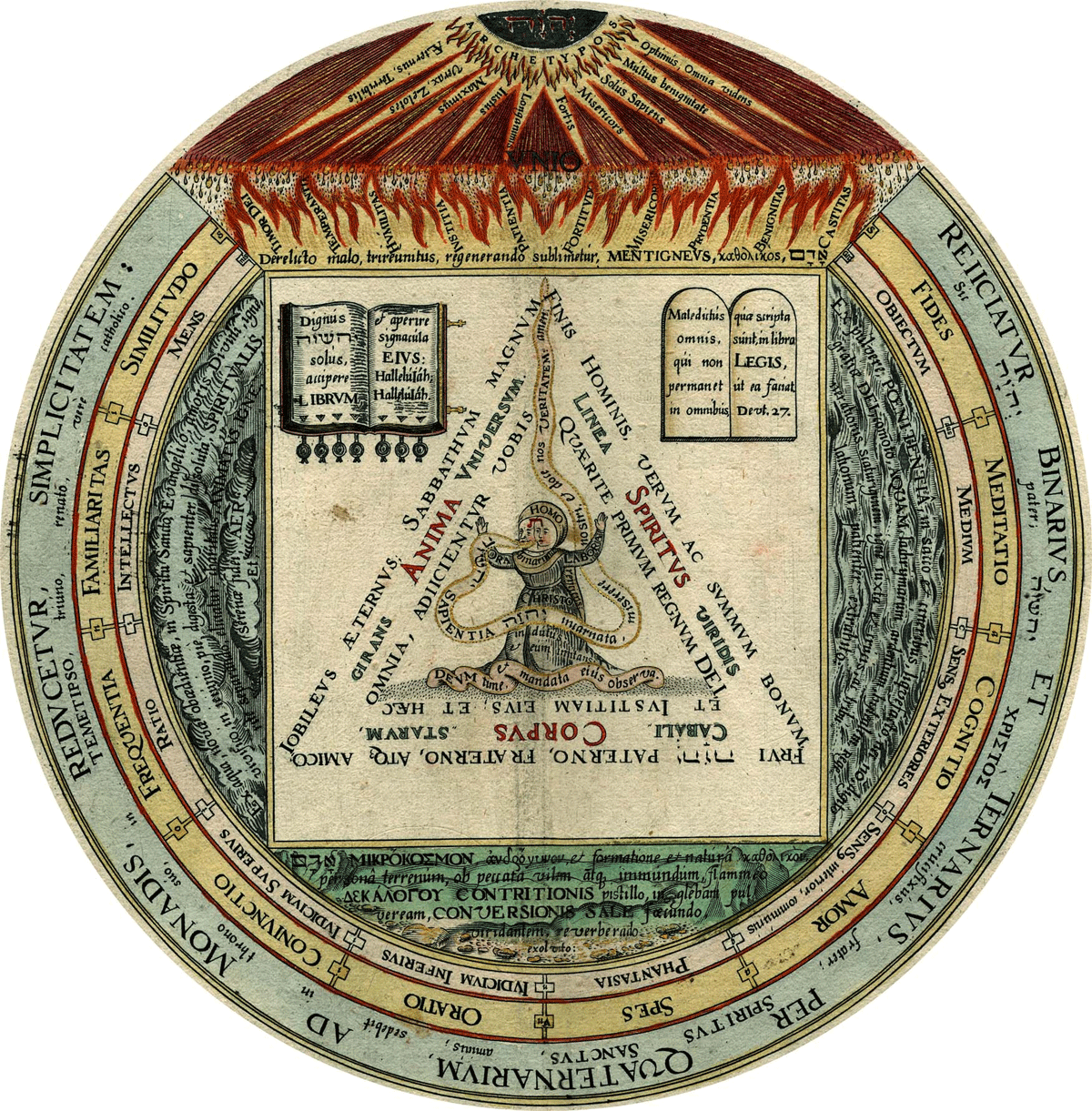
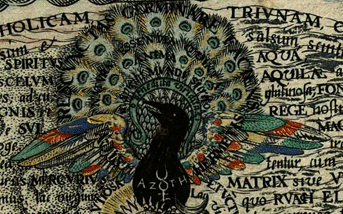
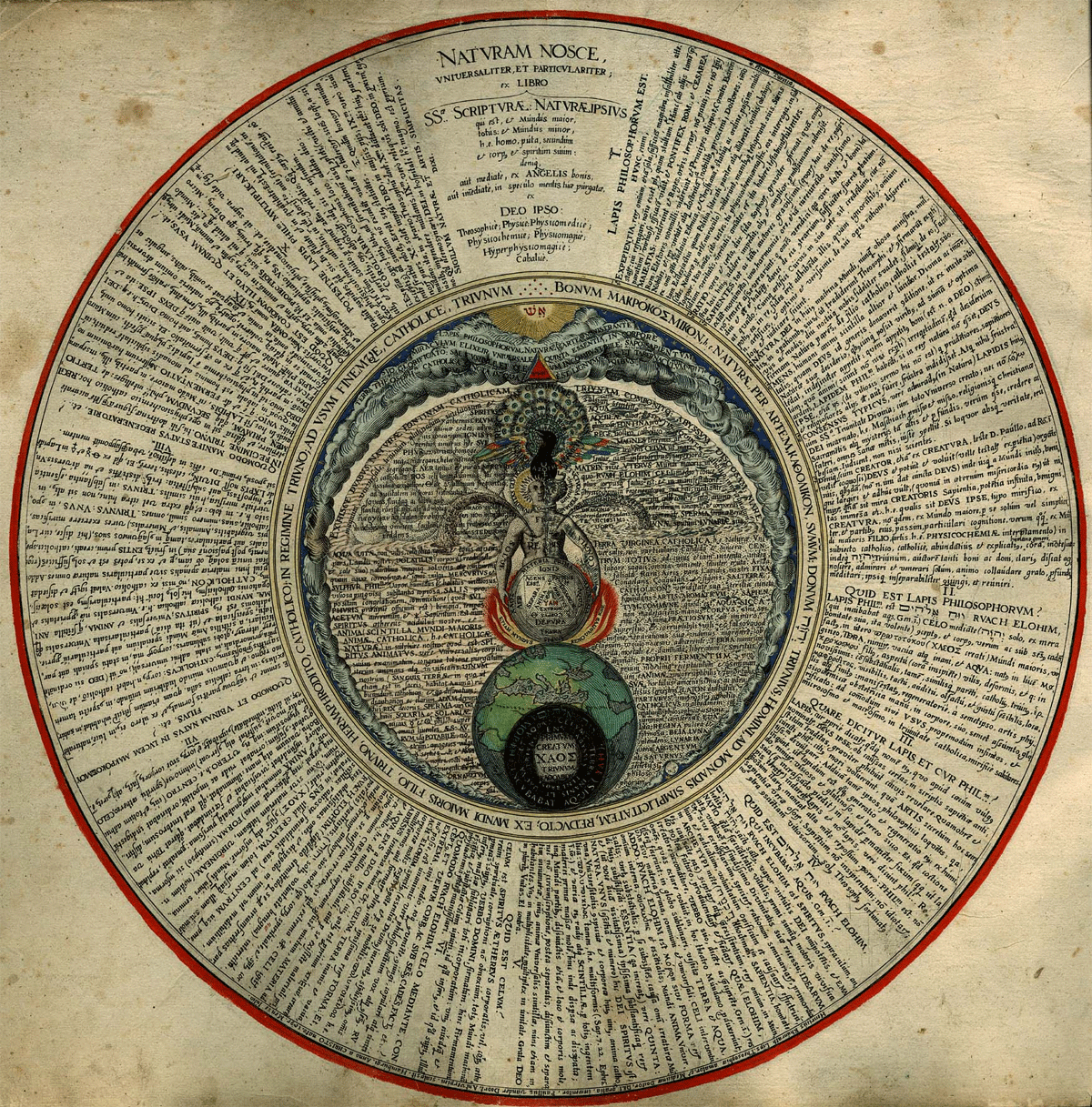
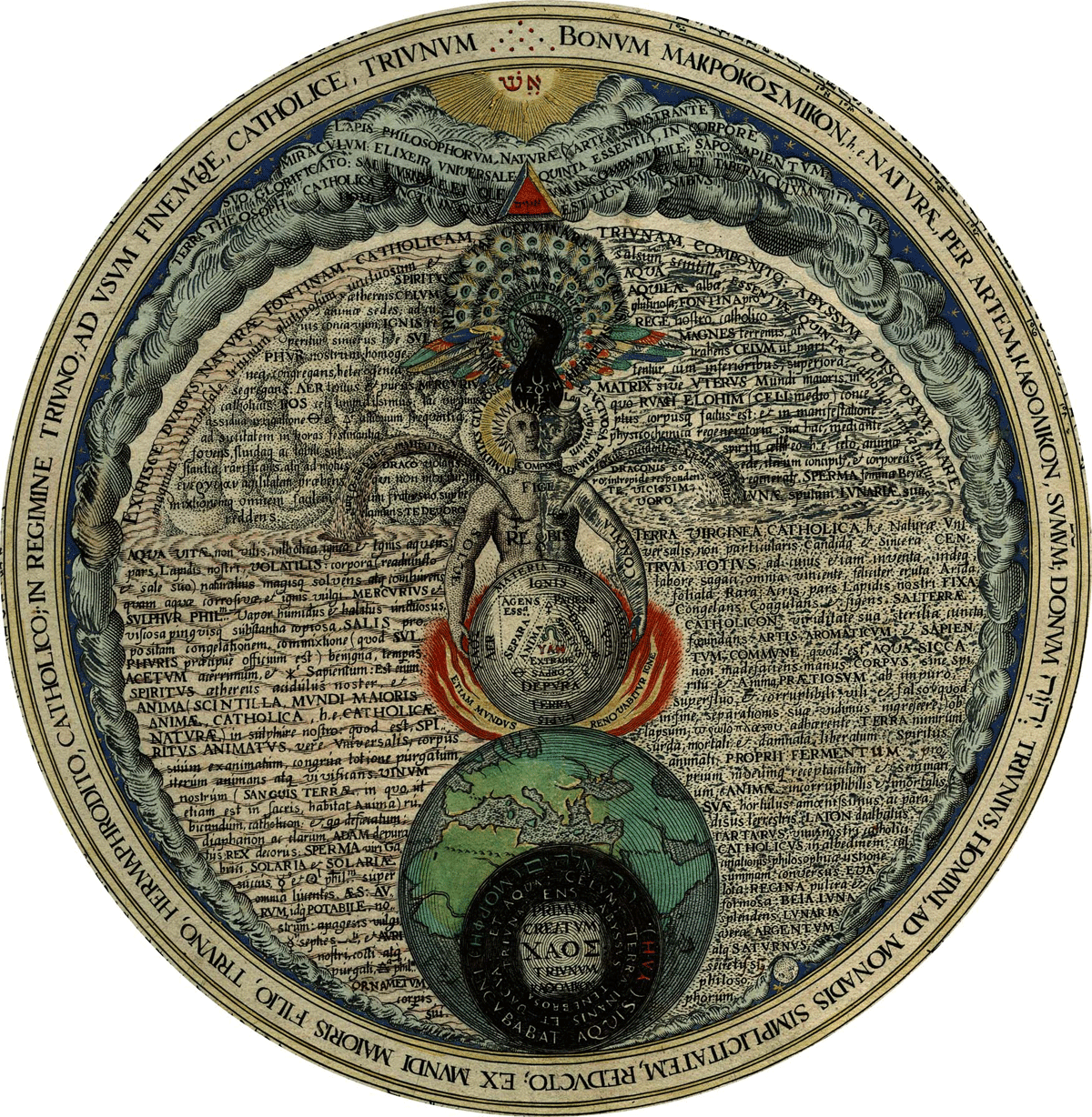
Hermaphrodite Surrounding the circular image of the hermaphrodite is engraved text Naturam nosce, uniuersaliter, et particulariter; ex libro sanctissimae Scripturae: Naturae ipsius, qui est, et Mundus maior, totus: et Mundus minor, hoc est homo, puta, secundum et corpus et spiritum suum: denique, aut mediate, ex angelis bonis, aut immediate, in speculo mentis tuae purgatae, ex Deo Ipso: theosophice; physice; physicomedice; physicochemice; physicomagice; hyperphysicomagice; cabalice. [Google translate: Nature knows universally, and particularly of the Most Holy Scripture from the book: nature of Him who is, The World and greater, all: The World and less, this is a man, for example, and according to their own spirit and the body: in short, or mediately, from the angels of good, or immediately, in a mirror of your mind are cleansed, from God Him: theosophice; physically; physicomedice; physicochemice; physicomagice; hyperphysicomagice; cabalice. I. Lapis Philosophorum est. Hunc, enim, [Google translate: Philosophers stone is. This man, for] 1. Experientia, rerum omnium, etiam sola, sufficiens magistra, infallibiliter attestatur: cui refragari, nonne esset plus quam stultum? Hunc (ab aliis tamen praeparatum) uirtuose efficacem uidit, et Pontifex Romanus, et Caesarea Maiestas: uiderunt et Reges, orbis terrarum, non pauci; nec non Imperii Romani Electores nonnulli: uiderunt et Principes aliquot, Comites, Barones, Nobiles, et, (propter uirtutem atque doctrinam) a nobilibus proximi, Doctores: immo ex omni gente, Iudaica, Ethnica, et Christiana, etiam Turcica, statuque ac ordine, passim, multi; tam Ecclesiastici quam Politici, literati pariter atque illiterati, oculis (obstupescentes Naturae, per artem, miraculo) uiderunt, manibusque tetigerunt, suis. Sciens loquor. Hos omnes cito testes: tu physicochemiaemastix, eos interroga, in subsidium ueritatis, ueritatis amantes, rem ita habere, testabuntur lubentes. [Google translate: The experience, of all things, even alone, a sufficient teacher, he infallibly bears witness: to which frustrates, is it not more than would be a fool? This (however, prepared by others) saw the virtuous effective, and the Roman Pontiff and, Caesarea and Majesty: they saw and the kings, the world, not a few, nor of the Roman Empire, not Electors some: and they saw a number of princes, earls, barons, nobles, and, (for the sake of virtue, and learning) from the nobles of our neighbor, Doctors: nay, from every nation, Jewish, pagan, and Christian, also Turkish, statuque and order in all directions, many, both ecclesiastical and politique, literati, and illiterate as well, his eyes (obstupescentes nature, by art, miracle) they saw by their hands, they touched, their. Knowing I speak. Quickly that all these witnesses: physicochemiaemastix you, ask them, the relief of truth, lovers of truth, to have a point, testabuntur great pleasure.] 2. Ratio, uera et certa, dux fida Sophorum, grauiter confirmat: quam, angustia loci huius addere impedit; alius et amplior, promptissimam, admisit. [Google translate: The reason, true and certain, Sophus loyal to the leader, gravely confirms it: how to add anguish of this place is an obstacle to the other and larger, most ready, she has lost.] 3. Sapientes, tot ac tanti, auctores grauissimi, (quorum, hac de re, passim extant monumenta) uno, harmonice, ore, etiam iureiurando sanctissimo, non temere asseuerarunt: qui omnes ueridici (quia uiri docti et boni) tamdiu et sunt et habentur, donec de eis contrarium, sufficienter, fuerit probatum. At quando? Cumque artifici cuiuis in sua arte sit credendum, cur non potius, ea in re, fides erit adhibenda illis, quam ignorantibus? Omnium enim artifices, et optime et uerissime, de sui operis ratione, disserere, loqui et iudicare sciunt. [Google translate: Wise men, so many and so great, was very much the authors, (of whom, in this regard, extant monuments in all directions) one, harmoniously and with the mouth, even the most holy oath, we can not asseuerarunt: Who will have all ueridici (for the learned and good men) and they are so long and are, them until the contrary is sufficiently, it has been proved. But when? And when the artist in his own art which is to be believed, why not rather, that in reality, to be used will be the faith of them, than who did not know? For all artists, and very well and verily, by reason of his work, discuss, and to judge know.] 4. Natura, Dei in huius machina Mundi, numquam otiosa ministra, multis, in operationibus suis, (ut tradiderunt Theosophi et confirmarunt experti) uiis ac modis, diu noctuque[1] nobis fideliter suadet, fidemque, de eo, facit firmam. Natura parens, de filio catholico, catholice testatur, suo. [Google translate: Nature, of God in the machine of this world, the minister never idle, often, in their operations, (as they delivered them unto THEOSOPHY experienced and confirmed) and the ways ways, day and night [1] urges us faithfully, and faith, of him, the firm makes. The nature of a parent, of the Son of the Catholic, Catholic testifies his or her own. 5. Mens, humani animi scintilla altior et lucidior, diuina ac immortalis, quam Deus id generis donauerit conditione, ut ex insito sibi Naturae suae desiderio, quibuscumque possit uiribus, ad summa et optima tendat, indefinenter appetit: quem appetitus boni (est enim a Deo) stimulum, quam animi (sciunt non nisi experti) irrequietudinem, quod desiderium ardens, Lapidem Philosophorum habendi, si in rerum natura non esset, Deus Ipse, etiam iis, (de uitiosis sermo hic non est) qui prudentiores, sapientiores et religiosiores aliis sunt, aut fuere, frustra indidisset. Atqui nihil frustra! [Google translate: The mind, the mind of the human spark of higher and more lucidly, by divine and immortal, something of that kind which God grant condition that implanted themselves from the nature of his desire, can be any strength to the highest and the best things to tend to, indefinenter desires of Him whom the desire for good (for it is from God) the sting, mind (experienced only they know) irrequietudinem, that burning desire, to be regarded as philosophers stone, if in the nature of things would not be God himself who, for them too, (this is not the word of the vicious), who is wiser, wiser and more godly than others, or having been in vain indidisset. But nothing in vain! 6. Consensus typicus, uere admirandus, (in Natura) Lapidis huius, cum sanctissima Triunitate diuina; cum toto Vniuerso creato; nec non logÙ Dei incarnato, hoc est Maschiach promisso et misso, religionisque Christianae Sacramentis atque mysteriis tam altis et profundis, uerum esse, credere ac fateri, omnes sanae mentis, iuste compellit. Si loquor absque ueritate, erubescam. Iudicent, non nisi scientes. [Google translate: The consent of the symbol, truly admired, (in nature) of this stone, when the Most Holy Triunitate divine accoutrements with the whole created PRANK not of God incarnate, that is Maschiach and promise, sent upon the mysteries of the Sacraments, and so high and the depths of the Christian religion, was only right that, to believe and to confess, all of sound mind, compels us to do justly. If I speak the truth, without, be ashamed. To judge, knowing only. 7. Denique, (cum Creator, etiam ex creatura, teste Diuino Paulo, ad Romanos I. uelit cognosci) Deus et potuit et uoluit (uelle testatur experientia) organis suis, quibusdam, (non enim uni dat cuncta Deus) inde usque a Mundi initio, benigne largiri et adhuc uult, (quoniam in aeternum misericordia eius) ut nimirum, quaenam sit mira Creatoris sapientia, potentia infinita, benignitas immensa etc. hoc est qualis sit Deus Ipse, typo mirifico, ex creatura, non quidem, ex Mundo maiore, per se solum uel simpliciter, et partibus eius, passim, particulari cognitione, uerum quoque, ex Mundi maioris filio, (artis, hoc est physicochemiae interpretamento) in subiecto catholico, catholice, abundantius et explicatius, humano generi, coram, innotescat: indeque yhvh[2] Triunum, auctorem tanti boni ac doni, clarius discat agnoscere, admirari et uenerari solum, animo collaudare grato, profundius meditari, ipsique inseparabiliter coniungi, et reuniri. [Google translate: Finally, (with the Creator, even in the creature, divine as a witness, Paul, I. would wish to be known to the Romans) could be the God and and we wish to (wish to experience testifies) their organs, in some, (for he gives all to one God) on until the world from the beginning, kindly and still wants to bestow on, (his mercy endureth for ever) that of course, what is the wonderful wisdom of the Creator, an infinite power, gentleness, etc. immense. what manner of man this is God himself who, WONDERFUL type, from the creature, not of all, from the greater world, or simply through himself alone, and of its parts, in all directions, the particular knowledge, but also, the major son of the world, (art, that is physicochemiae translation ) in a subject in a Catholic, Catholic, are much more and explained, the human race, before, be made known to this reason yhvh Triunum, the author of so great a gift of good and, clearly, learn to acknowledge, admire and honored with alone, praise with grateful mind, to meditate deeply, and they are inseparably united, and reuniri. II. Quid est Lapis Philosophorum? [Google translate: What is the philosophers stone?] Lapis Philosophrum est ruah elohim Ruach Elohim, (qui incubabat aquis, Gen. 1.) Caelo mediante (yhvh solo, ex mera bonitate sua, ita uolente) conceptus, et corpus, uerum ac sub sensus cadens, factus, in utero protÙtokou (Chaeos creati) Mundi maioris, uirgineo, terra, nimirum, uacua atque inani, et aqua: natus in lucem Macrocosmou filius, aspectu (coram insipiente) uilis, deformis, et quasi in nouissimis: consubstantialis, tamen, similisque parenti, catholicus, triunus, hermaphroditos, uisibilis, tactu, auditu, olfactu, et gustu sensibilis, localis atque finitus: manifestatus, regeneratorie, a semet ipso, artis physicochemicae obstetricia manu, in corpore, suo, semel assumpto, glorificato: ad commodum siue usus, propemodum infinitos, et microcosmo et macrocosmo, in triunitate catholica, mirifice salutares. [Google translate: Ruach Elohim, Elohim, is ruah Philosophrum stone, (who incubabat the waters, Gen.. 1.) Through the medium of Heaven (yhvh alone, out of pure goodness of their own, thus willing) concept, and the body, under the true and the sense of falling, being made, in the womb protÙtokou (Chae created) of greater world, uirgineo, the earth, of course, a deserted and empty, and the water: the son born in the light Macrocosmou in sight (before the foolish man) vile, ugly, and as in the last: one being with, nevertheless, similar parent, a Catholic who has triunus, hermaphrodites, visible, touch, hearing, smell, taste and sensible, and the local finite: manifested regeneratorie, from Himself, art physicochemicae midwife hand, in the body, his, once, taking with them, glorified: for the comfort or the use of, nearly infinite, and a microcosm and macrocosm, in the Catholic triunitate, wonderfully salutary.
III. Quare dicitur Lapis, et cur Philosophorum? [Google translate: It is therefore said stone, and why philosophers?] Lapis, cur proprie dicatur, quodque nomen eius, quo apud caecum uulgus nominatur. Deus Ipse, ob causas certas, in scriptis sapientiae antistitum traditas, grauiter prohibuit cuiuis reuelare. Quamobrem et cuncti philosophi citius mori uoluerunt, quam artis secretum hoc secretissimum diuulgare. Adducam tamen ipsos, philosophice loquentes: quia, inquiunt, ut lapidum est quoque generatio et regeneratio eius: ex humido, nimirum, uiscoso et glutinoso, et terreno[3] sicco. Et: quod coctione sua (quae incrassando procedit) in lapidem permanenter fixum (quique ut lapis teratur) induretur. Lapis et non lapis, uere dicunt philosophi. Responsum clarius, maneat alta mente repostum.[4] Porro: Philosophorum est, non sapientiae uerae osorum: Sapientium, non insipientium; non idiotarum; non contra conscientiam uitiosorum. Solus Theosophus fortunatus. [Google translate: The stone, why is properly called, and that his name, which in a blind man named mob. God himself who, due to causes of sure, given in the writings of bishops of wisdom, whose gravely forbade to reveal. For this reason, philosophers and all wanted to die more quickly, than this secret of the secret art diuulgare. However, I will bring them, philosophically speaking, because, they say, such as stones is also his generation and regeneration: from the moisture, of course, uiscoso and glutinous, and of earthy out. And, that his coctione (which proceeds incrassando) permanently fixed on the stone of (as stone and who other) harden them. The stone and not a stone, truly say of the philosopher. The answer is more clear, the mind remains high FAR. Moreover, philosophers, not those that hate, true wisdom: the wise, not foolish, not an uninitiated person, not against his conscience vicious. The only fortunate THEOSOPHY.] IV. Quid est ruah elohim Ruach Elohim, qui incubabat aquis, Gen. 1.? [Google translate: What is Elohim ruah Ruach Elohim, who incubabat the waters, Gen.. 1.? ruah elohim Ruach Elohim est spiritus, spiraculum, anhelitus yhvh sancti sanctus, uapor uirtutis Dei omnipotentis, et emanatio quaedam fecunditatis uitalis, primi summique motoris uiuifica atque uirtuosa, e profundissimo Diuinitatis suae recessu; idearum, uidelicet, siue exemplarium, specierum, rationum seminariarum, primordialium et radicalium, uoluntatum opificum et causarum effectricum, in archetypi mente (hokhmah Hhochmah[5] in sapientia, bonitate eius causante eas) conceptarum atque praeexistentium, rerum omnium, in Mundo postea futuro, producendarum et fiendarum. Quae (Elohim, creatore ac conditore, uerbo suo, dicente ac praecipiente. Gen. 1.) res omnes, quas extare uoluit, in hoc theatro Mundano, produxerunt, esseque fecerunt: in globo sublunari, uestitae terra et aqua, hylÍ siue materia prima, communi et uniuersali, Caeli interuentu. Addo: Ruach Elohim est morphÍ siue forma rerum omnium interna, ousiÙdÍs et essentialis; Mundi anima uniuersalis: uirtus substantialis, per se subsistens, causa omni creaturae Mundi huius subsistendi: essentia (quia increatus) uere quinta: et (ut uoce dicam usitatissima) ipsissima substantificaque rerum Natura. Vnus (essentia et numero) hic Dei spiritus est; una, uniuersitatis conspicuae et corporeae huius unius, anima catholica: polupoikilos tamen, hoc est multiformis (Sap. 7.22. Ephes. 3.10.) et uariae eius radii atque scintillae, per totius ingentem materiei primae massae molem, hinc inde dispersae ac dissipatae; inque Mundi partibus, disiunctis etiam, et loco et corporis mole, nec non circumscriptione, postea separatis, disiunctim et separatim, innumerae, unius animae uniuersalis scintillae, nunc etiam inhabitantes. Vnus in multiplicitate: multiplex in unitate. Grata Deo in pluribus unitas. Et contra. [Google translate: ruah Ruach Elohim, Elohim, is the Spirit, the breath, breath yhvh holy of holies, uapor virtue of Almighty God, and fruitfulness of life a kind of emanation, the first mover summique uiuifica, and virtuous, from the deepest recesses of His divinity; ideas, namely, whether of copies, and species, accounts of the seminary, primordial and radical, which creates wills and causes of workers, the archetype in the mind (hokhmah Hhochmah in wisdom, in His goodness causing them), and pre-existing conceived, of all things, afterwards in the world of the future, and the production would be accomplished. Which (Elohim, the Creator and the Creator, his word, and the order says. Gen. 1.) All things, which there willed it, the theater in this worldly, brought forth, esseque that they had done in the sphere sublunari, earth and water, clothing, or prime matter hylÍ, and the common and universal, the intervention of heaven. Addo: morphÍ Ruach Elohim, or is the form of all things internal, and essential ousiÙdÍs; the universal soul of the world: the substantial virtue, self-subsisting, the cause of subsistence to every creature of this world: the essence (for the uncreated) truly the fifth: and (as common voice shall I say) very substantificaque nature of things. One (and number of the essence) of God's Spirit is here, one, this one man's uniuersitatis visible and material, the soul of the Catholic: polupoikilos, however, that is the manifold (Wis 7.22. Eph. 3.10.) And various were his rays, and sparks, the whole matter a great a cake of the first mass, scattered and broken off, here and there; and in parts of the world, also separated, and in place of the body and in bulk, not the boundaries of separate afterwards, separately and individually, innumerable, universal sparks of one soul, even now the inhabitants. One in the complexity of the: manifold in the unit. Grateful to God in the unity of the majority of cases. And the other side.] V. Quid est Caelum? [Google translate: What is heaven?] Caelum est spiritus aethereus corporalis, uel corpus aethereum spirituale, corruptioni non obnoxium, totius Mundi machinam permeans: superius, uerbo Domini, firmatum, hinc Firmamentum; inferius, massae sublunari toti incorporatum: unius eiusdemque et essentiae et substantiae Caelum unum, id quod inferius, et id quod superius. Illud physicochemia potest manifestari. [Google translate: ETHEREAL heaven is the spirit of the body, the body of ethereal or spiritual, is not subject to corruption, permeans the engine of the whole world: above, the word of the Lord, so fixed, hence the firmament; below, a cake of the whole incorporated sublunari: heaven and substance and essence one and the same one, that which is below, and that which above. Physicochemia that can be manifested.
VI. Quomodo Ruach Elohim, Caelo mediante, conceptus, et uerum corpus, ac sub sensus cadens, factus etc.? [Google translate: How Ruach Elohim, through the medium of Heaven, the concept, the body and true, and under the sense of falling, etc. was made?] Extrema, sine medio, eoque conueniente, coniungi, copulari atque uniri non posse, est unanimis uere philosophantium uox atque consensus. Ruach Elohim, spiritus, (essentia diuinus) increatus, simplicissimus, omnis corporeae molis expers, sponte et per se mobilis, polupoikilos hoc est multiformis, aut formarum plenus, immo ipsissima rerum Forma: Et, Abyssus tenebrosa, triuna, uidelicet, Caelum, terra inanis et uacua, et aqua, Ens a Deo Ipso (cuius solius est proprium ktizein, creare) -- ex nihilo, hoc est de nullo substantiali, aut per se existente materiali principio, primum creatum, corporeum, confuse mixtum, materia ad motum, per se, inefficax: re uera, si quid, extrema sunt. Caeli igitur, medii, extremorum amborum suo modo (quia corpus spirituale, et spiritus corporalis) participis, (yhvh solius uoluntate benigna) interiectu. Ruach Elohim (descendendo demittendoque se per circumferentias partesque abditissimas omnes, et dispergendo in imum uel meditullium, scintillas radiosue fecunditatis suae) ad centrum usque penetrabat, in ens illud creatum, totum: massamque illam seu molem ingentem, rudem, (chaos) confusam atque informem, Mundi futuri seminarium, hylÍn siue materiam lutosam, uirgineam, (nondum enim neque conceperat, neque produxerat antea) forma (semet ipso) sic informauit, et anima animabat impraegnabatque purissima: permeabat, replebat, calorem infundebat, uiuificabat et fecundabat, quod erat Tohu ua Bohu, uacuum atque inane: illuminabat, quod erat tenebrosum; distinguebat, confusum; ornabat, rude ac impolitum; ordinabat indigestum et incompositum: inque eius utero, hoc est centro (cuius et totum adhuc hodie mouet, sustentat atque conseruat) intimoue (spiritu aethereo, Caelo uidelicet, ut dictum, intermediante) concipiebatur, et corpus siue corporeus factus, atque concretus est. [Google translate: The last point, without an intermediary, and so a suitable, united, joined, and can not be united, is truly of one mind with a philosophical voice, and consent was given. Ruach Elohim, the spirit (divine essence) uncreated, the most simple, devoid of all corporeal mass of their own accord and of itself the thing moved, that is polupoikilos of the manifold, or full of forms, and even very form of things: And, deep dark, triuna, namely, heaven, the earth empty and deserted, and the water, being from God Him (who solely own ktizein to create) - out of nothing, that is because of no substantial, or existing material per se the beginning, the first creature, corporeal, mixed confusedly, to the movement of the matter, per se, ineffective: true thing, if anything, the last are the. Of heaven, then, middle, of the extremes of both in their own way (for a spiritual body, the body and the spirit of) participant, (yhvh alone will kindly) interval. Ruach Elohim (descending parts of the circumference of abditissimas demittendoque itself through all, and scatter in the bottom or meditullium, sparks radiosue fruitfulness of his own) to the center until penetrabat, in being created it, the whole: it massamque or mass of huge and rude, (chaos), and the formless confused, world to come, the seminary, or hylÍn muddy matter, uirgineam, (For as yet he had conceived nor, nor prolonged before) the form of (himself), so informauit, and the soul pure animabat impraegnabatque: permeabat, filled, heat poured out, and uiuificabat fecundabat, which was Tohu ua Bohu, vain and empty: illuminated, which was full of darkness; discriminating, confused; distinction, crude, and rudely; undigested and unadorned ordained: and in her womb, that is the center (and the whole of which moves To this day, sustains, and preserves) intimoue (spirit ethereal, namely heaven, as stated above, intermediante) conceived, and the body or had become corporeal, and is concrete. VII. Quomodo et ubinam natus in lucem macrocosmou filius, etc.? [Google translate: How and where was born the son of macrocosmou into the light, etc.? E semine et sanguine parentis formatus, et ex utero eius, in lucem, naturaliter exclusus: in terra catholica sancta, quam etiamnum feliciter inhabitat, in Saturnio regno: et quamuis mundo ludibrium immundo, in conspectu tamen sapientis pretiosissimus. Catholicus: corpus enim habet catholicon, de hylÍ, puta, primordiali, in statu adhuc uniuersali; non ut (Deo sic ordinante) rerum ceterarum, globi sublunaris, corporum materia, in statu speciali aut particulari, a scintillis Animae Mundi specialium aut particularum propietatum, specificata et (ut ita dicam) particularisata. Vniuersalis quoque conditionis est eius spiritus; uniuersalis et anima, quae scintilla animae mundi catholicae catholica, hoc est uniuersalis naturae proprietatis et operationis. Catholicismus hic solus locum habet: particularimus est soloecismus. Catholicon, non nisi ex catholico. Valeant igitur et discendant procul hinc materiae specialis siue particularis naturae omnes. Addo: Hanc unicam solamque ob causam, per et ex se, potens et solus sufficiens (regeneratus post passionem suam) in fructus entis primi, creati, catholici, speciales aut particulares, tamquam in consanguineos suos, (hinc disce, cur Lapis uegetabilis, animalis, et mineralis.) uires exercere mirificas, catholice, suas, numero simul, omnes. Triunus: Vnus, in composito hoc est in toto: et, quod extra uel citra hunc, non sit alius, in uirtute mirifica, huic similis. Triunus: in substantia, essentia et hypostasi aut subsistentia: tribus distinctis et natura diuersis. Vnde Lapis noster diuinus, caelestis, terrenus. Et, quod ex sale, mercurio et sulphure in Lapidem sit compositus triunum. De ceteris in definitione, uerba praesupponunt mentem. [Google translate: E formed the seed parent, and from blood, and from her womb, for a light, naturally, excluded: in the land of the holy Catholic, which still dwells happily, Saturnia in the kingdom: and though the world mockery of the unclean, in the sight of the wise man, however, pretiosissimus. Catholic: the body, because he has Catholicon, the hylÍ of, for example, primordial, universal in the state still not that (God, so issues) of other things, sublunaris globe, bodies matter, in the state of special or particular, sparks from the soul of the world, or of special particles propietatum, specified and (so to speak) particularisata. Universal condition is also his spirit, and the universal soul, which the Catholic spark of the soul of the Catholic world, that is the universal nature of property and of operation. This is the only place Catholicismus has particular solecism. Catholicon, only by the Catholic. Away, then, and all of a particular nature or a special matter discendant far from here. Addo: solamque for this single cause, by and of itself, sufficient and only able to (after his passion has been regenerated) in the primary kind of being the fruit of, created, Catholics, special, or particular, as it were in his blood relatives, (hence learn, why uegetabilis stone, animal, and mineral.) exercise a wondrous strength, Catholic, their number at the same time, all. Triunus: One, that is, in the whole in the composite, and which was without this or on this side, there is no other, in the power with a wonderful, like this. Triunus: in substance, essence and hypostasis or subsistence: the nature of the three are distinct and different. The stone is why our divine, heavenly, is earthly. And, which is from the salt, Mercury and brimstone in the stone is composed triunum. In the definition of as concerning other words, how presuppose mind.
VIII. Quomodo manifestatus regeneratorie, etc.? [Google translate: How regeneratorie manifested, etc.?] In regimine triuno. Tu, fili doctrinae, figuram praesentem accurate contemplare, et quodnam sit in opere physicochemico catholico hoc, regimen primum, quodque secundum, philosophice intelleges: de tertio audi. In hoc fit lapidis, cum Mundo maiore, in partibus illius, inseparabilis unio: quae est et dicitur fermentatio. Mysterium harmonicum nota: Quod in cabala est hominis ad monadis simplicitatem reducti, cum Deo unio; id in physicochemia est lapidis plus quam perfecti, cum Macrocosmo, in partibus eius, et quae ex eo sunt, fermentatio. Et, sicuti homo unitus Deo, ratione Dei fit qua Deus humanus aut homo diuinus hoc est qua deificatur; quare et potest quae uult; uult autem quae Deus Ipse: ita et Lapis Philosophorum Mundo maiore, in partibus illius, fermentatus, ratione fermenti transformat se in quodcumque uoluerit, operaturque pro naturis omnium diuersis diuersimode omnia, in omnia, et coaequat se omnibus, cunctis, singulis ac uniuersis. Nonne omnia nomen eius? [Google translate: In the government of triuno. Thou, O son of doctrine, the figure carefully contemplate the present, and what is in the work of the Catholic physicochemico this, the governance of the first, and that the second, philosophically understand: hear from the third. This is done in stone, with the greater world, in the parts of that, inseparable union: which is the fermentatio and it is said. The mystery of the harmonious note: That in the cabala is the simplicity of the monad to the man to retreat, the union with God, that in more than a stone's physicochemia perfect, with the macrocosm, in the parts thereof, and which are from the fact, fermentatio. And, as a man united to God, which God becomes the human aspect of God or in man, which deify that is divine, and therefore can right what he wishes and; He will, however, which is God himself, so do the world a major philosophers stone, in the parts of that, fermentation, leaven transforms himself by reason of in whatever he wishes, of all the different natures diuersimode operaturque for all things, in all things, and up to a standard oneself to all men, all, to every one and all. Are they not all his name? IX. Quod est commodum illud, et quinam usus, etc.? [Google translate: What is the advantage of it, and who uses, etc.?] Operatur secundum corpus, spiritum et animam, in corpus spiritum et animam, Mundi utriusque catholice omnia. Et hoc, proiectionis usu; quae nil aliud, quam Lapidis, Mundo utrique, artificialis applicatio. Vsus eius quoque triunus, quia diuinus, Micro et Macrocosmicus: physice, physicomedice, etc. ut supra. Vide figuram quartam. [Google translate: He works, according to the body, spirit and soul, into the body of the spirit and the soul, both of the world all things Catholic. And this, the use of the projection, which are nothing else than stone, the world of both parties, the application of the work of art. Whately, he also triunus, because divine, and Micro Macrocosmicus: physically, physicomedice, etc.. as above. See the figure of the fourth.] X. Potestne Lapis Philosophorum multiplicari? [Google translate: Can He not be multiplied philosophers stone?] Tradunt sapientes, quod sic. In qualitate et in quantitate: Estque nil quam operis physicochemici, catholici, cum Lapide glorificato ante fermentationem, in Azoth iterum soluto, per regimen secundum, reiteratio; Quoque saepius reiteratur, eo citius et perfectius, opus absoluitur: idque sic in infinitum. [Google translate: Wise men say, that it is. In quality and in quantity: there is nothing of the work than physicochemici, Catholics, glorified with the stone before the fermentation, again in the dissolution of the Azoth, by the government of the second, reiteratio; Also often repeated, the more quickly and more perfectly, the work of absoluitur: and so on to infinity.] Corollaria, Colophonis loco addita, duo: [Google translate: Corollaries, Colophon place were added, and two things:] 1. Expensae operis huius totius, ad fermentationem usque completi (uictu et amictu exceptis) ad summum non excedunt ualorem 30 talerorum: sciens loquor, a sciente fraterne edoctus. Erant secus statuentes. [Google translate: The expenses of the work of the whole, to the fermentation completely fulfilled (with the exception of food and clothing) to the highest do not exceed 30 ualorem talerorum, knowing that I speak, having been taught by the knower fraternal. There were otherwise, when they had set.
2. Quemadmodum bonorum mundanorum pars decima solet impendi Deo, in causis piis; nouem uero usui mundano: ita, in contrario, Theosophum decet, decimam dumtaxat Lapidis huius partem, usibus impendere munandis, nouem uero reliquas soli Deo, in proximo, egeno. Quod eleemosynarii Dei, in hospitali hoc magno, est proprium. Sigillum naturae et artis, simplicitas. [Google translate: As part of the tenth of worldly goods is usually expended to God, in cases pious; nine worldly use, but I will now, in the opposite, THEOSOPHY fitting, only the tenth part of this stone, to expend munandis uses, and nine, however, the rest to God alone, in the next, the needy. That eleemosynarii of God, in this great hospital, is a property. Seal of nature and art, the simplicity.] Dixi. [Google translate: I said.] Henricus Khunrath Lips. Theosophiae amator, et Medicinae Doctor, Dei gratia, inuentor, Paullus uander Doort [Paulus vander Doort], Antverpien, scalpsit, Hamburgi, Anno a Christo nato 1595. Mense Iulio. [Google translate: Henry Khunrath Boston. Theosophiae a lover, Doctor and medicine, the grace of God, the inventor, Paullus uander Door [Paul Vander Door], Antverpien, scalpsit, Hamburg, in the year 1595 from the birth of Christ. In July.] _______________ Notes [1] Cf. Tac. Ann. 15.12. [2] Tetragammon. [3] Editions of 1595 and 1653: terreo. [4] Cf. Verg. Aen. 1.26.
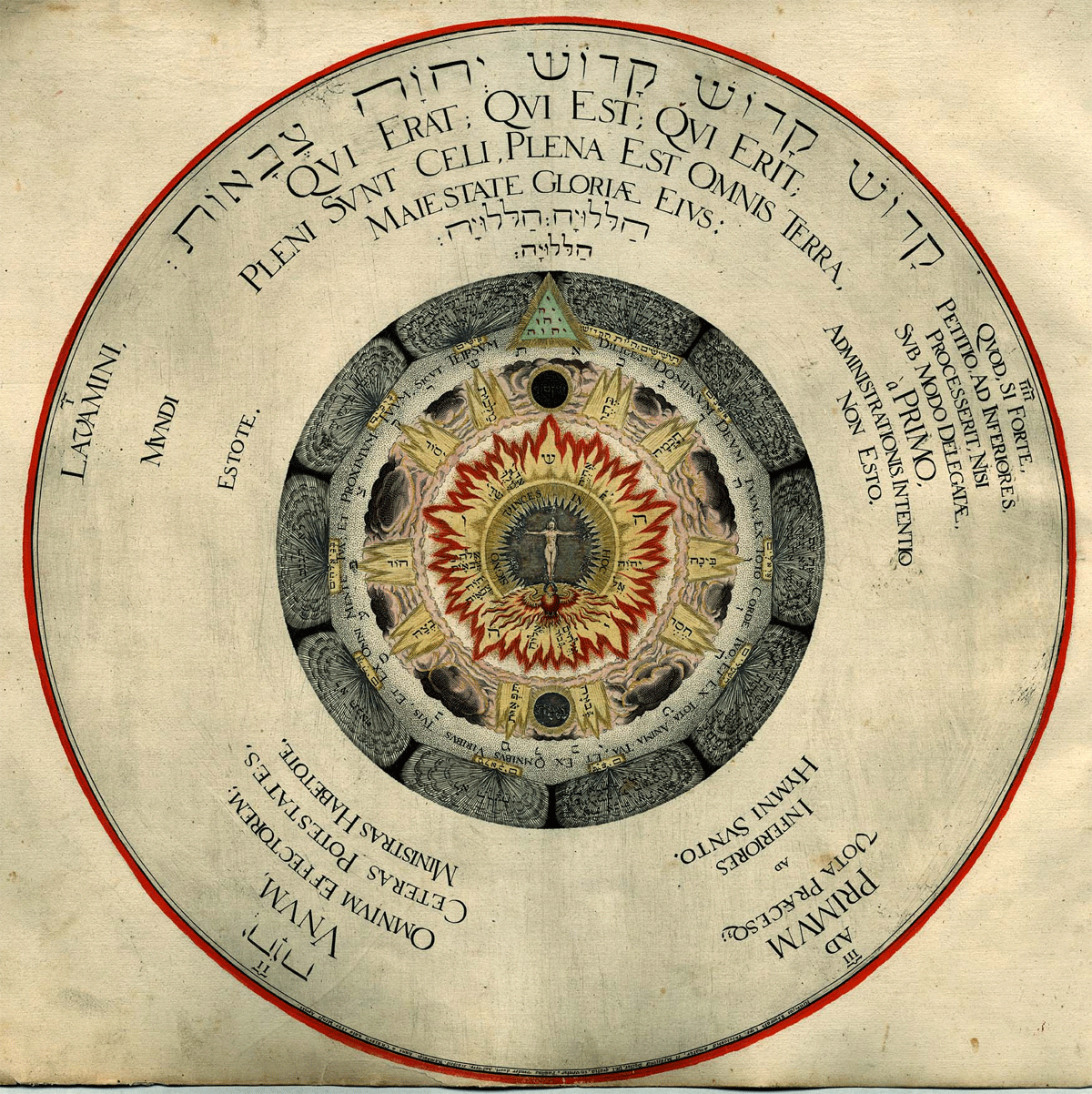
The four, the three, the two, the one Surrounding the circular image of the the Four, the Three, the Two, the One is engraved text. Decebit nos, igitur, prius pie lotos atque paenitentialiter purgatos, offerre, supplicesque, fide sincera, commendare deificae luci, et tunc, illam sapientiae aeternae, desuper rorantem mannam, supercaelestisque nectaream, et aquae et ignis, pluuiam, sicut stillicidia stillantia super terram, in corda, animas, uires mentesque nostras, hoc est in corpus, spiritum et animam, siue ternarium Microcosmicon renatum, descendentem, praeclusis sensibus seditiosis, mente quieta affectuque omni puro, fixe durantibus, tam immediate quam mediate, iuxta et dormientes ac uigilantes, patienter expectare; et sic, diuinitus, accendi; illustrari; illuminari; sanctificari; yhvh[1] frui; diuina pati; immo, in Deum, ineffabiliter, rapi; et quasi deificari. Laudantes interdum et adorantes (in soliloquiis, praesertim, iisque quotidianis, ut plurimum, matutinis) id pelagus misericordiae immensum, oceanuumque bonitatis omnis infinitum; ex quo, non tantum uerbi mirifici yehoshua Christou crucifixi, et sacrorum yhvh nominum atque uerborum omnium (quae, quoad nos, mansiones sunt sensibiles Diuinitatis, nec non memoracula nos docentia: stimulantia quoque, adiuuantia et eleuantia appetitum animae, mentisque, in nobis, operationem admirandam, in nosmet ipsos et extra nos, uirtuose promouentia) numen designantium et simul exhibentium; uerum etiam mirabilium omnium (facit enim yhvh mirabilia solus) ad nos usque deriuantur radii, destillant fluenta, et diuinissimi emanant riui. O felix terque quaterque felix, in admirationem, meditationem, amorem et perceptionem horum, qui rapitur. Numen, sic, summum, realiter praesens sentiemus; yhvh mirabilem, et in nobis, et in natura, et in scriptura, mirifice loquentem, ueridice audiemus, sufficienter uidebimus, fructuose obseruabimus; angelos bonos, nobis amice assistentes, nos fideliter monentes. yhvh iussu benigno familiariter docentes, atque in uiis nostris tuto ducentes, sine fallacia experiemur. Humi, igitur, procidentibus nobis, hic hymnus, aliique huic non ab similes, Ionico modulamine et accentu, sacris animi concitandi causa, debito, proferendus est: [Google translate: Decebit us, therefore, before, and having washed them with godly paenitentialiter cleared, to offer, as suppliants, sincere faith, to commend the deifying light, and at that time, that of eternal wisdom, the dripping manna from above, supercaelestisque nectar, and water and fire, rain, a drop stillantia upon the earth, in the hearts, souls, and minds of our strength, that is into the body, the spirit and the soul, or three Microcosmicon born again, coming down, shut seditious senses, all with a pure mind and feeling quiet, fixedly during its course, both immediately and mediately, in accordance with, and watching and sleeping, patiently to wait on and so, divinely, lighted; illustrated; enlightened, sanctified; yhvh to enjoy; to suffer divine things, for one, against God, ineffably, steal, and as it were, deified. Sometimes in praise and those who worship (in the soliloquies, especially, and those daily, for the most part, rising in the morning) that the main mercy immense, oceanuumque all infinite goodness, from which, not only of the word wonderfully yehoshua Christou crucified, and the sacred words, and names of all yhvh (which, as long as us, are sensible mansions of divinity, nor the teacher does not memoracula us: the instigation of, too, and help eleuantia appetite of the soul, the mind, in us, admire the operation, in ourselves and outside of us, virtuous promouentia) designating and divinity are presenting at the same time, but also of all wonders (yhvh wonderful things for it makes us the only) to us in the deriuantur rays, destillant streams, and streams of the divine they emanate. O happy thrice and four times happy, in admiration, meditation, love and perception of these, who is carried away. Deity, thus, the summit, the feel is really present; yhvh wonderful, and in us, and in nature and in writing, speaking wonderfully, we will hear ueridice sufficiently we shall see, have benefited from obseruabimus; the good angels, to us, Friend, assistants, who warns us faithfully. yhvh by order of a familiar kind, teaching, and leading safety in our streets, without the deceitfulness of experience. On the ground, therefore, they fell to us, the same hymn, not from this and other similar, Ionic accent and music, to inspire the mind the sacred cause, due to utter is:] Rei omnis generatorque opifexque, [Google translate: Generatorque opifexque all be
guilty of, [Google translate: The religion of famous human being, [Google translate: You, You, You, V. Angelloi, a nobis, ad yhvh et inde, ad nos, uolitantes, Reuerentia Tremorque sunto. [Google translate: Angelloi, by us, to the yhvh and thence, to us, uolitantes, shall be held Tremorque reverence.] VI. Erga illos, secundum notam probationem, iucunda oboedientia, esto. [Google translate: Toward them, according to the brand experience, and take delight in obedience, let him be.] VII. Sacra, quorum mysteria, sic tractaturi, uenitis; palam dignis, clam prophanis, sunto. [Google translate: Sacred, the mysteries of which, so to treat, Come; worthy openly, secretly profane things, shall be held.] Te ipsum nosce, ex libro Sanctissimae Scripturae; Naturae totius Vniuersi, qui est, et Macrocosmos totus, et Microcosmos, siue tu ipse, secundum et corpus, et spiritum tuum; denique et mentis tuae, Deo coniunctae; theosophice; physice; physicomedice; physicochemice; physicomagice; hyperphysicomagice; cabalice. [Google translate: Know thyself, from the book of the Holy Scripture, and the nature of the whole al men, who is, and the whole macrocosm and microcosm, or you yourself, the second and the body, and thy spirit, and finally, and of thy mind, united to God; theosophice; physically; physicomedice; physicochemice; physicomagice; hyperphysicomagice; cabalice.] yhvh nosce, ex Sanctissima Scriptura; creatura; etiam ex Se Ipso; et quidem, luce sua, in mente tua, immediate oborta; theosophice; naturaliter; cabalice. [Google translate: yhvh knows from the Most Holy Scripture a creature, and is also from Himself: and truly, with their light, in your mind, immediately arose; theosophice; naturally; cabalice.] Henricus Khunrath Lips. Theosophiae amator et Medicinae Doctor, Dei gratia, inuentor. Paulus vander Doort. Antverp. scalpsit, Hamburgi, anno a Christo nato, 1595. Mense Maio. [Google translate: Henry Khunrath Boston. Theosophiae a lover of Doctor and medicine, the grace of God, the inventor. Paul Vander Door. Antwerp. scalpsit, Hamburg, in the year by Christ-born, 1595. The month of May.] _______________ Note 1. Tetragammon.
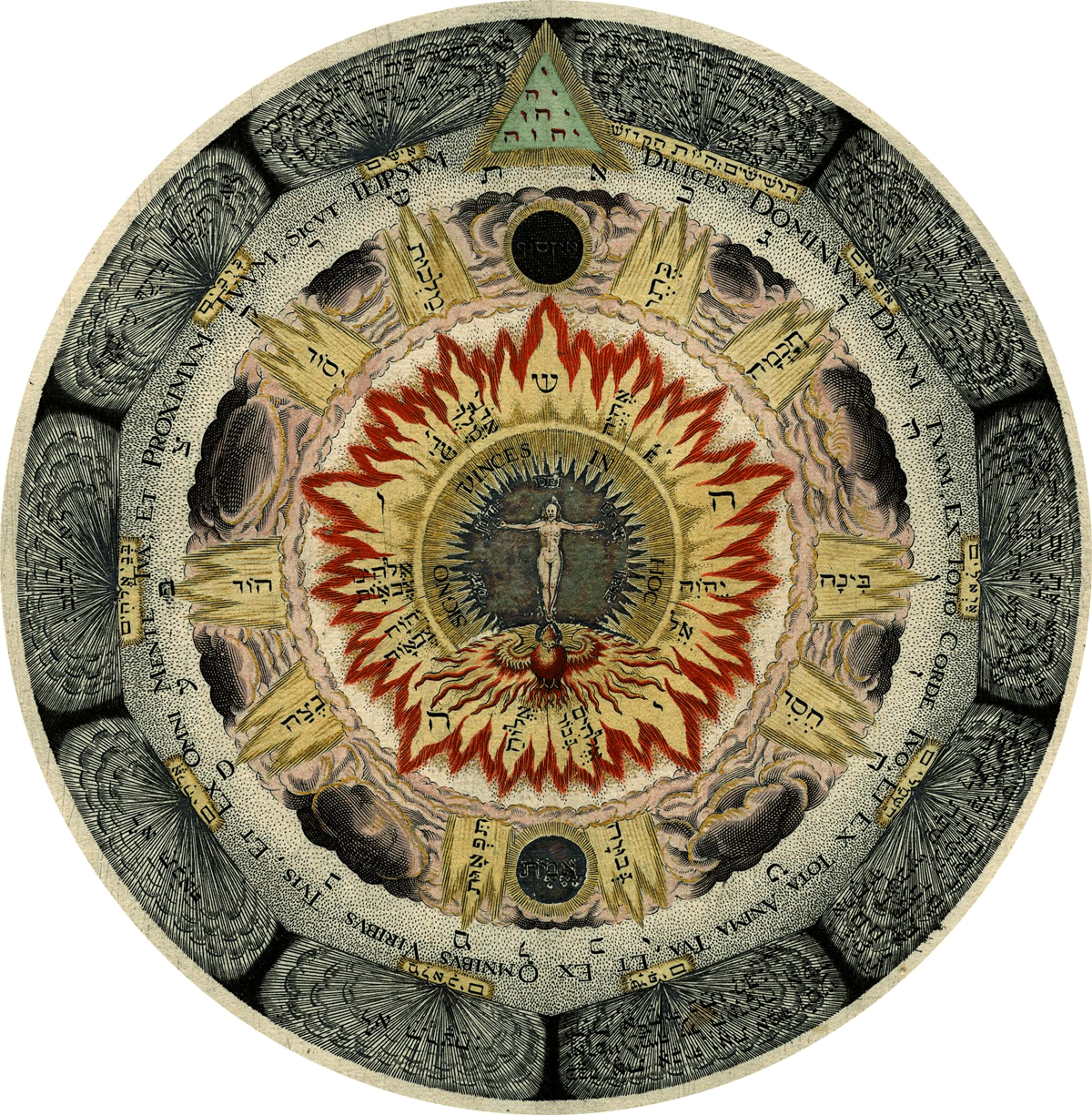
Cosmic Rose Surrounding the circular image of the cosmic rose is engraved text. kadosh kadosh kadosh adonai yhvh
[1] ts’va-ot [Google translate: Adonai, kadosh kadosh kadosh
yhvh ts'va-OT
I. Lauamini, mundi estote. [Google translate: Have their, be clean.] II. yhvh unum, omnium effectorem; ceteras potestates, ministras habetote. [Google translate: yhvh one, effective of all the other powers, have the ministers.] III. Ad primum uota precesque ad inferiores hymni sunto. [Google translate: Shall be held to the first vows, prayers and hymns to the lower.] IV. Quod, si forte, petitio ad inferiores, processerit, nisi sub modo delegatae, a primo, administrationis, intentio non esto. [Google translate: That, if perchance, the petition to the lower, should proceed only under a delegated, from the first, administration, the intention be not.] Henricus Khunrath Lips. Theosophiae amator, et Mediciniae Doctor, Dei gratia, inuentor. Paullus vonder doort [Paulus vander Doort], Antverp. scalpsit Hamburgi. Anno a Christo nato 1595. Mense April. [Google translate: Henry Khunrath Boston. Theosophiae
a lover, and Mediciniae Doctor, the grace of God, the inventor. Paullus
vonder Door [Paul Vander Door], Antwerp. scalpsit Hamburg. In the year
1595 from the birth of Christ. In the month of April.] [1] Tetragammon.
|
 |
|
 |
|
 (triangle, first
line, cube, second line, and a pentacle with a dot in the
centre thus:
(triangle, first
line, cube, second line, and a pentacle with a dot in the
centre thus:  (Alhim or Elohim)
are numerically read, the famous numerals 13514, or by
anagram 31415 — the astronomical [[pi]] (pi) number, or the
hidden meaning of Dhyani-Buddhas, of the Gebers, the Geborim,
the Kabeiri, and the Elohim, all signifying “great men,”
“Titans,” “Heavenly Men,” and, on earth, “the giants.”
(Alhim or Elohim)
are numerically read, the famous numerals 13514, or by
anagram 31415 — the astronomical [[pi]] (pi) number, or the
hidden meaning of Dhyani-Buddhas, of the Gebers, the Geborim,
the Kabeiri, and the Elohim, all signifying “great men,”
“Titans,” “Heavenly Men,” and, on earth, “the giants.”