|
CHRISTMAS unWRAPPED: THE HISTORY OF CHRISTMAS |
|
|
Produced and
written by Alison Guss [Transcribed from the movie by Tara Carreon, ABOL Librarian]
Table of Contents:
[Narrator] The Christmas Tree at Rockefeller Center. It's hard to imagine a Christmas in New York without it, but like many Christmas traditions, the tree is a relative newcomer to the Christmas story. Only since the early 19th century has the decorated tree been an important part of the American Christmas celebration. Hello. I'm Harry Smith. Welcome to the History Channel. Christmas Trees, candy canes, even Santa Claus seem like they've been around forever, but many of these Christmas traditions are surprisingly recent. Join us as we look back at how a holiday that started in pagan Rome became the centerpiece of the Christian year, and why this season is known as much for shopping as the birth of the Christ-child. Stay with us for Christmas unWrapped. THE HISTORY OF CHRISTMAS December 25th
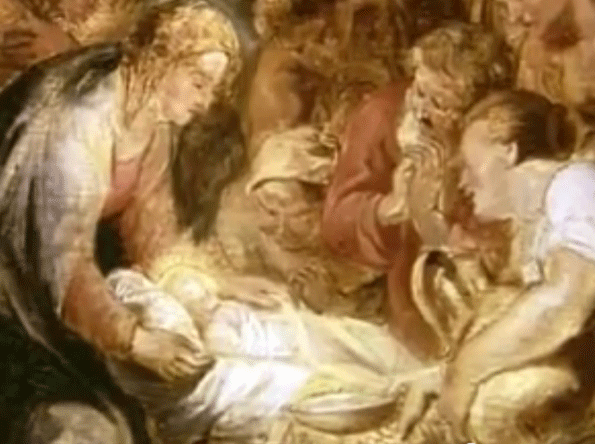
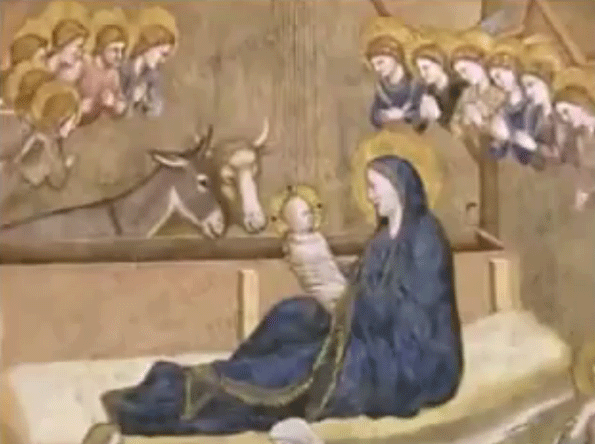
[Narrator] It is a story everyone knows. After a rude refusal by a local innkeeper, Mary and Joseph bedded down in a barn in Bethlehem.
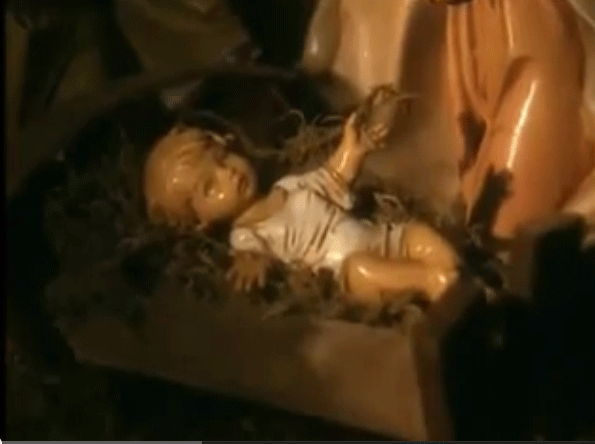
The next day, Mary gave birth to a son, the son of God. Those are the biblical origins of Christmas.
But centuries before Jesus walked the earth, early Europeans were celebrating light and birth in the darkest days of winter. In the Norse country, this winter celebration was known as Yule.
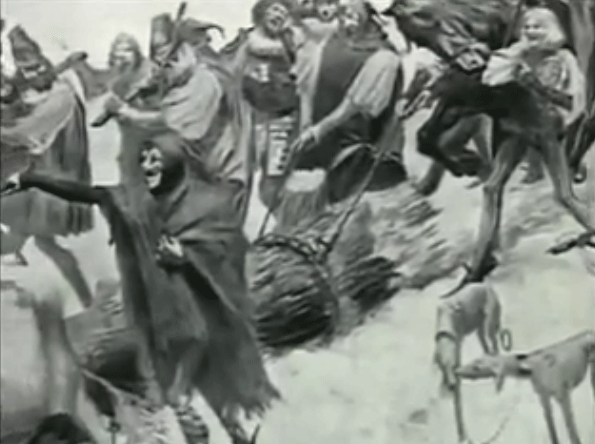
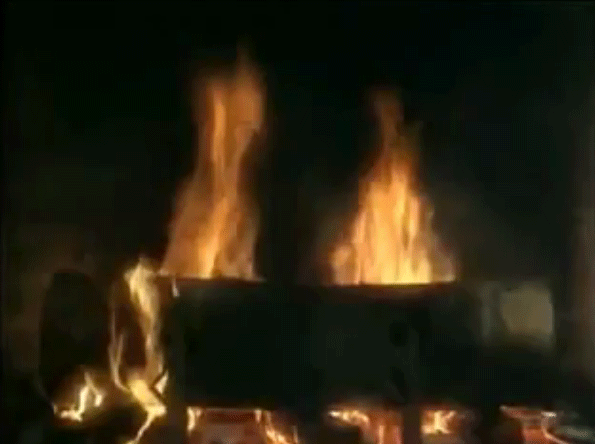
Around December 21st, the winter solstice, fathers and sons would drag home the biggest log they could find and set it on fire.
The yule log warmed but it also looked ahead. Each spark was said to represent a pig or calf to be born in the spring.
Also dragged inside were evergreens, the one plant that could make it through a Norse winter. Evergreens proved that life persisted in this dark time.
[Forrest Church, Minister, All Souls Church] There's a natural attraction to that which lives through the winter when one is struggling to survive through the winter. The evergreen is that part of nature that seems impervious to the coming of winter and the diminishing of the sun. And so it's an absolutely natural symbol, one which I think you react to almost without thinking about.
[Narrator] For as long as the yule log burned -- about 12 days -- feasting and revelry reined supreme.
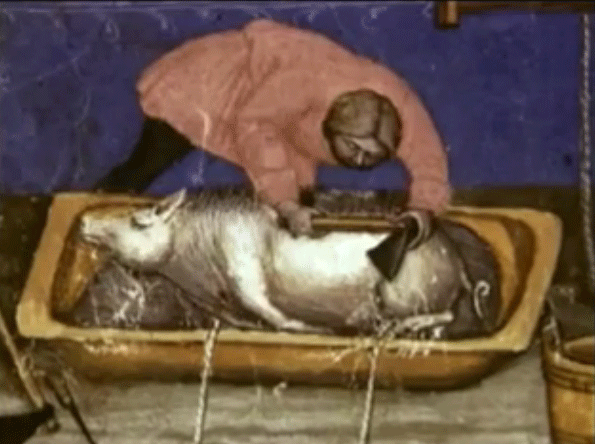
In fact, this was one of the few times that meat was abundant, since cattle had just been slaughtered for the long winter.
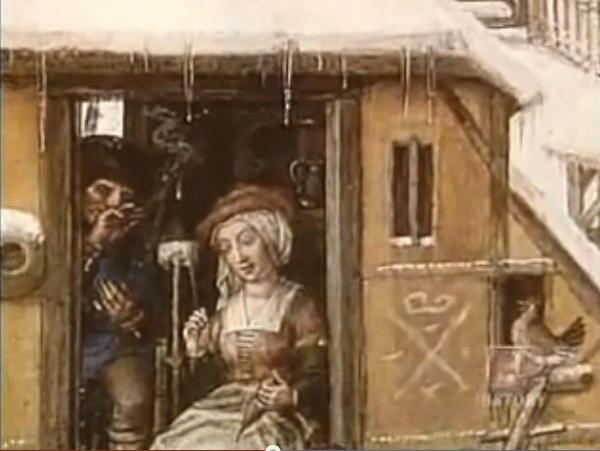
[A.W. Purdue, Historian, Open University, England] There is a necessity to kill most of the cattle, because you can't keep them alive over the winter. You can't feed them. You keep a few alive for breeding. But there is an opportunity for a great blow-out, or a great feast type of party. [Narrator] The party raged inside in defiance of winter's deadly howl. [A.W. Purdue, Historian, Open University, England] There is a spooky feel about the northern yuletide festivals. You may be all right there in the hall near the fires, but outside there are demons and there are spirits.
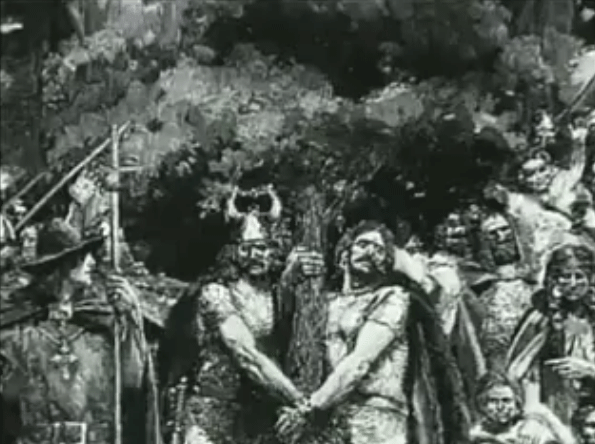
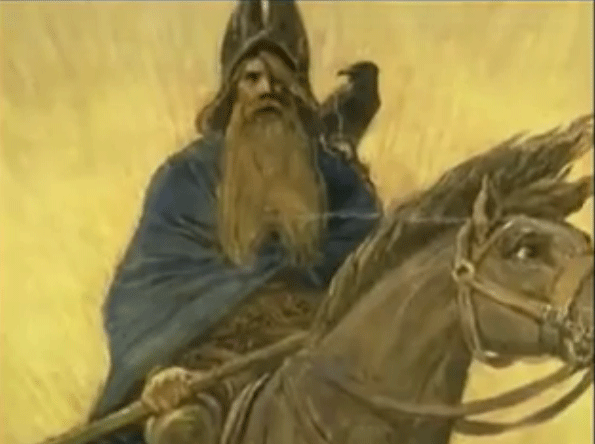
[Narrator] In Germany, the pagan god Odin lent his name to this mid-winter holiday. Early Germans were terrified of Odin, whose nocturnal flights decided who would prosper or perish in the coming year.
Later, we'd see another Christmas sky-rider, Santa Claus, but for now staying inside became the smartest choice at this frightening time of the year.
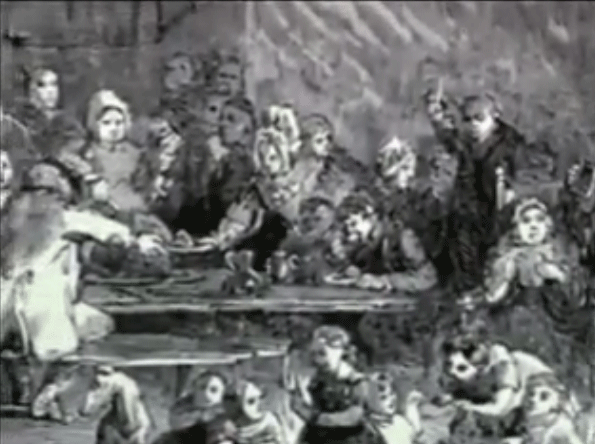
A thousand miles away in Rome, winter was less harrowing, but the December festivals were just as elaborate. One week before the winter solstice, Romans began celebrating Saturnalia, a month long orgy of food and drink, named for the God Saturn, which meant plenty. Rome's established order was turned on its head during this wild, delirious time.
[Elaine Pagels, Religion Dept., Princeton] The Saturnalia celebrations were certainly times of revelry, of turning the social order upside down, and having the master pretend to be the slave, and the slave pretend to be the master. Sort of a time out of time in which one could celebrate a kind of disorder in the universe.
[Narrator] One of the holiday's important feasts was Juvenalia, which celebrated the children of Rome.
[A.W. Purdue, Historian, Open University, England] All of these early festivals weren't necessarily about children particularly, but they are about fertility. Children did have their particular place, and indulging children is, of course, very much a part of our own Christmas. And it did have its place even in these ribald, drunken festivals that the Romans had.
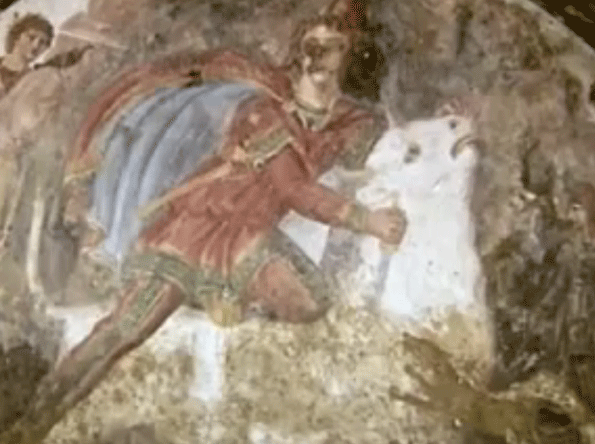
[Narrator] Among the upper classes in Rome, solstice celebrations were significantly more sober. Many influential Romans worshiped Mithra, the God of the unconquerable sun.
To this small but powerful sect, the birthday of Mithra was the holiest day of the year.
[Elaine Pagels, Religion Dept., Princeton] December 25th was the winter solstice in that part of the world, and it was also understood to be the birthday of the sun god, Mithra. And Mithra was said to be born from a rock. Shepherds came to worship him as he was an infant god born out of that pastoral place in the fields. And many of those stories, of course, have come into Christian tradition.
[Narrator] While Romans were worshipping the sun god, a new religion was taking hold throughout the empire. At first, Christians didn't celebrate the birth of Christ.
His resurrection was the essential fact of the new religion. By the 4th century, however, the question of the holy birth became impossible to ignore.
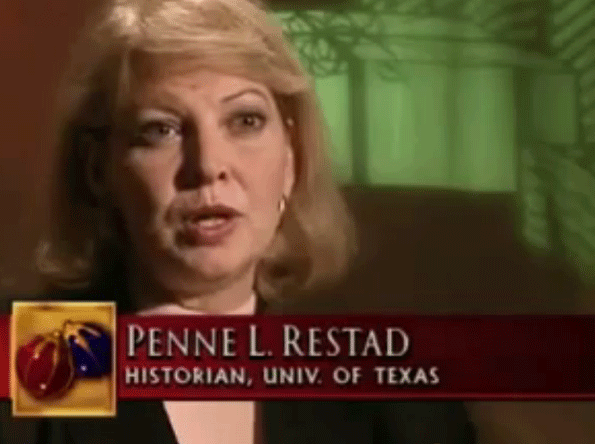
[Penne L. Restad, Historian, Univ. of Texas] There were questions within the church about how do we even imagine Jesus? Some people believe that Jesus was purely a spiritual emanation of God, and others believe that Jesus must have actually appeared on earth. And so the decision to celebrate Jesus's birth meant that Jesus was actually a human, or a human form.
[Narrator] For Christians, the fact of his birth was settled, but the date remained a mystery. The Bible doesn't mention exactly when Christ was born, but certain facts suggest it probably was not in December.
[Forrest Church, Minister, All Souls Church] If you're going to sort through the runes of the scriptures, Jesus was probably born in the Spring. If the shepherds are out in the fields watching their flock by night, we're not talking about one of the cold spells at the heart of winter.
[Narrator] If Pagan Rome was already celebrating the birth of Mithra on December 25th, it seemed natural to honor the birth of the Christ-child at the same time.
By the 4th century, the Church made it official.
December 25th was declared the feast day of the nativity. [A.W. Purdue, Historian, Open University, England] It was a short step from the feast day of the risen sun, S U N, to the feast day of the risen son, S O N. So in a sense, it's a very good choice that the symbolism is there, because the feast day of the risen S U N was about fertility, about birth. And so obviously is the Christian Christmas.
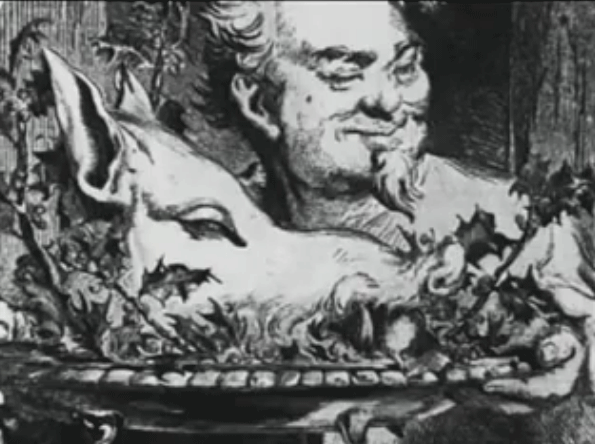
[Narrator] The Church knew it could not outlaw the pagan traditions of Christmas, so it set out to adopt them. The evergreens traditionally brought inside were soon decorated with apples, symbolizing the Garden of Eden. These apples would eventually become Christmas ornaments.
And holly, a traditional mid-winter decoration, was recast to represent Christ's crown of thorns.
[Stephen Nissenbau, Historian, University of Mass.] People already had their own agenda for this season. And that agenda was not one that was really radically changed when the names got changed from non-Christian to Christian names. The Church pretty much had a policy of live and let live. If people would call themselves Christians and do lip service to the birth of the savior, then let them do anything they wanted to do with it. But on the other hand, by assigning the nativity to that time of the year, the Church really gave up the opportunity to control the way that celebration took place.
[Narrator] The tension between piety and revelry at Christmas would reach its logical and extreme conclusion in puritan England when the holiday would be considered so un-Christian, it was done away with altogether.
By the Middle Ages, Christianity had largely replaced the old, pagan religions of Europe. On December 25th, the faithful were called to gothic cathedrals like Notre Dame and Salisbury Cathedral in England for Christ's mass, soon to be called Christmas. But out in the streets, the holiday was still more raucous than religious.
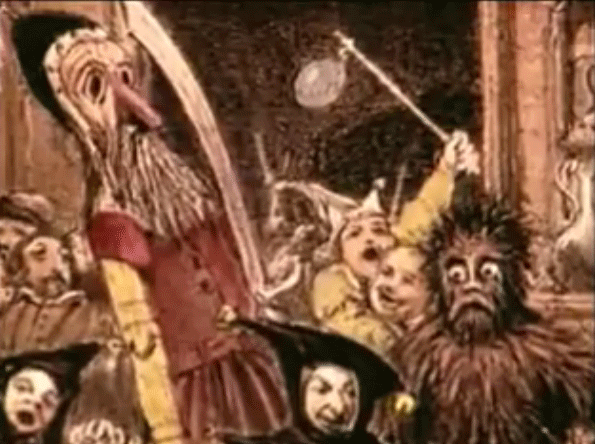
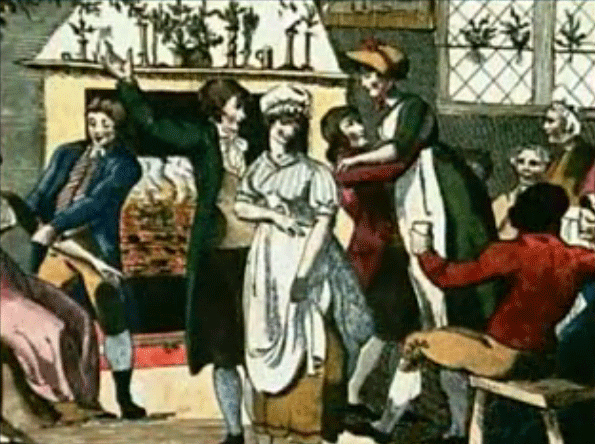
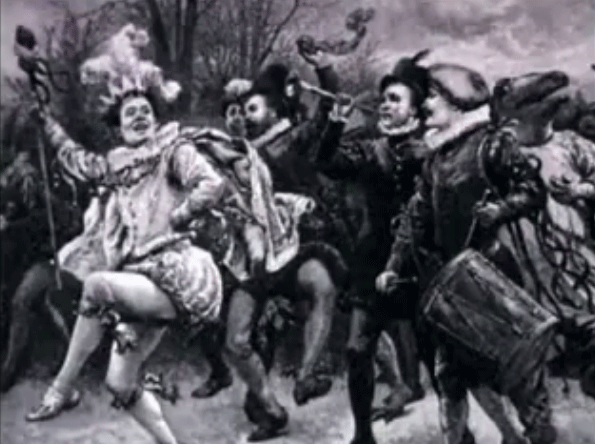
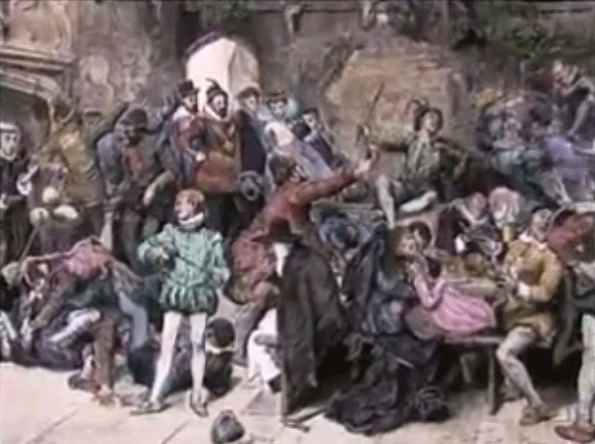
[Stephen Nissenbau, Historian, University of Mass.] If you went to England around Christmas time, any time before, say, 1800, you'd probably feel pretty ill at ease. You wouldn't think it was Christmas at all. What would you think it was? Maybe Mardi Gras. Maybe New Years Eve. Maybe Halloween. Because Christmas in old-time England was really a carnival.
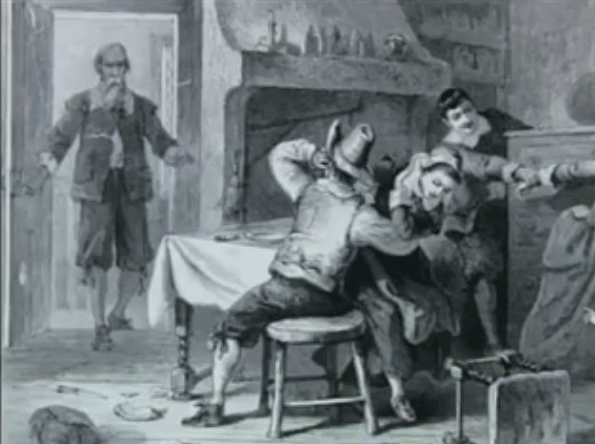
[Narrator] The houses of London were littered with brawling, drunken villagers and couples engaged in the most unholy activities.
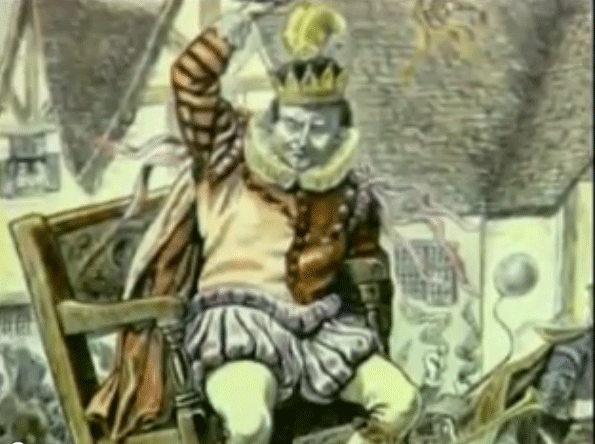
And each Christmas, a beggar or student was temporarily put in charge after being crowned The Lord of Misrule.
The rest of the peasantry also got their once a year chance to grab power from the ruling classes.
[Stephen Nissenbau, Historian, University of Mass.] They would go around to the houses of the rich, where they would bang on the doors and demand entry. And once they were let in, the lord of the manor had to give them the best stuff that he had. He had to give them his best food, he had to give them his best beer, his best of everything. And if he didn't, they would threaten or actually perform a trick. One surviving Christmas song says, "If you don't give us what we want, then down will come butler, bowl and all." Some historians think that it performed the role of a safety valve. You might say that a wealthy man could make up for an entire year of small or large injustices to the poor by giving a generous Christmas handout just once in the year.
[Narrator] The rules of Christmas would soon change, however, as a wave of religious reforms swept through England in the early 17th century.
Led by Oliver Cromwell, the puritans overthrew the king's forces in 1645 and vowed to rid England of all that was decadent. High on their list was English Christmas.
And in 1652, they outlawed it altogether. Shops were ordered to stay open; churches were forced to stay closed. [Rev. Forrest Church, Minister, All Souls Church, NYC] The puritans were always, I think, deeply attracted to those things that they were most opposed to. They had a fear that they might have too good of a time. I don't mean to trivialize them, but there was a deep fear that if these things were legalized, they themselves might enjoy them, and their souls would be lost.
[Narrator] The puritans may have said "Good riddance to Christmas," but the people never really stopped celebrating it.
The holiday merely went underground.
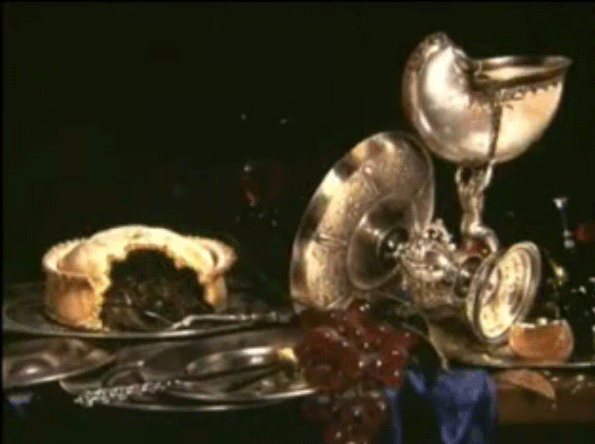
If Christmas pie was illegal, it began to be known as "mincepie" instead, which was just as delicious.
[Rev. Forrest Church, Minister, All Souls Church, NYC] The deeper need for Christmas in the human heart, the need for celebration at a time of darkness, those needs made the battle against Christmas, gave it a few temporary wins, but it couldn't possibly secure a final victory.
[Narrator] In 1656, the men of Kent and Canterbury passed a resolution saying that if they could not have their Christmas day, they would have the king back on his throne. They soon got their wish.
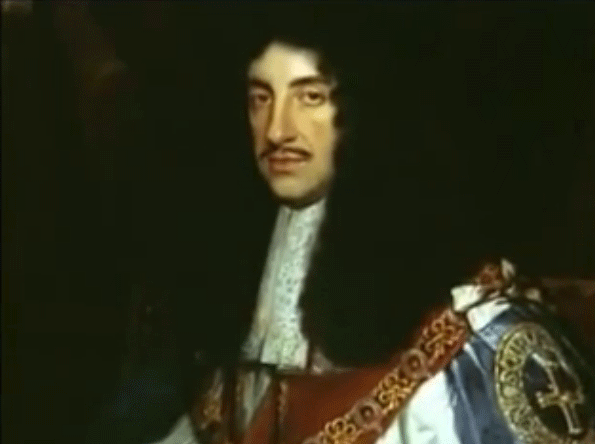
The monarchy was restored with Charles II, and Christmas was restored with him. It seemed the English could live without a king but not without Christmas.
[A.W. Purdue, Historian, Open Univ., England] It has been argued that one of the reasons for the restoration of the monarchy is because by restoring the monarchy, you also restored Christmas, restored the proper English Christmas with its rituals, its traditions, and its carousing. Christmas is brought back, if you like, by popular acclaim.
[Narrator] The fight against Christmas may have been lost in England, but the puritans had high hopes for the new colonies in America.
In 1620, a small group of separatists came ashore at Plymouth, Massachusetts.
Even more orthodox than their English cousins, these men and women hoped to rid themselves once and for all of the Christmas scourge. In 1659, puritans in Boston followed their English brethren in outlawing Christmas.
Anyone caught exhibiting the Christmas spirit was fined 5 shillings. Like in England, however, Christmas remained impossible to contain. The 1719 Boston Almanac doesn't list a Christmas holiday, but it does recommend that in late December, you not let your children and servants run too much abroad at night.
[Stephen Nissenbau, Historian, University of Mass] From almost the beginning, in Massachusetts, there's evidence that some people practiced Christmas, and that when they did so, it was in fact an opportunity to get drunk.
And one of the most interesting little sidelights on this, is the finding of historical demographers that there was actually a bulge in conceptions, the conception of children, that took place during Christmas.
[Narrator] Not all the colonies had such trouble with Christmas. Capt. John Smith, leader of the Jamestown settlement in Virginia, wrote that their first new-world Christmas was kept with plenty of good oysters, wild foul and good bread.
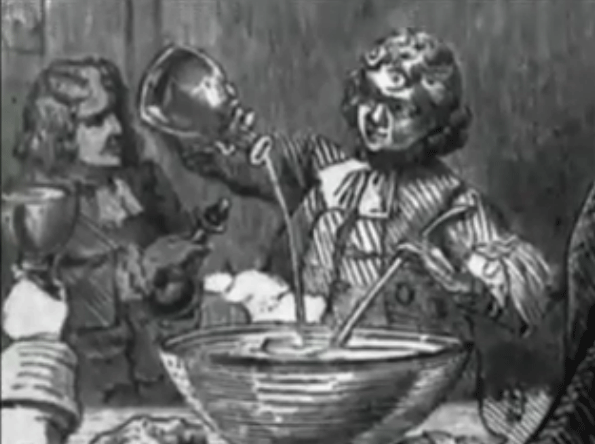
Jamestown settlers were also the first to drink eggnog as a Christmas drink.
The nog coming from the word "grog," which means any drink made with rum.
After Independence, however, all things English fell out of favor in America, Christmas included.
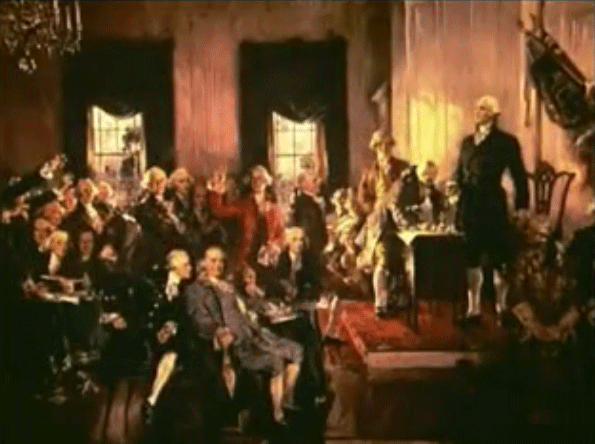
In fact, on December 25, 1789, the United States Congress sat in session and continued to stay open on Christmas day for most of the next 67 years.
[Penne L. Restad, Historian, Univ. of Texas] At this same time, there are people who are writing in their diaries that, "Isn't it too bad we don't have any holidays?" So after the revolution, here is an entire nation that works hard, has forsaken many holidays, has given up many holidays, because they were holidays that were mandated by the Crown, and it is time to start thinking about how to populate the calendar.
[Narrator] As the 19th century dawned, Christmas would be one holiday that would hold the new nation together, but it wouldn't be the carnival Christmas of old England. Nor would it be particularly religious. America would invent its very own Christmas, and in the process reinvent it for the whole world. O Tannenbaum
[Narrator] New York City, 1820. Within the space of a generation, New York had gone from a backwater port town to the center of American commerce.
Great wealth came to a few during these years, and moderate living to the burgeoning middle class.
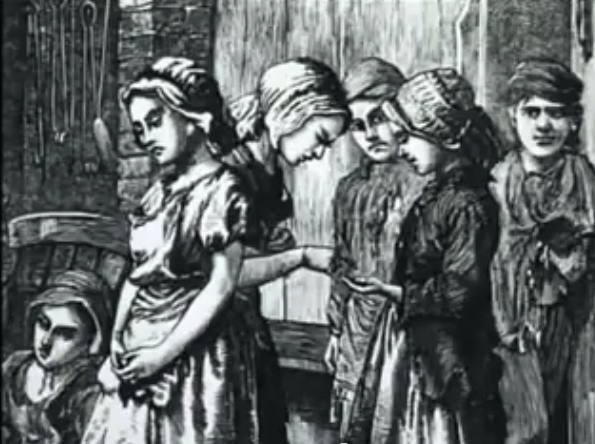
But the industrial revolution had also created the class of the unemployed and the unconnected, whose very existence threatened the cozy world of New York's middle rung. This was never more clear than at Christmas time.
[Stephen Nissenbaum, Historian, Univ. of Mass.] Class concept was emerging with the earliest stages of industrial capitalism, and so what had previously just had an edge of menace, a little bit of trick, but much more good will, much more treat, now changed, and the menace became increasingly obvious, and increasingly serious.
So that by the 1820s, the Christmas season in New York was really a time of gang rioting, a really very, very nasty scene.
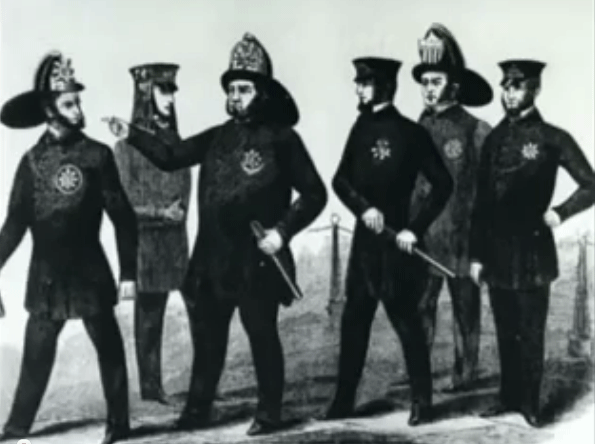
So nasty in fact that in the year 1828, the New York City Council for the first time instituted a professional police force of the city, as a direct result of a particularly savage Christmas season riot the year before.
[Narrator] New York's upper class was worried, so worried that a few of them set out to change the way the holiday was celebrated.
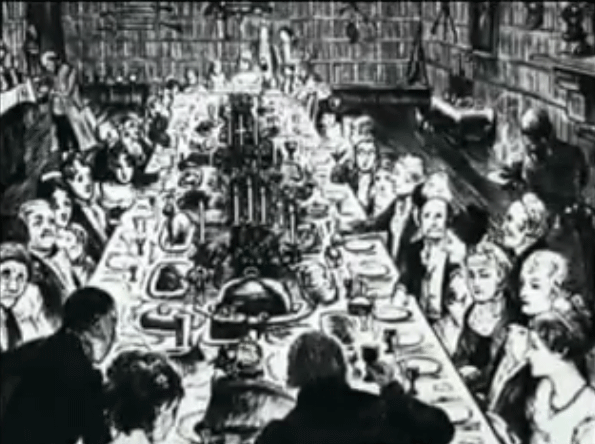
Washington Irving was America's best-selling novelist, and in 1819 he used his expertise to write "Bracebridge Hall," an enormously popular series of stories about Christmas at an imaginary English manor house.
Here, the classes mingled effortlessly as squires welcomed friendly and grateful peasants into their homes.
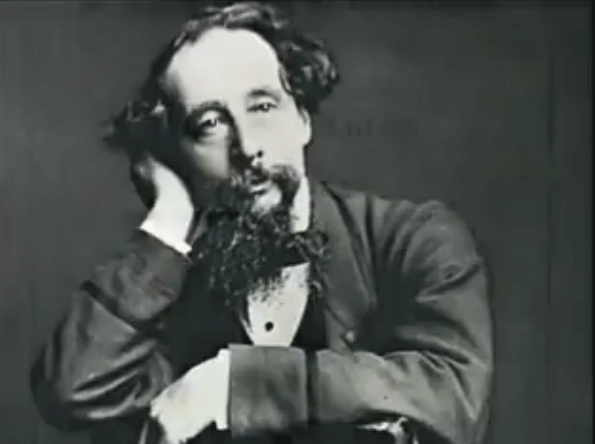
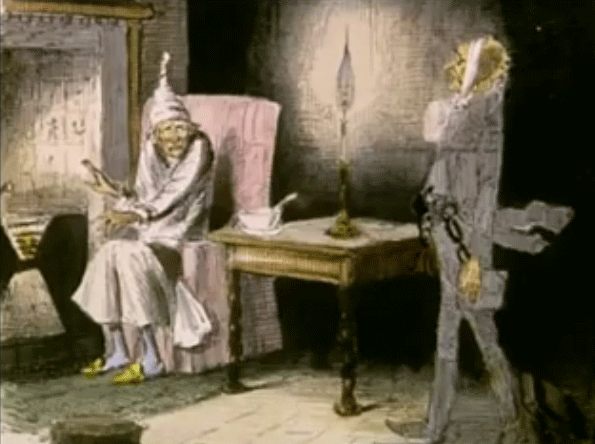
And in 1843, England's most popular writer, Charles Dickens, tackled the Christmas problem with "A Christmas Carol." It was a best-seller in London and America, and the lessons of the story struck a powerful cord on both sides of the Atlantic.
[A.W. Purdue, Historian, Open Univ., England] "A Christmas Carol", I think, showed the Victorians what could be the use and the meaning of Christmas in a society which had fears about inequality, about too much materialism, about, perhaps, just too rapid change.
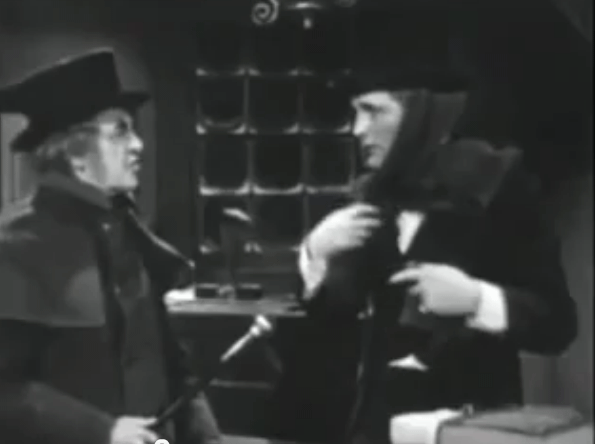
[Narrator] There have been countless treatments of this Christmas classic, some in print and some on screen. This television version is from 1958, but the themes are straight out of the 19th century.
[Ebeneezar Scrooge] It's not convenient. A poor excuse to pick the pocket of your employer every 25th of December. Christmas -- nonsense! Humbug! [Stephen Nissenbau, Historian, University of Mass] I think the character of Ebeneezar Scrooge is one very important lesson to middle class people. Because the Christmas season presented them with a real problem. What do we owe to the different people in our world? What do we owe to our families? What do we owe to our employees? What do we owe to the anonymous poor?
[Narrator] At first, Ebeneezer Scrooge refuses to face those problems, but after his visions of Christmas past, present and future, Scrooge learns that family and charity cannot be ignored at Christmas time.
[Leigh Eric Schmidt, Religion Dept., Princeton Univ.] Really, it's a conversion story, a story about this hard-hearted man being born to Christmas observance. That conversion story is important for Victorians to be thinking about their own conversion to the holiday. Because it is very much that they are being re-converted. So many of them had given up on the holiday, so now they have to come to terms with their own reconnection to that. And Scrooge is a way of doing that. [A.W. Purdue, Historian, Open University, England] There's this lovely story of Dickens going around America on one of these famous reading tours, and this American factory owner going to a reading of "A Christmas Carol." And on the way home saying to his wife, "Next year we shall close the factory on Christmas Day."
[Narrator] 19th century Americans were discovering Christmas after a 200 year drought of puritan disapproval. But the holiday would never have taken hold if society wasn't ready for it. One important shift was occurring right inside the family itself.
[Stephen Nissenbau, Historian, University of Mass] Before the 19th century, the family existed as what we might think of as an engine of discipline, designed to train children to work hard.
After 1820, 1830, the family was very quickly and perceptibly becoming an agency that was designed to provide the emotional nursery for children, so that they could grow up being sensitive little people, and who took a lot of pleasure in the family and in the world itself.
[Narrator] Christmas was tailor-made for this transition. Now there was a holiday where attention could be lavished on children without seeming to spoil them.
[Stephen Nissenbau, Historian, University of Mass] The moment of Christmas, where parents started to pay attention to their children, I sometimes come to think of this as the invention of quality time within the family. Parents would discover the joy that they could take out of watching the joy in their children's faces when they gave their children presents.
[Narrator] Americans now knew why they were celebrating Christmas, but they didn't know exactly how to go about it. The old pagan revelry was clearly inappropriate for a Victorian home, but some ancient traditions were perfect for reviving.
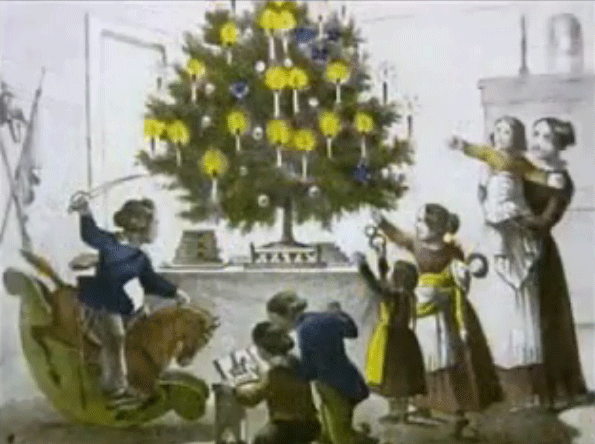
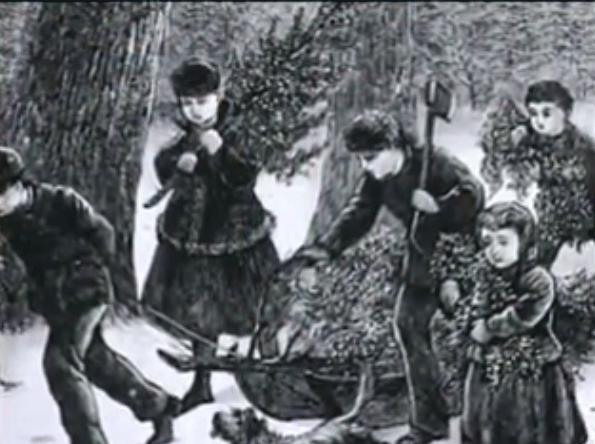
The Christmas tree has its roots in Germany where decorated evergreens had always been a part of the winter celebrations.
But the tree might have stayed there if not for the royal marriage in 1840 of Victoria, the queen of England, to her cousin, Prince Albert of Germany. Albert brought his German ways to Windsor Palace, including the annual Christmas tree.
In 1848, the London Illustrated News published this engraving of the royal family, standing by the first Christmas tree most English had ever seen.
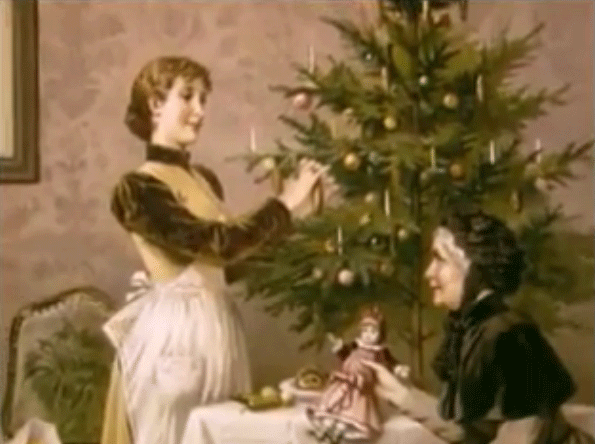
In just a few years, a decorated fir could be found in nearly every English home at Christmas. [A.W. Purdue, Historian, Open University, England] Within a few years, if you look at Victorian diaries and letters, people are saying, "We had a Christmas tree as is customary," or "We had a Christmas tree as we have always had." But they hadn't always had it at all. It was a custom which started in the 1840s, and by the 1850s, people believed that the Christmas tree was part of the English Christmas.
[Narrator] Americans embraced the Christmas tree just as quickly as the English had. In fact, its connection to the Old World was one of its strongest selling points.
[Leigh Eric Schmidt, Religion Dept., Princeton Univ.] For a lot of Americans, these are going to be new holiday traditions, not something their parents did, especially in the case of the more austere Protestants. So they're looking for a reason for what they're doing. And one of the most convenient reasons they can have is they can say, "Well, this is the way it is done in Germany, or this is the way it's done in England."
[Narrator] All of a sudden, Christmas traditions were popping up everywhere.
In 1828, Joel R. Poinsett, America's minister to Mexico, brought back a green and red plant that seemed perfect for the new holiday.
And in 1843, the English firm of J.C. Horsley printed the first Christmas card.
A newly efficient postal service in England and America helped make Christmas cards an overnight sensation.
It seemed as though every vestige of the old bacchanalian Christmas was gone. But even the Victorians couldn't clean up Christmas completely.
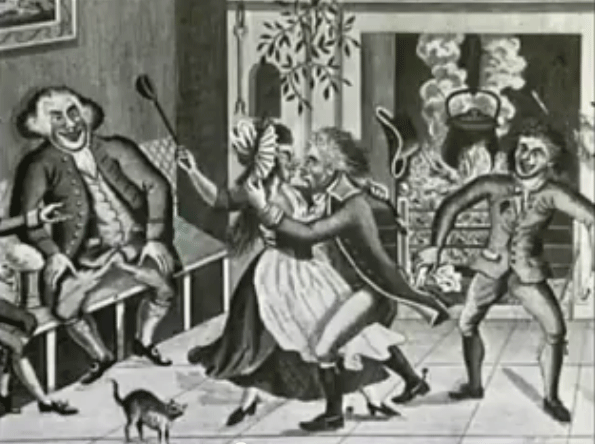
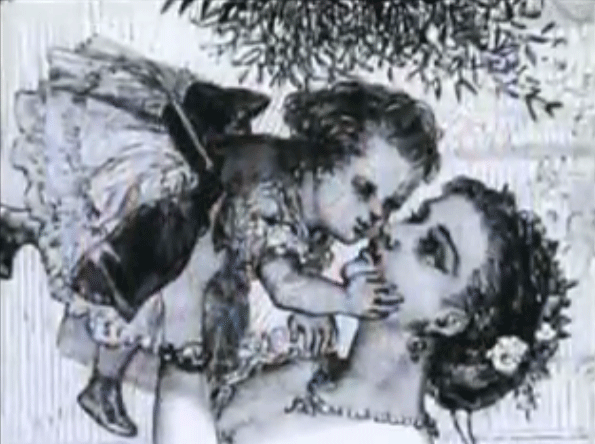
[A.W. Purdue, Historian, Open University, England] Victorians were particularly keen on mistletoe, because, of course, you could actually kiss a lady, or a lady could kiss a man, that normally in the normal course of things she would not be allowed to kiss.
So in a society which was fairly strict, one vestige of that licentious Christmas from earlier times, a sprig of mistletoe, no Victorian Christmas gathering was without it.
[Narrator] By mid-century, Christmas was everywhere in America: in the streets, in the homes, in the marketplace.
The one place you could not find Christmas was in church. Most Americans were protestant, and the protestant church had ignored Christmas for years. But protestant Victorians longed for official religion on this sacred day.
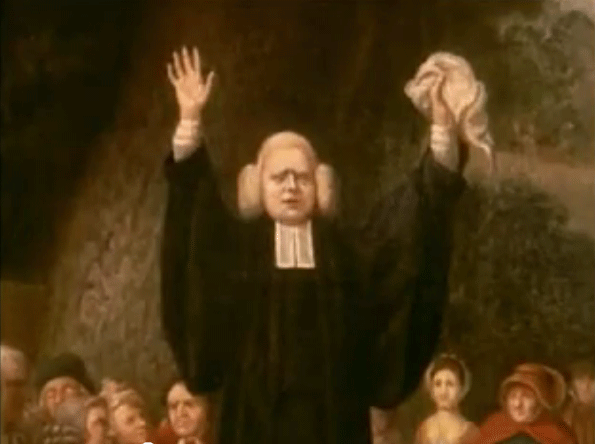
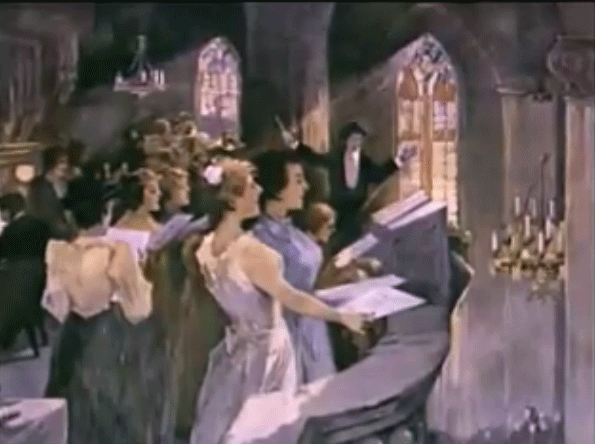
[Leigh Eric Schmidt, Religion Dept., Princeton Univ.] What a number of them did initially was say, "Well, we can't find a Christmas service in our Baptist church or our Presbyterian church, let's go see what the Catholics are doing, or let's go see what the Episcopalians are doing." And increasingly that puts pressure on these latter day puritans to have Christmas services, because there's a way in which lay people begin to expect it.
[Narrator] Church services, mistletoe and Christmas trees: America's new holiday now seemed firmly in place. But Victorian America had one last contribution to the Christmas season: a jolly elf who shimmied down the chimney would soon personify Christmas for generations to come.
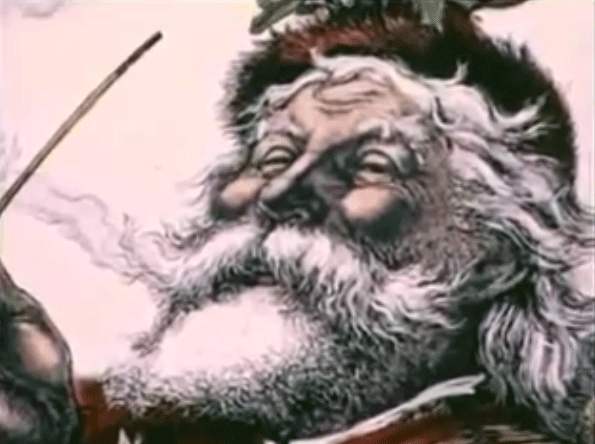
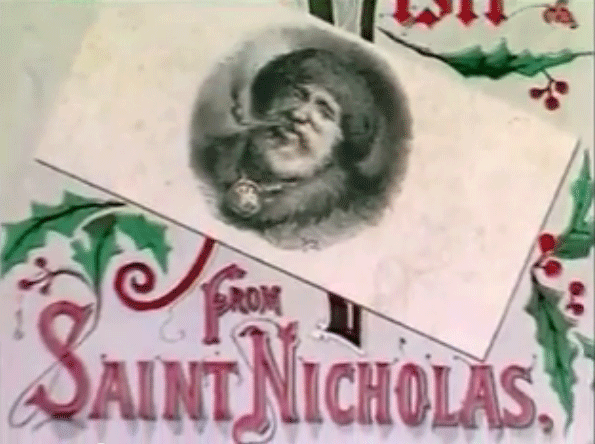
Ol' Saint Nick [Narrator] We borrowed the Christmas tree from Germany, and the Christmas card from England. But one Christmas icon was developed right here in America: Santa Claus.
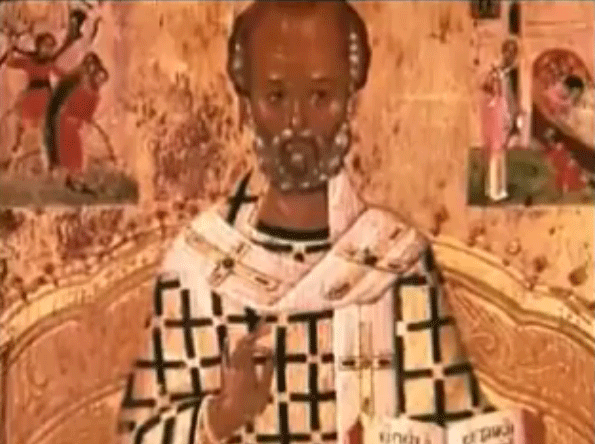
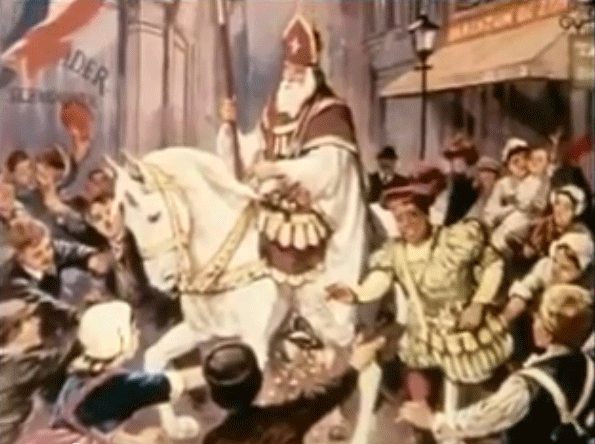
Long before Santa, however, there was Saint Nicholas, a Greek Orthodox bishop who became one of the most popular saints of the Middle Ages. [LC-1] On December 6th, Saint Nicholas Day, good children woke to gifts from the kindly saint. Bad children sulked away with nothing.
In Holland, he was known as Sinterklaas, and when the Dutch came to this country, they brought tales of their gift-giving Nicholas with them.
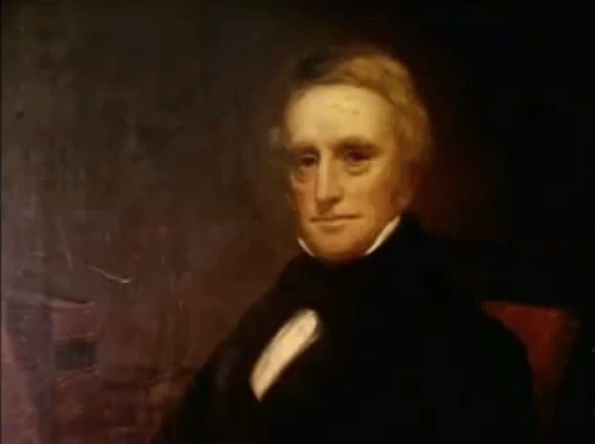
This quaint custom caught the imagination of Clement Clark Moore, a well-heeled Episcopal minister in New York City. In 1822, Moore wrote a poem for his children about a good-natured saint who came down the chimney on Christmas eve.
"Twas the night before Christmas, and all through the house, not a creature was stirring, not even a mouse. The stockings were hung by the chimney with care in hopes that Saint Nicholas would soon be there.
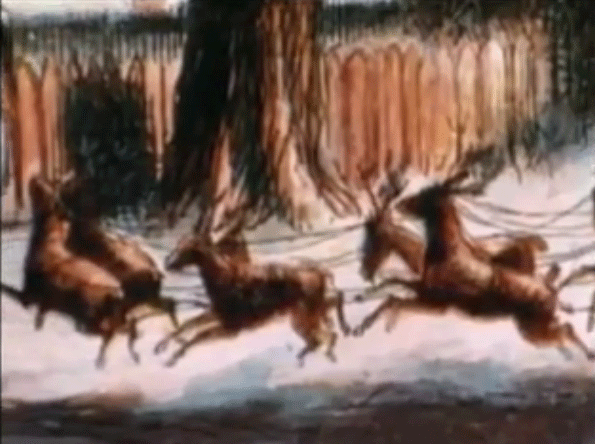
[Narrator] Moore dreamed up Dasher, Dancer and the rest of the reindeer, along with Santa's entrance through the chimney. But at first he was embarrassed by the poem. He worried it was too frivolous for a man of the church.
|