|
FOURTH AND LAST PART.
Ah, where in the world have there been greater follies than with the
pitiful? And what in the world hath caused more suffering than the
follies
of the pitiful?
Woe unto all loving ones who have not an elevation which is above their
pity!
Thus spake the devil unto me, once on a time: "Ever God hath his
hell: it
is his love for man."
And lately did I hear him say these words:
"God is dead: of
his pity for
man hath God died."
-- ZARATHUSTRA, II., "The Pitiful."
LXI. THE HONEY SACRIFICE.
-- And again passed moons and years over Zarathustra's soul, and he heeded
it not; his hair, however, became white. One day when he sat on a
stone in
front of his cave, and gazed calmly into the distance -- one there gazeth
out
on the sea, and away beyond sinuous abysses, -- then went his animals
thoughtfully round about him, and at last set themselves in front of him.
"O Zarathustra," said they, "gazest thou out perhaps for
thy happiness?" -- "Of what account is my happiness!" answered he, "I have long ceased to
strive any more for happiness, I strive for my work." -- "O Zarathustra,"
said the animals once more, "that sayest thou as one who hath
overmuch of good things. Liest thou not in a sky-blue lake of happiness?"
-- "Ye
wags,"
answered Zarathustra, and smiled, "how well did ye choose the simile!
But
ye know also that my happiness is heavy, and not like a fluid wave of
water: it presseth me and will not leave me, and is like molten
pitch." --
Then went his animals again thoughtfully around him, and placed themselves
once more in front of him. "O Zarathustra," said they, "it is
consequently
FOR THAT REASON that thou thyself always becometh yellower and darker,
although thy hair looketh white and flaxen? Lo, thou sittest in thy
pitch!" -- "What do ye say, mine animals?" said Zarathustra, laughing;
"verily I reviled when I spake of pitch. As it happeneth with me, so
is it
with all fruits that turn ripe. It is the HONEY in my veins that maketh my
blood thicker, and also my soul stiller." -- "So will it be, O Zarathustra,"
answered his animals, and pressed up to him; "but wilt thou not to-day
ascend a high mountain? The air is pure, and to-day one seeth more
of the
world than ever." -- "Yea, mine animals," answered he, "ye counsel admirably
and according to my heart: I will to-day ascend a high mountain! But see
that honey is there ready to hand, yellow, white, good, ice-cool, golden-comb-honey. For know that when aloft I will make the
honey-sacrifice." --
When Zarathustra, however, was aloft on the summit, he sent his animals
home that had accompanied him, and found that he was now alone: -- then he
laughed from the bottom of his heart, looked around him, and spake thus:
That I spake of sacrifices and honey-sacrifices, it was merely a ruse in
talking and verily, a useful folly! Here aloft can I now speak freer
than
in front of mountain-caves and anchorites' domestic animals.
What to sacrifice! I squander what is given me, a squanderer with a
thousand hands: how could I call that -- sacrificing?
And when I desired honey I only desired bait, and sweet mucus and
mucilage,
for which even the mouths of growling bears, and strange, sulky, evil
birds, water:
-- The best bait, as huntsmen and fishermen require it. For if the
world be
as a gloomy forest of animals, and a pleasure-ground for all wild
huntsmen,
it seemeth to me rather -- and preferably -- a fathomless, rich sea;
-- A sea full of many-hued fishes and crabs, for which even the Gods might
long, and might be tempted to become fishers in it, and casters of nets,
-- so rich is the world in wonderful things, great and small!
Especially the human world, the human sea: -- towards IT do I now throw out
my golden angle-rod and say: Open up, thou human abyss!
Open up, and throw unto me thy fish and shining crabs! With my best
bait
shall I allure to myself to-day the strangest human fish!
-- My happiness itself do I throw out into all places far and wide 'twixt
orient, noontide, and occident, to see if many human fish will not learn
to
hug and tug at my happiness; --
Until, biting at my sharp hidden hooks, they have to come up unto MY
height, the motleyest abyss-groundlings, to the wickedest of all fishers
of
men.
For THIS am I from the heart and from the beginning -- drawing, hither-
drawing, upward-drawing, upbringing; a drawer, a trainer, a training-master, who not in vain counselled himself once on a time: "Become
what
thou art!"
Thus may men now come UP to me; for as yet do I await the signs that it is
time for my down-going; as yet do I not myself go down, as I must do,
amongst men.
Therefore do I here wait, crafty and scornful upon high mountains, no
impatient one, no patient one; rather one who hath even unlearnt patience, -- because he no longer "suffereth."
For my fate giveth me time: it hath forgotten me perhaps? Or
doth it sit
behind a big stone and catch flies?
And verily, I am well-disposed to mine eternal fate, because it doth not
hound and hurry me, but leaveth me time for merriment and mischief; so
that
I have to-day ascended this high mountain to catch fish.
Did ever any one catch fish upon high mountains? And though it be a
folly
what I here seek and do, it is better so than that down below I should
become solemn with waiting, and green and yellow --
-- A posturing wrath-snorter with waiting, a holy howl-storm from the
mountains, an impatient one that shouteth down into the valleys: "Hearken,
else I will scourge you with the scourge of God!"
Not that I would have a grudge against such wrathful ones on that account: they are well enough for laughter to me! Impatient must they now be,
those
big alarm-drums, which find a voice now or never!
Myself, however, and my fate -- we do not talk to the Present, neither do we
talk to the Never: for talking we have patience and time and more
than
time. For one day must it yet come, and may not pass by.
What must one day come and may not pass by?
Our great Hazar, that is
to
say, our great, remote human-kingdom, the Zarathustra-kingdom of a
thousand
years --
|
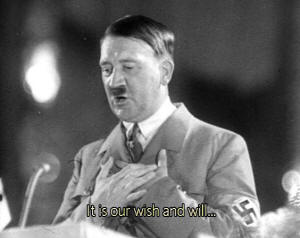

It is our wish
and will that this State and this Reich last for a thousand years. We
can be happy to know that this future belongs entirely to us!
-- Triumph of the Will, directed by
Leni Riefenstahl
Prince
of Persia draws very heavily from the
Zoroastrian faith, one of the world’s oldest monotheistic religions. It
was founded in ancient Iran (Persia) about 3,500 years ago. At the start
of the game, the Prince’s beautiful companion, Elika, mentions that her
people, the Ahura, have been keeping the evil Ahriman sealed in a “tree
of life” for 1,000 years. A thousand years is an interesting number to
note because for 1,000 years, Zoroastrianism was one of the most
powerful religions in the world. It was the official religion of Persia
from 600 BCE to 620 CE.
--
An Appreciation of Attention
to Detail, by Erika Haase
The Khazars (Chazars
or Khozars) were a nation of Finnish origin, related to the Bulgars, the
Avars, and the Ugars or Hungarians. They had settled after the
dissolution of the empire of the Hungs on the frontier between Europe
and Asia, founding a kingdom on the Volga (which they called the River
Itil, or Atel.) near its mouth in the Caspian Sea, in the neighborhood
of Astrakhan. Their Kings, known by the title of "Chakan," or "Khagan,"
led these warlike sons of the steppe from war to war and victory to
victory....
Like their
neighbors, the Bulgarians and the Russians, the Khazars professed a
coarse religion, which combined sensuality with lewdness. Gradually they
became acquainted with Christianity and Mohammedanism, through the
Greeks and Arabs who came to the capital, Balanyiar, to trade their
wares for fine furs. From the Jews who fled to Khazaria from the
religious persecution of the Byzantine Emperior Leo in the year 723, and
settled in communities throughout that hospitable land, the Khazars
became acquainted also with Judaism; and it was through these Jews, who
mingled among them as interpreters, merchants, physicians, or
counselors, that a love of Judaism was instilled into one of the warlike
Khazar Kings, known to history as Bulan....
Bulan was
finally led to adopt Judaism, according to this account, by the fact
that while all three disputants adhered to their religious difference
and championed their particular creed, both the Christian and the
Mohammedan champions were obliged to admit that the religion of their
Jewish opponent was the foundation of their own and that it was
admittedly an excellent religion, aside from what they considered the
superiority of their own. That was good enough for the King of the
Khazars, and he decided in favor of Judiasm, which the nobles of his
kingdom, numbering nearly 4,000, thereupon adopted with him. Little by
little it made its way among the people, so that most of the inhabitants
of the towns of the Khazar kingdom presently became Jews....
After Obadiah
came a long series of Jewish Khazars, for, according to a fundamental
law of the State, only Jewish rulers were permitted to ascend the
throne.
For a long time
the Jews, dispersed among other countries of the world, knew nothing of
this powerful nation to Judaism, and when at last vague rumors reached
them it created among them a belief that Khazaria was a land peopled by
a remnant of the lost ten tribes...
In the middle of
the tenth century of the Christian era there lived at Cordova a noted
and influential Jew, Abu-Yussuf Chasdal ben Isaac Ibn-Shaprut, a member
of the noble family of Ibn-Ezra, who was a powerful and trusted Minister
of the Court of Abdulrahman III., Caliph of Cordova, and who, despite
his elevation at the hands of the Moslem ruler, had not forgotten to
hold most dear his own faith and people and to make the task of
protecting and furthering Judaism the chief purpose of his life....
The vague rumor
of the existence of an independent kingdom of Jews in the land of the
Khazars penetrating to Spain, roused his deep interest, and he never
failed to inquire about such a Jewish kingdom from embassies that came
to him from near or far. Once Ambassadors from Khorasan brought him news
that there was indeed such a community and that a Jewish King was on the
throne there. Thereafter he was all the more eager to enter into
communication with this Jewish kingdom and its ruler.
--
"Old
Manuscripts Reveal a Lost Jewish Kingdom," by The New York Times, 1912
In contrast to
the new, growing, Anglo-Saxon race, look, for instance, at the
Sephardim, the so-called "Spanish Jews"; here we find how a genuine race
can by purity keep itself noble for centuries and tens of centuries, but
at the same time how very necessary it is to distinguish between the
nobly reared portions of a nation and the rest. In England, Holland
and Italy there are still genuine Sephardim but very few, since they can
scarcely any longer avoid crossing with the Ashkenazim (the so-called
"German Jews"). Thus, for example, the Montefiores of the present
generation have all without exception married German Jewesses. But every
one who has travelled in the East of Europe, where the genuine Sephardim
still as far as possible avoid all intercourse with German Jews, for
whom they have an almost comical repugnance, will agree with me when I
say that it is only when one sees these men and has intercourse with
them that one begins to comprehend the significance of Judaism in the
history of the word. This is nobility in the fullest sense of the
word, genuine nobility of race!
Beautiful figures, noble heads, dignity in speech and bearing. The
type is Semitic in the same sense as that of certain noble Syrians and
Arabs. That out of the midst of such people Prophets and Psalmists could
arise -- that I understood at the first glance, which I honestly confess
that I had never succeeded in doing when I gazed, however carefully, on
the many hundred young Jews -- "Bochers " -- of the Friedrichstrasse in
Berlin. When we study the Sacred Books of the Jews we see further
that the conversion of this monopolytheistic people to the ever sublime
(though according to our Ideas mechanical and materialistic) conception
of a true cosmic monotheism was not the work of the community, but of a
mere fraction of the people; indeed this minority had to wage a
continuous warfare against the majority, and was compelled to enforce
the acceptance of its more exalted view of life by means of the highest
Power to which man is heir, the might of personality. As for the
rest of the people, unless the Prophets were guilty of gross
exaggeration, they convey the impression of a singularly vulgar crowd,
devoid of every higher aim, the rich hard and unbelieving, the poor
fickle and ever possessed by the longing to throw themselves into the
arms of the wretchedest and filthiest idolatry. The course of Jewish
history has provided for a peculiar artificial selection of the morally
higher section: by banishments, by continual withdrawals to the Diaspora
-- a result of the poverty and oppressed condition of the land --
only the most faithful (of the better classes) remained behind, and
these abhorred every marriage contract -- even with Jews! -- in which
both parties could not show an absolutely pure descent from one of the
tribes of Israel and prove their strict orthodoxy beyond all doubt.
There remained then no great choice; for the nearest neighbours, the
Samaritans, were heterodox, and in the remoter parts of the land, except
in the case of the Levites who kept apart, the population was to a large
extent much mixed. In this way race was here produced. And when at
last the final dispersion of the Jews came, all or almost all of these
sole genuine Jews were taken to Spain. The shrewd Romans in fact
knew well how to draw distinctions, and so they removed these dangerous
fanatics, these proud men, whose very glance made the masses obey, from
their Eastern home to the farthest West, while, on the other hand, they
did not disturb the Jewish people outside of the narrower Judea more
than the Jews of the Diaspora. -- Here, again, we have a most
interesting object-lesson on the origin and worth of "race"! For of
all the men whom we are wont to characterise as Jews, relatively few are
descended from these great genuine Hebrews, they are rather the
descendants of the Jews of the Diaspora, Jews who did not take part in
the last great struggles; who, indeed, to some extent did not even live
through the Maccabean age; these and the poor country people who were
left behind in Palestine, and who later in Christian ages were banished
or fled, are the ancestors of "our Jews" of to-day. Now whoever
wishes to see with his own eyes what noble race is, and what it is not,
should send for the poorest of the Sephardim from Salonici or Sarajevo
(great wealth is very rare among them, for they are men of stainless
honour) and put him side by side with any Ashkenazim financier; then
will he perceive the difference between the nobility which race bestows
and that conferred by a monarch.
--
The Foundations of the
Nineteenth Century, by Houston Stewart Chamberlain
The Khazars'
tribal structure is not well understood. They were divided between
Ak-Khazars ("White Khazars") and Kara-Khazars ("Black Khazars"). The
10th-century Muslim geographer al-Istakhri claimed that the White
Khazars were strikingly handsome with reddish hair, white skin and blue
eyes while the Black Khazars were swarthy verging on deep black as if
they were "some kind of Indian". Many Turkic nations had a similar
(political, not racial) division between a "white" ruling warrior caste
and a "black" class of commoners; the consensus among mainstream
scholars is that Istakhri was confused by the names given to the two
groups. However, Khazars are described by the generality of early Arab
sources as having a white complexion, blue eyes, and reddish hair. The
Turkic affinities of the Khazars are confirmed by modern anthropological
studies....
In 529, Prince
Khosrau I of the Persian Empire fought the social movement led by the
Zoroastrian priest Mazdak. Numerous Jewish families who supported the
movement had to flee the country north of Caucasus Mountains....
Originally, the
Khazars practiced traditional Turkic Tengriism, focused on the sky god
Tengri, but were heavily influenced by Confucian ideas imported from
China, notably that of the Mandate of Heaven. ...
The Khazars
revered a number of traditional divinities subordinate to Tengri,
including the fertility divinity Umay, Kuara, a thunder divinity, and
Erlik, the divinity of underworld....
Jews fled from
Byzantium to Khazaria as a consequence of persecution under Heraclius,
Justinian II, Leo III, and Romanos I. These were joined by other Jews
fleeing from Sassanid Persia (particularly during the Mazdak revolts),
and, later, the Islamic world. Jewish merchants such as the Radhanites
regularly traded in Khazar territory, and may have wielded significant
economic and political influence. Though their origins and history are
somewhat unclear, the Mountain Jews also lived in or near Khazar
territory and may have been allied with the Khazars, or subject to them;
it is conceivable that they, too, played a role in Khazar conversion....
At some point in
the last decades of the 8th century or the early 9th century, the Khazar
royalty and nobility converted to Judaism, and part of the general
population may have followed. The extent of the conversion is debated.
The 10th century Persian historian Ibn al-Faqih reported that "all the
Khazars are Jews." Notwithstanding this statement, most scholars believe
that only the upper classes converted to Judaism; there is some support
for this in contemporary Muslim texts....
Essays in the
Kuzari, written by Yehuda Halevi, detail a moral liturgical reason for
the conversion which some consider a moral tale. Some researchers have
suggested part of the reason for conversion was political expediency to
maintain a degree of neutrality: the Khazar empire was between growing
populations, Muslims to the east and Christians to the west. Both
religions recognized Judaism as a forebearer and worthy of some respect.
The exact date of the conversion is hotly contested. It may have
occurred as early as 740 or as late as the mid-9th century. Recently
discovered numismatic evidence suggests that Judaism was the established
state religion by c. 830, and though St. Cyril (who visited Khazaria in
861) did not identify the Khazars as Jews, the khagan of that period,
Zachariah, had a biblical Hebrew name....
The Khazars
enjoyed close relations with the Jews of the Levant and Persia. The
Persian Jews, for example, hoped that the Khazars might succeed in
conquering the Caliphate. The high esteem in which the Khazars were held
among the Jews of the Orient may be seen in the application to them, in
an Arabic commentary on Isaiah ascribed by some to Saadia Gaon, and by
others to Benjamin Nahawandi, of Isaiah 48:14: "The Lord hath loved
him." "This", says the commentary, "refers to the Khazars, who will go
and destroy Babel" (i.e., Babylonia), a name used to designate the
country of the Arabs. From the Khazar Correspondence it is apparent that
two Spanish Jews, Judah ben Meir ben Nathan and Joseph Gagris, had
succeeded in settling in the land of the Khazars....
Besides Judaism,
other religions probably practiced in areas ruled by the Khazars
included Greek Orthodox, Nestorian, and Monophysite Christianity,
Zoroastrianism as well as Norse, Finnic, and Slavic cults....
The number of
Khazars who converted to Judaism is also hotly contested, with
historical accounts ranging from claims that only the King and his
retainers had embraced Judaism, to the claim that the majority of the
lay population had converted. D.M. Dunlop was of the opinion that only
the upper class converted; this was the majority view until relatively
recently. Analysis of recent archaeological grave evidence by such
scholars as Kevin A. Brook asserts that the sudden shift in burial
customs, with the abandonment of pagan-style burial with grave goods and
the adoption of simple shroud burials during the mid-9th century
suggests a more widespread conversion....
The Kuzari is
one of most famous works of the medieval Spanish Jewish philosopher and
poet Rabbi Yehuda Halevi. Divided into five essays ("ma'amarim" (namely,
Articles)), it takes the form of a dialogue between the pagan king of
the Khazars and a Jew who was invited to instruct him in the tenets of
the Jewish religion.
--
Khazars, by Wikipedia
And if
Zoroaster were either Cham, Chus, or
Mizraim ...
--
Zoroaster, by Wikipedia |
How remote may such "remoteness" be? What doth it concern me? But on that
account it is none the less sure unto me -- , with both feet stand I secure
on this ground;
-- On an eternal ground, on hard primary rock, on this highest, hardest,
primary mountain-ridge, unto which all winds come, as unto the storm-
parting, asking Where? and Whence? and Whither?
Here laugh, laugh, my hearty, healthy wickedness! From high
mountains cast
down thy glittering scorn-laughter! Allure for me with thy
glittering the
finest human fish!
And whatever belongeth unto ME in all seas, my in-and-for-me in all things -- fish THAT out for me, bring THAT up to me: for that do I wait,
the
wickedest of all fish-catchers.
Out! out! my fishing-hook! In and down, thou bait of my happiness! Drip
thy sweetest dew, thou honey of my heart! Bite, my fishing-hook,
into the
belly of all black affliction!
Look out, look out, mine eye! Oh, how many seas round about me, what
dawning human futures! And above me -- what rosy red stillness! What
unclouded silence!
Go to Next Page
|